The person who starts the company — spotting the gap, bearing the risk and answering for payroll, from Assyrian caravan financiers to venture-backed founders.
Also called: Founder · Business owner · Startup founder
Entrepreneur: The person who starts the company — spotting the gap, bearing the risk and answering for payroll, from Assyrian caravan financiers to venture-backed founders.
"Entrepreneur" comes from the French entreprendre, "to undertake," and it was an Irish-born banker in Paris, Richard Cantillon, who first gave the word its economic meaning: someone who buys at a certain price to sell at an uncertain one, living on the difference and eating the loss. His essay, published in 1755, still describes the job better than most business books — the entrepreneur is the person in the economy who volunteers to carry uncertainty.
It is the only profession on this site with no license, no degree requirement and no governing body anywhere on earth. The exam is the market, and it fails roughly half of all new firms within five years in most OECD countries. It is also far larger than the startup mythology suggests: the International Labour Organization counts nearly half the world's workers as self-employed, most of them running necessity-driven micro-businesses, not venture-backed companies.
This page follows the undertaking itself from Assyrian caravan financiers and the medieval commenda contract to the Dutch East India Company, Schumpeter's "creative destruction" and Y Combinator's demo day. It covers how people actually get in and get funded, what a founder's day and craft look like, eight founders from six countries who built things that outlived them, and how much of the job AI can realistically absorb.
Inside the profession
Entrepreneur is not a job description so much as a commitment to assemble customers, capital, talent and persistence before anyone can promise the result.
What the day actually is
Early founders do whatever the venture cannot yet hire for: talk to customers, sell, build, recruit, handle cash, write copy and fix operational failures before the week ends. A typical day mixes discovery calls with invoice chasing, hiring screens with product triage, and a late decision about whether to keep a feature or cut burn. As a company grows the work becomes more specialized, but uncertainty and responsibility remain unusually concentrated in one person or a tiny founding group.
The mythology problem
Public stories celebrate exceptional exits and hide the closed companies, family support, unpaid labor and years of ordinary iteration behind them. Entrepreneurship is neither a guaranteed route to freedom nor proof of superior character; it is a risky form of work with unequal access to runway, networks and second chances. The craft is closer to repeated customer learning under cash constraint than to a cinematic origin myth, and many durable businesses never look like venture folklore at all.
The real gate
There is no license, and credentials can help without being decisive. Access to customers, savings, co-founders, market knowledge and trusted advisers is often more important than a polished pitch deck or a fashionable stack. A small service business that wins repeat local demand can be as entrepreneurial as a venture-backed software company; the gate is whether someone can assemble buyers, delivery and persistence before the money runs out.
What AI changes
AI lowers the cost of prototypes, research summaries, customer support drafts and routine operations, allowing smaller teams to test ideas faster than previous generations could. It also makes copying easier and raises the value of distribution, trust, proprietary knowledge and the ability to learn from customers faster than competitors. Founders who treat models as cheap leverage still have to own pricing, hiring, compliance and the moment a product fails a real buyer.
How the work branches
Five common shapes of the same title — specialty, setting or career path.
High-growth startups
Venture-backed founder
Builds for rapid scale with outside capital, board expectations and a narrow path to a large outcome.
Profitable small companies
Bootstrapped business owner
Grows from customer revenue, retaining control while accepting slower expansion and personal operational responsibility.
Mission-driven ventures
Social entrepreneur
Uses a commercial or hybrid model to address a social or environmental problem while measuring more than revenue.
Established business models
Franchise or local operator
Runs a tested brand or local service operation where execution, hiring and neighborhood knowledge matter most.
Startups and large firms
Serial or intrapreneurial builder
Starts multiple ventures or creates new businesses inside organizations using networks and repeatable operating skills.
How it reads by country
Same craft, different gatekeeping, status and daily texture — rewritten for readers in each language.
United States — venture capital and uneven runway
Venture capital, accelerators and large customer markets support high-growth startups, while health insurance and personal savings can determine who can take the risk. Small business ownership follows a separate, less visible path.
South Korea — platforms, chaebol and policy support
Seoul has dense startup networks and public support programs, alongside powerful incumbent firms. Founders navigate rapid consumer trends, competitive hiring and a market where distribution partnerships matter.
Japan — patient relationships and new startup energy
Corporate careers remain influential, but startup funding and university spinouts have grown. Trust, long customer relationships and careful execution can matter more than the Silicon Valley rhetoric of rapid disruption.
Germany — Mittelstand and technical ventures
Engineering depth, regional banks and the Mittelstand create routes beyond venture capital. Compliance, labor rules and cautious customers can slow launches while supporting durable specialist businesses.
United Kingdom — London finance and regional ecosystems
London offers capital, talent and international markets, while university towns and regional hubs feed science and creative ventures. Founders must still manage high costs and variable access to investment.
Singapore — regional base and state-backed ecosystem
Singapore offers capital access, predictable administration and a base for Southeast Asia. The domestic market is small, so regional expansion, regulation and cross-border partnerships arrive early.
From the archive
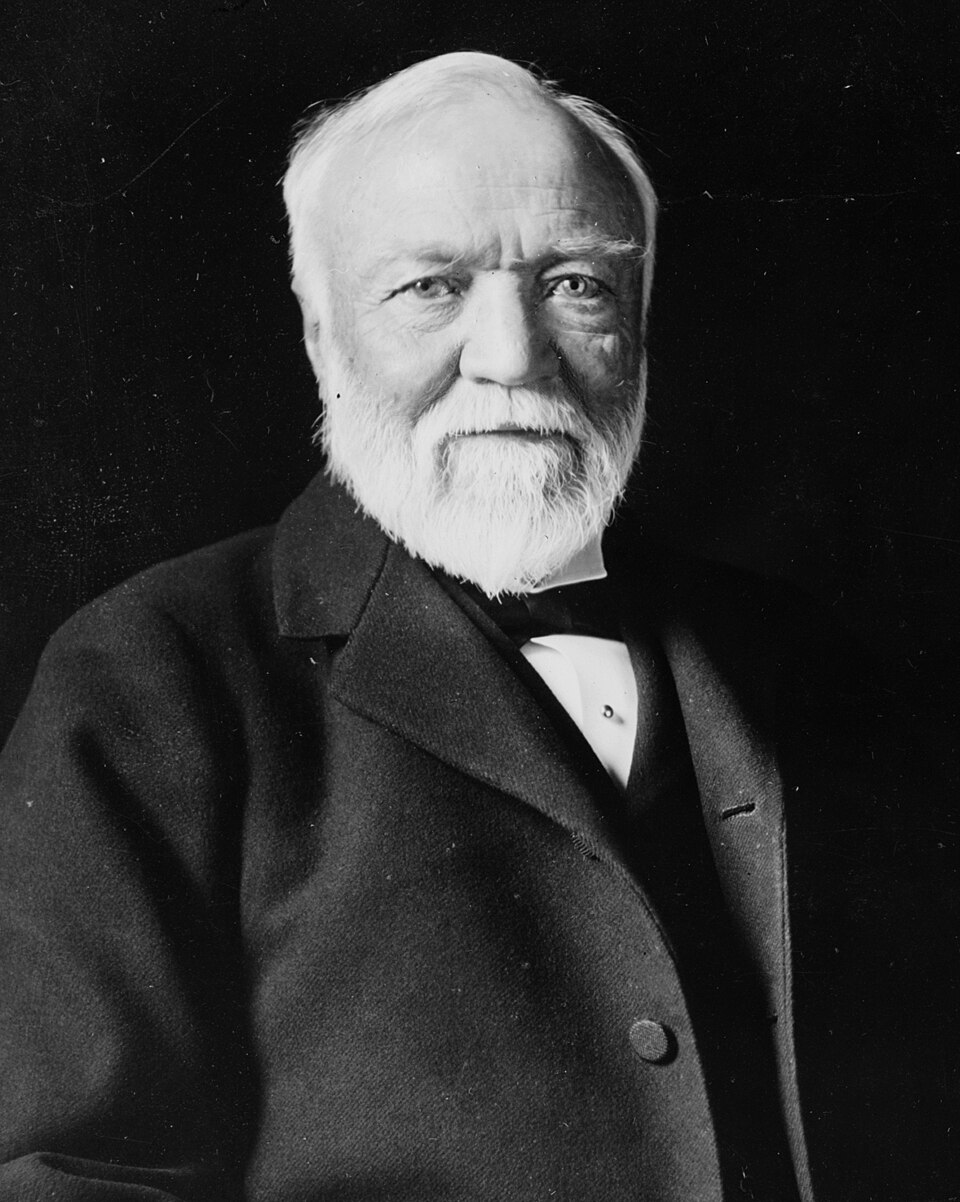
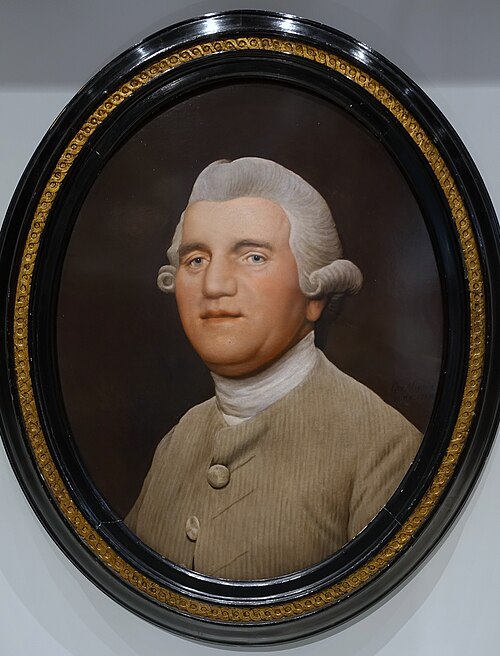
Commons CC/PD images self-hosted for this profession.
Why attitude matters here
Entrepreneurship has no license, no exam and no supervising body of any kind — the market is the only check, and it usually reports back too late to fix the mistake. That absence of external accountability makes a founder's own judgment and honesty the entire quality-control system.
There is no license, board or supervisor to catch a bad decision
Every other profession on this site has some external accountability — a bar, a license, an employer, a licensing exam. An entrepreneur has none of it: no one certifies the decision to hire, to raise money on certain terms, or to keep spending after the product has clearly failed. Attitude is not one input among many here; in the absence of any other check, it is the entire quality-control system.
The founder personally absorbs what others get away with
When a founder is dishonest with themselves about a failing product, avoids a hard conversation with a co-founder, or delays laying off staff the business cannot support, the cost does not land on a distant shareholder — it lands on the founder's own savings, credit and the employees who trusted the runway estimate. Evasion has a shorter, more personal feedback loop here than almost any other job.
Radical uncertainty rewards honest updating, not conviction
A founder must act on incomplete information constantly — hire before demand is proven, spend before revenue confirms the model — and the single biggest determinant of survival is whether they update that judgment honestly as evidence arrives, versus doubling down on the original plan because changing course feels like admitting failure to investors or themselves.
Stances that hold up under pressure
Five concrete postures the work rewards, not slogans.
Pays employees and vendors before drawing a founder salary
Prioritizes payroll and supplier obligations over personal draw when cash is tight, treating other people's dependence on that money as a harder constraint than the founder's own comfort, rather than the reverse.
Delivers bad news to investors early, not late
Tells the board a metric is slipping or a milestone will be missed as soon as it becomes clear, rather than waiting for the next scheduled update to avoid an uncomfortable interim call, because a late warning removes options that an early one preserves.
Kills an idea the market has clearly rejected
Shuts down or substantially changes a product line after real evidence of customer disinterest, instead of reframing weak signals as temporary setbacks, because sunk-cost attachment to a founding idea is one of the most reliable ways a company burns through its remaining runway.
Surfaces co-founder conflict instead of papering over it
Raises a disagreement about equity, roles or direction with a co-founder directly and early, rather than letting it fester until it resurfaces at a moment of maximum damage, such as during a fundraise or an acquisition negotiation.
Keeps a functioning boundary instead of glorifying total sacrifice
Protects enough personal stability — sleep, health, relationships — to keep making sound decisions over years, rather than treating constant depletion as proof of commitment, because a founder who burns out makes worse calls exactly when the company needs better ones.
Moments that reveal it
Situations that separate résumé language from how someone actually practices.
Payroll is due and the numbers do not fully work
Deciding what gets cut first — the founder's own pay, a vendor payment, a planned hire — with no HR department or board resolution required in the moment, reveals whether stated values about employees survive an actual cash crunch.
A beta customer reveals the product does not solve their real problem
Hearing that the core assumption behind months of work is wrong, from a customer whose feedback could easily be dismissed as one data point, tests whether the founder investigates honestly or explains the feedback away to protect the existing plan.
A co-founder wants to ship a known bug to hit a demo deadline
Shipping a flawed product for an investor demo can secure funding that keeps the company alive; disclosing the flaw risks losing the round. The choice made when only the founders know about the bug is the one that defines the company's real standards.
Investors offer money attached to terms that compromise the mission
A term sheet with control provisions or growth expectations that conflict with the founder's original goals for the company tests whether the mission was a genuine constraint on decisions or marketing language dropped once real capital is on the table.
Where "calling" turns harmful
"Hustle culture" as cover for uncompensated labor
Founders and investors routinely frame extreme hours, deferred pay and equity-only compensation as belief in the mission, a framing that conveniently benefits whoever is not working for free. Early employees are pressured to accept exploitative terms through appeals to shared vision, and founders who ask for reasonable pay are sometimes told they lack the commitment the role requires — unrelated to whether the business is viable.
The profile
Resists AI88
Pay72
Barrier to entry12
Autonomy97
Demand74
Impact85
How exposed is it to AI?
Very low
Task by task, much of a founder's week is automatable: research, marketing copy, bookkeeping, early code. But the role is not the sum of those tasks — it is bearing legally accountable risk, persuading strangers to commit money and careers, and deciding under genuine uncertainty. No AI system can own a company's downside, and no jurisdiction lets one be a company's directing mind. What automation actually does is lower the entry cost — historically, that has always meant more entrepreneurs, not fewer.
No. Entrepreneurship is unlicensed everywhere; no country requires a qualification to register a company. In practice most successful founders have education and, more importantly, industry experience: a large US Census study published in 2018 found the average founder of the fastest-growing new firms was 45 at founding. Customers and investors, not examiners, decide who continues.
How do entrepreneurs actually make money?
Three ways: a salary they set themselves, which is often minimal in the early years; profit distributions once the business earns more than it spends; and equity — the ownership stake whose value is realized only if the company is sold, listed or pays dividends. Most entrepreneurial wealth comes from the third, which most founders never reach.
What share of new businesses fail?
Across the US and most OECD countries, roughly half of new employer firms survive five years, and about a third reach ten. The often-quoted "90% of startups fail" describes venture-style outcomes, where anything short of a large exit counts as failure. Plain survival is far more common than the mythology suggests — and still far from guaranteed.
What is the difference between an entrepreneur and a small-business owner?
The words overlap, but economists since Joseph Schumpeter reserve "entrepreneur" for someone attempting a new combination — a new product, method, market or business model — while a livelihood business repeats a proven formula locally. Both carry personal risk and set their own pay. A restaurant can be either, depending on whether it is copying or inventing.
How do startups get funded?
Overwhelmingly from personal savings, family, bank credit and retained profits. Angel investors, accelerators and venture capital fund only a small fraction of new firms — well under 1% in the United States — but dominate the headlines because they target the companies designed to grow fastest. Equity crowdfunding, legalized in the US by the 2012 JOBS Act, added a public route.
How old are successful founders?
Older than the mythology. Analyzing US Census data on 2.7 million founders, Azoulay, Jones, Kim and Miranda found the mean age at founding was 42, and 45 among the fastest-growing 0.1% of new firms. Twenty-something icons like Gates, Jobs and Zuckerberg are memorable outliers; industry experience turns out to predict success better than youth.
Can AI replace entrepreneurs?
AI is absorbing tasks — market research, marketing copy, bookkeeping, even early product code — faster than almost any profession's toolkit. But the core of the role is not a task: it is bearing risk, winning the trust of first customers and hires, and being the legally accountable person. Cheaper building likely means more entrepreneurs, competing harder, not fewer.
Do you still need a business plan?
A forty-page plan has largely given way to lean methods — testing assumptions on real customers before writing anything long — following Steve Blank's customer development and Eric Ries's Lean Startup. But banks, grant agencies and many government startup programs still require a formal plan, and investors expect a concise pitch deck plus evidence of traction instead.
Embed this ranking
Paste this code into your blog or site — the ranking stays up to date.