🚀Origins & Evolution

Entrepreneur · The person who starts the company — spotting the gap, bearing the risk and answering for payroll, from Assyrian caravan financiers to venture-backed founders.

People have organized ventures for private profit for at least four thousand years, but for most of that time the hard problem was not having ideas — it was structuring risk. A sea voyage or a caravan could return triple the stake or nothing at all, and the history of entrepreneurship is largely the history of contracts invented to make that gamble survivable: the partnership, the commenda, the joint-stock company, limited liability, venture capital.

The word came late. Richard Cantillon gave "entrepreneur" its economic meaning in an essay published in 1755, and Joseph Schumpeter put the figure at the center of economic theory in 1911. The role itself is far older than either, and its status has swung between honored and despised more violently than almost any other profession's.

Where it began

c. 1900 BCEAssur & Kanesh (Mesopotamia / Anatolia)

Around 23,000 cuneiform tablets excavated at Kültepe in central Turkey — ancient Kanesh — document Assyrian family firms running donkey caravans of tin and textiles from the city of Assur into Anatolia around 1900 BCE. Their financing instrument, the naruqqum or "money bag," pooled gold from multiple investors into a merchant's decade-long venture in exchange for a share of profits: recognizably venture capital, four thousand years before the term. The tablets record contracts, interest rates, smuggling disputes and letters from wives demanding the money actually be sent home.

Timeline

c. 1900 BCEAssyrian merchants at Kanesh

The Kültepe tablets record Assur trading houses running tin-and-textile caravans into Anatolia, financed by the naruqqum — a long-term fund pooling several investors' gold into one traveling merchant's ventures for a contracted share of profit. It is the earliest richly documented private commerce anywhere, complete with defaults and lawsuits.

c. 1000–1100The commenda tames the sea voyage

Italian ports, led by Venice and Genoa, formalize the commenda: a sedentary investor funds a traveling merchant's voyage, typically taking three-quarters of the profit while bearing the whole capital loss if the ship sinks. Closely paralleling the Islamic qirad, it split risk from labor — the ancestor of the limited partnership.

1602The VOC invents the public company

The Dutch East India Company is chartered with a subscription open to any resident of the United Provinces; over a thousand Amsterdam investors, including household servants, buy in. Its permanent, tradeable shares create the Amsterdam exchange — for the first time, strangers can own a slice of a venture they will never see.

1755Cantillon names the entrepreneur

The Essai sur la Nature du Commerce en Général by Richard Cantillon, an Irish banker in Paris who died two decades before its publication, defines the entrepreneur as one who buys at a certain price to sell at an uncertain one — the first economic theory in which risk-bearing itself is the job.

1765Wedgwood manufactures demand

After completing a tea service for Queen Charlotte, potter Josiah Wedgwood wins permission to rename his cream-colored earthenware "Queen's Ware" and advertises the royal connection across Europe. Money-back guarantees, free delivery, illustrated catalogues and showrooms follow — the modern consumer-marketing playbook, invented to sell dishes.

1911Schumpeter's innovator

In The Theory of Economic Development, Austrian economist Joseph Schumpeter puts the entrepreneur at the center of capitalism as the carrier of "new combinations" — new products, methods and markets that displace old ones. His 1942 phrase for the process, "creative destruction," becomes the profession's defining idea.

1946Venture capital is institutionalized

Harvard Business School professor Georges Doriot founds American Research and Development Corporation in Boston, the first institutional venture firm, raising money from insurers and universities to back untested companies. Its $70,000 stake in Digital Equipment Corporation in 1957 multiplies several-thousand-fold — the industry's founding proof that one hit pays for every miss.

1957The traitorous eight found Fairchild

Eight young researchers walk out of Nobel laureate William Shockley's semiconductor lab and, with financing arranged by Arthur Rock from industrialist Sherman Fairchild, found Fairchild Semiconductor in Mountain View, California. Their later spin-offs — Intel, AMD, Kleiner Perkins among them — seed Silicon Valley's entire genealogy of defection and founding.

1983Grameen Bank charters microcredit

Muhammad Yunus's village lending experiment, begun in 1976 with $27 from his own pocket to 42 borrowers in Jobra, Bangladesh, becomes an independent bank. Grameen's collateral-free small loans, made overwhelmingly to women, carry entrepreneurship to people conventional banks refused to see; the bank and Yunus share the 2006 Nobel Peace Prize.

2005Y Combinator standardizes the accelerator

Paul Graham, Jessica Livingston, Trevor Blackwell and Robert Morris begin funding founders in batches — small checks, standard terms, three months of intense mentoring, then a demo day pitch to investors. The accelerator format is copied worldwide; alumni include Airbnb, Stripe, Dropbox and Reddit.

The eras

Excavated ruins of the ancient Assyrian merchant colony at Kültepe, Turkey.
Klaus-Peter Simon · CC BY-SA 3.0 · Wikimedia Commons
c. 2000 BCE – 1000 CE

Caravans, ports and family firms

From Assyrian trading houses to Phoenician shippers, Roman publicani bidding on state contracts and the caravan merchants of Mecca, ancient commerce was organized around family firms and partnerships built on kinship and reputation. Status varied sharply: Rome's Lex Claudia of 218 BCE barred senators from owning large trading ships, treating commerce as beneath the governing class, while in seventh-century Arabia the Prophet Muhammad was himself a caravan merchant and Islamic law treated honest trade with respect.

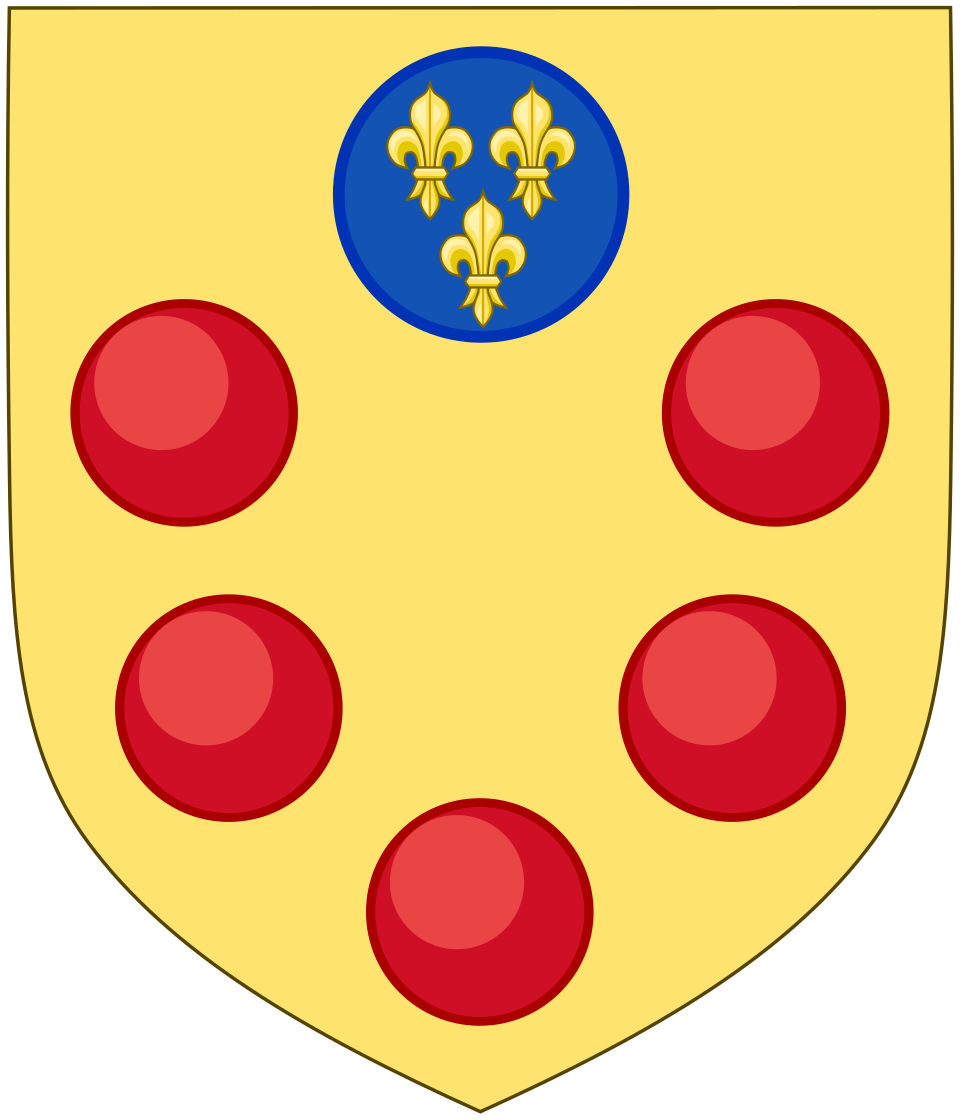
The Medici family's banking operations, depicted in a Renaissance-era illustration.
Heralder · CC BY-SA 3.0 · Wikimedia Commons
1000 – 1600

Contracts that tamed risk

Medieval Italy engineered the legal machinery modern business still runs on: the commenda for single voyages, the multi-year compagnia partnership, marine insurance, the bill of exchange, and the double-entry bookkeeping that Luca Pacioli printed in 1494. The Medici Bank ran branches from London to Rome as separate partnerships under one family's control — a holding structure centuries ahead of its name — while the Hanseatic League networked merchant cities from Bruges to Novgorod.

A ship of the Dutch East India Company, the world's first publicly traded corporation.
Himasaram · Public domain · Wikimedia Commons
1600 – 1850

Joint stock and the industrial founder

The Dutch East India Company of 1602 proved strangers would pool capital in a permanent, share-trading company — and the South Sea Bubble of 1720 proved how badly it could go, freezing English company formation for a century under the Bubble Act. Industrial entrepreneurs — Wedgwood in pottery, Arkwright in cotton, Boulton and Watt in steam — built the factory system anyway, and Britain's Limited Liability Act of 1855 finally let ordinary investors risk only what they put in.

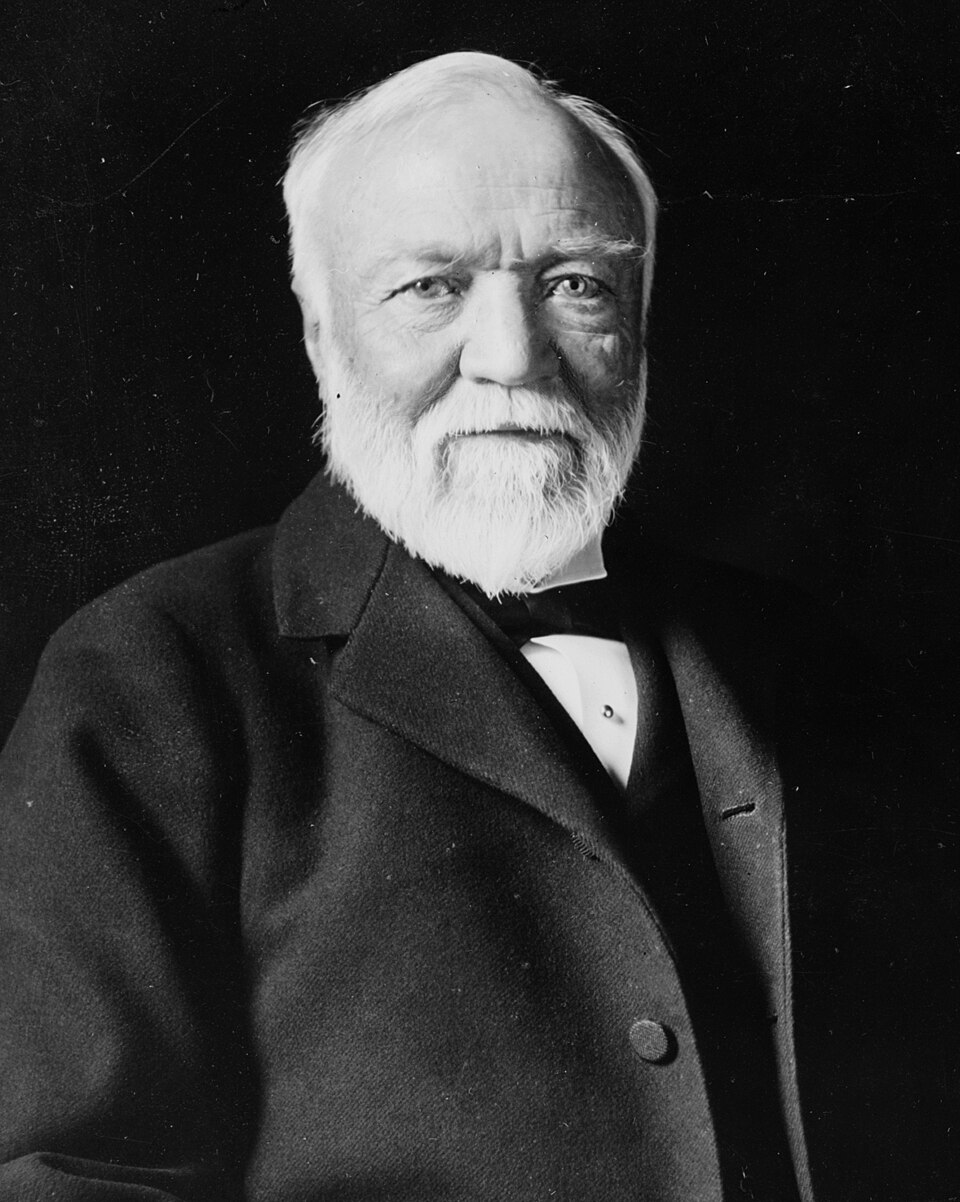
Portrait of industrialist Andrew Carnegie, emblem of the age of tycoons.
Theodore C. Marceau · Public domain · Wikimedia Commons
1850 – 1970

Tycoons, corporations and managers

Railways, steel and oil created fortunes and a new vocabulary of suspicion: Carnegie and Rockefeller were "captains of industry" to admirers and "robber barons" to critics, and the 1890 Sherman Act was written to break what they built. Meiji Japan industrialized through founder-led zaibatsu like Iwasaki Yatarō's Mitsubishi, while Shibusawa Eiichi helped launch some 500 companies. By mid-century, salaried managers ran the big corporations, and economists wrote about the entrepreneur mostly in the past tense.

Aerial view of Silicon Valley, the center of the modern startup economy.
Coolcaesar · CC BY-SA 3.0 · Wikimedia Commons
1970 – present

The startup age

Venture capital matured — Sequoia Capital and Kleiner Perkins were both founded in 1972 — and the personal computer, internet and smartphone waves each minted a generation of founders, mythologized in California garages. Accelerators standardized entry from 2005, and in 2013 investor Aileen Lee counted 39 private companies worth over $1 billion and called them "unicorns"; a decade later there were more than 1,200, from Bangalore and Beijing to Tel Aviv, São Paulo and Lagos.

What this job replaced

Neighbouring trades that no longer exist — absorbed, automated or regulated away.

Merchant adventurer

c. 1407–1809

England's overseas trade was long the legal monopoly of chartered merchant guilds, above all the Company of Merchant Adventurers of London, which controlled the export of woolen cloth to the Low Countries and Germany from the early fifteenth century. Free-trade politics and interloping merchants eroded the monopolies through the seventeenth century, and the company's Hamburg successor was finally dissolved in 1809 — the entrepreneur no longer needed a royal charter to trade abroad.

Itinerant peddler

c. 1600–1930

For centuries the peddler carried retail to the countryside on his back, extending goods and credit where no shop existed; the trade was a classic first rung for immigrants, and several retail dynasties climbed it — Adam Gimbel peddled along the Mississippi before opening the Vincennes, Indiana store in 1842 that grew into Gimbels department stores. Mail-order catalogues, the department store and finally the automobile erased the trade across the industrialized world by the 1930s.

Comprador

1842–1949

After the Treaty of Nanking opened China's ports, foreign trading houses hired Chinese merchant-managers — compradors — to run their local buying, selling and staff, straddling two commercial worlds on commission. Some, like the reformer-merchant Zheng Guanying, became industrialists and public figures in their own right. The role, long resented as a symbol of foreign economic control, was abolished outright after the Communist victory of 1949.

Trades that vanished →

Each era's defining invention — the naruqqum, the commenda, the joint-stock share, limited liability, the venture fund, the accelerator — solved the same problem: how to let someone attempt something uncertain without being personally destroyed by the attempt. Every one of them widened who could afford to try.

What has not changed since the Kültepe tablets is the figure at the center: one named person who assembles other people's money, effort and trust into a venture, and answers for the result. The contracts around that person keep improving; the exposure never fully goes away.

Keep exploring

More in Business & Finance