AI Researcher: Designs and tests the algorithms behind machine intelligence, in a field now racing to automate a growing share of its own research process.
An AI researcher designs, trains and evaluates the algorithms that let software recognize images, generate language, plan and make decisions — usually a form of machine learning, where a model improves at a task by processing large amounts of data rather than following rules a person wrote by hand. The work spans university labs inventing new architectures, corporate research groups scaling proven ones, and specialists who spend a career on one narrow slice, such as how a model learns from very little data.
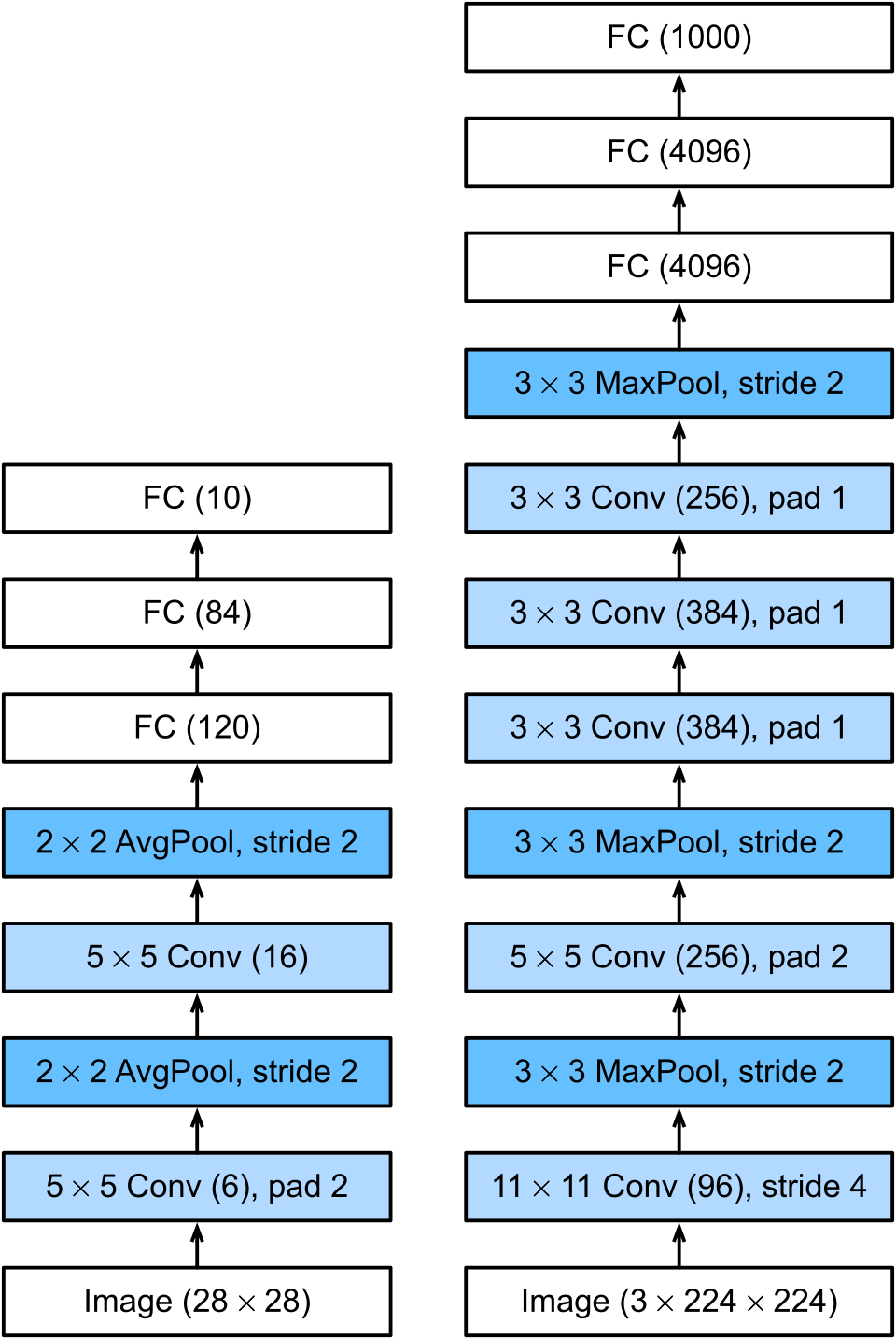
The field is younger than most people assume: the phrase 'artificial intelligence' was coined in 1955 for a 1956 summer workshop at Dartmouth College, and the work has cycled twice through boom and 'winter' since then — periods when funding collapsed after early promises went unmet. Today's dominant approach, deep learning, spent decades as a minority position before a single 2012 image-recognition contest and a 2017 paper on 'attention' reshaped the whole discipline around ever larger neural networks trained on ever more data.
AI research is unusual among the professions on this site because its subject and its instrument are the same technology. Tools built from the field's own output now draft literature reviews, propose experiments and write code for training runs, and a few labs are openly trying to automate parts of the research process itself. What survives that pressure, and what does not, is the question the rest of this profile tries to answer honestly rather than reassuringly.
Inside the profession
AI research is a discipline of controlled surprises: proposing an idea is easy, but showing that a result is real, useful and not an artifact of data, compute or a lucky seed is the actual work.
The day is experiments, not inspiration
Researchers read papers, design comparisons, write and debug training code, inspect failed runs and explain results to collaborators. A promising improvement may disappear after stronger baselines, more random seeds or a changed evaluation set. The craft is experimental rigor: isolating what caused an effect, documenting negative outcomes and matching a paper's claims to the evidence rather than to the most appealing narrative.
The job spans different institutions
University researchers pursue questions over long horizons and train students; industry labs can run costly experiments and move results into products; research engineers build the systems that make either possible. Theory, computer vision, language, robotics, reinforcement learning, safety and scientific AI require different methods. The shared currency is a result other people can inspect, reproduce or build on—not a job title alone.
Publication is the informal gate
A PhD remains the usual route to independent research, built on mathematics, programming and an advisor's laboratory. Yet the practical gate is a record of careful work: papers, code, datasets, benchmarks and collaborations that survive skeptical review. Strong engineers and researchers from physics, neuroscience or statistics can enter through residencies and open-source contributions, but frontier roles usually demand demonstrated research depth.
The field automates its own workflow
AI tools now summarize literature, draft experiment code and search hyperparameters; some systems attempt larger parts of the research loop. They can make plausible work cheaper to produce. That increases the value of research taste, evaluation and accountability: deciding which question matters, detecting a quiet flaw and standing behind a public claim. Automation changes the ratio of running experiments to judging them, not the obligation to verify.
How the work branches
Five common shapes of the same title — specialty, setting or career path.
Universities and industrial labs
Research scientist
Sets or advances a research agenda through experiments, papers and collaborations.
Model and systems labs
Research engineer
Builds training, evaluation and data systems that make research ideas testable at scale.
Alignment and evaluation
AI safety researcher
Studies model failures, misuse, robustness and methods for safer behavior or governance.
Physical systems
Robotics / embodied AI researcher
Combines perception, control, simulation and hardware experiments for systems acting in the world.
Science and engineering domains
Scientific ML researcher
Applies or develops learning methods for biology, climate, materials, physics and other research fields.
How it reads by country
Same craft, different gatekeeping, status and daily texture — rewritten for readers in each language.
United States — frontier labs and universities
A dense concentration of major labs, cloud compute and universities creates high-paying but selective opportunities. Access to compute and a strong publication network can shape which questions are feasible.
South Korea — applied research and large platforms
Corporate research centers, universities and electronics firms support work in language, vision, robotics and chips. Product pressure can place researchers close to deployment.
Japan — robotics, industry and research institutes
Robotics, manufacturing and long-established research institutions create distinctive research pathways. Collaboration between corporate labs and universities remains important.
Germany — institutes and applied science
University groups, research institutes and industrial employers support AI research with strong links to manufacturing and engineering. Funding structures often reward collaborative projects.
United Kingdom — research clusters and policy attention
University research and London-based labs create a concentrated ecosystem, alongside visible AI-safety and policy communities. Competition for senior talent is intense.
Singapore — international research hub
Universities, public research programs and multinational labs recruit internationally. Regional applications, multilingual data and cross-border collaboration are common themes.
From the archive
Commons CC/PD images self-hosted for this profession.
Why attitude matters here
AI research runs faster than its own peer review, so a researcher's honesty about a result that does not replicate or an ablation that undercuts their own headline claim is often the only quality control the field's knowledge actually has.
Reproducibility depends on honesty nobody can force
A result can look real because of a lucky random seed, an unreported hyperparameter search, or a baseline not tuned as carefully as the proposed method, and few outside labs have the compute to check. Whether a researcher reports failed seeds alongside the successful one is a decision no reviewer can verify from the paper alone. The field's knowledge is only as reliable as researchers' willingness to undercut their own best result.
Compute cost makes judgment more valuable than persistence
A single large training run can cost more than a researcher's annual salary, so the decision about what experiment to run next, not the ability to run many experiments quickly, is where real skill lives. A researcher who cannot sit with an ambiguous result long enough to understand it before chasing the next flashy idea wastes resources a slower, more careful colleague with the same budget would not.
Competitive pressure rewards overclaiming
Publication deadlines and competition between labs racing to announce the same capability create a persistent temptation to describe a cherry-picked demo as a general result, or a narrow benchmark win as a broader breakthrough. The researcher who runs the boring ablation that might undercut their own claim, even against a looming deadline, is what keeps the field's public claims checkable rather than promotional.
Stances that hold up under pressure
Five concrete postures the work rewards, not slogans.
Running the ablation that could undercut the headline result
Testing whether a proposed method actually outperforms a properly tuned baseline, even when skipping that comparison would let a more impressive number reach the paper's abstract unchallenged, and reporting the comparison honestly regardless of what it shows.
Reporting a negative result instead of shelving it quietly
Writing up an experiment that did not work, including in internal notes that shape a team's future direction, rather than letting it disappear because a positive result is easier to present and celebrate.
Admitting a result does not replicate
Acknowledging publicly or internally when another team, or one's own later attempt, cannot reproduce a previously reported finding, instead of attributing the discrepancy to an unspecified implementation difference and moving on.
Refusing to overstate capabilities under submission pressure
Describing what a system actually does in a paper's abstract and public communications, even when a broader, more attention-grabbing claim would be easier to get accepted, funded, or covered favorably by the press and social media.
Reading the failure logs before rerunning with a new seed
Investigating why a training run underperformed instead of immediately retrying with different random initialization in the hope that a better roll of the dice fixes a bug nobody actually diagnosed or understood.
Moments that reveal it
Situations that separate résumé language from how someone actually practices.
A headline result a colleague cannot reproduce
Another team, or an internal colleague, reports that they cannot get the paper's central result to replicate. Investigating that report seriously, instead of assuming an implementation mistake on their end, is where a researcher's actual commitment to correctness shows.
A reviewer requests the one ablation you avoided
Peer review asks for exactly the comparison that, if honestly run, might weaken the paper's central claim. Running it properly and reporting the result as found, rather than finding a technical reason to decline, separates rigorous researchers from persuasive ones.
A public demo built from the best of many failed runs
A polished demonstration is assembled from the handful of successful outputs among dozens of failures. How that selection process is described publicly — as a representative capability or, honestly, as a cherry-picked best case — is a specific and recurring test in a field that communicates heavily through demos.
A conference deadline arrives before the checks are done
A major submission deadline is approaching and several verification steps remain unfinished. Submitting with the checks skipped, versus delaying or qualifying the claims accordingly, reveals whether deadline pressure or scientific standard sets the researcher's actual behavior.
Where "calling" turns harmful
Deadline grind dressed up as mission
Machine-learning PhD programs and industry labs have documented cultures of all-night work before deadlines, often described as an expected rite of passage, not a symptom of understaffing. Junior researchers report pressure from advisors to accept authorship arrangements or hours they would otherwise refuse, justified by how field-changing the work supposedly is. The same "changing the world" language discourages pushback on unsustainable hours.
The profile
Resists AI50
Pay90
Barrier to entry92
Autonomy68
Demand90
Impact96
How exposed is it to AI?
Moderate
A meaningful share of an AI researcher's routine work — literature triage, first-draft experiment code, hyperparameter search, drafting a related-work section — is already comparably fast for an AI system to do, and multi-agent research systems built explicitly to automate more of the loop are an active project at several major labs. What has not been automated is judging whether a result is real, deciding which question is worth asking, and being accountable when a published claim turns out to be wrong.
What does an AI researcher actually do day to day?
Most days split between reading recent papers, writing and debugging training code, waiting on and analyzing results from long-running experiments, and discussing findings with collaborators. Contrary to the popular image, a large share of the job is diagnosing why a model is underperforming or a result won't replicate, not brainstorming new architectures from scratch.
Do I need a PhD to become an AI researcher?
For an independent research role at a university or a top industry lab, effectively yes — a PhD remains the field's real credential, since there is no licensing exam. Strong engineers without one increasingly enter through industry residency programs or a public record of open-source work and cited preprints, but titles like 'research scientist' still skew heavily toward doctorate holders.
Is AI research itself at risk from AI?
Parts of it clearly are: literature summarizing, boilerplate experiment code and first-draft related-work sections are already routinely AI-assisted, and labs are openly experimenting with systems that propose and run their own experiments. Framing what a result actually means, and taking responsibility for a published claim, have proven much harder to hand over.
How much do AI researchers earn?
It varies enormously by employer and seniority. The US median for the broader 'computer and information research scientist' category was $140,910 in 2024, but new PhDs joining a large technology company's research lab often start well above that, and a small number of senior researchers at frontier AI labs have reportedly been offered total packages worth seven or eight figures during the 2024–2025 hiring competition.
What's the difference between an AI researcher and a machine learning engineer?
The lines blur constantly, but a rough distinction holds: a researcher's output is usually a paper, a new method or an insight about why something works, judged by peer review; an engineer's output is usually a working system in production, judged by whether it ships and holds up under real use. Many people do both across a career.
Which programming languages and tools does AI research use?
Python dominates, paired with a deep-learning framework — PyTorch is now the most common in research, with JAX popular for large-scale and Google-affiliated work. Beyond code, researchers depend on shared GPU or TPU compute clusters, experiment-tracking tools like Weights & Biases, and arXiv, where most new results circulate as preprints months before formal peer review.
Can you become an AI researcher without a computer science background?
Yes, more easily than in most technical fields. Physics, mathematics, neuroscience and statistics all feed directly into AI research, and some influential figures — including physicist John Hopfield, whose 1982 neural-network model shared the 2024 Nobel Prize in Physics — moved into the field from elsewhere. A strong quantitative and programming foundation matters more than the specific major.
What is the biggest bottleneck in AI research today?
Increasingly, computing power and the money to pay for it, not ideas. Training a frontier model can cost tens of millions of dollars in compute alone, concentrating the most resource-intensive research inside a handful of well-funded labs and pushing university and smaller-lab researchers toward more data- and compute-efficient methods almost by necessity.
Embed this ranking
Paste this code into your blog or site — the ranking stays up to date.