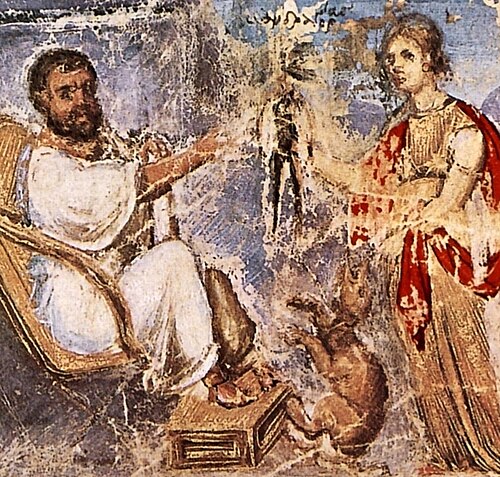
The medicines expert behind every prescription — from Baghdad's first drug shops and the apothecary's mortar to morphine, artemisinin and the modern dispensary.
Also called: Chemist (UK) · Druggist · Apothecary (historical)
Pharmacist: The medicines expert behind every prescription — from Baghdad's first drug shops and the apothecary's mortar to morphine, artemisinin and the modern dispensary.
"Pharmacist" descends from the Greek pharmakon, a word that meant remedy and poison at the same time — an ambiguity the profession has been managing for four thousand years. A Sumerian clay tablet from Nippur, written around 2100 BCE, already lists drug recipes; Baghdad opened the world's first true drug shops around 754 CE; and in about 1240 Emperor Frederick II legally split the preparer of medicines from the prescriber, creating the independent profession that still exists today.
The job has always had a double identity: scientist and shopkeeper. Pharmacists founded alkaloid chemistry — morphine, quinine and caffeine were all first isolated by people trained at the apothecary's bench — and, on the shopkeeper side, American pharmacists invented Coca-Cola, Pepsi and Dr Pepper at their soda fountains. Today the science half dominates: everywhere in the world, dispensing medicines requires a licensed professional with a university pharmacy degree and a passed national examination.
This page follows the trade from the Nippur tablet and Dioscorides' De Materia Medica through the apothecary guilds, the alkaloid century and the rise of the pharmaceutical industry, to a present in which robots count the pills and the pharmacist's real work is judgment: catching the fatal interaction, questioning the wrong dose, and — since COVID-19 — vaccinating a meaningful share of the world.
Inside the profession
A pharmacist is the licensed medicines expert who stands between a prescription and a patient: verifying dose, interactions and identity, then deciding whether the medicine should leave the counter at all.
Verification is the real craft
Dispensing looks like counting tablets, but the decisive work is clinical verification. A pharmacist checks the prescriber's authority, matches the drug to the indication, screens age, weight, kidney and liver function, and asks whether an interaction flagged by software actually matters for this person. Controlled-drug registers, fridge temperatures and final accuracy checks are not bureaucracy; they are the profession's answer to a product customers cannot judge. The Frederick II separation of prescriber and dispenser still shapes the day: the pharmacist's signature means the medicine is fit to leave.
Community counter and hospital ward
Community pharmacists own the public-facing side—counseling, vaccinations, minor-illness advice and the brown-bag medication review—while hospital pharmacists join ward rounds, adjust doses for organ failure and prepare sterile intravenous and chemotherapy products. Both roles share the same core: catching the wrong drug, the duplicate therapy and the dose that looks normal until renal function is checked. Tall-man lettering, shelf separation and the three prime questions are craft habits aimed at look-alike packaging and hurried conversations. Robots already assemble many packs; judgment remains human.
Licensing before the white coat counts
Every country that licenses pharmacists gates practice through a university pharmacy degree and a national examination. The United States requires a PharmD plus NAPLEX and a state law exam; Britain uses the MPharm, foundation training and GPhC registration; Japan requires the national pharmacist examination. Intern hours and supervised practice matter because a labeling error can kill. Residencies and specialties deepen hospital, oncology or ambulatory care paths, but the shared gate is the same: no independent practice without registration, and nothing leaves without a pharmacist's final check.
From product to clinical service
The profession is moving past the historical wall between prescribing and dispensing. Alberta's broad pharmacist prescribing, UK independent-prescriber training and US test-and-treat or contraceptive authorities push pharmacists into initiation and monitoring, not only supply. Central-fill warehouses and automation free time for those tasks while intensifying metrics pressure on wait times and script volume. Pharmacogenomics and complex biologics raise the stakes of counseling. What survives automation is accountable judgment: whether this flagged interaction, this dose and this patient story add up to a safe supply.
How the work branches
Five common shapes of the same title — specialty, setting or career path.
High-street and chain pharmacies
Community pharmacist
Dispenses, counsels, vaccinates and manages minor illness at the public counter under continuous queue and metrics pressure.
Wards and pharmacy departments
Hospital clinical pharmacist
Joins rounds, adjusts doses for organ function, stewards antibiotics and prepares sterile or chemotherapy products.
Manufacturers and medicines agencies
Industrial / regulatory pharmacist
Works on formulation, quality systems, labeling and regulatory submissions rather than daily patient dispensing.
Primary-care and specialty clinics
Ambulatory care / clinic pharmacist
Manages chronic therapies, reconciles regimens and often collaborates under collaborative practice or prescribing protocols.
Cancer centers and radiopharmacy units
Nuclear or oncology pharmacist
Handles high-hazard preparations where compounding accuracy, shielding and protocol adherence are non-negotiable.
How it reads by country
Same craft, different gatekeeping, status and daily texture — rewritten for readers in each language.
PharmD, NAPLEX and state boards
US pharmacists enter through a PharmD, intern hours, NAPLEX and a state jurisprudence exam, then practice under state board rules. Chain metrics, prior authorization and expanding test-and-treat or contraceptive authorities shape daily work; hospital residencies open clinical careers.
National license and dispensing separation
South Korean pharmacists pass the national pharmacist examination and work under a legal separation of prescribing and dispensing that still structures clinics and pharmacies. Hospital clinical roles and community shops diverge sharply in intensity, status and after-hours expectations.
薬剤師国家試験 and the dispensing boom
Japan licenses pharmacists through the national examination after a six-year pharmacy curriculum. Community dispensing near clinics, detailed counseling norms and hospital pharmaceutical departments define the craft; registration and controlled-drug discipline remain tightly policed.
Apotheker and the Approving authority
German pharmacists qualify as Apotheker through university study and state examination, then practice in Apotheken with a named responsible pharmacist. The Apothekenpflicht model, night-duty rotations and precise compounding rules give daily practice a strongly regulated texture.
MPharm, GPhC and independent prescribing
UK pharmacists complete an MPharm, foundation training and GPhC registration. Community and NHS hospital paths diverge early; independent-prescriber training is becoming standard for new registrants, shifting the job from supply toward initiation and monitoring.
SPC registration in a compact system
Singapore pharmacists register with the Singapore Pharmacy Council after approved education and training. Public institutions, polyclinics and private retail share a dense urban market; clinical pharmacy in hospitals carries status, while community work emphasizes counseling and chronic-disease support.
From the archive
Commons CC/PD images self-hosted for this profession.
Why attitude matters here
A pharmacist's technical knowledge sets what can be dispensed safely, but attitude decides whether a flagged interaction is investigated or waved through when the queue is long and the metrics board is red.
The patient cannot audit the product
Medicines are among the few everyday goods whose quality and appropriateness a customer cannot judge at the counter. When a pharmacist skips the final check, assumes the software caught everything, or defers to a hurried prescriber without calling, the error arrives home in a labeled bottle. That separation of roles exists because opacity kills; attitude toward verification is the remaining safety layer after robots count the tablets.
Metrics reward speed, harm rewards silence
Chain dashboards track wait time, script volume and abandoned baskets; they do not track the interaction call that never happened. A pharmacist who treats verification as optional once trust is earned will look productive until a look-alike pack or outlier dose reaches a patient. The stance toward interrupting the flow for a clinical doubt is therefore load-bearing in a way résumé skills alone are not.
Counseling only works if someone slows down
The three prime questions and brown-bag reviews only catch duplicate therapies, leftover opioids and misunderstood inhalers if the pharmacist treats the conversation as clinical work rather than a formality after the sale. Patients leave with regimens they will misuse when the counter culture rewards throughput over understanding; skill without that patience fails quietly at home.
Stances that hold up under pressure
Five concrete postures the work rewards, not slogans.
Final check as non-negotiable
Reading the label against the prescription three times on every supply, including the last script before closing, rather than trusting a technician's assembly once the morning rush feels familiar. Verification failures are silent until a patient reports the wrong strength at home.
Calling the outlier dose
Phoning the prescriber when a dose, frequency or combination looks wrong for age or organ function, instead of dispensing because the signature is valid and the queue is growing. Deferential silence is a documented failure mode in pharmacy culture.
Treating counseling as clinical time
Asking what the patient already knows, what worries them and how they will take the medicine, in language they use, rather than reading the leaflet aloud while bagging. The conversation is where inhaler technique and leftover duplicates are caught.
Protecting controlled-drug discipline
Counting, signing and reconciling controlled medicines exactly, including when a shift is short-staffed, because register gaps and fridge excursions become regulatory and safety failures days later when nobody remembers the rush.
Interrupting for a look-alike pack
Stopping the assembly line when packaging, strength or brand feels off, using tall-man habits and shelf separation rather than assuming familiarity. Expectation bias at the final check is a classic pharmacy error pattern.
Moments that reveal it
Situations that separate résumé language from how someone actually practices.
A software flag on a busy Saturday
Whether the pharmacist investigates a drug-interaction alert for this patient's labs and co-medications, or clears it to keep the wait-time metric green, is a recurring test no licensing exam scores. The queue never records the call that was skipped.
A familiar patient's unusual dose
Seeing a long-time customer present with a dose that looks wrong for age or renal function forces a choice between trust in the regular prescriber and a phone call that delays the line. How that moment is handled reveals more than counseling certificates.
Technician assembly under time pressure
Signing off a prepared pack without a genuine final accuracy check because the technician is trusted and the next customer is already waiting is the exact failure mode protocols exist to prevent. Nobody is watching that signature except the patient later.
A vaccination or minor-illness consult
Whether contraindications, consent and aftercare are actually reviewed, or treated as a throughput task between scripts, shows whether expanded clinical roles are real practice or marketing language pasted onto the same rushed counter.
Where "calling" turns harmful
Passion for patients as unpaid overtime
Pharmacy culture often praises staying late for counseling and vaccination clinics while staffing models assume one pharmacist can absorb infinite clinical expansion. Calling the work a vocation can justify unpaid pajama-time documentation, unsafe pharmacist-to-script ratios and metrics that punish the very interventions that prevent harm. Dedication that cannot refuse an unsafe workload becomes a staffing strategy, not a virtue.
The profile
Resists AI58
Pay74
Barrier to entry80
Autonomy52
Demand68
Impact82
How exposed is it to AI?
Moderate
A large fraction of traditional pharmacy work — counting, labeling, stock control, claims processing, first-pass interaction screening — is already automated or clearly automatable, which is why this score sits far above a surgeon's. What resists is the judgment and accountability layer: the legally mandated final verification, the decision that an alert does or does not matter for this patient, counseling, and the growing clinical services no dispensing robot performs. The realistic future is fewer pharmacists per prescription, doing more clinical work per pharmacist.
Only in some countries. The United States requires a Doctor of Pharmacy (PharmD), the sole entry degree there since the early 2000s. The United Kingdom uses a four-year MPharm master's degree plus a foundation training year; much of Europe, Asia and Africa uses a four- to six-year bachelor's or master's in pharmacy. Every route ends in a national licensing examination and registration.
How long does it take to become a pharmacist?
Roughly six to eight years after secondary school in most systems. A US student typically completes two to four years of pre-pharmacy coursework, four years of PharmD study, and around 1,500 supervised intern hours. A UK student completes a four-year MPharm and a paid foundation year. Optional hospital residencies or specializations add one to two years on top.
What is the difference between a pharmacist and a pharmacy technician?
The pharmacist is the licensed medicines expert who carries legal responsibility: verifying every prescription, judging interactions and doses, counseling patients, and in many countries vaccinating or prescribing. Technicians, trained in one to two years, do much of the physical assembly — counting, labeling, stock. In most jurisdictions nothing leaves the pharmacy without a pharmacist's final check.
How much do pharmacists earn?
The United States pays best: a median of about $136,000 in the mid-2020s, according to the Bureau of Labor Statistics. Canadian pharmacists typically earn around C$110,000; UK hospital pharmacists roughly £47,000–£63,000 on NHS bands; Australian community pharmacists often less relative to their training. In India, staff pharmacists commonly earn a few lakh rupees a year — a fraction of Western pay.
Can pharmacists prescribe medicines?
Increasingly, yes. Alberta, Canada has allowed qualified pharmacists broad prescribing rights since 2007. The UK has trained pharmacist independent prescribers since 2006, and newly registered UK pharmacists will qualify as prescribers from 2026. Many US states allow pharmacists to prescribe contraceptives or test-and-treat for flu and strep. The historical wall between prescriber and dispenser, built in 1240, is being deliberately lowered.
Will robots and AI replace pharmacists?
They already do much of the counting: dispensing robots and central-fill warehouses assemble a growing share of prescriptions, and software flags interactions automatically. What remains human is the judgment layer — deciding whether a flagged interaction matters for this patient, catching the wrong-drug error the computer approved, counseling, vaccinating and prescribing. The profession is shifting toward those clinical tasks, not disappearing.
Why does it take so long to fill a prescription?
Because dispensing is the visible tenth of the work. Behind the counter, the pharmacist or team verifies the prescriber's authority, checks the dose against the patient's age, weight, kidney function and other medicines, resolves insurance rejections, screens for interactions and duplications, and performs a final accuracy check. A queue of such checks, plus phone calls to prescribers, is what the waiting time actually is.
What do hospital pharmacists do differently from community pharmacists?
Hospital pharmacists work inside the clinical team: they attend ward rounds, adjust doses for kidney and liver function, prepare sterile intravenous and chemotherapy products, manage antibiotic stewardship and advise prescribers directly. Community pharmacists own the public-facing side — dispensing, counseling, vaccinations, minor illness. The clinical movement that created the hospital role began at American university hospitals in the 1960s.
Embed this ranking
Paste this code into your blog or site — the ranking stays up to date.