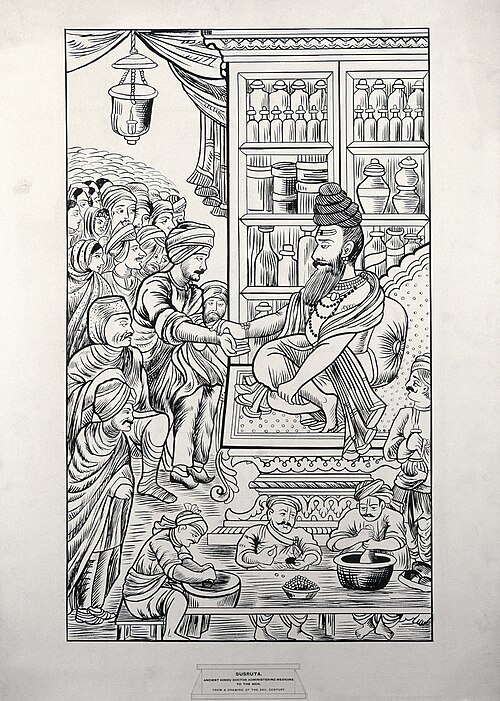
The physician who operates to cure, from Sushruta's ancient rhinoplasty to today's robotic operating rooms, still alone with the decision at the table.
Also called: Consultant surgeon · Operating physician
Surgeon: The physician who operates to cure, from Sushruta's ancient rhinoplasty to today's robotic operating rooms, still alone with the decision at the table.
"Surgeon" comes from the Greek cheirourgos, "hand-worker" — a word that already carries the argument the profession has had about itself for three thousand years: is this a scholar's discipline or a craftsman's trade. Ancient Egypt, India and Mesopotamia all produced systematic surgical knowledge; medieval Europe then split the work in two, handing cutting and bleeding to barbers while university-trained physicians kept their hands, and their status, clean.
There is exactly one honest route into the job everywhere it is practiced: years of formal medical education followed by years more of supervised, hands-on training, because no textbook substitutes for a trained hand inside a living body. The training runs a decade or more almost everywhere, because a wrong decision is irreversible in a way few other professions share, and because judgment under pressure cannot be taught from a slide.
This page follows the job from the Edwin Smith Papyrus and Sushruta's ancient rhinoplasty to Paré's battlefield surgery, ether, antisepsis and the Blalock–Thomas–Taussig operation. It covers how people actually enter the trade today, what a single operating day demands of the body and the judgment, who reached the top of the profession and how, and how much of the work robots and AI can realistically take over.
Inside the profession
A surgeon is the physician who accepts responsibility for changing anatomy when medicine alone cannot solve the problem. The craft is technical, but its center is judgment: whether to operate, what to do when the plan fails, and when to stop.
The decision before the incision
The decisive surgical act often happens before anyone enters the operating room. A surgeon translates imaging, symptoms, physiology and a patient's own priorities into a recommendation that may be life-changing but is never risk-free. Consent is not a signature on a form: it is a conversation about alternatives, likely benefits, complications and the possibility that the real anatomy will differ from the scan. In trauma, the choice may be made in minutes; in cancer or elective joint surgery it may take several visits. Good surgeons resist the temptation to equate technical capability with an indication to operate.
Anatomy as lived reality
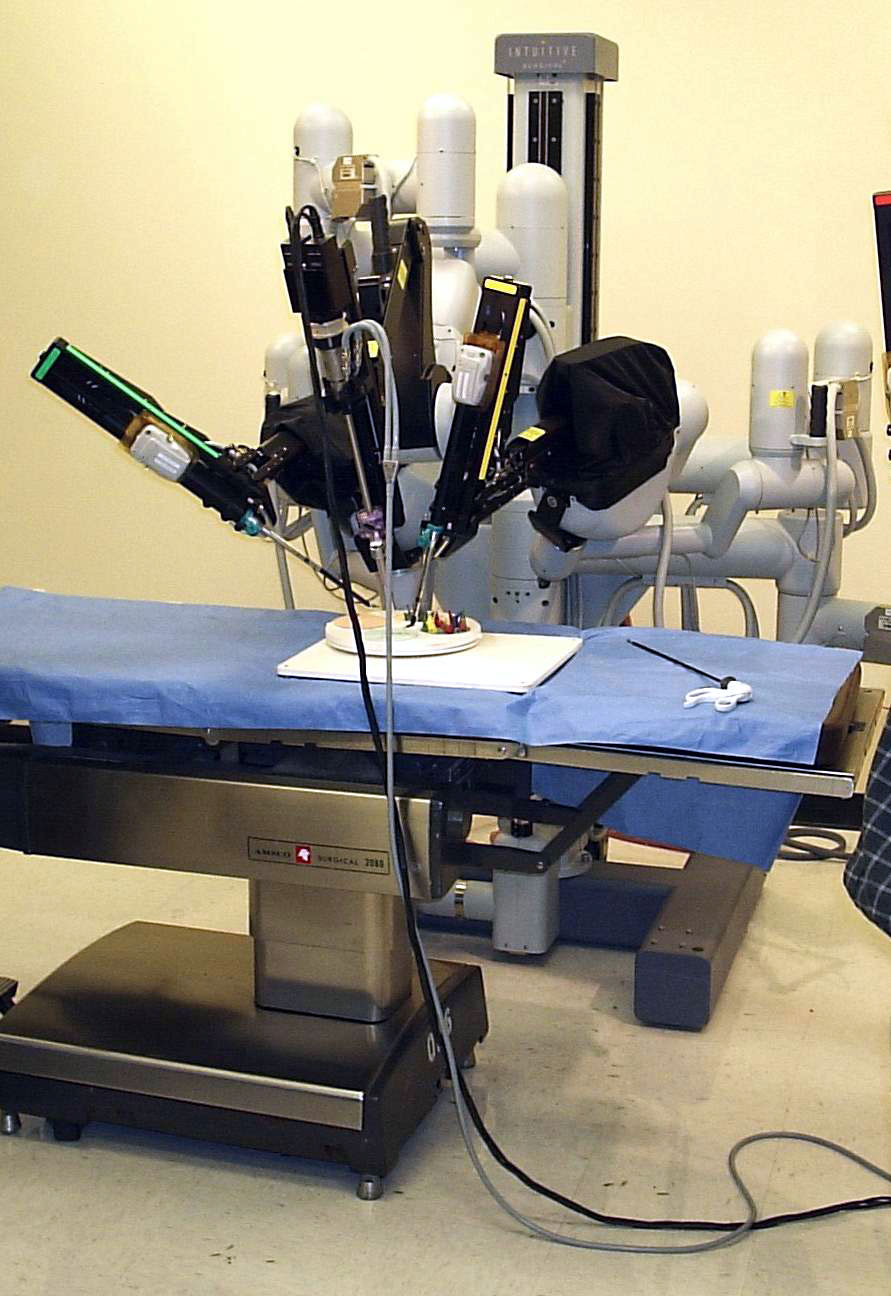
Training gives surgeons a three-dimensional map of nerves, vessels, organs and tissue planes, but no two bodies are identical. Prior operations leave scar tissue, tumors displace landmarks, and bleeding can turn a familiar field into an unfamiliar one. This is why the old Halstedian ideals remain practical: gentle handling, meticulous control of bleeding, sterile technique and closure without tension. A laparoscopic camera or da Vinci console can magnify and steady movement, yet neither replaces the operator's reading of tissue resistance, color and perfusion. The hand follows anatomy; expertise is knowing when anatomy is no longer following the textbook.
A team sport with named accountability
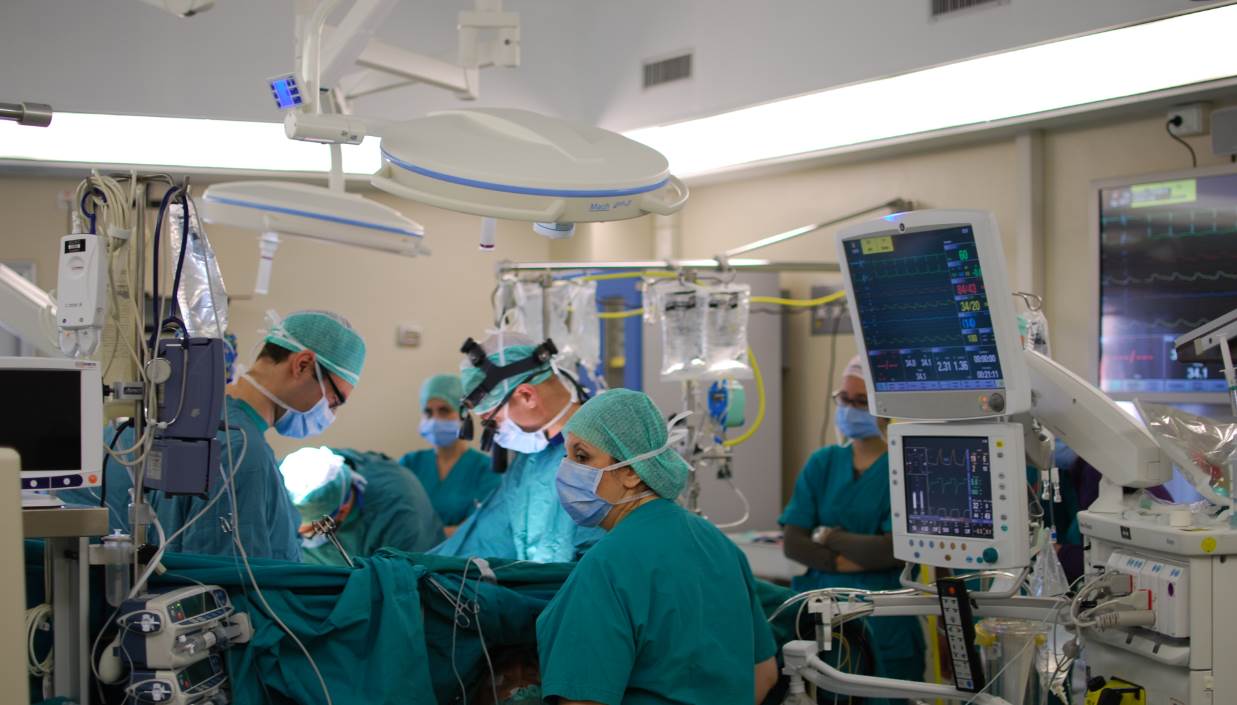
The public sees a single surgeon, but a safe operation depends on an anesthesiologist, scrub and circulating nurses, assistants, technicians, pathologists and recovery staff. The WHO Surgical Safety Checklist formalized a shared pause before incision: confirm identity, site, procedure, antibiotics and anticipated hazards. Surgeons set the tempo, but they must make it possible for any team member to speak when something is wrong. Afterward, the work continues in rounds, calls about fever or pain, pathology review and difficult conversations with families. The surgeon remains the named decision-maker, but operative success is collective coordination under pressure.
Practice after the operation
Surgery's feedback loop is unusually concrete. A wound heals or becomes infected; an anastomosis holds or leaks; a patient returns to eating, walking or breathing—or does not. Morbidity-and-mortality conferences turn these outcomes into disciplined review rather than private shame, asking where the plan, system or judgment could improve. Residents learn through graduated responsibility, simulation and supervised cases, not the caricature of simply watching once and doing once. Newer work includes minimally invasive platforms, image guidance and AI-supported planning, but it also includes knowing when not to use them. The craft matures through honest outcome review as much as through manual repetition.
How the work branches
Five common shapes of the same title — specialty, setting or career path.
Hospitals and emergency services worldwide
General surgeon
Handles abdominal disease, soft-tissue problems, trauma and the broad operative foundation from which many subspecialties branch.
Specialist heart and chest centers
Cardiothoracic surgeon
Operates on the heart, lungs and major chest vessels, often alongside perfusionists and intensive-care teams.
Trauma units, elective joint centers and sports clinics
Orthopedic surgeon
Repairs bones, joints, ligaments and deformity; practice ranges from fracture call to joint replacement.
Tertiary hospitals
Neurosurgeon
Treats brain, spine and peripheral-nerve disease where millimeters can change speech, movement or sensation.
District hospitals and crisis settings
Rural or humanitarian surgeon
Works with limited imaging, blood supply and specialist backup, requiring breadth, triage skill and careful referral judgment.
How it reads by country
Same craft, different gatekeeping, status and daily texture — rewritten for readers in each language.
Match, residency and privileges
US surgeons enter through medical school, the NRMP Match and a long residency, often followed by fellowship. Daily life is shaped by hospital credentialing, insurance authorization, operative blocks and malpractice exposure; board certification is practically expected for privileges.
Tertiary-center intensity
In South Korea, surgery is concentrated in large teaching hospitals where specialist hierarchy, high patient throughput and after-hours availability shape status. The medical license is national, while hospital appointment and training networks strongly influence the path into a department.
Specialist certification and team hierarchy
Japanese surgeons qualify through medical school, the national examination and hospital training, with Japan Surgical Society specialist certification marking progression. University-hospital affiliations, detailed consent and long service hours give daily practice a strongly team-based texture.
Approbation to Facharzt
Germany gates practice through Approbation, then structured Weiterbildung toward Facharzt status. Hospital surgeons work inside tariff-based teams with formal on-call duties, while Oberarzt and Chefarzt titles still carry visible authority in the operating hierarchy.
The consultant pathway
UK surgeons progress through foundation training, core training, MRCS and specialty posts before consultant appointment. NHS lists, multidisciplinary meetings and waiting-time pressure structure the day; the historic convention of calling qualified surgeons Mr or Ms survives.
A regional referral hub
Singapore combines tightly regulated specialist accreditation with public-hospital training and a substantial private sector. Surgeons manage local patients and complex regional referrals, with multilingual consent, efficiency and public-private career choices shaping daily work.
From the archive
Commons CC/PD images self-hosted for this profession.
Why attitude matters here
A surgeon's technical skill sets the ceiling on what an operation can achieve, but attitude sets the floor: the discipline to slow down, ask for help, and tell the truth about a complication is what keeps a bad day from becoming a fatal one.
Irreversibility removes the safety net
Once tissue is cut, there is no undo command. A surgeon who opens a routine gallbladder and finds unexpected cancer has seconds to decide whether to press on, change technique or call for help. Technical skill built the plan; attitude toward one's own limits, exercised in that exact moment, decides whether the patient leaves the table intact. Confidence without humility kills people who trusted a plan made before the anatomy was seen.
A team only works if someone can interrupt it
The WHO Surgical Safety Checklist exists because operating rooms used to run on unquestioned hierarchy, where a nurse who noticed the wrong side marked could still stay silent. A surgeon's posture toward being challenged determines whether the checklist is theater or protection: if a resident learns speaking up gets them dismissed, the next near-miss goes unspoken. The team's skill is worthless if its senior member made correction feel dangerous.
Fatigue does not lower the stakes for the patient
A patient on the table at hour fourteen of a surgeon's shift does not get a discount on precision because the surgeon is tired. Judgment degrades with fatigue long before hands do, which is why the honest habit of self-monitoring, handing off when impaired, and refusing to operate on ego rather than readiness is a professional skill in its own right, distinct from raw technical ability.
Stances that hold up under pressure
Five concrete postures the work rewards, not slogans.
Sterile discipline under time pressure
Maintaining scrubbed technique exactly, including on the case running late for the next patient, rather than treating protocol as optional once trust has been earned. Infection control fails quietly and shows up days later, so the discipline has to hold when nobody is watching as strictly as when an attending is.
Owning a complication out loud
Presenting one's own bad outcome at a morbidity-and-mortality conference in enough honest detail that colleagues can learn from it, rather than framing it as unavoidable. Surgical cultures that punish this kind of disclosure end up repeating the same preventable errors under different names.
Calling for help before it is obvious you need it
Requesting a senior colleague, a second opinion or an intraoperative consult while there is still time to change course, instead of waiting until the situation has degraded past the point of a clean rescue. This runs directly against the instinct to appear capable alone.
Treating consent as a real conversation
Spending the extra minutes explaining alternatives, likely complications and what happens if the plan does not work, in language the patient actually understands, rather than presenting a signature line as a formality to clear before the real work starts.
Re-checking one's own work
Counting instruments and sponges, confirming the correct side and level again immediately before incision, and re-reading imaging personally rather than trusting a summarized report, even after a thousand uneventful cases have made the check feel redundant.
Moments that reveal it
Situations that separate résumé language from how someone actually practices.
The 2 a.m. page about a feverish post-op patient
Nobody is scoring how quickly a surgeon returns that call or how carefully they reason through it instead of ordering a reflexive antibiotic and going back to sleep. Whether the workup is genuinely thought through, at the hour when it is least convenient, is closer to the real measure of the job than anything said in an interview.
A routine case that turns out not to be routine
Opening for a scheduled procedure and finding anatomy, cancer or damage the imaging did not show forces an immediate choice between the safe, familiar plan and the harder, honest one. How a surgeon handles that moment, without a colleague present to see it, reveals more than years of case-log numbers.
Presenting your own error at M&M
Standing in front of peers to walk through a complication that traces back to a decision the surgeon made, rather than a framing that shifts responsibility to the patient's anatomy or another department, is a specific, recurring test that résumés and interviews cannot simulate.
A nurse questions the site marking
When a more junior team member raises a doubt right before incision, the surgeon's actual response, not their stated commitment to teamwork, shows whether the checklist culture is real. Waving off the question to keep the schedule on time is the failure mode the checklist was built to catch.
Where "calling" turns harmful
Residency's martyrdom problem
Surgical training built its reputation on endurance: the old "see one, do one, teach one" model and reported 100-hour weeks were treated as proof of dedication, not a safety hazard. The 1984 death of Libby Zion, under exhausted, under-supervised New York residents, forced work-hour limits, but the culture persists where residents underreport hours to protect accreditation, or are told needing sleep means lacking the calling.
The profile
Resists AI92
Pay96
Barrier to entry98
Autonomy62
Demand84
Impact95
How exposed is it to AI?
Very low
A small share of surgical work — some suturing, imaging analysis, routine endoscopic screening and post-operative monitoring — is realistically automatable in the near term. The center of the job, deciding what to do under uncertainty and carrying responsibility for that decision, remains firmly outside what any current robot or AI system can do, or is legally permitted to do.
Do you need to go to medical school to become a surgeon?
Yes, everywhere in the world. Unlike many skilled trades, surgery has no informal apprenticeship route: it requires a full medical degree, followed by several years of supervised surgical residency and often a subspecialty fellowship, before a hospital will credential someone to operate independently. There has been no shortcut, historically or today, since anesthesia and antisepsis made formal training the only safe path.
How long does it take to become a surgeon?
Roughly thirteen to sixteen years after secondary school in most countries: an undergraduate degree, medical school, a surgical residency of five to seven years, and often a one- to three-year fellowship in a subspecialty. Countries with direct-entry medical degrees, like the UK and Australia, shorten the front end but keep a similarly long residency and specialty-training tail.
What is the difference between a surgeon and a physician?
A physician diagnoses and treats disease mainly through medication and non-invasive care; a surgeon treats disease and injury by operating — physically repairing, removing or reconstructing tissue. Every surgeon completes the same foundational medical training as a physician before specializing into operative practice, which is why a fully qualified UK surgeon is addressed as "Mr" or "Ms," not "Dr."
How much do surgeons get paid?
It varies enormously by country and specialty. In the United States, general surgeons averaged around $423,000 in 2023, among the highest-paid professions in the country; in the UK, NHS consultant surgeons earn a basic salary of roughly £105,000 to £140,000, often supplemented by private practice. In many lower- and middle-income countries, salaried surgeon pay is a small fraction of these figures.
What is "the Match" in surgical training?
In the United States, the Match is a national algorithm that pairs medical graduates with residency programs based on both sides' ranked preferences, run by the National Resident Matching Program. Graduates cannot simply apply for and accept a surgical residency job directly; where they train is decided in one coordinated national result released on a single day each March.
Will AI and robots replace surgeons?
Not the core role. Robotic platforms and AI imaging are changing how some tasks get performed — steadier instrument control, better pre-operative planning — but a human surgeon still decides what to do when a patient's real anatomy does not match the scan, and still carries the legal and moral responsibility for that decision. Judgment under uncertainty has no automated substitute yet.
What is the hardest part of becoming a surgeon?
The sheer length and intensity of training: a decade or more of tuition or lost wages, sleep-deprived residency years historically as long as 100-plus hours a week, and a steep learning curve where mistakes involve real patients. Many surgeons describe the psychological weight of responsibility, more than the technical skill itself, as the hardest thing to build tolerance for.
Do all surgeons operate on everything, or do they specialize?
Almost all modern surgeons specialize. After a general surgical foundation, most go on to focus on one region or system — orthopedic, cardiothoracic, neurological, pediatric, transplant — often through an additional fellowship. A single surgeon operating across the entire body, common a century ago, is now rare; specialization has tracked the huge growth in procedure-specific knowledge and technology since Halsted's era.
Embed this ranking
Paste this code into your blog or site — the ranking stays up to date.