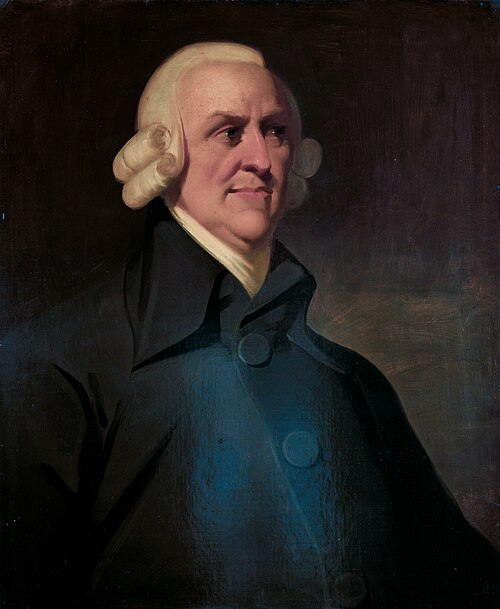
Economist: The scholar of scarcity — from Adam Smith's pin factory to the central-bank decision room, still asked to predict what no model fully captures.
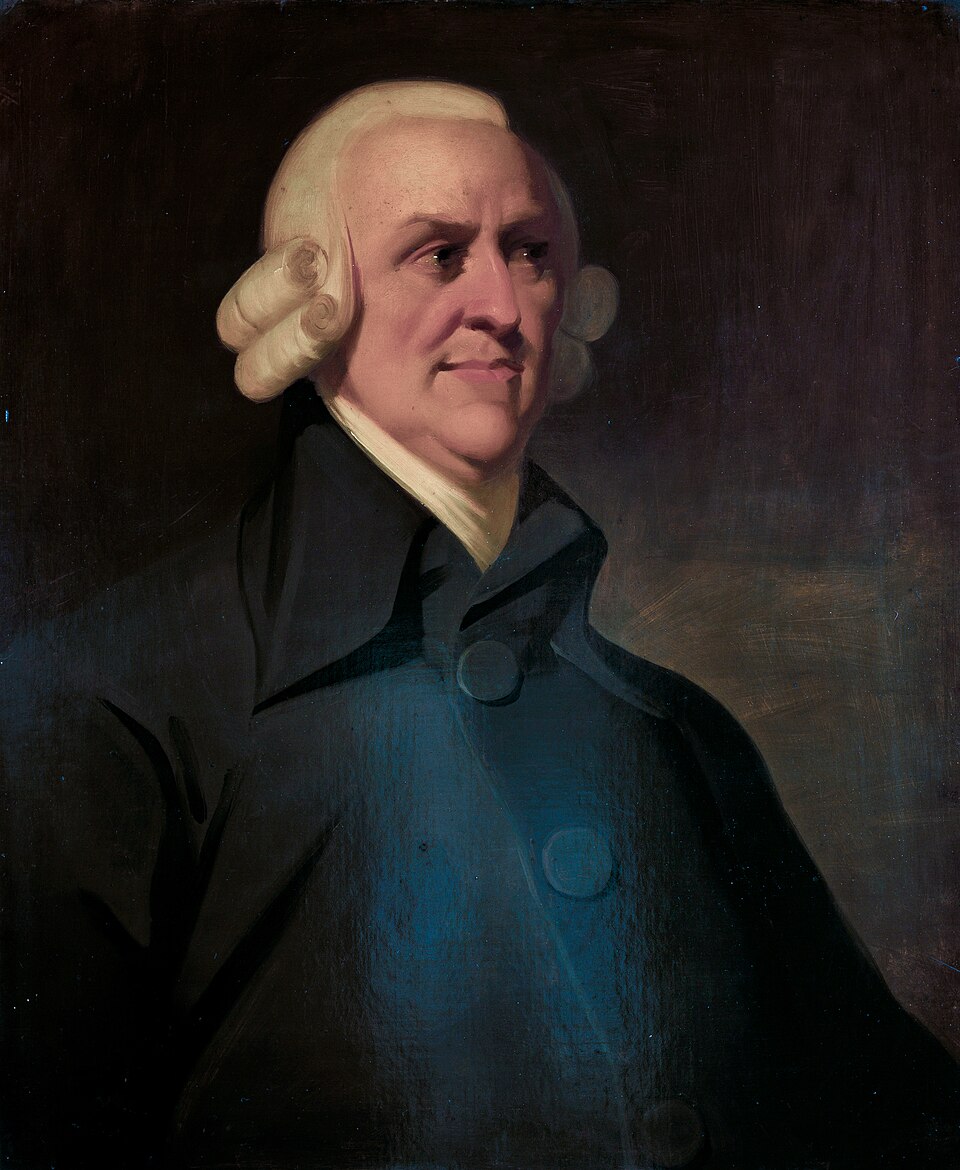
"Economist" descends from the Greek oikonomia — household management — and for most of history that is all it meant: the person who ran an estate. Adam Smith called himself a moral philosopher; Britain's first professor of political economy, Thomas Malthus, was not appointed until 1805, at the East India Company College. The salaried specialist who measures, models and forecasts whole economies is barely a hundred and fifty years old, younger than the railway.
There is no license to practice and no protected title — anyone may be called an economist — yet the working hierarchy is among the most credential-bound of any profession. Research posts at central banks, the IMF or a university effectively require a PhD that takes five to six years after a mathematics-heavy degree, and a single annual hiring ritual, the job market, decides where most new doctorates in the field begin.
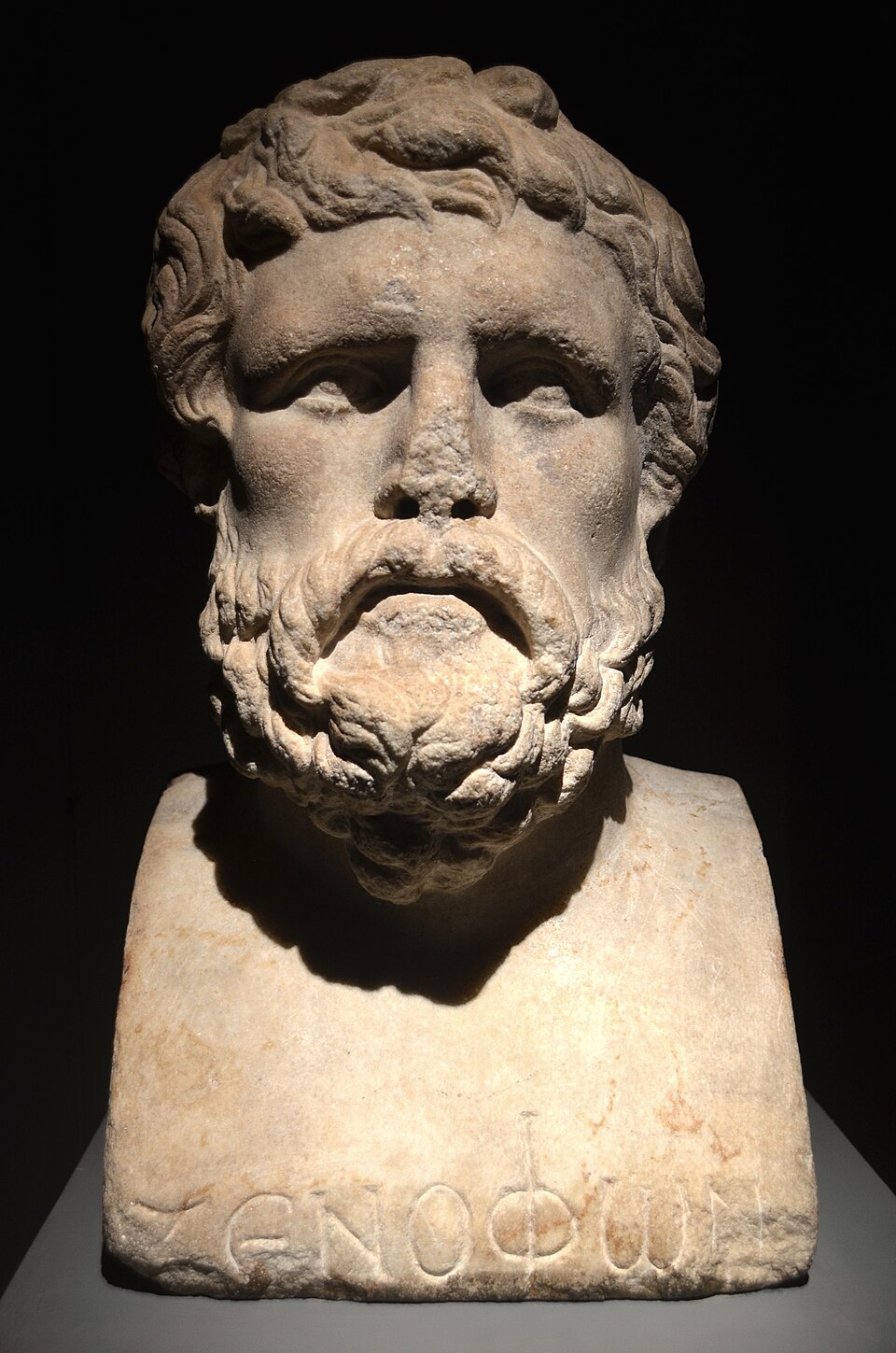
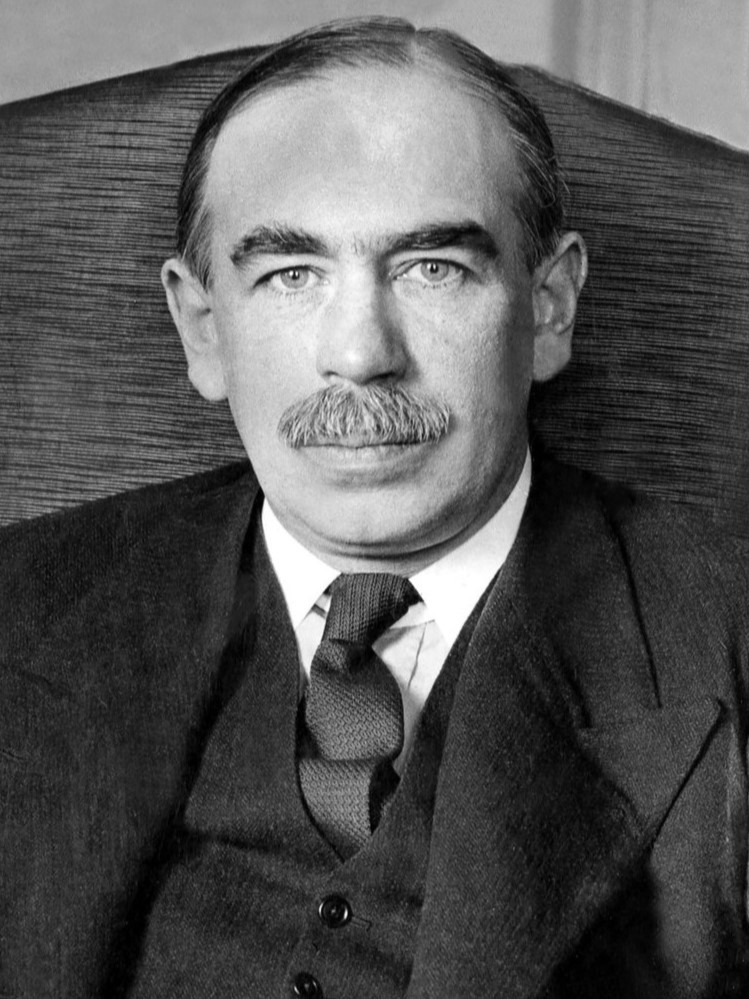
This page follows the trade from Xenophon's estate manual and Ibn Khaldun's Muqaddimah through Smith, Ricardo, Marx and Keynes to the econometricians and randomistas of the present. It covers how people actually enter the field today, what the daily work looks like inside a central bank or a faculty, who reached the top of the profession and how, and how much of the job AI can realistically absorb.
Inside the profession
Economics is the disciplined study of scarcity, incentives and aggregate outcomes — models, data and institutions used to explain and advise on choices that no single equation fully captures.
Models are maps, not the territory
Economists build simplified representations — supply and demand, general equilibrium, search models, DSGE systems — to make trade-offs legible. The craft is knowing which simplification is useful for which question, and stating the assumptions that would break the conclusion. Adam Smith's pin factory and modern central-bank projection rooms share a family resemblance: both try to reason about coordination under constraints. A model that fits last decade's data can still mislead next year's policy if the institution or technology changed. Judgment lives in the gap between elegant math and stubborn facts.
Evidence has its own politics
Empirical work — RCTs, difference-in-differences, instrumental variables, administrative data — promised to discipline ideology with identification. It also created new failure modes: p-hacking, external-validity overclaim and policy clients who want a preferred sign on a coefficient. Good economists pre-register when they can, report robustness honestly and resist treating a local estimate as a universal law. Bad incentives in academia and consulting both reward confident stories. The profession's credibility depends on making uncertainty visible rather than laundering it into a single headline elasticity.
Where economists actually work
Universities and research institutes produce the public face of the field, but large numbers work in central banks, finance ministries, competition authorities, international organizations, think tanks and private firms. The day shifts from papers to briefings, forecast rounds, merger reviews or pricing analytics. Communication becomes as important as technique: a minister or CEO will not read a proof. Specializations — labor, development, IO, macro, health, environmental — share core tools but answer to different data and clients. Career paths diverge early between academic prestige tournaments and applied advisory tracks.
Computation changes the toolkit, not the duty
Machine learning, alternative data and faster computation expand what can be measured and predicted, especially in firms. They do not remove the need to ask whether a correlation is causal, whether a policy transfer is ethical, or whether a forecast's error bands were communicated. Economists who outsource judgment to a black box become expensive dashboards. The enduring work is clarifying trade-offs — growth versus stability, efficiency versus distribution — and owning the advice when outcomes diverge from the slide deck.
How the work branches
Five common shapes of the same title — specialty, setting or career path.
Universities and research institutes
Academic economist
Produces research, teaches methods and competes in a publication-driven prestige market.
Monetary and fiscal institutions
Central-bank or ministry economist
Builds forecasts, policy briefings and scenario analysis under political and market time pressure.
Agencies and advisory firms
Competition / regulatory economist
Applies industrial organization to mergers, market power and rule-making with legal counterparts.
Multilaterals and NGOs
Development or international economist
Evaluates programs, debt and growth diagnostics across countries with sparse or noisy data.
Corporations, banks and consultancies
Industry or finance economist
Turns macro and micro analysis into pricing, strategy, risk and client-facing insight.
How it reads by country
Same craft, different gatekeeping, status and daily texture — rewritten for readers in each language.
United States — PhD tournament and policy pipeline
US economics careers are heavily shaped by PhD placement, NBER networks and a thick market of Fed, Treasury, think-tank and tech/econ roles. The academic ladder is steep; applied paths in antitrust, finance and data-rich firms have expanded alternatives.
South Korea — exam culture and ministry influence
Korean economists often enter through competitive education tracks into ministries, the Bank of Korea, research institutes and conglomerates. Policy advising carries high status; bilingual research and US PhD credentials remain common advancement signals.
Japan — ministry research and corporate economics
Japanese economists work across universities, government research arms and corporate planning units. Consensus policy culture and long institutional memory shape how aggressively models are used in public argument compared with more adversarial Western debates.
Germany — ordoliberal legacy and institute network
Germany's dense network of economic research institutes, Bundesbank analysis and ministry advisory roles sits beside a historically distinctive social-market vocabulary. Economists often move between academia and policy institutes with strong empirical traditions.
United Kingdom — LSE-to-Treasury corridors
UK economics retains strong academic brands and a clear pipeline into the Bank of England, Treasury and competition bodies. Consulting and City macro roles add private demand; public debate culture keeps economists unusually visible in media.
Singapore — planning state and regional analysis
Singapore employs economists heavily in government planning, MAS and regional research hubs. The role often blends open-economy macro, industrial policy analytics and communication to a state that treats economic management as core capacity.
From the archive
Commons CC/PD images self-hosted for this profession.
Why attitude matters here
An economist's methods can support almost any preferred policy story; whether the uncertainty, assumptions and conflicting evidence are shown — or trimmed for the client — is an attitude problem with public consequences.
Decision-makers cannot re-derive the identification strategy in the meeting
Ministers, CEOs and journalists consume conclusions, not appendices. If an economist buries the fact that an estimate depends on a parallel-trends assumption that barely holds, or presents a point forecast without the error band that would change the decision, the audience has little chance to catch it live. Intellectual honesty has to be self-enforced because the buyer of advice is structurally downstream of the technical choices.
Career incentives punish 'it depends' at exactly the wrong moments
Media hits, consulting renewals and academic attention reward clean narratives. An economist who softens caveats to stay quotable, or stretches external validity to keep a grant narrative intact, trains institutions to expect false precision. The profession's value is precisely the disciplined 'it depends' — and that is the phrase easiest to edit out under status pressure.
Models travel into law and money whether or not they deserve to
Merger simulations, damage estimates, inflation forecasts and poverty projections become inputs to court orders and budgets. Treating a fragile calibration as robust because the client needs a number is not a victimless methodological preference. Attitude toward the boundary between useful simplification and courtroom theater decides whether economics clarifies trade-offs or launders ideology.
Stances that hold up under pressure
Five concrete postures the work rewards, not slogans.
Leads with assumptions that would reverse the conclusion
States upfront which modeling or identification assumptions, if false, would flip the policy implication, rather than hiding them in a technical appendix or footnote no principal, journalist or judge will actually read before acting on the headline result.
Reports the result that disappoints the sponsor
Publishes or briefs null, wrong-signed or inconvenient findings with the same care as supportive ones, instead of quiet file-drawer disappearance when a contract, ministry preference or ideological audience wanted a cleaner, more usable sign on the estimate.
Separates personal politics from the estimate in the room
Keeps advocacy labels off empirical claims in official briefings, and explicitly flags when a recommendation is a value judgment about distribution or rights that goes beyond what the data identify, so principals cannot later claim the science required their preferred policy.
Refuses false precision in public forecasts
Presents ranges, scenarios and historical forecast-error bands rather than a single authoritative decimal that implies a certainty the model, the data vintage and the institution's past performance do not support.
Credits data builders and coauthors accurately
Names the statistical agencies, survey teams, research assistants and collaborators who made an estimate possible, resisting lone-genius media framing that erases the infrastructure and labor behind every clean coefficient.
Moments that reveal it
Situations that separate résumé language from how someone actually practices.
A client asks for a single elasticity to put in a press release, and the paper's robustness checks show the estimate is unstable across reasonable specifications.
Does the economist refuse the single-number framing and explain the instability in usable language, or supply the preferred specification because the relationship, the headline and the next contract depend on sounding certain?
A referee or senior colleague suggests dropping a null appendix result that weakens the paper's punchy abstract.
Does the author keep the null visible and accept a quieter paper with a less punchy abstract, or comply to protect journal placement, citation potential and a job-market narrative that needs a clean, surprising finding to travel?
A forecast round is hours from publication and new data arrive that worsen the outlook the institution wanted to project.
Does the team revise the forecast, document the data vintage and communicate the change, or smooth the revision to avoid embarrassing last week's guidance and the principal who already briefed the press?
An opposing expert in litigation uses a method the economist knows is common but, in this market, badly misspecified.
Does the economist attack only the misspecification with evidence and alternative estimates, or overclaim that the entire method family is illegitimate to win the rhetorical round and impress the counsel paying the invoice?
Where "calling" turns harmful
"Public service" and prestige used to normalize underpaid research labor
Economics wraps rigor and social contribution around underpaid RAships, unpaid visiting labor and graduate overwork framed as scientific vocation. Think tanks and some multilaterals use mission talk to justify precarious contracts and free exploratory memos, converting intellectual calling into a subsidy for institutions that could price the labor honestly.
The profile
Resists AI62
Pay74
Barrier to entry78
Autonomy64
Demand68
Impact85
How exposed is it to AI?
Moderate
A substantial share of the working day — data preparation, routine estimation, chart production, literature review, first-draft prose, short-horizon forecasting — is already automatable, and much of it is already automated in practice. What resists is the core a client actually pays for: framing questions, judging causal claims, integrating models with institutional reality, and owning the advice. Roughly a third of the job is machine work now; the accountable judgment on top is not.
Three broad tracks share the title: academics who research and teach, policy economists at central banks, ministries and bodies like the IMF, and private-sector economists at banks, consultancies and tech firms. The daily work is similar everywhere — cleaning data, estimating models, writing, and explaining the results to people who must act on them.
Do you need a PhD to be an economist?
Not legally — the title is unprotected everywhere. In practice, research roles at universities, central banks and international institutions are close to PhD-only, while ministries, commercial banks and consultancies hire at master's level, and the UK's Government Economic Service recruits straight from a bachelor's degree. The PhD is a union card for the research track, not the profession.
How much do economists earn?
The US median was about $115,000 in 2023 according to the Bureau of Labor Statistics, with Federal Reserve and IMF economists above it and chief economists at major banks earning $500,000 or more. Pay is far lower in nominal terms elsewhere: a government economist in India or Brazil earns a small fraction of US figures for identical work.
Is there really a Nobel Prize in economics?
Strictly, no — it is the Sveriges Riksbank Prize in Economic Sciences in Memory of Alfred Nobel, endowed by Sweden's central bank in 1968 and first awarded in 1969, sixty-eight years after the original prizes. It is presented at the same Stockholm ceremony with the same prize money, which is why almost everyone, including economists, just says Nobel.
Why did economists fail to predict the 2008 crisis?
When Queen Elizabeth II visited the London School of Economics in November 2008 she asked exactly that. The British Academy's written answer blamed "a failure of the collective imagination of many bright people": standard macroeconomic models simply left the financial system out. The episode forced banking and credit back into mainstream models, a rebuild still under way.
What is the difference between an economist and a financial analyst?
A financial analyst values specific companies and securities to guide investment decisions, typically credentialed through the CFA program. An economist studies how whole systems behave — inflation, employment, trade, poverty — and asks causal questions about them. The training differs accordingly: analysts learn accounting and valuation, economists learn econometrics and modelling, usually through a master's or PhD.
Will AI replace economists?
It is already absorbing real parts of the job — data cleaning, coding, literature search, first drafts and routine forecasting. What it has not touched is choosing the question worth answering, judging whether an estimated effect is truly causal, and giving advice a minister or governor will stake a decision on. The profession is shifting toward those tasks, not shrinking evenly.
How much mathematics does economics require?
More than most students expect. An undergraduate degree needs calculus and statistics; a research-track PhD effectively requires multivariable calculus, linear algebra, probability theory and usually real analysis before admission. Graduate admissions committees treat the mathematics record as the main signal, which is why many successful applicants majored in maths or took a mathematics-heavy joint degree.
Embed this ranking
Paste this code into your blog or site — the ranking stays up to date.