The architect of play — the person who decides what a game asks of its players, from Senet's ancient board to Tetris and today's three-billion-player industry.
Also called: Video game designer · Systems designer
Game Designer: The architect of play — the person who decides what a game asks of its players, from Senet's ancient board to Tetris and today's three-billion-player industry.
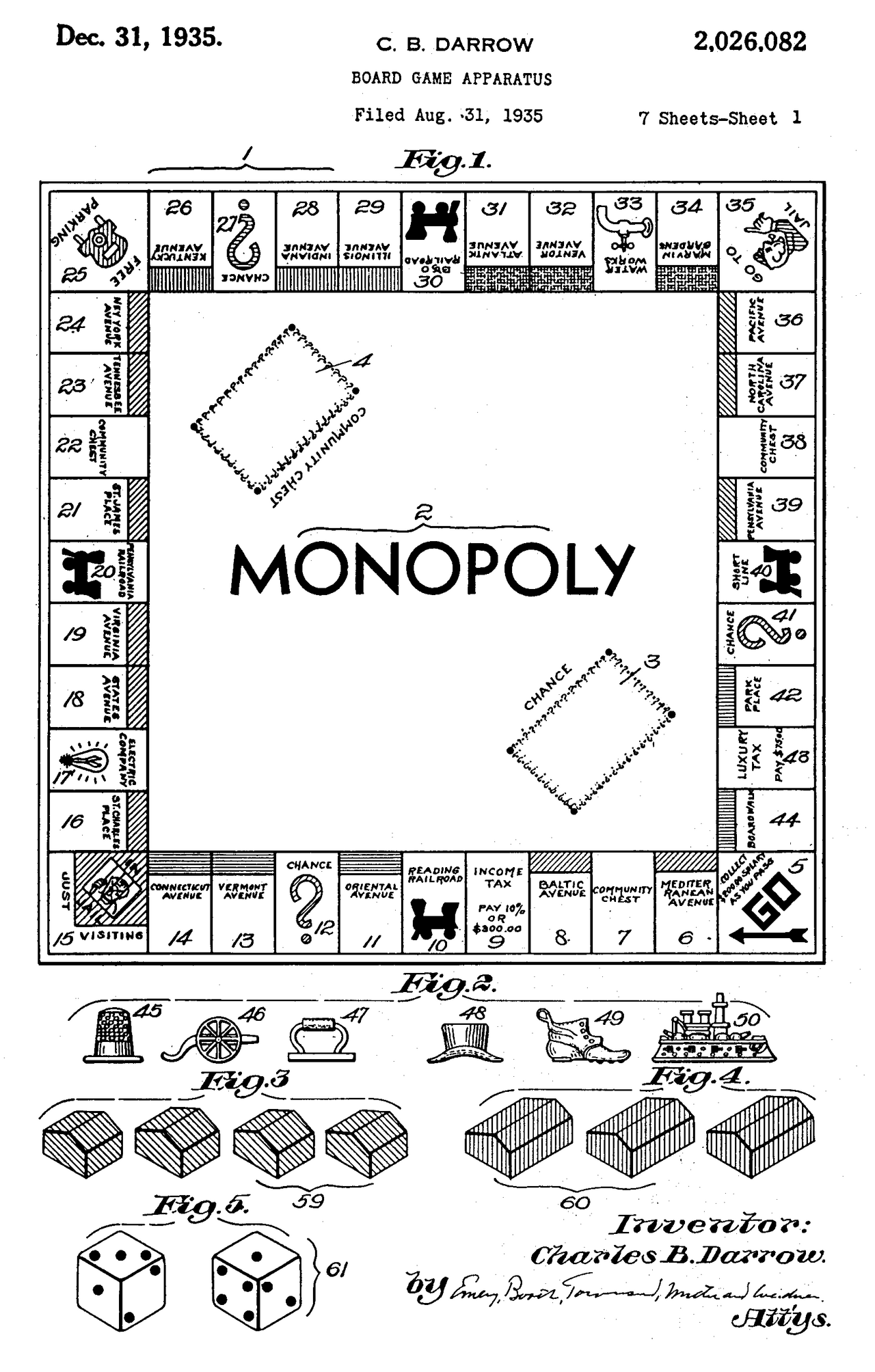
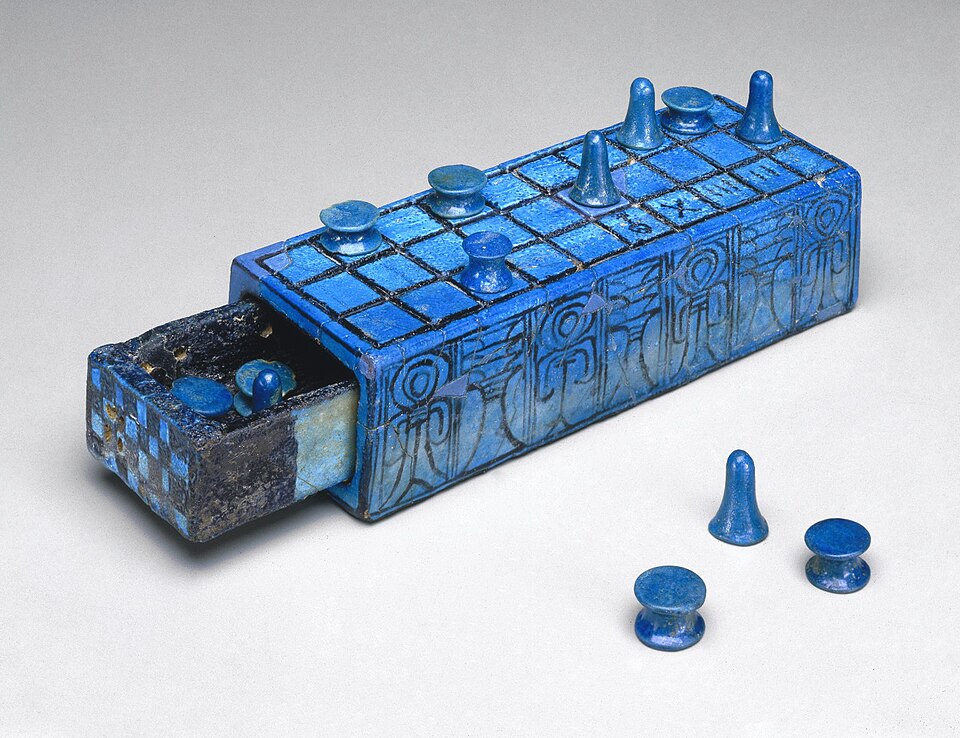
The job title is younger than the work by five thousand years. Someone designed Senet, the board game buried with Egyptian pharaohs, and someone designed the Royal Game of Ur — but no name survives, because for most of history games had makers and no authors. Even in 1935, Parker Brothers paid Lizzie Magie a flat $500 for the patent behind Monopoly while the man who copied her design became a millionaire. Authorship came late to play.
A game designer decides what a game asks of its players: the rules, the goals, the difficulty curve, the economy, the shape of a level, the meaning of a choice. It is a distinct craft from programming or art — designers specify and tune the experience that programmers and artists then build. The profession only acquired its own degrees in 1997, when Abertay University in Scotland launched the world's first, and it still has no license anywhere: a portfolio of finished, playable work is the only credential that counts.
This page follows the craft from Prussian war-gaming and Magie's Landlord's Game through the oscilloscope tennis of Brookhaven in 1958, the uncredited Atari years, Tetris behind the Iron Curtain and the 27 designers who met in Chris Crawford's living room in 1988. It covers how people actually break in today, what a design day looks like, who reached the top of the profession, and how much of the work generative AI can realistically absorb.
Inside the profession
Game design is the craft of deciding what a player is asked to do, notice and feel — rules, goals, feedback and failure states arranged so that the system remains playable under real attention, not just elegant on a whiteboard.
Systems before spectacle
A game designer spends more time on loops, incentives and failure than on trailers. The work is specifying what happens when a player presses a button, misses a jump, spends a currency or waits too long — then watching whether those consequences teach, punish or bore. Paper prototypes, spreadsheets and grey-box levels often matter more than final art. Good design survives a bad art pass; pretty presentation rarely saves a broken loop. The craft is closer to experimental psychology and industrial design than to writing a story outline, even when narrative is the public face of the product.
Playtesting is the real author
Designers propose systems; players rewrite them by misunderstanding tutorials, finding exploits and quitting at friction the team never felt. Structured playtests, telemetry and postmortems turn those surprises into revisions. The hard skill is distinguishing a taste complaint from a comprehension failure, and resisting the urge to defend a clever mechanic that only the design team enjoys. Titles from Tetris to Animal Crossing succeed because iteration closed the gap between intended and experienced play. Ego attached to a first pitch is expensive; curiosity about where players get stuck is the durable competence.
Scope, platforms and live ops
Console, mobile, PC, board and free-to-play live-service games demand different pacing, monetization ethics and post-launch labor. A designer on a live title keeps tuning drop rates, events and retention after ship; a designer on a boxed single-player game fights scope against a fixed content budget. Platforms constrain input, session length and discovery. The same person may write a combat GDD one year and a seasonal economy spreadsheet the next. Specialization exists — systems, levels, narrative, UX — but shipping still requires arguing priorities with producers, engineers and artists under a calendar that does not care about elegance.
Tools change; judgment stays scarce
Engines, AI assistants and rapid prototyping shorten the path from idea to playable build, which raises the volume of mediocre systems that look finished too soon. What still does not automate well is deciding whether a mechanic belongs in the game, whether a tutorial teaches or lectures, and whether a monetization pattern respects player time. Studios hire for portfolio evidence of shipped or deeply playtested work, not for slogans about creativity. The profession's public mythology is auteur vision; its daily practice is documentation, negotiation and the willingness to cut a favorite feature when data and players disagree.
How the work branches
Five common shapes of the same title — specialty, setting or career path.
Studios and live-service teams
Systems designer
Owns combat, economy, progression and rule interactions; writes specs engineers can implement and designers can balance.
Action, adventure and multiplayer titles
Level or encounter designer
Shapes space, pacing and challenge so that geometry and AI teach the player without a lecture.
Story-driven and RPG productions
Narrative designer
Wires dialogue, quests and branching so story beats survive player choice and production cuts.
Mobile and multiplatform products
UX / player-experience designer
Designs onboarding, menus and feedback so intention is readable on first contact.
Small teams and self-published titles
Indie or solo designer-developer
Carries design, scope control and often code or art; trades staff resources for ownership of the full loop.
How it reads by country
Same craft, different gatekeeping, status and daily texture — rewritten for readers in each language.
United States — AAA clusters and indie coasts
US design careers concentrate around major studio hubs and a large indie/mobile sector. Portfolios, shipped credits and networking often matter more than degrees; crunch culture and live-service staffing remain industry controversies that shape who stays.
South Korea — MMOs, mobile and PC bang culture
Korean studios built deep expertise in online economies, competitive balance and mobile live ops. Designers work inside highly metric-driven pipelines; global hits and domestic PC/mobile markets reward systems thinking and rapid event cadence.
Japan — console craft and genre lineages
Japanese design traditions in action, RPG and puzzle games still influence world practice. Studio hierarchies, long iteration on feel and a strong domestic console/handheld history shape how designers argue for 'game feel' versus western live-ops metrics.
Germany — mid-size studios and serious games
Germany hosts established mid-size developers, board-game crossovers and applied/serious-games work. Designers often navigate EU labor norms that constrain crunch rhetoric, alongside strong technical and simulation traditions in strategy titles.
United Kingdom — AAA, education and outsourcing hubs
The UK remains a major development center with strong university game courses and large studio campuses. Designers move between AAA, mobile and outsourcing support roles; BAFTA and industry meetups form part of professional visibility.
Singapore — regional studios and SEA markets
Singapore hosts regional offices, publishers and smaller studios targeting Southeast Asian and global mobile audiences. Designers often work across languages and markets, with government creative-industry support coexisting with competitive freelance pipelines.
From the archive
Commons CC/PD images self-hosted for this profession.
Why attitude matters here
Game design talent shows in clever systems; whether those systems respect player time, honesty of feedback and the people who will live with the game after launch depends on attitudes no portfolio screenshot can prove.
Players cannot audit the designer's real intentions
A player experiences only the finished loop — not the discarded tutorials, the knowingly confusing monetization or the feature cut for schedule rather than clarity. If a designer papers over a broken onboarding with dark-pattern urgency, or ships a pay wall disguised as skill gating, the audience has no design document to check against. The ethical and craft judgment has to be exercised before ship, because the market only sees symptoms.
Live metrics reward the wrong kind of cleverness
Retention curves, ARPDAU and conversion funnels can make a manipulative economy look like a design success for a quarter. A designer who treats every engagement spike as validation, rather than asking whether the spike came from fair challenge or from anxiety and sunk-cost traps, will optimize the product into something players resent. Attitude toward what counts as a good number decides whether the craft serves play or extracts attention.
Crunch and credit make silence expensive for juniors
Design is collaborative and hierarchical: a junior who knows a mechanic is unreadable may still ship it if speaking up risks blame for slipping the milestone. Whether someone keeps raising the comprehension failure after being waved off, documents the risk and fights for a playtest — or protects their standing by staying quiet — is not visible on a résumé. Teams that punish candor produce games nobody on the team privately enjoys.
Stances that hold up under pressure
Five concrete postures the work rewards, not slogans.
Cuts a favorite mechanic when playtests show confusion
Removes or redesigns a system the designer personally loves once evidence shows players do not understand it, rather than stacking another tutorial screen, tooltip or forced walkthrough to defend the original idea against the people who actually have to play it.
Separates engagement from exploitation in economy design
Refuses to treat every retention lever as ethically equal, and argues internally when a proposed monetization pattern depends on misleading scarcity, unclear odds, pay-to-skip punishment or anxiety loops that extract money without delivering commensurate play value.
Writes specs engineers can implement without mind-reading
Documents edge cases, failure states, soft locks and acceptance criteria clearly enough that implementation does not invent player-facing surprises the designer never intended, then stays available when engineering finds a hole the GDD papered over.
Owns the grey-box before arguing about polish
Insists on playable, ugly prototypes that test the core loop early, rather than spending scarce preproduction budget on presentation, trailer moments or UI skin that hides an unresolved system and makes cutting it politically harder later.
Credits collaborators honestly in public talks
Names the systems, level, narrative and UX partners who made a shipped moment possible in postmortems and conference talks, instead of letting marketing or auteur myth-making compress a team's contested work into a single visionary story.
Moments that reveal it
Situations that separate résumé language from how someone actually practices.
Telemetry shows a monetization tweak raises revenue but also spikes refund requests and forum accusations of unfairness within days of ship.
Does the designer push to roll back, disclose odds more clearly or redesign the offer with product and legal, or defend the change because the quarterly target finally moved and leadership is celebrating a chart players experience as a trap?
A producer asks to ship an unfinished tutorial because marketing has already locked a launch window and 'players will figure it out from YouTube.'
Does the designer escalate the comprehension risk with concrete playtest evidence and a scoped alternative, or accept the date and privately plan a day-one patch that may never receive priority once live-ops events crowd the backlog?
A junior designer's critique of a broken combat feel is dismissed in a meeting as lack of vision, even though the room quietly agrees the feel is off.
Does a senior designer reopen the critique with recorded playtests and protect the junior's standing, or let the silence stand to keep milestone mood intact and teach everyone that candor is career-limiting on this team?
A clever exploit appears that high-skill players love and that wrecks balance for everyone else.
Does the designer patch for the whole audience with a clear patch note, or leave the exploit live because content creators are driving free marketing off the broken state and community managers fear the backlash from the loudest cohort?
Where "calling" turns harmful
"Passion for games" as a blank check for unpaid overtime
Studios recruit on calling language — dream job, love of games, shipping together — then treat crunch weeks as proof of commitment rather than planning failure. Portfolio gatekeeping makes it easy to imply that anyone who asks about overtime, credits or pay for trial projects is not passionate enough, normalizing death-march schedules and credit erasure for juniors.
The profile
Resists AI65
Pay62
Barrier to entry45
Autonomy52
Demand55
Impact58
How exposed is it to AI?
Moderate
A substantial share of design production — bulk dialogue, level first passes, balance simulation, documentation — is realistically automatable, and mid-2020s layoffs show studios acting on that leverage. What resists is the judgment layer: inventing loops nobody has played, reading playtests, and holding a vision across a team for years. The designer's output shifts from content toward decisions about machine-drafted content.
A designer decides how a game works: its rules, goals, levels, economy, difficulty and moment-to-moment feel. The daily work is writing specifications, building rough prototypes, running playtests and tuning numbers in spreadsheets and the game engine. Designers rarely write production code or final art — they define the experience that programmers and artists then build, and they own whether it is actually fun.
Do you need a degree to become a game designer?
No country licenses game designers, and studios hire on portfolios, design tests and shipped credits rather than diplomas. Dedicated degrees have existed only since Abertay University launched the world's first in 1997; they help with structure, teammates and recruiting showcases, but plenty of working designers studied something else entirely — or nothing — and broke in through mods, jams or QA.
How much do game designers earn?
Industry surveys in 2024 put mid-level designers in the United States at roughly $90,000–130,000 a year, with juniors nearer $60,000 and design directors at large studios above $200,000. Pay in the UK, Germany and Japan is substantially lower in nominal terms, and indie income is famously unpredictable — from nothing at all to Stardew Valley, built by one person, selling over 30 million copies.
How do I get a first job with no experience?
Finish something small and playable — a game jam entry, a mod, a one-page board game — because studios read finished work, not idea documents. The classic entry routes are junior designer roles won through a studio's timed design test, QA testing with visible design sense, or a mod or indie release that becomes its own credential, as Counter-Strike did for its two creators in 1999.
What is the difference between a game designer and a game developer?
"Developer" covers everyone who makes games — programmers, artists, producers, audio staff and designers together, or the studio as a whole. The designer is the specific discipline responsible for rules and experience. On a large production the design department itself splits further: systems designers, level designers, narrative designers, economy designers, each owning a different layer of how the game behaves.
Is crunch still a problem in the games industry?
Historically, yes, and openly: the anonymous "EA Spouse" blog post of 2004 and Rockstar's admitted 100-hour weeks on Red Dead Redemption 2 in 2018 both became industry scandals. Pressure near ship dates remains real, but the culture is shifting — several studios now publicize no-crunch policies, and US game workers formed their first wall-to-wall studio unions in 2023.
Will AI replace game designers?
AI already drafts dialogue barks, balances numbers through simulated play and generates asset variations — Ubisoft unveiled its Ghostwriter tool for exactly this in 2023. But deciding which of a hundred drafts is fun, reading what playtesters mean rather than what they say, and inventing a loop nobody has played before remain human judgments. Procedural generation has existed since the 1980s and never removed the designer.
Can you make a living designing board games?
A few dozen people worldwide do it full time; Reiner Knizia, with more than 700 published titles, is the most prolific. Most tabletop designers license games to publishers for royalties of only a few percent of the wholesale price, so a modest hit earns hobby money, not a salary. Crowdfunding has widened the path since the 2010s, but self-publishing shifts all the financial risk onto the designer.
Embed this ranking
Paste this code into your blog or site — the ranking stays up to date.