The scholar paid to profess a subject in public — twenty-five centuries of teaching and discovery, from Plato's grove to the tenure track and the AI tutor.
Also called: University professor · Academic · Faculty member
Professor: The scholar paid to profess a subject in public — twenty-five centuries of teaching and discovery, from Plato's grove to the tenure track and the AI tutor.
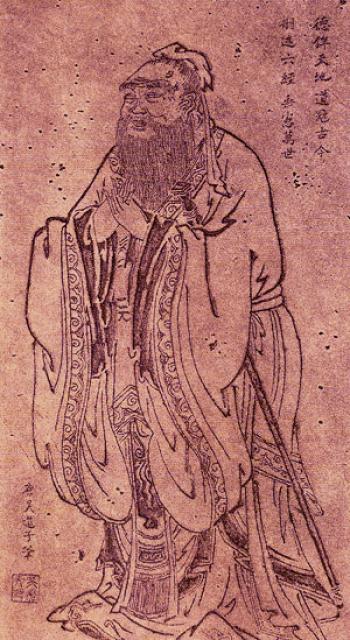
The title comes from the Latin profiteri, "to declare publicly": a professor is someone who professes a subject, openly, for a living. The role is older than the university itself — Plato taught in an Athenian grove for four decades, Confucius accepted any student who could offer a bundle of dried meat, and the scholars of ninth-century Fez and eleventh-century Bologna organized teaching into institutions that still operate today. The modern professor, half teacher and half researcher, is a much younger invention, dating to Berlin in 1810.
There is one standard route in almost everywhere: a doctorate, then years of temporary research posts, then a permanent academic appointment that most doctorate-holders never obtain. The training is long not because the knowledge is dangerous, as in medicine, but because the job demands something rarer — producing knowledge that did not exist before, and defending it in public before rivals who are paid to find its flaws. Selection happens continuously, and mostly through publication.
This page follows the profession from the Academy and the medieval masters' guilds through Humboldt's research university and the postwar boom that multiplied faculties worldwide. It covers how people actually become professors today in different countries, what the working week really contains beyond the lecture, who reached the top of the craft across twenty-five centuries, and how much of the job artificial intelligence can realistically absorb.
Inside the profession
A professor's job joins teaching, research and institutional service, but the balance—and the security—changes radically by discipline, country and contract.
What the day actually is
Teaching is only one visible responsibility. Professors prepare courses, supervise students, conduct or direct research, review manuscripts, seek funding, sit on committees and answer a steady stream of institutional requests. A lecture can be the smallest part of a week; office hours, grant deadlines, peer review and departmental governance often consume more hours than classroom time itself.
The research economy
In many fields, promotion depends on publications, grants, collaborators and reputation among peers who will never see a teaching evaluation. The rules differ between laboratory science, humanities, professional schools and teaching-focused colleges, yet evaluation often rewards work that takes years to mature and is hard to schedule around term calendars. Managing a lab, archive or field project can become a full managerial job layered on scholarship.
The long gate
Doctoral study and postdoctoral work are common routes, but neither promises a permanent academic post. Hiring is competitive and geographically constrained; many skilled scholars work on temporary contracts or build careers in industry, government and public scholarship after years of preparation. The gate is not only intellectual quality—it is timing, fit, funding climate and willingness to relocate for scarce openings.
What is changing
AI affects writing, coding, assessment and research workflows, raising hard questions about integrity, authorship and what students must still learn to do unaided. Universities also face funding pressure, changing student expectations and demands to make research useful beyond specialist journals. Professors increasingly navigate open science, public communication and institutional metrics alongside the older craft of teaching and inquiry.
How the work branches
Five common shapes of the same title — specialty, setting or career path.
Research universities
Research professor
Leads scholarship, grants and graduate supervision, with teaching often tied to a specialized field.
Liberal arts and universities
Teaching-focused professor
Centers curriculum, student learning and departmental service while maintaining scholarly or professional practice.
Medicine, law and practice fields
Clinical or professional professor
Combines teaching with active professional work, translating current practice into education.
Funded research labs
STEM laboratory principal investigator
Runs a team, equipment and grant portfolio; management and fundraising can exceed bench work.
Think tanks and media-facing research
Public scholar or policy academic
Connects research to government, community partners and wider audiences alongside university duties.
How it reads by country
Same craft, different gatekeeping, status and daily texture — rewritten for readers in each language.
United States — tenure tracks and grant pressure
Tenure can offer meaningful protection after a demanding probationary period, but many courses are taught by contingent faculty. Research universities often tie advancement to grants, publications and graduate supervision.
South Korea — prestige, publication and competition
University posts are highly competitive and shaped by institutional reputation, research metrics and student demographics. International publication and overseas networks can carry substantial weight.
Japan — laboratories and institutional hierarchy
Research groups, seniority and university affiliation structure many careers. Professors may hold significant responsibility for laboratories, students and long-term collaborative networks.
Germany — habilitation routes and research institutes
Universities coexist with major non-university research institutes, creating multiple academic paths. Professorial appointments are prestigious and often come after long, selective qualification routes.
United Kingdom — teaching, REF and fixed-term work
Research assessment and grant funding shape institutional priorities. Teaching loads, student fees and fixed-term early-career roles make the job's conditions vary sharply by institution and discipline.
Singapore — global hiring and strategic research
Universities recruit internationally and link research to national economic priorities. Competitive grants, high teaching standards and regional networks shape both opportunity and pressure.
From the archive
Commons CC/PD images self-hosted for this profession.
Why attitude matters here
A professor is paid to produce knowledge that does not yet exist and to teach a room that no one else is watching, on a reward cycle measured in years rather than days. Both tasks depend on an internally generated standard, because the external checks that keep most jobs honest arrive too slowly or not at all.
Peer review and tenure reward honesty years after the work is done
A dishonest or sloppy result can sit unchallenged in the literature for years before replication or scrutiny catches it, and tenure decisions are made on a multi-year cycle far removed from the daily choice to run an inconvenient analysis or report a null result. The professor who keeps standards high on an ordinary Tuesday, with no one checking, is the only reason the eventual review means anything.
Nobody observes most of the teaching that happens
Outside of occasional peer observation, a lecture happens between a professor and a room of students with no other adult present, and whether a struggling student gets real office-hours attention or a form-letter brush-off is almost never reviewed. Teaching quality here is close to entirely self-enforced, making it one of the clearest tests of whether a professor cares about students or only about the research that gets evaluated.
Original work requires tolerating being publicly wrong
Producing genuinely new knowledge means proposing ideas that other experts, paid specifically to find flaws, are likely to challenge — sometimes publicly, sometimes for years. A professor who cannot tolerate that exposure either stops attempting original work or starts defending flawed positions past the point the evidence supports them, both of which quietly corrode the research record.
Stances that hold up under pressure
Five concrete postures the work rewards, not slogans.
Gives the struggling student real office-hours time
Spends actual attention on a student who is falling behind, working through the specific point of confusion, rather than sending a generic email pointing to resources, even though the form-letter response is far less visible to anyone evaluating the professor's time.
Reports a null result honestly
Publishes or discloses a study that failed to confirm the hoped-for hypothesis rather than shelving it or reframing the data until it supports a more publishable conclusion, accepting the smaller publication credit that comes with an honest negative finding.
Reviews manuscripts as if the work mattered
Reads a peer-review assignment closely enough to catch real errors and give useful feedback, instead of rubber-stamping a paper from a known colleague or a prestigious lab to clear an unpaid obligation quickly.
Mentors toward the student's goals, not a replica of themselves
Helps a graduate student pursue the career path that actually suits them — industry, teaching-focused academia, policy — rather than pushing every student toward the same research-university track the mentor themselves followed.
Corrects their own published claim when evidence changes
Issues a correction or publicly revises an earlier finding when new evidence undermines it, rather than letting a wrong claim stand uncorrected in the literature because retracting it feels like a personal or reputational loss.
Moments that reveal it
Situations that separate résumé language from how someone actually practices.
A graduate student's data does not support the hoped-for hypothesis
Deciding what actually goes into the paper — the honest null result or a reframed narrative that makes the data look more supportive — happens in private, between advisor and student, long before any outside reviewer ever sees the work.
A borderline student sits just below a scholarship cutoff
Grading a genuinely close case, where a half-point either way changes a real outcome for the student, with no one reviewing the specific judgment call afterward, tests whether the standard applied is the same one used for every other student.
A harder research question offers a weaker publication record
Choosing between an ambitious but slow-to-publish research direction and a series of safer, quicker papers that look better on a CV during a tenure clock reveals whether the professor's stated commitment to real inquiry survives career pressure.
A plagiarism case involves a student the professor favors
Applying an academic-integrity policy consistently is easy in the abstract and hard in the specific case of a talented, well-liked student whose career would be damaged by enforcement — exactly the case that tests whether the standard is real.
Where "calling" turns harmful
"Love of the craft" used to justify adjunct exploitation
Universities rely on the idea that scholars work out of devotion to knowledge to justify stacking teaching loads onto adjunct faculty for near-poverty pay with no security, while unpaid committee work lands on junior tenure-track faculty under the same framing. Graduate students are often told that questioning a stipend shows they lack real commitment — a message that discourages organizing even where doctoral unions have improved conditions.
The profile
Resists AI76
Pay58
Barrier to entry90
Autonomy88
Demand48
Impact82
How exposed is it to AI?
Low
Roughly the content-delivery and first-pass-assessment layer of the job is automatable now or soon: recorded and AI-assisted instruction, routine grading, literature triage, administrative reporting. The core — choosing research questions, supervising apprentice researchers, refereeing what enters the canon, and answering for the certification of students — requires accountable expert judgment that no current system can carry. The realistic near-term future is fewer purely teaching roles and more machine leverage per professor, not the disappearance of the chair.
At research universities, almost always: the doctorate is the profession's baseline credential in nearly every country. The main exceptions are professors of practice — distinguished judges, architects, artists or executives appointed to teach their craft — and some conservatoire and fine-arts traditions where a professional reputation substitutes for a doctorate. German-speaking systems historically demanded even more: a second, post-doctoral thesis called the Habilitation.
How long does it take to become a professor?
Typically ten to fifteen years after secondary school: a bachelor's degree of three to four years, a doctorate of four to seven, then two to six years of postdoctoral or fixed-term posts before a first permanent appointment. Tenure or an equivalent permanent status usually arrives in a candidate's mid-to-late thirties, and in German-speaking and some Asian systems often later still.
What is tenure, and why does it matter?
Tenure is an indefinite appointment that can be revoked only for serious cause, designed to protect scholars who publish unpopular findings. The American standard was set by the AAUP's 1940 Statement of Principles, typically after a six-year probation and an up-or-out review. Other systems protect professors differently: German professors are civil servants, while the UK abolished formal tenure in its 1988 Education Reform Act.
What is the difference between assistant, associate and full professor?
In the North American system they are career ranks: assistant professors are on probation for tenure, associate professors have usually just earned it, and full professors have passed a second promotion review. In the UK and much of the Commonwealth, the ladder runs lecturer, senior lecturer, reader, professor — so "professor" there means only the top rank, not any university teacher.
How much do professors earn?
It varies more by country and rank than most people expect. US full professors averaged roughly $150,000–$170,000 in 2024, with Swiss chairs among the world's best paid at over CHF 200,000; UK professors typically earn £75,000–£100,000, and Indian government-university professors around ₹25–35 lakh. At the other pole, US adjuncts teaching per course commonly receive only $3,000–$4,000 per class.
Do professors spend more time teaching or doing research?
It depends entirely on the institution. A research-university post is nominally split roughly 40 percent research, 40 percent teaching and 20 percent service, though grant deadlines routinely bend that. Teaching-focused institutions can assign four or more courses per term, leaving research to evenings. Faculty time-use surveys in several countries consistently report total working weeks of fifty hours or more across both kinds of job.
How hard is it to get a permanent professorship?
Harder than almost any comparison suggests, because doctorates are produced far faster than permanent posts open. In many humanities fields a single tenure-track opening draws several hundred applications, and in most rich countries only a minority of PhD graduates ever hold a permanent academic job. The realistic plan treats the doctorate as preparation for several careers, of which professor is one possibility.
Will AI replace professors?
The exposed parts are content delivery and first-pass assessment: recorded lectures, AI tutors and automated grading already carry real weight, and Georgia Tech ran an AI teaching assistant students didn't detect back in 2016. What resists automation is the rest of the job — choosing which questions are worth asking, supervising apprentice researchers, and taking responsibility for certifying what counts as competence and truth.
Embed this ranking
Paste this code into your blog or site — the ranking stays up to date.