🎓The Greats

Professor · The scholar paid to profess a subject in public — twenty-five centuries of teaching and discovery, from Plato's grove to the tenure track and the AI tutor.

Choosing eight names from twenty-five centuries of teaching is necessarily unfair — above all to the masters of traditions that kept thinner written records, from Nalanda's logicians to Timbuktu's Sankoré scholars, whose individual names history mostly failed to keep. The eight below are chosen because their influence on the craft itself is documented and still visible in any university today.

They span China, Egypt, France, Italy, Germany, Poland, India and the United States, and include the inventor of the teaching laboratory, the first salaried woman professor, and two people who taught before the professorship existed. What they share is that some piece of how professors now work — the seminar, the lab, the lecture, the open door — traces directly to them.

The all-time podium

🥈
Hypatia
Egypt (Eastern Roman Empire)
2
Confucius
Confucius
China
1
Peter Abelard
Peter Abelard
France
3

The eight who reached the top

1
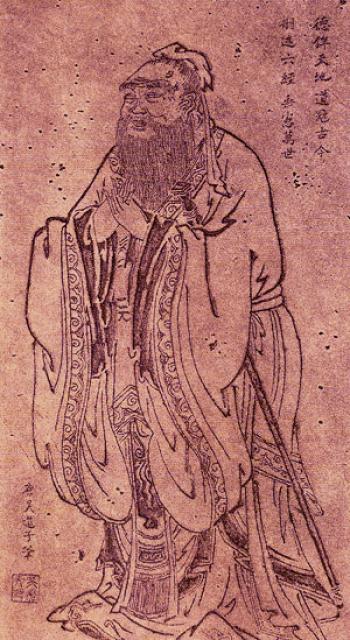
Traditional portrait of the Chinese teacher and philosopher Confucius. Wu Daozi , 685-758, Tang Dynasty. · Public domain

Confucius

China · 551–479 BCE

The first teacher in recorded history to make open instruction a life's work, Confucius taught any committed student regardless of birth and organized China's inherited learning into a curriculum of texts, ritual and ethics. From 605 to 1905, China's imperial examinations tested his canon — the longest run any syllabus has ever had.

The story

The Analects preserves his admission policy: from anyone bringing so much as a bundle of dried meat as tuition, he never withheld instruction — opening advanced learning, then an aristocratic monopoly, to commoners. Tradition credits him with three thousand students, seventy-two of whom mastered the full curriculum. He spent fourteen years wandering between states seeking a ruler who would employ him, and failed; when he died, his students mourned three years at his grave, and one, Zigong, stayed six.

“A teacher's curriculum can outlast every government that declined to hire him.”
Students, by tradition
3,000
Years his canon ruled exams
1,300 (605–1905)
Years wandering, seeking office
14
2

Hypatia

Egypt (Eastern Roman Empire) · c. 355–415 CE

Head of Alexandria's Neoplatonist school around 400 CE, Hypatia taught philosophy, mathematics and astronomy to pagan and Christian students who traveled from across the eastern Mediterranean to study with her, and she edited and preserved mathematical classics — commentaries on Diophantus and Apollonius are attributed to her — as the ancient scholarly world contracted.

The story

Her student Synesius of Cyrene, later a bishop, wrote to her all his life; his surviving letters address her with the reverence owed a mother and teacher, and one asks her to oversee the construction of a hydrometer for him, instructions included — a working scholarly bond across the era's hardening religious lines. In March 415 she was murdered by a Christian mob amid Alexandria's civic feuds, and her death has stood ever since for what a city loses when it kills its teachers.

“Teaching across a divide builds loyalties that outlive the divide — and the teacher.”

Years leading Alexandria's school
c. 400–415 CE
Mathematical commentaries attributed
3 works
Her student letters that survive
Several, from a bishop
3
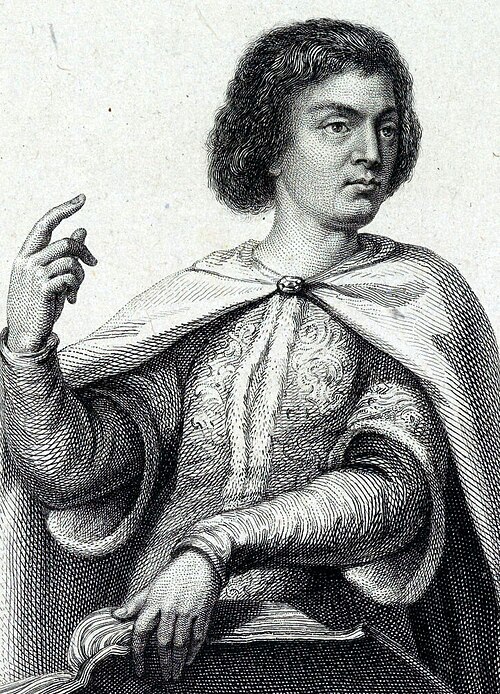
Medieval depiction of the philosopher and teacher Peter Abelard. Antoni Oleszczyński · Public domain

Peter Abelard

France · 1079–1142

The star lecturer of twelfth-century Paris, Abelard drew students by the thousand and out-argued his own masters, founding rival schools when they barred him. His Sic et Non set 158 questions on which church authorities contradicted one another, training students to reconcile them — the scholastic method the first universities were built to practice.

The story

After a church council at Soissons condemned his book on the Trinity in 1121, Abelard withdrew to empty land near Nogent-sur-Seine and built an oratory of reeds and thatch he called the Paraclete. His autobiographical Historia Calamitatum records what happened next: students left the cities to follow him into the wilderness, building themselves huts and living on coarse bread and herbs from the fields so they could keep hearing him lecture. In 1122, the professor, not the campus, was the university.

“Students follow the teaching, not the buildings.”

Contradictions posed in Sic et Non
158 questions
Future pope among his students
1 (Celestine II)
Age founding his first school
~22, at Melun
4
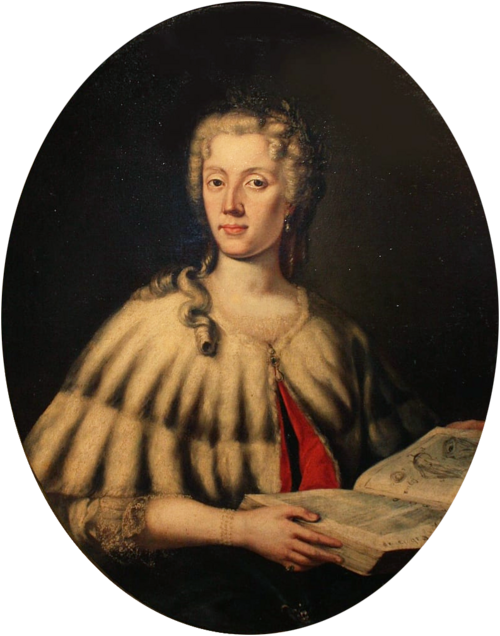
Portrait of Laura Bassi, the first salaried woman university professor. Carlo Vandi · Public domain

Laura Bassi

Italy · 1711–1778

The first woman in the world appointed to a salaried university professorship, Bassi won a chair at Bologna in 1732, at twenty, after publicly defending forty-nine theses before the city's senate. Over forty-six years of teaching she became one of Italy's earliest and most effective champions of Newtonian experimental physics.

The story

Bologna gave her the chair but, because she was a woman, restricted her public lecturing to ceremonial occasions. Her answer was to move the teaching home: from 1749 she ran experimental-physics courses from a laboratory in her own house with her physician husband Giuseppe Veratti, and the course became one of Europe's most sought-after. In 1776, aged sixty-four, Bologna's Institute of Sciences appointed her to its chair of experimental physics — with Veratti formally serving as her assistant.

“If the institution restricts the room, move the teaching; serious students will find it.”

Age at first professorship
20 (Bologna, 1732)
Years teaching physics
46
Theses defended publicly
49, before the Senate
5
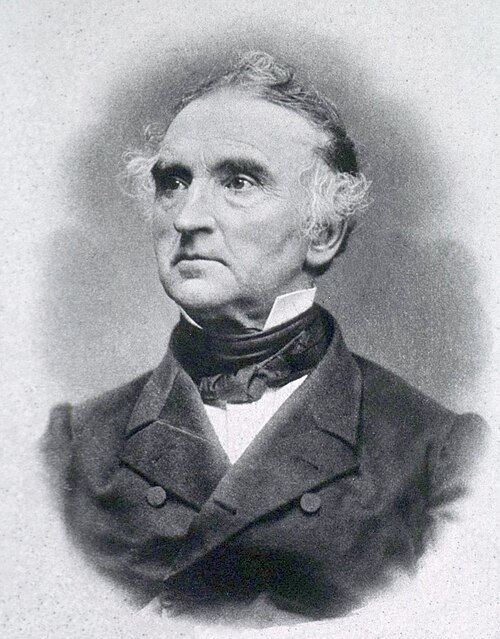
Portrait of the chemist Justus von Liebig, inventor of the teaching laboratory. Unknown author Unknown author · Public domain

Justus von Liebig

Germany · 1803–1873

At Giessen, Liebig invented the modern teaching laboratory: students learned chemistry not from lectures alone but by performing analyses at the bench, in cohorts, on live research problems. That model — apprentice researchers gathered around a professor — became the template for graduate training in every science, in every country.

The story

Alexander von Humboldt met the twenty-one-year-old Liebig in Paris and persuaded the Grand Duke of Hesse to appoint him professor at Giessen in 1824, over the faculty's objections. In a converted guard barracks, Liebig built the laboratory that drew students from Britain, France, Russia and America; trainees like August Kekulé and August Wilhelm von Hofmann went on to fill chemistry chairs across Europe, and academic genealogists still trace tens of thousands of living scientists' doctoral ancestry back through Giessen.

“Train researchers by letting them research; the method outlives every individual result.”

Age appointed professor
21 (Giessen, 1824)
Years running the Giessen lab
28 (1824–52)
Doctoral descendants traced today
Tens of thousands
6
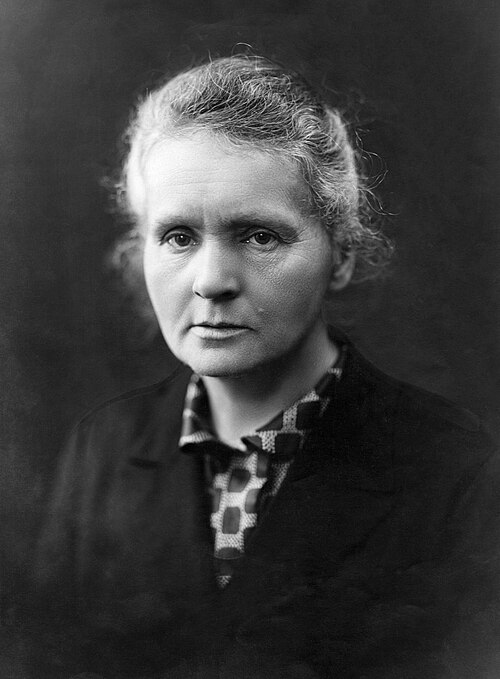
Photograph of Marie Curie, first woman to teach at the Sorbonne. Henri Manuel · Public domain

Marie Curie

Poland / France · 1867–1934

The first woman to teach at the Sorbonne in its six and a half centuries, and the first person to win Nobel Prizes in two different sciences, Curie took over the physics chair created for her husband Pierre and built the Radium Institute, whose researchers — her daughter Irène among them — won further Nobels.

The story

Pierre Curie was killed by a horse-drawn wagon in April 1906, and the Sorbonne offered his chair to his widow — its first woman teacher. On 5 November 1906, before a hall packed with students, journalists and society onlookers who had queued for hours expecting a moment of theater, she began at the exact sentence of the physics syllabus where Pierre's final lecture had stopped: no eulogy, no acknowledgment of the occasion, just the course, continued.

“Continuity of the work can be the strongest tribute — and the strongest argument.”

Nobel Prizes, two sciences
2 (1903, 1911)
First woman at the Sorbonne
1906
Her notebooks stay radioactive
~1,500 more years
7

C. V. Raman

India · 1888–1970

Raman left one of colonial India's best-paid civil-service posts in 1917 for a Calcutta professorship at roughly half the salary, then discovered the light-scattering effect that bears his name using equipment costing a few hundred rupees. In 1930 he became the first Asian to win a Nobel Prize in the sciences.

The story

Raman was so certain his work on the scattering of light would win the 1930 Nobel Prize that, by his own account, he booked steamship passage to Stockholm for himself and his wife in July — months before the announcement. The confidence was earned: the effect he and his student K. S. Krishnan demonstrated on 28 February 1928, with sunlight, filters and simple optics, gave chemistry a new way to fingerprint molecules, and India still marks the date as National Science Day.

“Modest equipment plus an immodest question can beat the best-funded laboratory.”

Pay cut taken for the chair
~50% (1917)
Cost of key apparatus
A few hundred rupees
Nobel Prize in Physics
1930, first in Asia
8

Richard Feynman

United States · 1918–1988

A Nobel physicist who treated teaching as seriously as research, Feynman rebuilt Caltech's introductory physics course from first principles in 1961–63. The resulting Feynman Lectures on Physics has sold well over a million English-language copies, is free online, and remains the most famous physics course ever delivered.

The story

As the two-year experiment wore on, his colleague David Goodstein later recounted, many of the freshmen the course was designed for quietly stopped attending — yet the hall stayed full, because graduate students and Caltech faculty kept taking the empty seats to hear the subject rethought from scratch. Feynman himself judged the experiment a partial failure for its intended audience; the published lectures went on to teach generations of physicists anyway.

“Rethinking a subject from first principles can teach the whole field, even when it misses the freshmen.”

English copies of the Lectures
1.5M+
Years the Lectures in print
60+ and counting
Nobel Prize in Physics
1965 (QED)

Bars are scaled to the leader in this list.

Comparison Lab

Toggle names on and off — every bar rescales to the leader of your selection.

5 / 8

The argument

Half this list taught before the professorship existed: Confucius and Hypatia held no university chair because there were no universities, and Abelard's Paris predates the guild's formal charters. Including them is a deliberate claim — that the craft precedes the title — but purists could reasonably start the list in 1088.

The list also inherits the archive's biases. The masters of Nalanda, which taught thousands of students for centuries before its destruction, the scholars of Timbuktu's Sankoré mosque, and generations of women who taught without appointments left far fewer individually attributed records — less because they mattered less than because fewer of their students' notes survived, or were translated.

The modern seats are the most contestable: Wilhelm von Humboldt shaped the profession more than anyone but never professed; John Dewey defined its freedoms; Emmy Noether taught under Hilbert's name because Göttingen would not appoint a woman. Feynman's seat, in particular, could be given to Noether with a perfectly straight face.

Keep exploring

More in Education & Humanities