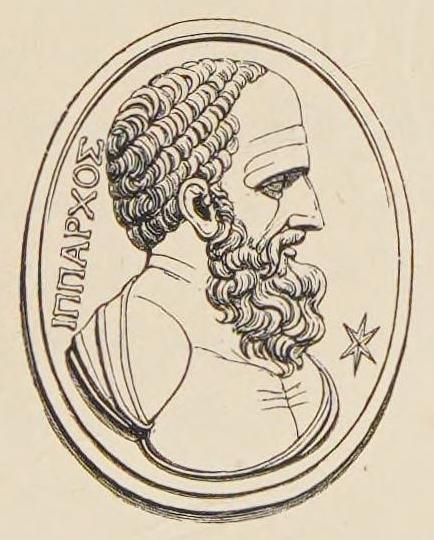
Astronomer: The scientist who measures the universe, from Babylonian clay tablets to space telescopes, still deciding which flicker in the data is a discovery.
Astronomy is the oldest continuously practiced science on Earth. Babylonian scribes kept nightly records of the sky on clay for some seven centuries — the longest unbroken scientific dataset ever produced — and Chinese court astronomers logged eclipses, comets and new stars for two thousand years. For most of that history the astronomer was a priest or court official whose real job was calendars and omens; the separation from astrology was only completed around the eighteenth century.
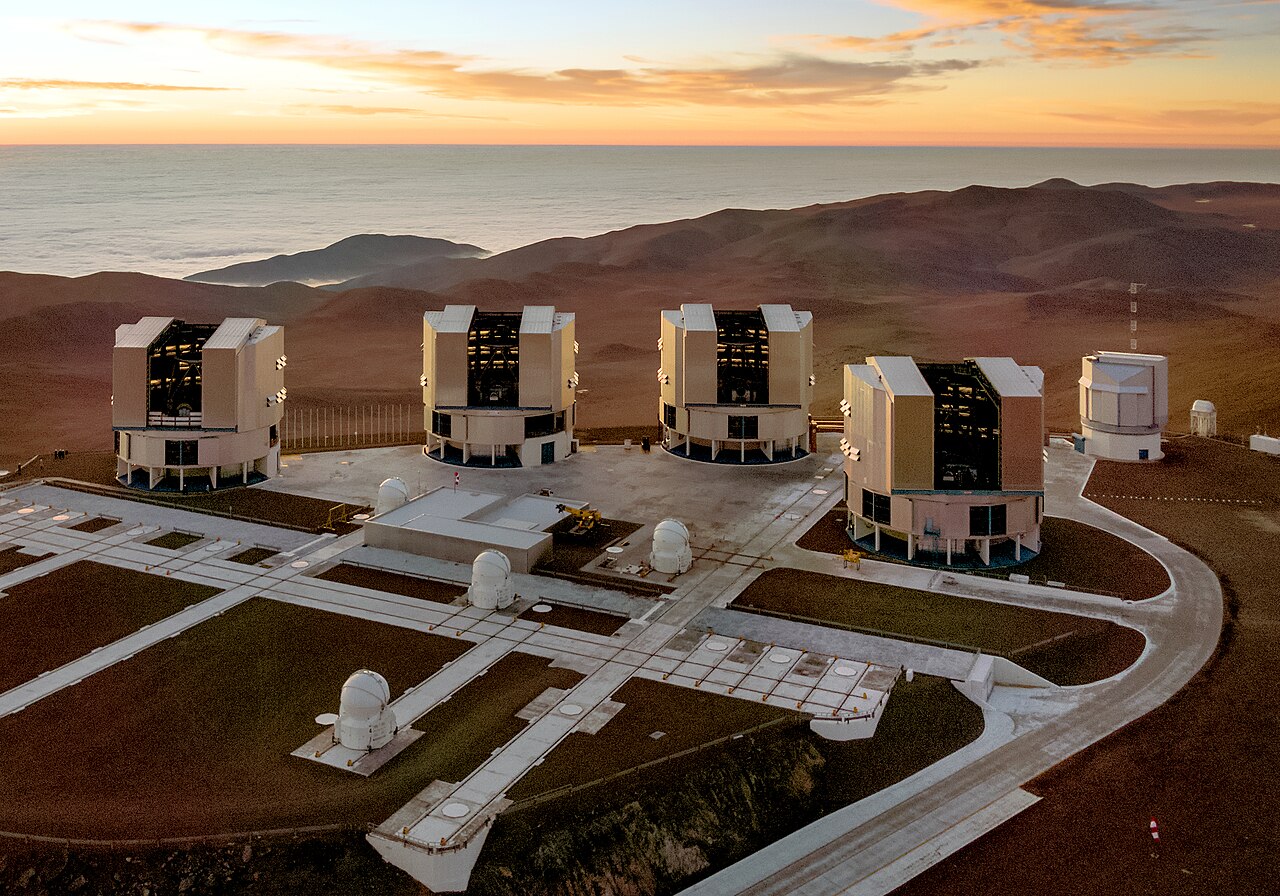
The modern version bears little resemblance to the robed figure at an eyepiece. The International Astronomical Union counts roughly 12,000 professional members worldwide, and most spend their days writing code, not observing: the world's great telescopes sit on Chilean and Hawaiian mountaintops, mostly operated by queue, with data flowing to researchers who may never visit. No country licenses astronomers — the doctorate is the profession's gate, and permanent posts are far scarcer than the PhDs produced each year.
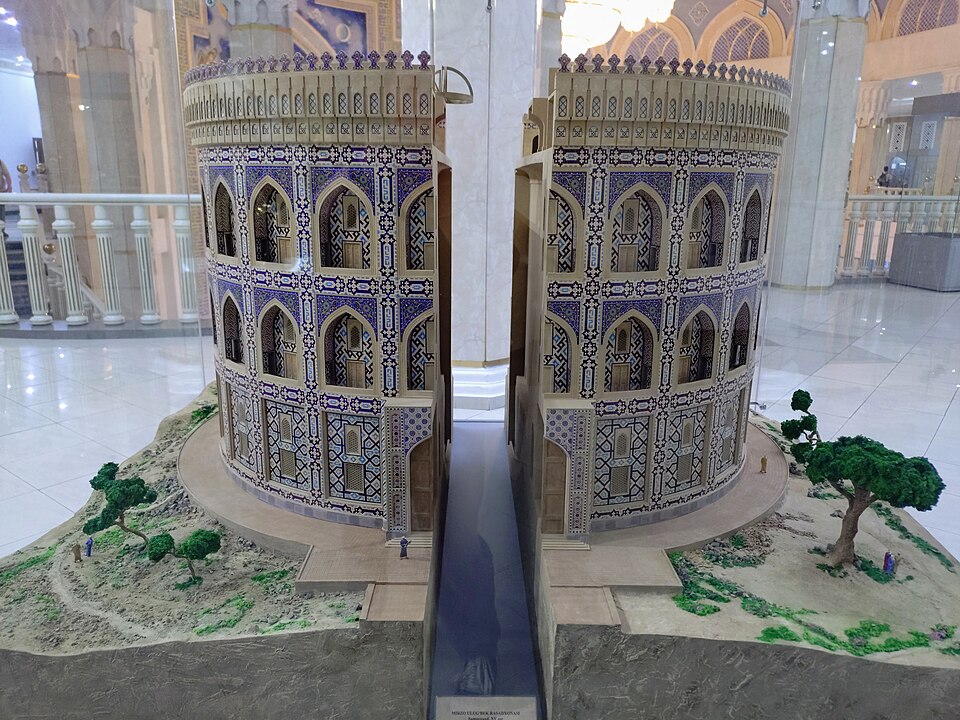
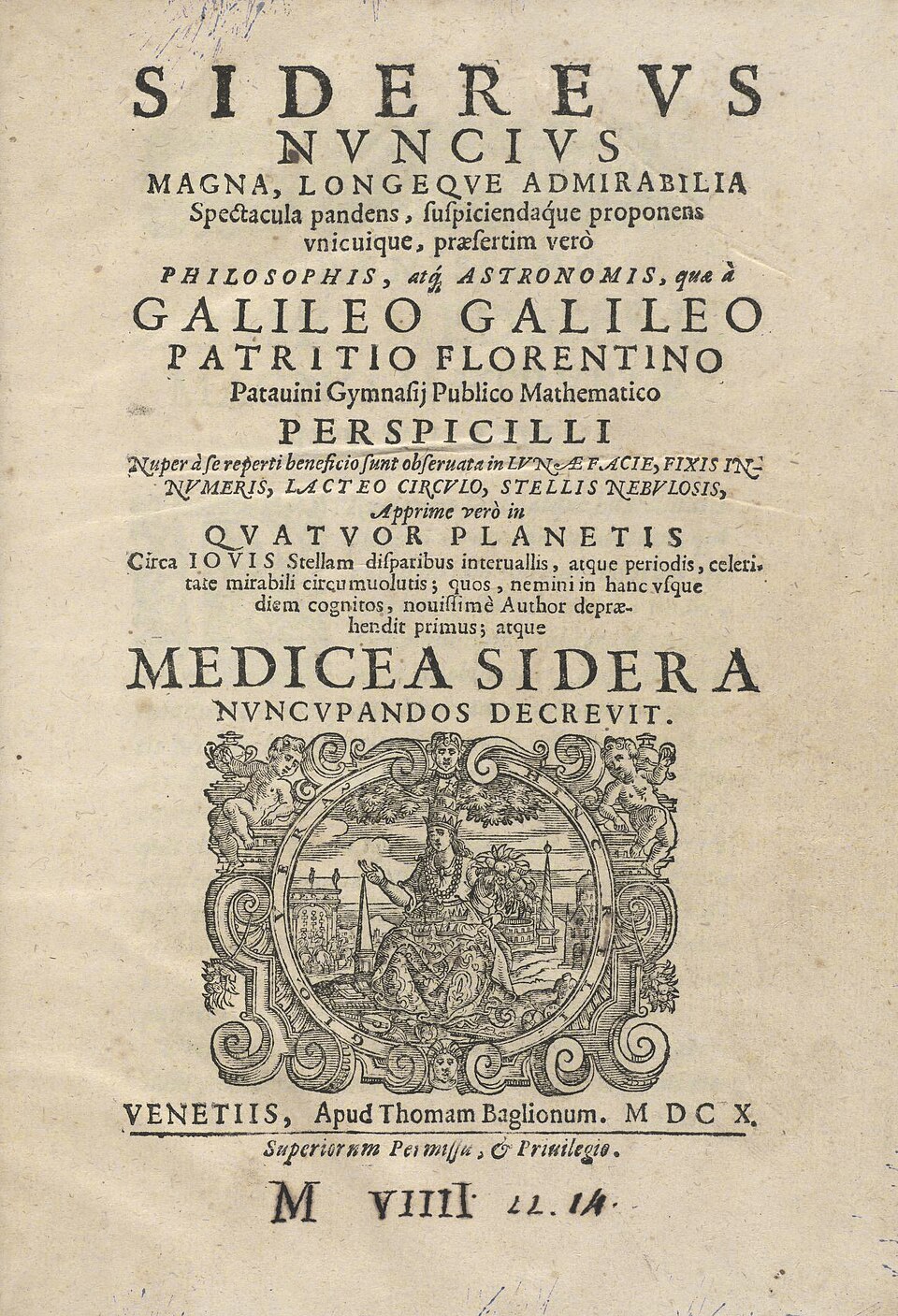
This page follows the profession from the Babylonian diaries and Hipparchus's catalog through Ulugh Beg's Samarkand, Tycho's island, the Harvard computers and the photographic plate on which Hubble wrote "VAR!" It covers how people actually become astronomers today and what the decade of training costs in different countries, what a night on a summit and a year at a desk involve, eight figures who defined the craft, and how much of the work robotic surveys and machine learning are already taking.
Inside the profession
An astronomer measures the universe—photons, particles, gravitational waves—and turns those measurements into claims about objects that cannot be visited. The work spans mountaintop observing, space-mission operations, survey pipelines and theory, but every path collides with calibration, selection effects and the scarcity of telescope time.
What the day actually is
Observers prepare proposals, reduce data, fight weather and instrument quirks, and write. Theorists and simulators build models that must confront survey statistics. Pipeline scientists keep catalogs honest as detectors and software versions change. Large collaborations add shift schedules, telecons and authorship rules. Romantic images of lonely domes survive in outreach; most career hours are computational, statistical and bureaucratic long before they are starlit.
Where variety hides
Planetary science, stellar astrophysics, galaxies, cosmology, high-energy astrophysics and instrumentation are different crafts under one roof. Space-mission roles emphasize engineering interfaces and operations; survey science emphasizes software and statistical rigor; classical PI-led observing still exists but shares the stage with factory-scale datasets from projects such as Gaia-class astrometry and wide-field imaging surveys. Radio, optical and messenger astronomy barely share toolchains.
The long gate
A doctorate is the standard research entry; named postdoctoral fellowships and instrument-team memberships are the practical filters afterward. Permanent posts are few relative to PhD output, so many astronomers move into data science, teaching, planetarium work or aerospace. IAU membership marks community standing more than a license. Habilitation still matters on some European academic ladders. The portfolio is proposals won, pipelines built and papers that survive archival reuse.
What is changing underfoot
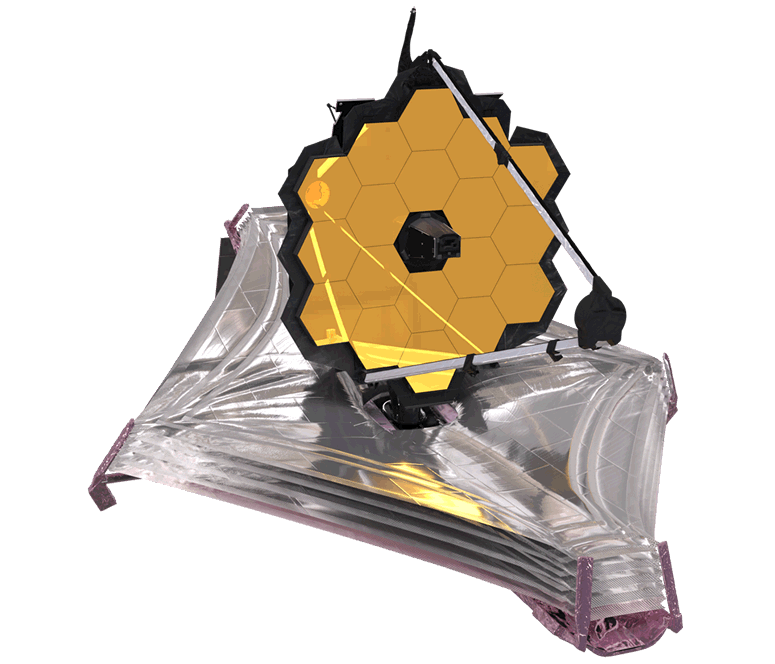
Survey factories and space telescopes produce data volumes that make manual reduction obsolete for many questions; ML classifiers help and also import new failure modes. Citizen science and open archives widen participation while raising provenance questions. The scarce goods remain telescope time, mission slots and careful interpretation of systematics. Automation drafts more plots; it does not allocate JWST-class hours or excuse overclaimed exoplanet detections.
How the work branches
Five common shapes of the same title — specialty, setting or career path.
Universities and observatories
Observational astronomer
Wins time, reduces data and interprets sources; lives inside calibration and proposal cycles.
Institutes and HPC centers
Theoretical / computational astrophysicist
Builds models and simulations tested against catalogs; craft is numerical validity and statistical comparison.
Observatories and space agencies
Instrumentation scientist
Designs detectors, optics and pipelines; success is a working instrument and characterized systematics.
Large collaborations
Survey / archive scientist
Owns catalogs, quality flags and releases; reproducibility across software versions is the daily problem.
Mission teams and labs
Planetary scientist
Links telescopes, spacecraft data and laboratory analogs; operations timelines structure the week.
How it reads by country
Same craft, different gatekeeping, status and daily texture — rewritten for readers in each language.
United States — NASA, NSF and soft-money careers
University careers lean on NASA/NSF funding and national observatory access. Postdoc chains are common; space-mission involvement and survey memberships strongly shape hiring. Planetaria and data roles absorb many PhDs.
South Korea — growing facilities and university metrics
Domestic observatories, space program links and university groups create a smaller but competitive scene. Overseas PhDs and postdocs remain common stepping stones; publication metrics weigh heavily.
Japan — NAOJ and university observatories
National Astronomical Observatory collaborations and university departments structure careers. Instrument projects and long-term group affiliation matter; Subaru-class partnerships shape observational access.
Germany — Max Planck and ESO links
Max Planck institutes and university chairs sit beside European Southern Observatory participation. Formal doctoral and habilitation routes still influence academic progression.
United Kingdom — STFC and university groups
STFC-supported astronomy and strong university departments define research paths. Fixed-term early careers are common; public outreach and planetarium work form a visible adjacent track.
University astrophysics groups punch above domestic telescope ownership by joining international surveys and networks. Computational and data-intensive astronomy fits the local research funding style.
From the archive
Commons CC/PD images self-hosted for this profession.
Why attitude matters here
Astronomical skill reduces data; attitude decides whether a detection is announced as nature or as a result still hostage to the next systematic and the next referee.
Telescope time is a commons
Oversubscription means a poorly prepared run or a casual archival re-analysis that ignores flags wastes a resource other teams needed. Proposal honesty about feasibility and attitude toward calibration debt determine whether shared facilities produce science or only press releases.
Selection effects punish storytelling
Exoplanet candidates, transient classifications and cosmological parameter shifts are easy to overclaim when cuts are tuned after looking. Because the public loves discoveries, the pressure to simplify is external as well as internal. The field advances when someone volunteers the null test that kills the headline.
Collaboration credit is easy to steal quietly
Large consortia depend on people who built pipelines, wrote reduction code and stood night shifts. Burying those contributions while racing a first-author narrative trains cynicism into the next proposal cycle. Attitude toward credit is part of scientific infrastructure.
Stances that hold up under pressure
Five concrete postures the work rewards, not slogans.
Shows the systematics plot before the discovery plot
Leads with calibration, selection function and null tests in talks and papers, rather than only the image that will screenshot well.
Declines to hype a marginal candidate
Holds language at 'candidate' or 'hint' when significance and follow-up do not support discovery rhetoric, including in media quotes.
Leaves a reduction a stranger can rerun
Documents software versions, flags and cuts so archival users are not reconstructing folklore from a methods paragraph.
Protects junior observers on shared nights
Shares usable data rights and authorship expectations before the run, rather than renegotiating after a lucky transient appears.
Stops claiming when the instrument is misbehaving
Halts or flags an observing sequence when focus, pointing or detector health is off, instead of collecting pretty garbage to 'use somehow later.'
Moments that reveal it
Situations that separate résumé language from how someone actually practices.
A transient looks extraordinary on night one
Drafting a dramatic ATel versus waiting for calibration and a second instrument reveals whether priority is priority or prudence.
A survey catalog release has known bad flags
Shipping on the promised date with quiet caveats buried, or delaying until quality flags are honest, is an attitude test managers feel as schedule pressure.
A journalist wants a simple exoplanet 'Earth twin' line
Whether the astronomer holds the error bars in the quote, or lets the headline run ahead of the paper, is public-facing integrity.
A student found the bug that kills a senior's result
Rewarding the correction in daylight, or softening it to protect a narrative already in a grant, trains the collaboration's real standard.
Where "calling" turns harmful
Romance of the night sky as unpaid labor
Outreach and hiring copy sell stargazing; the job sells scarce postdocs, night shifts and proposal anxiety. 'Passion for the cosmos' is routinely used to justify unpaid outreach, precarious contracts and the expectation that people will relocate endlessly without complaint. Wonder is authentic; it is not a reason to accept authorship theft, unsafe fatigue on observing runs or silence about overclaimed results.
The profile
Resists AI70
Pay55
Barrier to entry85
Autonomy82
Demand42
Impact65
How exposed is it to AI?
Low–moderate
A substantial share of the work — image reduction, alert filtering, source classification, telescope scheduling — is already automated or clearly will be, and language models are eating literature review and first drafts. But the tasks that define the role — framing questions, judging anomalies, building instruments, and standing behind claims in peer review — remain stubbornly human, and the data flood is increasing the demand for that judgment, not reducing it.
For research posts, effectively yes: no country licenses astronomers, but universities, observatories and space agencies treat the doctorate as the entry credential, and telescope-time and grant eligibility mostly assume it. People do work in astronomy without one — as telescope operators, instrument engineers, software developers and outreach staff — and amateurs still make real discoveries, but leading research is a PhD's game.
How long does it take to become an astronomer?
Roughly nine to twelve years from leaving school to a first independent research position: a three- or four-year bachelor's in physics or astronomy, often a master's in Europe, then a PhD of three to six years. A permanent job usually takes longer still — most astronomers pass through several multi-year postdoctoral contracts, commonly landing a lasting post in their mid-to-late thirties.
What is the difference between an astronomer and an astrophysicist?
Today, almost nothing: the titles are used interchangeably on job advertisements and department doors. Historically, astronomy meant measuring positions and motions, while astrophysics — born with spectroscopy in the mid-1800s — meant explaining the physics behind them. Since essentially all modern astronomers work with physics, "astrophysicist" is simply the newer word; "astronomer" is the older and broader one.
How much do astronomers earn?
The US Bureau of Labor Statistics put the median astronomer's wage at about $128,000 in 2023, but that describes senior people: PhD students live on stipends of roughly $30,000–45,000 and postdocs on $60,000–75,000 (US, 2024–25). German, British and Australian academic scales run somewhat lower in nominal terms, and Indian institute salaries are far lower again.
Do astronomers still look through telescopes?
Almost never with an eye at an eyepiece — detectors replaced eyes over a century ago, and most large telescopes are now queue-scheduled: staff or robots observe, and the data arrives over the network. Many productive astronomers have never visited the telescopes they use, and a large share of papers are written entirely from archives like those of Hubble, Gaia and the Sloan survey.
What is the difference between astronomy and astrology?
Astronomy is the science of what is actually out there; astrology is the belief that planetary positions shape human affairs, and it has failed every controlled test. The two were one trade for millennia — Kepler financed real orbital mechanics by casting horoscopes — and separated in Europe during the seventeenth and eighteenth centuries. No observatory, university department or journal has employed astrology since.
Can amateur astronomers still make real discoveries?
Yes, and they regularly do: amateurs discover comets and supernovae, track asteroids, time stellar occultations and monitor variable stars through networks like the AAVSO, founded in 1911. Citizen-science platforms extend the tradition — Galaxy Zoo volunteers have co-authored dozens of papers since 2007, and in 2009 Australian amateur Anthony Wesley spotted a fresh impact scar on Jupiter before any professional did.
Will AI replace astronomers?
It is already doing the parts astronomers were happiest to give up: reducing raw images, filtering millions of nightly alerts and scheduling telescopes. What it has not touched is deciding which questions matter, judging whether an odd signal is a discovery or an artifact, building new instruments, and standing behind a claim in peer review. The realistic future is fewer routine tasks per discovery, not fewer astronomers per question.
Embed this ranking
Paste this code into your blog or site — the ranking stays up to date.