From Babylonian scribes to Fields medalists and AI-assisted proof: the profession that turns hard questions into permanent certainty, one theorem at a time.
Also called: Research mathematician · Mathematical scientist
Mathematician: From Babylonian scribes to Fields medalists and AI-assisted proof: the profession that turns hard questions into permanent certainty, one theorem at a time.
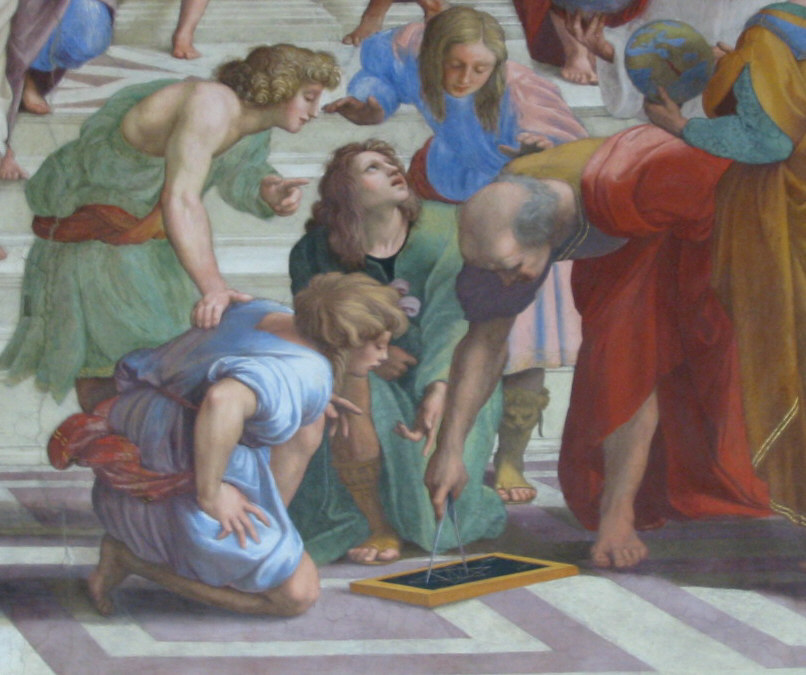
"Mathematician" descends from the Greek mathema, "that which is learned," and the Pythagorean brotherhood of the sixth century BCE already reserved the word mathematikoi for its inner circle, the ones trusted with the actual reasoning. It is the oldest profession built entirely on abstraction: Babylonian scribes were solving quadratic problems on clay tablets around 1800 BCE, and the theorems Euclid proved in Alexandria around 300 BCE are still true, still taught and still cited — a permanence no other field's founders can claim.
The modern job splits in two. A few tens of thousands of research mathematicians worldwide prove new theorems at universities and institutes, a career that runs through a PhD, years of postdoctoral wandering and a brutally narrow academic market. A far larger group applies the same training in finance, cryptography, machine learning and government: the US Bureau of Labor Statistics counted only a few thousand people holding the literal job title "mathematician" in 2023, while math-trained quants, actuaries and data scientists number in the hundreds of thousands.
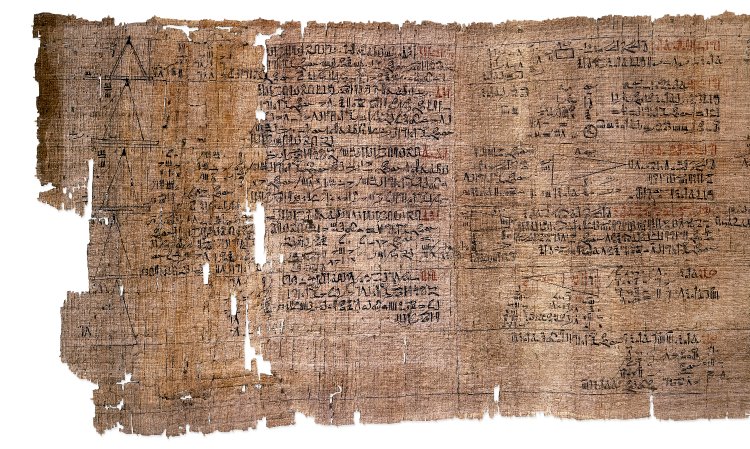
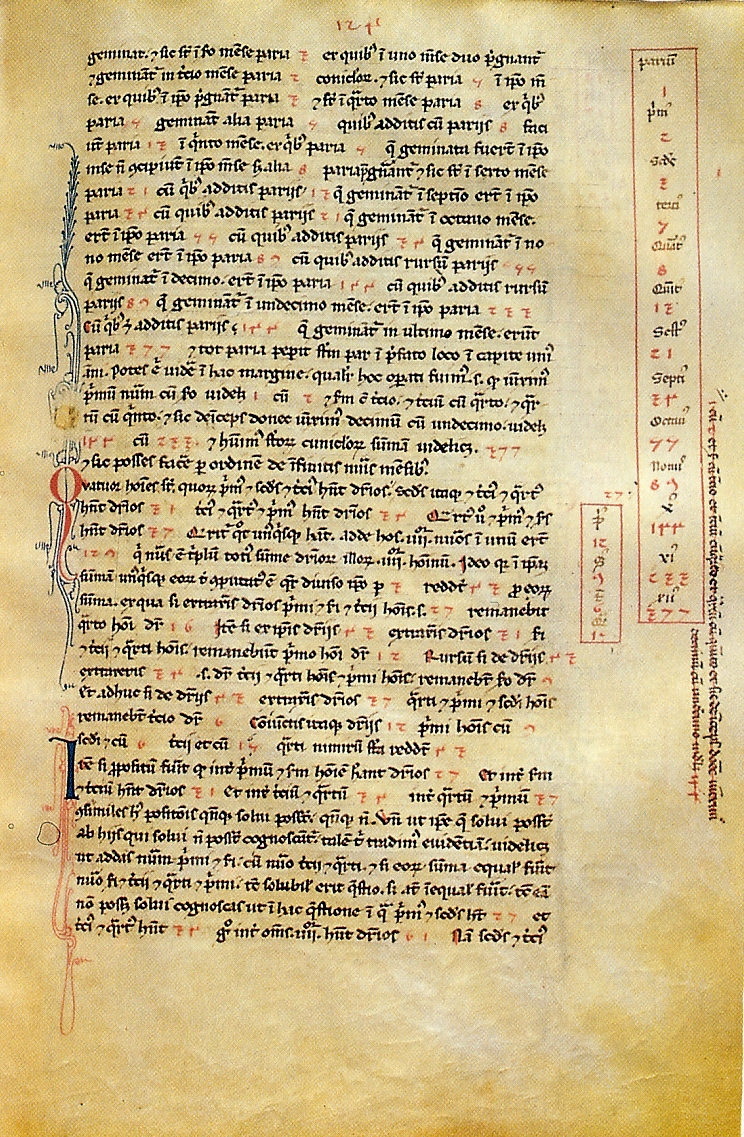
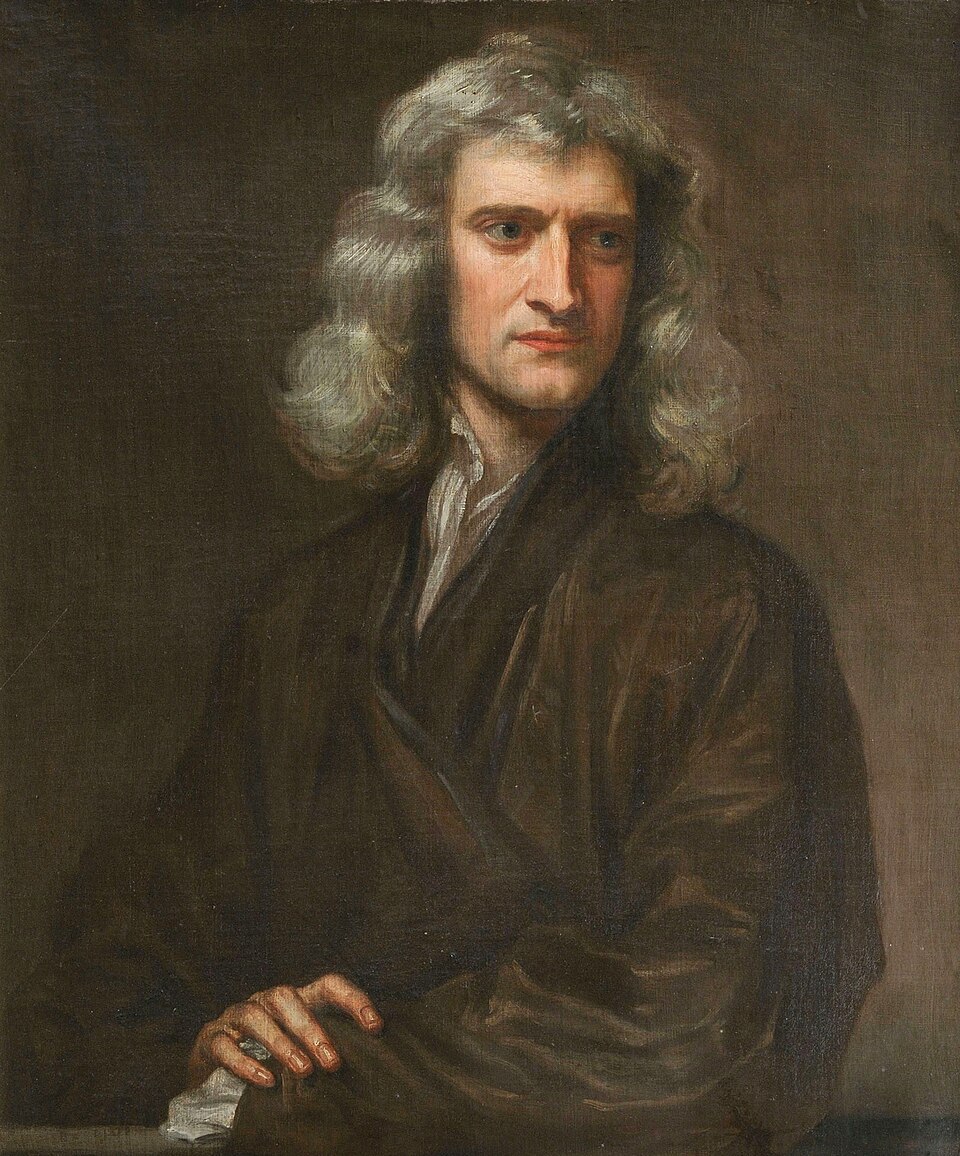
This page follows the trade from Plimpton 322 and the Rhind Papyrus through al-Khwarizmi's Baghdad, the Newton–Leibniz calculus feud and Hilbert's 23 problems, to Wiles's attic, Perelman's refusals, and machines that now solve olympiad problems at gold-medal level. It covers how people actually become mathematicians in different countries, what the daily craft looks like, who reached the top of the profession and how — and how much of the work AI can realistically absorb.
Inside the profession
A mathematician builds precise structures—proofs, models, algorithms—and takes responsibility for whether an argument actually closes. The profession spans pure research, teaching, industrial modeling and cryptography-adjacent work; what travels between them is the habit of stating assumptions and refusing a gap dressed as intuition.
What the day actually is
Research mathematicians read, attempt proofs, find counterexamples, write and seminar. Applied mathematicians translate a domain problem into equations or algorithms and then argue the translation is faithful. Teachers and lecturers spend large fractions of time on exposition, assessment and student struggle with abstraction. Computers help with examples, formal verification in some subfields and large calculations; they do not replace the decision of what counts as a complete argument.
Where variety hides
Algebra, analysis, geometry/topology, number theory, logic, probability, combinatorics, numerical analysis and mathematical physics barely share weekly tools. Industry roles in finance, optimization, cryptography and data science often drop the public title while keeping proof-like rigor for edge cases. National labs and institutes host long-horizon work; consulting timelines do not. The Fields-Medal public image is a tiny slice of the employment distribution.
The long gate
A PhD is the usual research entry; postdocs and strong letters are the practical filter. Habilitation or HDR still matter in parts of Europe; France's agrégation shapes secondary and some higher-ed paths; Chartered Mathematician exists in the UK. Many graduates teach or move into software and quantitative industry. There is no universal license—the portfolio is theorems, papers, code artifacts and the ability to explain a hard idea cleanly.
What is changing underfoot
Computer algebra, formal proof assistants and large language models change how examples are explored and how drafts are written. They increase the value of taste: choosing the right conjecture, spotting a false lemma that looks plausible and knowing when a numerical result is not a proof. Automation can suggest steps; accountability for a published theorem or a safety-critical model remains human.
How the work branches
Five common shapes of the same title — specialty, setting or career path.
Universities and institutes
Pure research mathematician
Proves theorems and trains students; success is peer-recognized arguments and lasting definitions.
Labs, finance, tech
Applied / industrial mathematician
Builds models and algorithms under domain constraints; validation against data and failure modes dominates.
HPC and simulation groups
Numerical analyst / scientific computing
Studies accuracy, stability and cost of computational methods; craft is error control, not only speed.
Schools and universities
Mathematics educator
Designs explanations and assessments; measures success in what students can do independently.
Industry and agencies
Cryptography / security mathematician
Works with proofs of security properties and protocol flaws; assumptions must be stated without marketing fog.
How it reads by country
Same craft, different gatekeeping, status and daily texture — rewritten for readers in each language.
United States — PhD pipeline and quantitative industry
Research careers lean on NSF and university posts; many PhDs enter tech and finance. Teaching loads and soft-money postdocs vary widely; REUs and competitions shape early visibility more than licensure.
South Korea — exam culture and research universities
Strong contest and entrance-exam traditions feed undergraduate talent; research posts remain competitive and metric-aware. Industry and finance absorb applied skill; overseas PhDs are common.
Japan — university chairs and RIMS-style institutes
University departments and research institutes structure long-term careers. Careful seminar culture and group affiliation matter; permanent posts are selective relative to graduate numbers.
Germany — habilitation routes and institute research
Universities and Max Planck / institute networks support deep research tracks. Formal doctoral titles and habilitation still influence some academic ladders; industry modeling roles are substantial.
United Kingdom — CMath and faculty pathways
Chartered Mathematician status sits beside PhD routes. REF-aware university careers and strong pure traditions coexist with quantitative industry in London and beyond.
Singapore — compact faculty, global students
Universities hire internationally and link mathematics to finance, optimization and data. Teaching quality and research visibility both matter in a small domestic faculty market.
From the archive
Commons CC/PD images self-hosted for this profession.
Why attitude matters here
Mathematical talent produces ideas; attitude decides whether a gap in an argument is faced in daylight or papered over with the phrase 'it is easy to see.'
A false lemma travels farther than its author
Other mathematicians build on published statements. A handwaved step that 'should be fine' can waste years of follow-up work and damage trust in a subfield. Because referees cannot re-check every line under time pressure, the practice depends on authors volunteering the weakest link.
Students learn what counts as understanding
A lecturer who rewards mimicry of solution templates without conceptual checks trains brittle competence. Attitude toward a student's honest confusion—whether it is treated as a defect or as information—shapes whether the next cohort can do mathematics alone.
Applied models harm people when assumptions hide
A pricing, risk or optimization model with silent assumptions fails in the world, not only on a blackboard. Stating limitations clearly under client pressure is an ethical stance distinct from formal cleverness.
Stances that hold up under pressure
Five concrete postures the work rewards, not slogans.
Writes the hypothesis that could break the theorem
States regularity, finiteness or measurability assumptions explicitly, rather than burying them where only experts notice the gap.
Kills a favorite conjecture with a counterexample hunt
Spends time trying to refute an idea before investing in a proof sketch, treating disproof as success rather than embarrassment.
Credits the lemma's actual source
Tracks priority and folklore carefully in papers and talks, resisting the habit of absorbing a known trick without citation.
Stops a calculation when error control is missing
Refuses to present simulation output as evidence without numerics that bound the error, especially under deadline pressure.
Explains the idea before the notation pile
In teaching and seminars, leads with the strategy of proof so listeners can follow, rather than performing opacity as prestige.
Moments that reveal it
Situations that separate résumé language from how someone actually practices.
A referee is unlikely to check a technical lemma
Whether the author still writes a complete argument, or leans on 'standard methods' to hide a hole, is integrity without an audience.
A student asks a basic question that exposes a fuzzy lecture
Defensive dismissal versus rebuilding the explanation shows whether teaching is performance or communication.
A client wants a single risk number without caveats
Holding the model assumptions in the deliverable, or delivering false precision, is applied mathematics under commercial pressure.
A coauthor wants to submit with a known gap 'to be filled later'
Blocking submission until the gap is closed, or agreeing to race the arXiv, reveals the real standard of the collaboration.
Where "calling" turns harmful
Genius mythology and disposable early careers
Mathematics cultures often romanticize solitary obsession and treat exhaustion as proof of seriousness, while postdoc chains and adjunct teaching absorb labor without security. 'If you loved the subject you would not care about pay or hours' is used to excuse precarious contracts and to dismiss people who leave for industry as insufficiently pure. Rigor is a virtue; unpaid martyrdom and citation gatekeeping are not.
The profile
Resists AI70
Pay68
Barrier to entry82
Autonomy88
Demand62
Impact78
How exposed is it to AI?
Moderate
A real share of the working day — literature search, verification, computation, well-posed problem solving — is automating now, and AI already proves competition-level results. But the tasks that define the career (choosing problems, forming concepts, judging significance, teaching humans) sit furthest from what current systems do. The likeliest outcome is fewer hours proving routine lemmas and more spent deciding what to prove: transformation of the job, not removal of the profession.
Research mathematicians spend their days trying to prove statements no one has proved: reading papers, computing examples, filling blackboards, and writing up the small fraction of ideas that survive. Most also teach and supervise students. Applied and industrial mathematicians build and analyze models — of markets, machines, diseases or data — where the mathematics must answer to messy reality. Very little of either job is arithmetic.
Do you need a PhD to be a mathematician?
For research and university positions, yes, effectively everywhere: the PhD is the credential that proves you can produce new mathematics. Outside academia the picture is looser — trading firms, tech companies and government agencies hire strong bachelor's and master's graduates — and unlike medicine or law, nothing legally stops anyone from proving theorems without any degree. Ramanujan never completed one.
How much do mathematicians earn?
Sector matters far more than seniority. US mathematicians earned a median of about $116,000 in 2023 (BLS); a full professor in Germany typically earns roughly €80,000–110,000; a junior CNRS researcher in France starts near €30,000. The outliers are in finance, where senior quantitative researchers at top trading firms can clear several times a professor's salary — a small, selective slice of the profession.
Will AI replace mathematicians?
AI systems reached gold-medal level on International Mathematical Olympiad problems in 2025, and proof assistants like Lean can now verify research-level arguments. What machines still cannot do is decide which questions matter, invent the definitions that make a problem tractable, or carry responsibility for mathematical meaning. Most researchers expect the job to be transformed — closer to working with a powerful collaborator — rather than eliminated.
Why is there no Nobel Prize in mathematics?
Alfred Nobel simply left mathematics out of his 1895 will; the popular story of a feud with the mathematician Gösta Mittag-Leffler has no documentary support. The field built its own honors instead: the Fields Medal, awarded every four years since 1936 to mathematicians under forty, and the Abel Prize, awarded annually by Norway since 2003 with a purse comparable to a Nobel's.
What are the Millennium Prize Problems?
Seven problems the Clay Mathematics Institute named in 2000, each carrying a $1 million prize: the Riemann hypothesis, P versus NP, the Navier–Stokes and Yang–Mills problems, the Birch and Swinnerton-Dyer and Hodge conjectures, and the Poincaré conjecture. Only the Poincaré has been solved — by Grigori Perelman, who refused both the prize money in 2010 and the Fields Medal before it.
Do you have to be a genius, or good at mental arithmetic?
Neither. Professional mathematics rewards stamina, taste and comfort with being stuck far more than calculating speed; many working mathematicians are unremarkable at mental arithmetic, which computers took over decades ago. The lone-genius cases are real but rare — most theorems are proved by well-trained, persistent people who chose good problems and kept working on them for years.
What jobs do mathematics graduates actually get?
A large share go where the money is: software, data science, quantitative finance, actuarial work, cryptography and machine learning, where mathematical maturity is the scarce skill. Teaching absorbs many more. Only a minority stay in academic research — US universities alone produce roughly 1,900 math PhDs a year, far more than the permanent academic posts available to absorb them.
Embed this ranking
Paste this code into your blog or site — the ranking stays up to date.