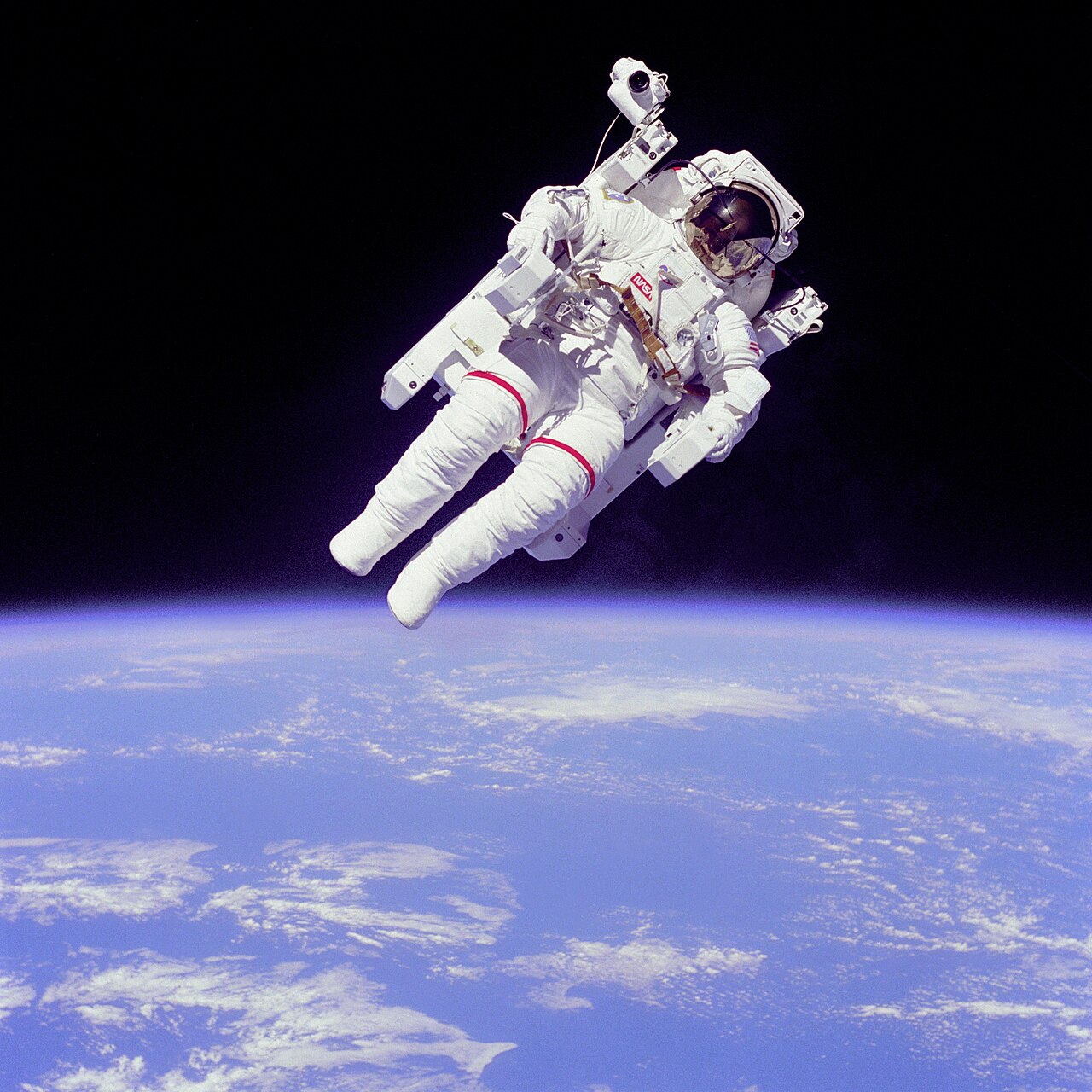
Astronaut: The rarest job on Earth is practiced off it: roughly 700 people have ever held it, from Gagarin's 108 minutes to year-long tours on the space station.
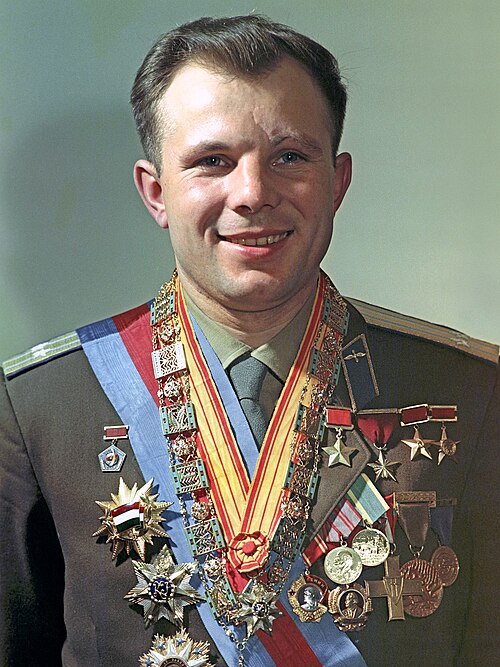
"Astronaut" is built from Greek — astron and nautes, "star sailor" — and every spacefaring nation has renamed the job in its own image: Russia's kosmonavt sails the universe, China's hángtiānyuán navigates the heavens. Whatever the word, it names the rarest profession on Earth. Since Yuri Gagarin's single orbit on 12 April 1961, roughly 700 people have held it — fewer than have climbed K2, and spread across barely a dozen employers worldwide.
There is no direct door into the job. Every astronaut arrives as something else first — fighter pilot, engineer, physician, biochemist, geologist — and survives a selection that routinely rejects more than 99.9 percent of applicants: NASA chose 10 from over 12,000 in 2021, and ESA chose its 2022 class from 22,523. Those selected then train for years, learning spacewalking in a 12-metre-deep pool and Russian in a classroom, for a flight that may never come.
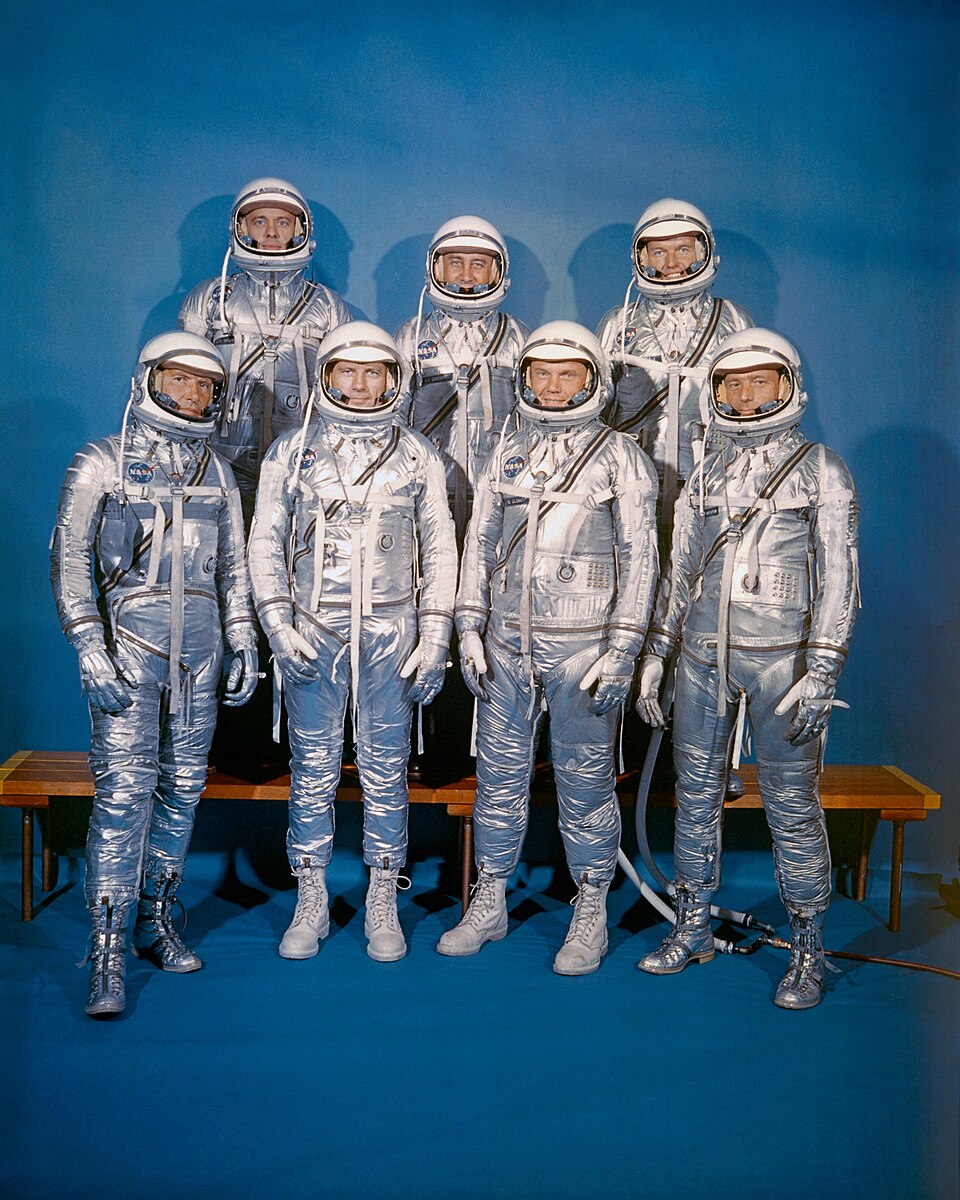
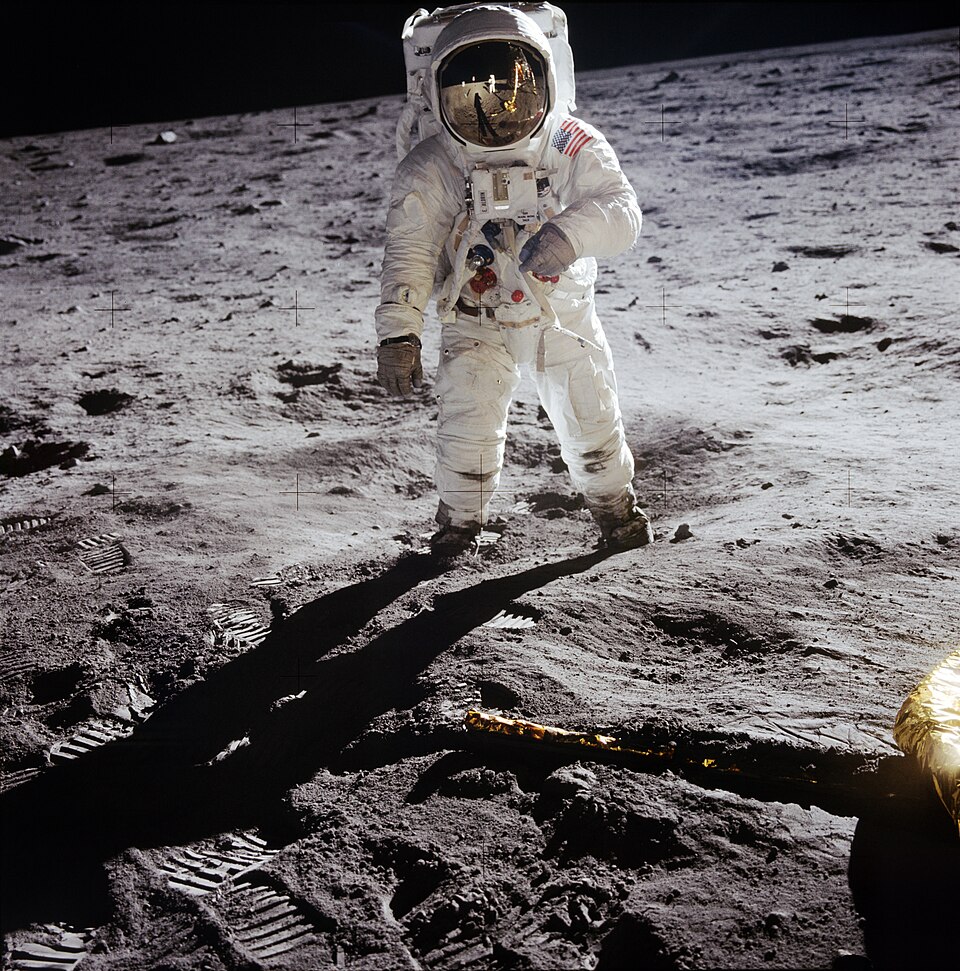
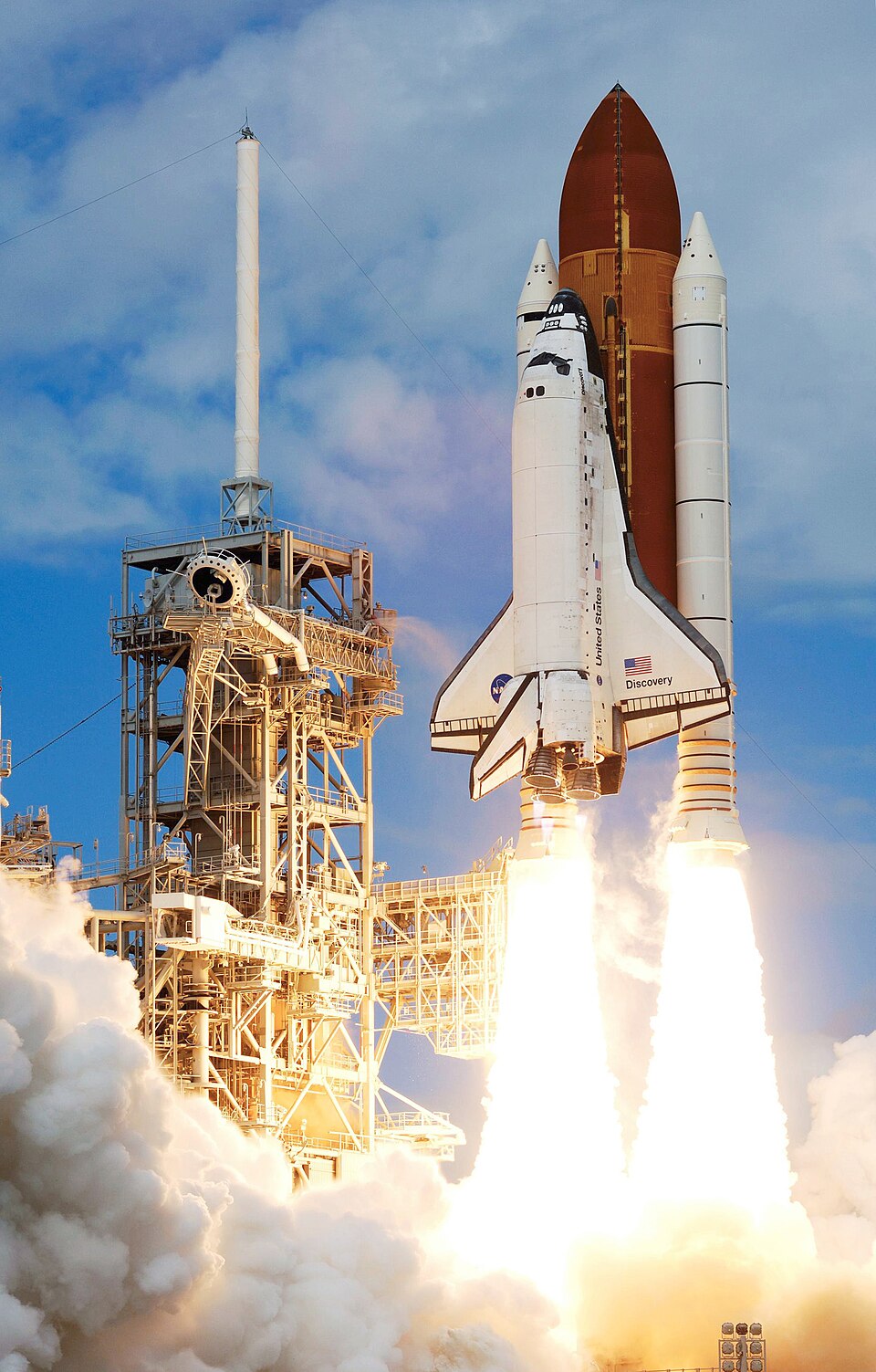
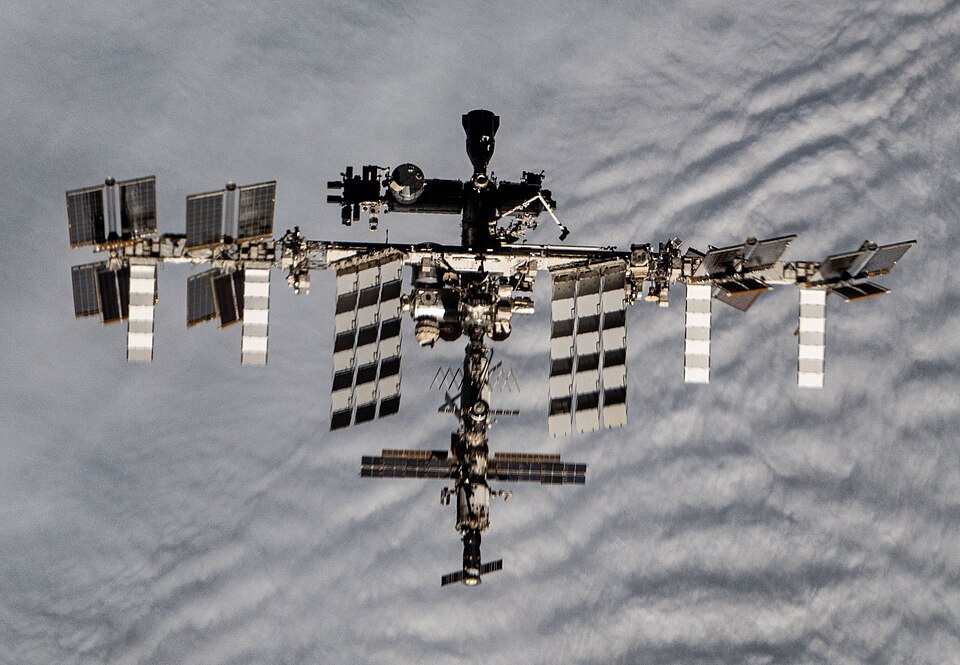
This page follows the profession from the Mercury Seven and Gagarin's Vostok through the Moon landings, the Shuttle's scientist-astronauts and a quarter century of continuous life aboard the International Space Station, into today's commercial crews. It covers how people actually get selected, what a day in orbit is scheduled down to five-minute blocks, who reached the top of the corps and how, and how much of the work robots already do.
Inside the profession
Astronaut is not a perpetual view from orbit; it is a rare operational role built on years of technical work, medical screening, teamwork and rehearsal for tasks that cannot be improvised.
Selection favours proven operators
Agencies recruit from engineering, science, medicine, military aviation and mission operations because the job demands a record of performance under constraint. Selection is highly competitive and includes physical, psychological and team assessment. The title comes after another serious career, not instead of one.
Training is the work
Candidates study spacecraft systems, robotics, survival, Russian or other operational languages, geology and emergency procedures. Simulators, neutral-buoyancy facilities and field exercises turn improbable failures into practiced responses. Even specialists must understand the wider vehicle and mission.
Spaceflight is a team product
A crew executes procedures written and supported by thousands of people on the ground. Communication with mission control, careful maintenance and scientific protocols occupy much of an expedition. Public appearances are also part of the role because agencies need public trust and political support.
A changing access model
Commercial spacecraft and new national programmes broaden the organisations involved, but not the core demands of safety and judgement. More flights may create new mission-specialist roles, while long-duration exploration keeps medical resilience and cooperative discipline central.
How the work branches
Five common shapes of the same title — specialty, setting or career path.
Science and station operations
Mission specialist
Runs experiments, maintains systems and supports complex mission tasks.
Vehicle operations
Pilot astronaut
Brings extensive flight-test or aviation experience to spacecraft procedures.
Focused research missions
Payload specialist
Contributes deep expertise for a defined experiment or capability.
Private spaceflight
Commercial astronaut
May fly as a company operator, researcher or privately funded participant.
Earth-based simulation
Analog mission operator
Tests habitats, procedures and human factors that support future crews.
How it reads by country
Same craft, different gatekeeping, status and daily texture — rewritten for readers in each language.
United States — NASA and commercial partners
NASA's astronaut corps recruits experienced professionals, while commercial providers create additional but still exceptionally selective flight roles. Military, research and engineering backgrounds remain common pathways.
South Korea — research partnerships and national ambition
Korea's human-spaceflight experience has been built through international partnerships and science missions. Aerospace engineering, research and agency roles provide the most realistic route into future programmes rather than a standalone astronaut career ladder.
Japan — JAXA and ISS expertise
JAXA astronauts are selected from highly accomplished technical and scientific pools and have a long ISS partnership record. Robotics, life sciences and precise operations are prominent national strengths.
Germany — ESA science and industry
German candidates compete through the European Space Agency selection system, supported by strong research institutes and aerospace manufacturing. Astronaut opportunities are European, not a national civil-service track.
United Kingdom — ESA access and research missions
British candidates participate through ESA and commercial research channels. The small number of seats makes a strong technical career valuable in its own right, regardless of selection outcome.
Singapore — space technology before crewed flight
Singapore's space sector focuses on satellites, data and downstream applications rather than a national crew programme. The relevant career path is engineering and research collaboration, with crewed opportunities dependent on international programmes.
From the archive
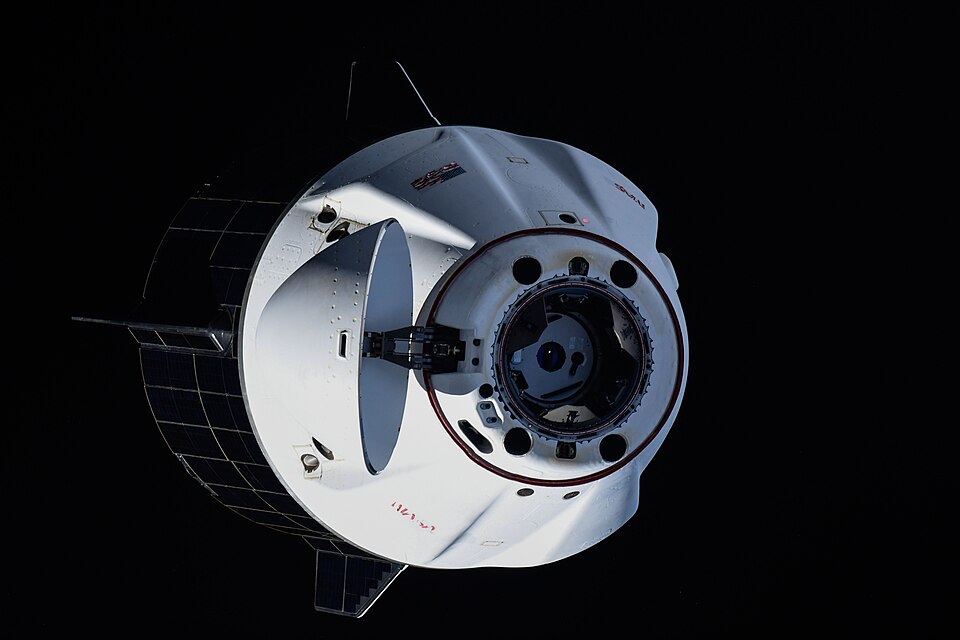
Commons CC/PD images self-hosted for this profession.
Why attitude matters here
An astronaut's technical training is nearly identical across a crew; what separates the ones mission control trusts with the next flight is whether they stay calm, honest and useful when a procedure stops matching the situation.
There is no way to pull over and no one who can reach the vehicle
A car problem can be stopped at the roadside; a spacecraft problem has to be worked through in real time, by the people already on board. An astronaut's attitude toward a checklist that stops matching reality — whether they freeze, or improvise methodically from first principles, as the Apollo 13 crew did — determines the outcome far more than any single piece of technical knowledge, because the knowledge is assumed and the composure is not.
Six people in a sealed container for months make interpersonal discipline a survival skill
Long-duration missions put a small crew in close quarters with no ability to leave, take a walk, or get distance from a conflict, for months at a time. An astronaut who cannot manage frustration or repair a friction with a crewmate before it festers is a genuine mission risk, and selection processes screen explicitly for this because technical excellence has never been the thing that breaks a long-duration crew.
Speaking up to a commander in a life-or-death instant runs against every social instinct
When a junior crew member notices something a commander has missed, mid-EVA or mid-reentry, saying so immediately requires overriding deference to authority and confidence that could be wrong. Spaceflight's chain of near-misses traces repeatedly to a crew member who saw the anomaly and hesitated to voice it, which is why crews now train explicitly on structured, urgent communication that doesn't wait for permission to speak.
Stances that hold up under pressure
Five concrete postures the work rewards, not slogans.
Reports anomalies immediately and precisely, without softening them
Describing exactly what a gauge, a smell or a sound actually was — not a minimized version chosen to avoid alarming ground control — is what lets the people with more data and more time actually help; a self-edited report can cost the minutes that mattered.
Works the checklist and improvises from principles when the checklist runs out
Staying methodical when a procedure stops applying, building a fix from first principles the way the Apollo 13 crew adapted a square filter to a round housing, distinguishes trained composure from technical skill alone — the skill assumed, the composure the actual differentiator.
Repairs a crewmate friction before it compounds over months in a sealed vehicle
Addressing an irritation directly and early, rather than letting it accumulate silently across a mission with no way to gain physical distance, is a discipline crews are selected and trained for specifically because isolation turns small unresolved frictions into mission-threatening ones.
Defers to the commander's call under stress, but says so first if they disagree
Voicing a disagreement clearly and once, then executing the commander's decision without visible resentment if overruled, keeps a crew functional under the kind of stress that would fracture a group still negotiating who is in charge.
Treats every simulator failure as data rather than as something to survive quietly
Debriefing a training failure honestly, including one's own errors, rather than minimizing them to preserve standing among peers who will fly with them, is what actually improves the odds on the mission where the same failure happens for real.
Moments that reveal it
Situations that separate résumé language from how someone actually practices.
An unexpected reading appears during a procedure, ambiguous enough that it could be a sensor glitch or a genuine system fault, with no immediate time pressure forcing a call either way.
Does the astronaut report the raw anomaly to ground control right away and let more data resolve it, or wait quietly to see if it self-corrects before mentioning something that might turn out to be nothing at all?
A procedure that has always worked in training stops matching what the vehicle is actually doing, mid-task.
Does the astronaut stop, reassess from first principles and communicate the mismatch, or keep executing the trained steps on the assumption that the checklist must be right and their read of the situation must be wrong?
A crewmate's habit — noise, a comment, a repeated small friction — starts to genuinely irritate another crew member two months into a six-month mission, with no way to get physical distance from each other at all.
Does the irritated crew member raise it directly and early, before it grows into something larger, or let it accumulate silently in a sealed environment where avoidance was never actually an available option?
A junior astronaut notices something during a high-stakes EVA or reentry sequence that the commander, focused elsewhere on another task at that exact moment, appears to have missed entirely.
Do they call it out immediately and specifically, using the trained language for an urgent challenge, or hesitate a moment too long on the assumption that the commander has almost certainly already seen it too?
Where "calling" turns harmful
"Dream job" framing is used to justify unpaid public relations labor and glossing over real risk
Astronauts are rare and celebrated, which agencies lean on to extract unpaid outreach and promotional work on top of an already demanding schedule, on the premise that anyone who calls this a dream job shouldn't complain about the hours it costs. The same framing has downplayed real occupational risk — radiation exposure, bone loss, psychological strain — as an acceptable price for a calling rather than a cost that should be disclosed plainly.
The profile
Resists AI74
Pay55
Barrier to entry99
Autonomy35
Demand30
Impact88
How exposed is it to AI?
Low
Task by task, a meaningful slice of the job is already automated: ascent, docking and re-entry are machine-flown with humans as monitors, and robotic probes do planetary science at a fraction of crewed cost. What cannot be automated is the mission's actual product — human presence, human physiology as the experiment, and improvised repair — so the profession shrinks or grows with political ambition, not with algorithmic capability.
Through a national or commercial selection, entered from another career. NASA requires a STEM master's degree (or a medical degree, test-pilot school, or doctoral work) plus professional experience or 1,000 hours piloting jets; ESA, JAXA, Canada and China run comparable competitions. Survivors of medical, psychological and interview rounds then complete roughly two years of basic training before becoming eligible for a flight assignment.
How much do astronauts get paid?
Far less than the fame suggests. NASA astronauts are civil servants: the 2024 selection quoted $152,258 a year, inside a general band of roughly $105k–190k. ESA's 2022 class started around €6,000–7,000 a month; Roscosmos published cosmonaut salaries in 2019 equal to only about $25,000–30,000 a year before flight bonuses. Military astronauts stay on their service's officer pay.
How long does astronaut training take?
About two years of basic training covers spacecraft systems, spacewalking in a giant pool, robotics, jet flying, wilderness survival and the Russian language. Graduation only makes you eligible: a specific mission then adds 18–30 months of dedicated training across Houston, Star City, Cologne and Tsukuba. Counting the prior degrees and career, most astronauts fly 15–20 years after leaving school.
Do you have to be a military pilot?
Not anymore. The first generation was drawn almost entirely from military test pilots — NASA's 1959 Mercury selection screened only them. Since the Shuttle era created mission specialists in 1978, roughly half of most astronaut classes have been civilian engineers, scientists and physicians. Pilots still fill command seats, but ESA's 2022 class included an astrophysicist, a neuroscientist-pilot and a medical doctor.
What are the physical requirements?
Less superhuman than people assume. Modern limits mostly ensure you fit the suits and seats — Soyuz-era seats accepted heights of roughly 150–190 cm — with vision correctable to 20/20 (NASA has accepted laser eye surgery since 2007), controlled blood pressure and no disqualifying conditions on a long-duration flight physical. ESA went further in 2022, selecting parastronaut John McFall, a leg amputee.
How many astronauts are there?
Vanishingly few. Roughly 700 people have reached space since 1961, and the active professional corps is far smaller: NASA lists around 40–50 active astronauts, ESA fewer than a dozen career astronauts, with comparably small groups in Russia, China, Japan and Canada. For comparison, a single large hospital employs more surgeons than there are trained astronauts alive.
How dangerous is spaceflight?
Statistically among the most lethal occupations ever practiced. Nineteen people have died during spaceflights — including the Soyuz 11, Challenger and Columbia crews — out of roughly 700 who have flown, a fatality rate near 3 percent, with more killed in training, such as the Apollo 1 fire in 1967. Modern vehicles are safer, but every crew still signs on to real, quantified risk.
Will robots replace astronauts?
Robots already fly the spacecraft — Soyuz has docked automatically since the 1980s, and SpaceX's Dragon is fully autonomous — and probes explore where humans cannot. But the profession's product is human presence itself: the physiology experiments, the repairs no arm can improvise, the symbolism. Robotic missions replace some science; they cannot replace the part of the job that is being there.
Embed this ranking
Paste this code into your blog or site — the ranking stays up to date.