👨‍🚀Origins & Evolution

Astronaut · The rarest job on Earth is practiced off it: roughly 700 people have ever held it, from Gagarin's 108 minutes to year-long tours on the space station.

Most professions accreted over centuries; this one was invented by committee in about two years. Between 1959 and 1961 the United States and the Soviet Union each had to decide, from scratch, what kind of human being should ride a converted ballistic missile — and both reached for military test pilots, small enough to fit the capsule and accustomed to machines that might kill them. The word itself was borrowed from interwar science fiction.

Everything since has been an argument about what the job actually is: pilot or passenger, hero or lab technician, national symbol or working scientist. Each new vehicle answered differently — Apollo needed geologist-explorers, the Shuttle needed engineers and physicians, the station needs patient generalists — and the commercial era is now rewriting the answer again.

Where it began

1957–1961Soviet Union & United States

Sputnik's launch in October 1957 turned a theoretical question — could a human survive spaceflight? — into a race. NASA introduced the Mercury Seven in April 1959, chosen from 508 screened military test-pilot records after President Eisenhower ruled that only test pilots need apply; the USSR quietly selected twenty young air force pilots in March 1960, among them a 26-year-old lieutenant named Yuri Gagarin. Neither country knew whether a person could swallow, see or think in weightlessness. On 12 April 1961 Gagarin's 108-minute flight answered the question and created the profession in a single morning.

Timeline

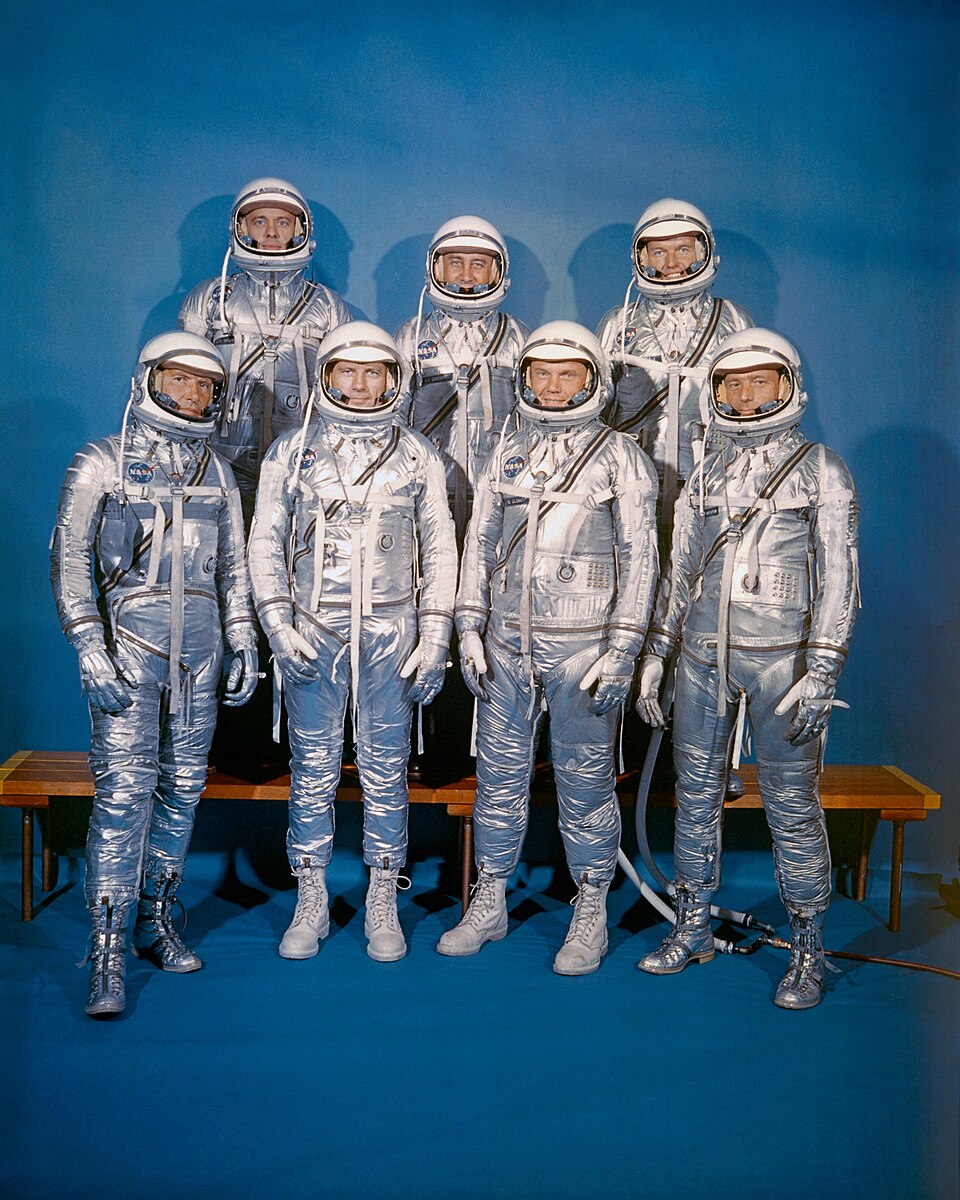
1959The Mercury Seven

On 9 April 1959 NASA presented its first seven astronauts — all military test pilots, screened from 508 records — at a Washington press conference where reporters treated them as heroes before any had flown. The template they set, cool competence under absurd risk, defined the job's public image for decades.

1961Gagarin orbits the Earth

On 12 April 1961, Yuri Gagarin rode Vostok 1 through a single 108-minute orbit, calling out "Poyekhali!" — "Let's go!" — at liftoff. He ejected at seven kilometres and parachuted into a Saratov field, a detail kept secret for years because record rules required landing with the craft. He launched a senior lieutenant and landed a major.

1963Tereshkova, the first woman

Valentina Tereshkova, a 26-year-old textile-factory worker chosen for her amateur parachuting, flew 48 orbits over three days aboard Vostok 6 in June 1963 — at that point more time in space than all American astronauts combined. No other woman flew until 1982; she remains the only woman ever to fly to space alone.

1965Leonov walks in space

On 18 March 1965 Alexei Leonov floated out of Voskhod 2 for twelve minutes — and nearly died returning: his suit had ballooned rigid in vacuum, and he silently vented its pressure toward the edge of decompression sickness to squeeze back into the airlock head-first. Spacewalking has been the job's defining physical craft ever since.

1969Apollo 11 lands on the Moon

Neil Armstrong and Buzz Aldrin spent 21.6 hours on the Sea of Tranquility on 20–21 July 1969 while Michael Collins orbited alone above. Twelve people walked the Moon between 1969 and 1972 — every one a product of the test-pilot and engineering pipeline built a decade earlier, and no one has repeated it since.

1971First space station, and the cost

The USSR's Salyut 1 hosted the first station crew for 23 days. On re-entry that June, a valve failure asphyxiated Georgy Dobrovolsky, Vladislav Volkov and Viktor Patsayev — still the only humans to die in space itself. Pressure suits during launch and landing, abandoned as unnecessary, became mandatory in every program afterward.

1978NASA Group 8 remakes the corps

The Shuttle needed scientists and engineers, not just pilots, so NASA's 1978 class of 35 created the "mission specialist" and included the first American women and African American astronauts — among them Sally Ride and Guion Bluford, who both flew in 1983. Half a century of all-male, all-pilot corps ended in one selection.

2000Humanity moves in

On 2 November 2000, Bill Shepherd, Yuri Gidzenko and Sergei Krikalev docked with the new International Space Station as Expedition 1. Humans have lived in orbit continuously ever since — turning the astronaut from an occasional visitor into a permanent resident species of one habitat, rotating in six-month shifts.

2003China joins, alone

Yang Liwei circled the Earth 14 times aboard Shenzhou 5 on 15 October 2003, making China the third nation to launch its own astronaut on its own rocket. Excluded from the ISS by US law, China built its own path — culminating in the permanently crewed Tiangong station in the 2020s.

2020The first commercial crew

On 30 May 2020, NASA astronauts Doug Hurley and Bob Behnken reached orbit in SpaceX's Crew Dragon — the first crewed orbital flight owned and operated by a private company, and the first crewed launch from US soil since 2011. Within two years, entirely private crews such as Inspiration4 followed on the same vehicle.

The eras

The seven Mercury astronauts in silver pressure suits, 1959.
NASA on The Commons · Public domain · Wikimedia Commons
1957–1969

Test pilots with a new job title

The first astronauts were chosen for the ability to stay useful inside a malfunctioning machine: military test pilots, screened by intrusive medical programs neither country fully understood the need for. Mercury, Vostok and Gemini flights lasted hours to days, and the crews fought their own engineers for the right to actually fly the vehicles — a struggle Tom Wolfe later immortalized as the argument over whether they were pilots or "Spam in a can."
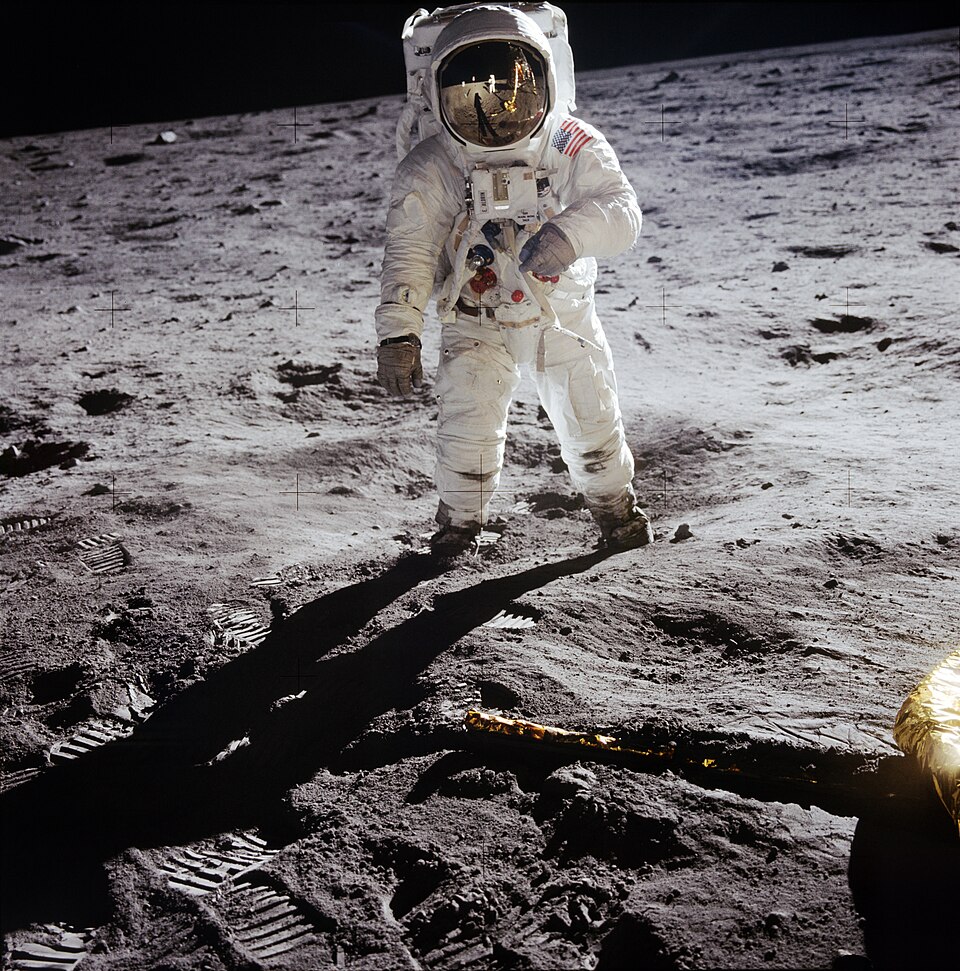
Buzz Aldrin standing on the Moon during Apollo 11, photographed by Neil Armstrong.
Neil A. Armstrong · Public domain · Wikimedia Commons
1969–1981

The Moon and the first stations

Apollo made astronauts the most famous people alive — around 600 million watched the first Moon landing — and briefly turned them into field geologists, with Harrison Schmitt on Apollo 17 the only professional scientist to walk the Moon. The Soviet Union, having lost that race, pivoted to endurance: Salyut stations taught crews to live in orbit for months, and the 1975 Apollo–Soyuz handshake between former rivals previewed the international workplace the job would become.

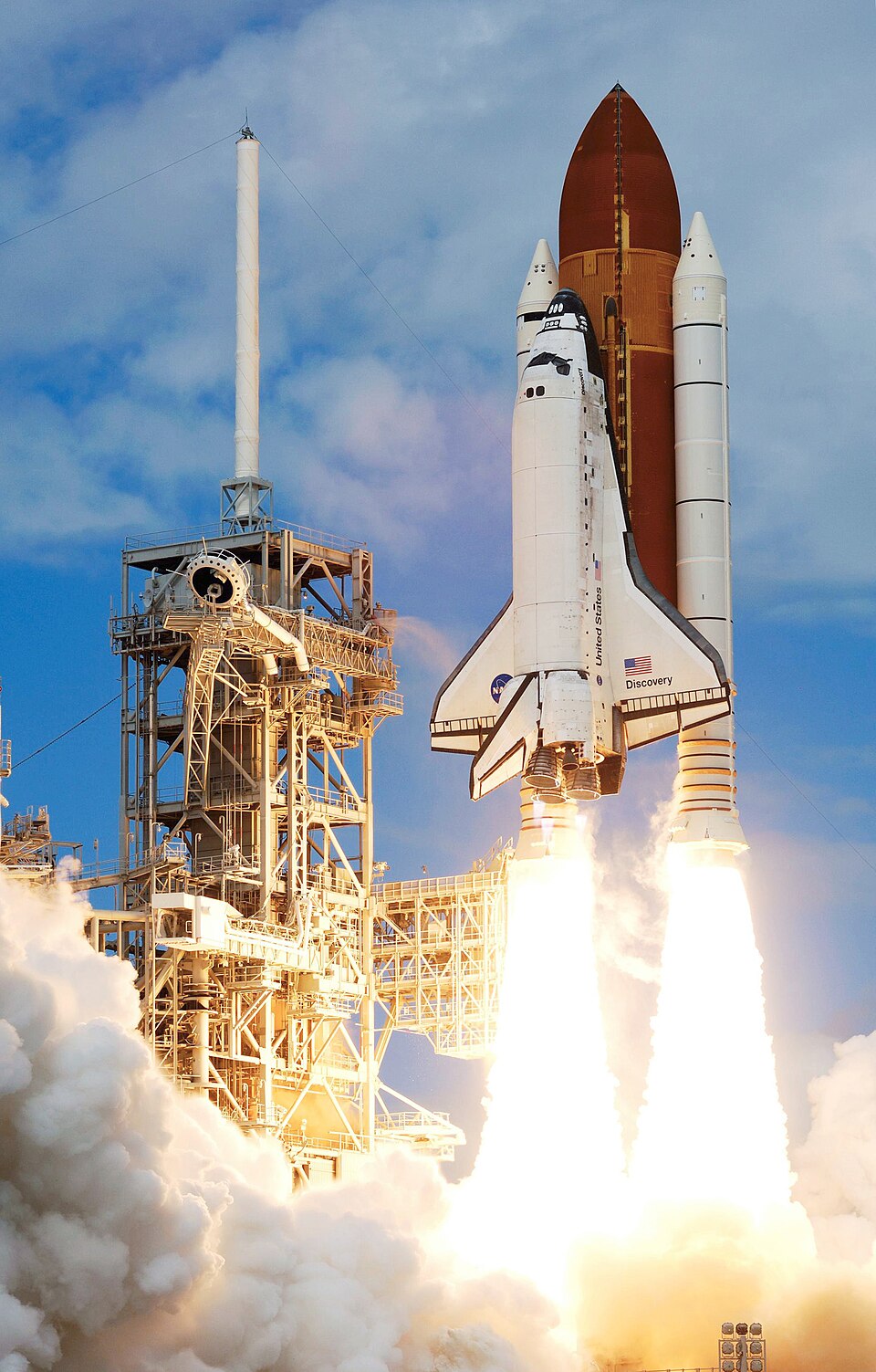
The Space Shuttle lifting off from the launch pad.
NASA; edited by jjron (tilt corrected) · Public domain · Wikimedia Commons
1981–2000

The Shuttle opens the corps

The Space Shuttle carried up to eight people at a time and needed engineers, physicians and scientists more than stick-and-rudder pilots, so the corps diversified fast: Sally Ride in 1983, Guion Bluford the same year, and payload specialists from partner nations across Europe, Japan, Canada and beyond. Challenger's loss in 1986, killing teacher Christa McAuliffe and six others on live television, ended the claim that spaceflight had become routine; aboard Russia's Mir, physician Valeri Polyakov logged 437 consecutive days, still the record.

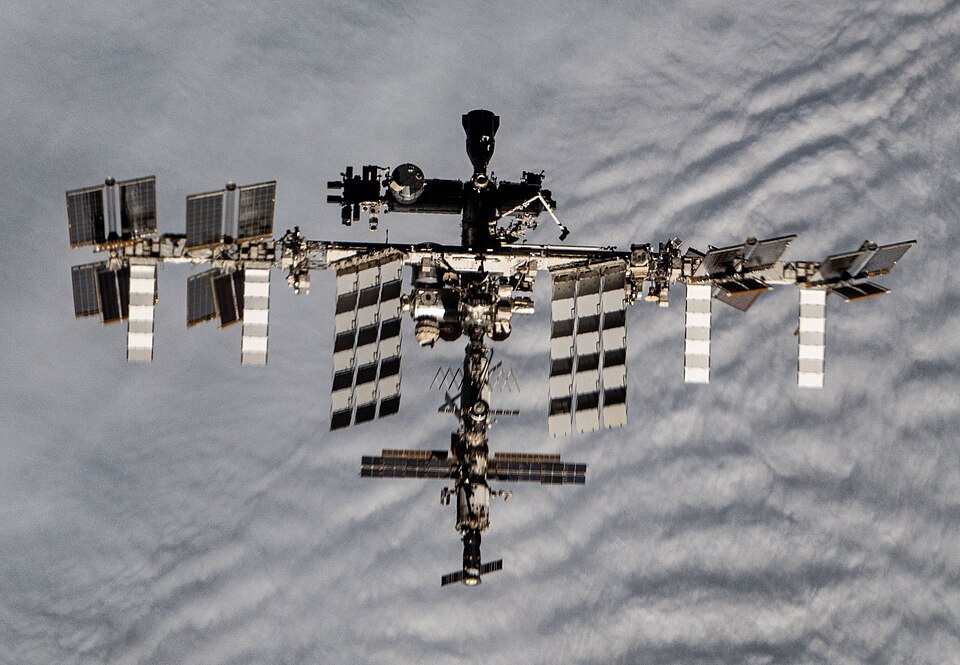
The International Space Station photographed against the blackness of space.
NASA Johnson Space Center · Public domain · Wikimedia Commons
2000–2020

The station professional

Continuous ISS habitation from November 2000 remade the astronaut into a long-duration generalist: part laboratory technician running hundreds of experiments, part plumber and electrician maintaining a million-kilogram machine, part test subject whose own bones, eyes and DNA are the data. After the Shuttle retired in 2011, every crew flew on Russia's Soyuz for nine years — an era of forced cooperation through otherwise frozen politics, with six-month tours as the standard unit of a career.

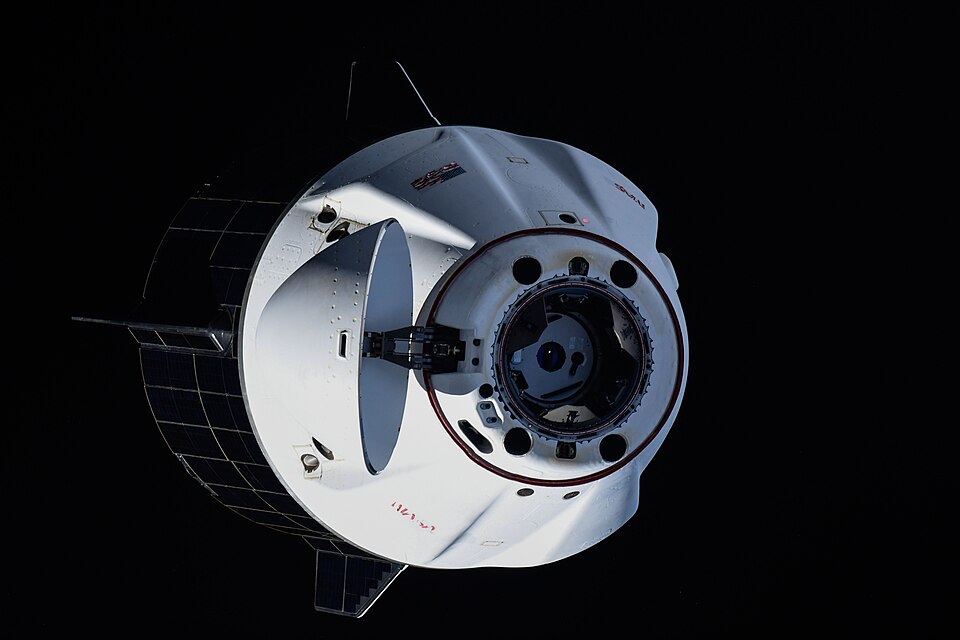
A SpaceX Crew Dragon capsule in orbit above the Earth.
NASA Johnson Space Center · Public domain · Wikimedia Commons
2020–present

Commercial and plural

SpaceX's Crew Dragon ended the government monopoly on reaching orbit, and the profession promptly split: career agency astronauts training for Artemis Moon missions, China's corps rotating through its own Tiangong station, and a new commercial class — private missions like Inspiration4 in 2021 and Axiom's ISS visits, crewed partly by retired NASA veterans now flying as employees of a company. ESA's 2022 selection of parastronaut John McFall began dismantling the last physical entry barriers.

What this job replaced

Neighbouring trades that no longer exist — absorbed, automated or regulated away.

Stratonaut

1931–1966

Before rockets, the edge of space belonged to balloonists in pressurized gondolas. Auguste Piccard reached 15,785 metres in 1931; the Soviet Osoaviakhim-1 crew of three died in 1934 when their record-setting flight iced up and broke apart; the US Explorer II crew touched 22,066 metres in 1935, photographing the curve of the Earth. The trade produced the pressure suits and cabin technology astronauts inherited, then vanished when rockets made balloons look slow — its last practitioner, Nick Piantanida, died in a 1966 jump attempt.

X-15 rocket-plane pilot

1959–1968

Twelve pilots flew the X-15 rocket plane off the wing of a B-52 to the edge of space — eight earned US astronaut wings for flights above 50 miles, and Joe Walker crossed the 100-kilometre Kármán line twice in 1963. For a decade it seemed winged rocket planes, not capsules, would be the path to orbit; the program ended in 1968, a year after Michael Adams died in a re-entry breakup, and the winged path lay dormant until the Shuttle partially revived it.

Shuttle payload specialist

1983–2003

The Shuttle era created a category of one-flight, non-career crew members: company engineers like Charles Walker of McDonnell Douglas, the first commercial astronaut in 1984; sitting US politicians; and teacher Christa McAuliffe, who died aboard Challenger in 1986. The category never recovered its footing after that loss and effectively ended when Columbia broke up in 2003, killing payload specialist Ilan Ramon — professional career corps and, later, paying private astronauts absorbed the role.

Trades that vanished →

Seven decades in, the profession has already outlived three of its supposed endpoints: the Moon race that created it, the Shuttle that routinized it, and the station that domesticated it. Each time the vehicle changed, the job description was rewritten — but the selection boards kept looking for the same person: technically deep, medically durable, impossible to panic.

What has not changed since Gagarin is the core transaction. A government — now sometimes a company — spends years and fortunes preparing one human to go where the species mostly cannot, because some things a probe cannot do, and because a probe proves nothing about us. Every era has renegotiated the price; none has cancelled the trip.

Keep exploring

More in Frontier & Field