The witness who finds out what is happening and tells the public — from Rome's Acta Diurna to the Panama Papers, still asking questions power would rather skip.
Also called: Reporter · Correspondent · Newsperson
Journalist: The witness who finds out what is happening and tells the public — from Rome's Acta Diurna to the Panama Papers, still asking questions power would rather skip.
The word comes from the French journal, a daily — someone paid to fill the day's record. The function is far older than the name: Rome posted the Acta Diurna in the Forum from 59 BCE, Tang-dynasty China circulated hand-copied court gazettes, and Venice sold handwritten news sheets by subscription before Johann Carolus of Strasbourg printed the first newspaper in 1605. Finding out what is happening and telling the public has been an organized trade, in some form, for more than two thousand years.
It is also one of the least gated major professions. Almost no country requires a license — Italy's state-recognized order of journalists is the famous exception — and no exam stands between a school-leaver and a byline. What gates entry instead is the portfolio: published work, and the sources behind it. That openness cuts both ways. The trade is easy to enter and hard to stay in, modestly paid at the median, and, in a growing list of countries, dangerous to practice honestly.
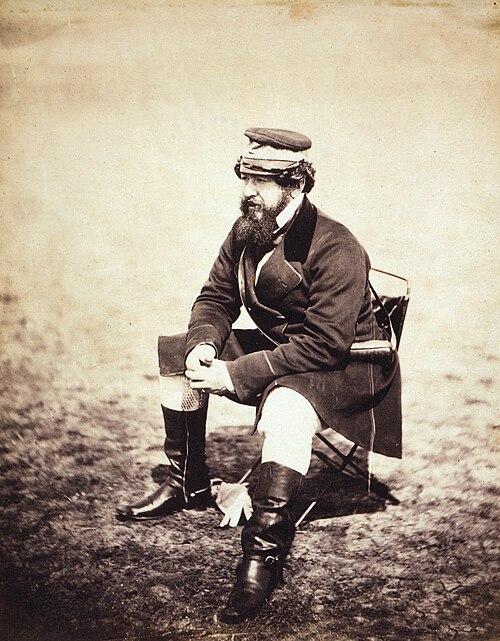
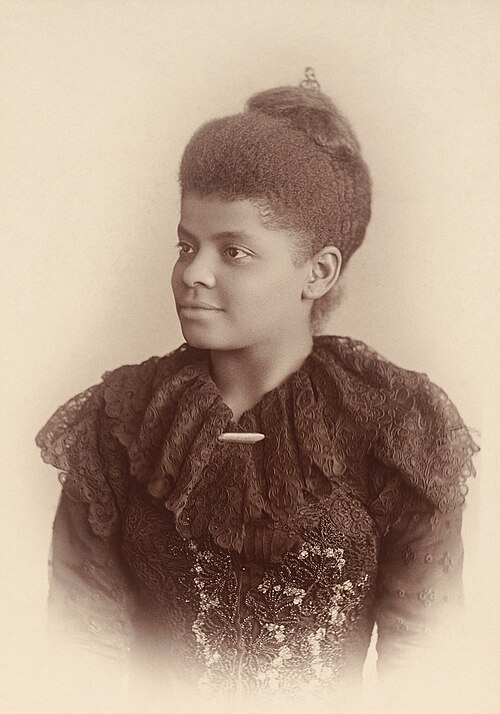
This page follows the trade from Caesar's gazette to the Panama Papers: how war reporting, the interview, the byline and the two-source rule came to exist; what a working day actually demands; the route in through student papers, traineeships and beats; eight practitioners from William Howard Russell to Anna Politkovskaya; and an honest accounting of which parts of the job artificial intelligence is already doing, and which parts still require a human being willing to knock on a door.
Inside the profession
Journalism is the practice of making a defensible public account before the deadline closes, even when the people with the best information would prefer not to talk.
Reporting is verification
A story begins with a question, documents, observations and sources rather than a finished opinion. Reporters test claims against records, seek responses from people criticised and distinguish what they know from what they infer. Speed matters, but an error can damage a source and an audience for years.
The beat creates expertise
Courts, city halls, hospitals, sport and technology each have their own language and incentives. A beat reporter learns who has authority, what data exists and which routine meeting may contain a consequential decision. Trust is built through fair, repeated contact rather than access bought by flattery.
The business model shapes the newsroom
Advertising decline, subscriptions, nonprofit funding and platform distribution have changed which stories receive time. Many journalists combine reporting with newsletters, audio, video or audience work. Independence depends not only on individual courage but also on editors, legal support and a viable publisher.
AI raises the premium on provenance
Automation can transcribe interviews, search records and draft routine copy, while synthetic media makes verification harder. The core work remains source judgement, field reporting and accountable editing. A useful newsroom records how it knows what it publishes.
How the work branches
Five common shapes of the same title — specialty, setting or career path.
Public-interest and watchdog reporting
Investigative reporter
Builds long records-based projects that often need legal and editorial backing.
Local, political or specialist desks
Beat reporter
Covers a defined institution closely enough to spot meaningful change.
Television, radio and digital video
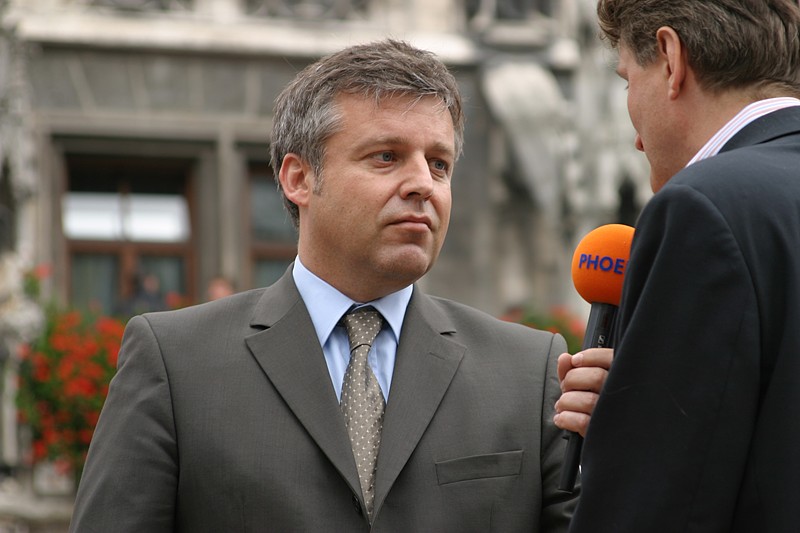
Broadcast journalist
Reports through scripts, live interviews and visual evidence under tight timing.
Newsrooms and investigative teams
Data journalist
Uses datasets and code to find patterns, then reports the human meaning.
Multiple publications and regions
Freelance correspondent
Trades staff stability for independence, pitches and a portable network.
How it reads by country
Same craft, different gatekeeping, status and daily texture — rewritten for readers in each language.
United States — local-news strain and nonprofit growth
National outlets coexist with shrinking local newsrooms and expanding nonprofit investigative models. First Amendment protections are important but do not eliminate litigation risk, access battles or financial pressure.
South Korea — fast digital news and press access
Korean news moves quickly across portals, broadcasters and newspapers, with political reporting shaped by fierce competition and access norms. Digital audience metrics can reward speed while deep reporting requires time and institutional protection.
Japan — club access and independent outlets
Kisha club systems can structure access to official sources, while magazines, broadcasters and digital independents offer different reporting cultures. Foreign-language and investigative work often requires patient sourcing outside formal briefings.
Germany — public broadcasting and regional papers
Public broadcasters, national publications and local papers support varied career routes. Strong privacy law and careful editorial standards shape reporting practice, particularly around personal allegations.
United Kingdom — national press and public broadcasters
London concentrates national media, while regional journalism remains a key training ground. The BBC, commercial broadcasters and a combative press culture create distinct editorial environments.
Singapore — regional desk and legal awareness
Singapore-based outlets cover Southeast Asia from a major regional hub. Journalists work in a compact media market where defamation law, regulatory boundaries and cross-border reporting require careful editorial judgement.
From the archive
Commons CC/PD images self-hosted for this profession.
Why attitude matters here
A journalist's reporting skills get a story written; whether that story is fair, sourced honestly and worth the harm it might cause someone depends on attitude choices no editor can fully check after the fact.
The reporter usually knows more than the editor about what a source actually said
An editor can catch a grammar error or ask a clarifying question, but they were not in the room when a source spoke, and cannot verify from the newsroom whether a quote was trimmed fairly or a caveat was dropped to sharpen a sentence. Whether a reporter represents a source's actual meaning, including the parts that complicate a clean narrative, is a matter of that reporter's own discipline, not a check the system reliably performs for them.
Deadline pressure rewards exactly the shortcuts that produce corrections
The fastest way to file a story is often to run with the first confirmation, skip the callback that would complicate it, or repeat a claim because it is plausible and everyone else is running it. A reporter whose attitude toward verification degrades under deadline pressure — rather than holding the same bar at minute one and minute fifty-nine — is the profile behind nearly every retraction that wasn't caused by a genuinely deceived source.
Access journalism quietly punishes the reporters who ask the hardest questions
A source who feels burned by tough coverage can simply stop returning calls, cutting off future access that a reporter's career may depend on. Whether a journalist asks the uncomfortable follow-up anyway, knowing it might cost them their best source, or softens coverage to preserve the relationship, is an attitude choice invisible to readers and decisive for whether the outlet's reporting can be trusted at all.
Stances that hold up under pressure
Five concrete postures the work rewards, not slogans.
Calls a source back to check a quote that could be read multiple ways
Confirming an ambiguous or damaging quote before publishing it, even when the deadline makes the call genuinely inconvenient, catches the misunderstandings that a fast, confident read of a notebook simply does not.
Runs the correction as prominently as the original error
Publishing a correction with the same visibility as the mistake it fixes, rather than a quiet edit or a buried note, is what separates a newsroom that takes accuracy seriously from one that treats corrections as a formality to minimize.
Asks the question that risks losing a valuable source's access
Putting the hard, specific follow-up to a powerful or useful source, even knowing it could end the relationship that access depends on, is the actual test of whether a reporter's independence survives contact with a source worth keeping.
Declines to run a claim that only one source will confirm on the record
Holding a story that isn't adequately sourced, even under competitive pressure to publish before a rival outlet does, protects against the exact failure mode — a single unverified claim treated as fact — behind most major journalistic scandals.
Discloses a personal or financial connection to a story before it becomes a problem
Flagging a conflict of interest to an editor before it is discovered by someone else is a discipline that has nothing to do with reporting talent and everything to do with whether a newsroom's credibility survives scrutiny.
Moments that reveal it
Situations that separate résumé language from how someone actually practices.
A quote from an interview, taken slightly out of its original context, would make for a much sharper and more shareable headline than the fuller, more complicated version of the same remark actually said.
Does the reporter run the quote with the context that complicates it, or the trimmed version that reads better but represents the source's actual meaning noticeably less accurately to readers who see only the headline?
A well-placed source who has been valuable for months provides information that turns out, on a closer check, to be wrong or misleading, and correcting the record publicly would visibly embarrass that specific source in front of colleagues.
Does the reporter correct the public record plainly regardless of the relationship at stake, or quietly let the error stand uncorrected to preserve access to a source they will likely need again soon on other stories?
A competing outlet publishes a claim first, based on sourcing the reporter's own newsroom cannot yet confirm to the same standard it would normally require before running anything on the record.
Does the reporter hold the story until it's properly sourced by their own newsroom's usual standard, or match the competitor's claim quickly under the pressure of being visibly scooped on the story first?
A story a reporter has invested several weeks in turns out, midway through the reporting, to not actually support the angle it was originally pitched and assigned on.
Does the reporter follow the evidence to wherever it actually points, even if that means pitching something far less dramatic, or keep looking selectively for evidence that supports the original angle?
Where "calling" turns harmful
"Speaking truth to power" gets used to justify pay that doesn't cover the work
Local news and freelance journalism increasingly run on the premise that reporters who care about the public-interest mission should accept low pay and per-piece rates that don't cover the reporting time a story actually requires, because complaining about compensation looks unserious next to the mission. A newsroom that pays enough for reporters to decline a rushed, under-sourced story is protecting the accuracy the profession depends on.
The profile
Resists AI58
Pay35
Barrier to entry30
Autonomy70
Demand32
Impact88
How exposed is it to AI?
Moderate
A substantial share of day-to-day output — routine recaps, transcription, translation, first-draft summaries, feed monitoring — is already automatable, and jobs built mostly on aggregation are disappearing. The tasks that break stories are not automatable: cultivating human sources, witnessing events firsthand, and adversarial accountability interviews all require a trusted, legally responsible human. The job shrinks and re-centers on original reporting rather than vanishing.
Do you need a journalism degree to become a journalist?
No, in most countries. Editors hire on published work — clips — and many respected reporters studied history, economics, law or nothing at all. A journalism degree teaches craft, media law and shorthand faster than learning alone, and some markets have structured routes of their own: Germany's paid Volontariat traineeships, Japan's newspaper entrance exams. Italy is the rare democracy that legally requires registration with a professional order.
How much do journalists earn?
Modestly, with famous exceptions. The US median for news analysts, reporters and journalists was about $57,500 in 2023 (BLS); UK medians sit near £35,000; Japan's national dailies pay well above their market's average wage. A small class of anchors, columnists and star investigative reporters earns hundreds of thousands to millions, which badly distorts public perception of what typical journalism pays.
How do I get a first job in journalism?
Build clips before anyone will pay you: student papers, campus radio, local outlets, a focused newsletter. Then aim for the structured entry points — internships, the BBC, Reuters and AFP trainee schemes, Germany's Volontariat, graduate programs at national papers — all of which judge applicants mostly on published work. Local and trade publications hire earlier and teach faster than famous mastheads.
Will AI replace journalists?
It is already doing part of the work: the Associated Press has auto-generated routine corporate-earnings stories since 2014, and transcription, translation and first-draft summaries are increasingly automated. What AI cannot do is witness events firsthand, persuade a frightened source to talk, or put an accountable question to a person in power. Jobs built on aggregation shrink; verification and original reporting gain value.
What is the difference between a journalist and a reporter?
A reporter gathers and files news — the trade's front line. Journalist is the wider term, covering reporters but also editors, photojournalists, producers, columnists and fact-checkers, everyone whose work is bound by the same norms of verification, independence and accountability. All reporters are journalists; a columnist or a news editor is a journalist who may rarely report.
Is journalism dangerous?
It depends almost entirely on where and what you cover. The Committee to Protect Journalists counted 124 journalists killed in 2024, the deadliest year in its records, the majority in Gaza, and 361 imprisoned worldwide that December. In most democracies the sharper risks are legal — libel suits, source-protection fights — plus sustained online harassment, which falls hardest on women reporters.
Do journalists need a press card or license?
A license, almost never — state licensing of journalists is widely treated as a press-freedom violation, and Brazil's Supreme Court struck down its diploma requirement in 2009. Press cards are different: credentials for access, issued by employers, unions or bodies like France's CCIJP, which has issued the carte de presse since 1936. Italy remains the notable democracy requiring membership in a professional order.
Is journalism a dying career?
Shrinking and reshaping, not dying. US newsroom employment fell about 26 percent between 2008 and 2020 (Pew) as advertising money moved to platforms, and local papers keep closing. But subscription-funded national outlets, nonprofit newsrooms, newsletters and cross-border investigative networks have all grown, and demand for people who can verify what is true is rising, not falling. There are fewer jobs — and different ones.
Embed this ranking
Paste this code into your blog or site — the ranking stays up to date.