🧮Origins & Evolution

Mathematician · From Babylonian scribes to Fields medalists and AI-assisted proof: the profession that turns hard questions into permanent certainty, one theorem at a time.

Mathematics is older than the profession of mathematician. For most of recorded history the people doing it were scribes, philosophers, astrologers, court astronomers or gentleman amateurs; a salaried job whose entire content was proving new mathematics barely existed before the nineteenth-century German university. What did exist, continuously since Bronze Age Mesopotamia, was the work itself — and the strange property that separates it from every other science: its results, once proved, never expire.

That permanence shapes the whole history. Physics discards its past; mathematics compounds it. A working number theorist today directly uses results of Euclid (c. 300 BCE), Fermat (1640), Gauss (1801) and Riemann (1859) in a single argument. The story of the profession is the story of how societies kept deciding, era after era, that someone should be paid to add to that permanent stock — and who was allowed to be that someone.

Where it began

c. 1800 BCEBabylonia & Egypt

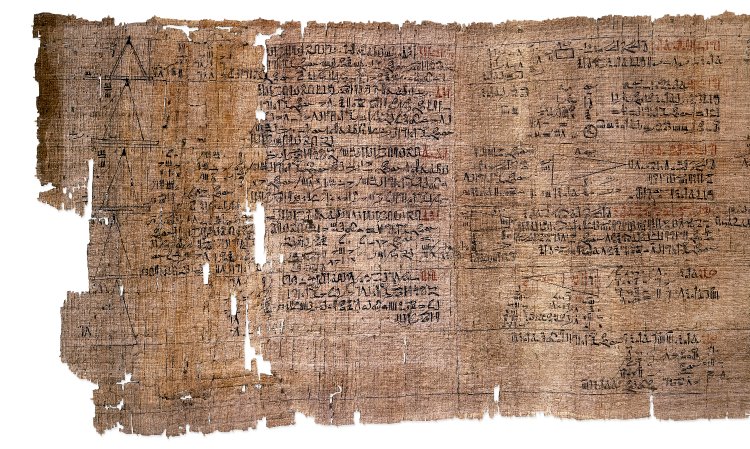
The first people paid to do mathematics were scribes. In the tablet-house schools of Nippur and Babylon, trainees copied tables of reciprocals and squares and solved what we would now call quadratic equations, in base sixty — the tablet Plimpton 322 (c. 1800 BCE) lists sophisticated Pythagorean triples a full millennium before Pythagoras. In Egypt, the Rhind Papyrus (copied c. 1550 BCE by the scribe Ahmes from an older text) works through 84 problems of rations, granaries and pyramid slopes. These were administrators, not theorists — but they were numerate professionals with training, texts and salaries, and every later form of the job descends from them.

Timeline

c. 1800 BCEPlimpton 322 and the scribal schools

A Babylonian clay tablet now at Columbia University lists fifteen rows of Pythagorean triples in sexagesimal notation, evidence of systematic number theory a thousand years before Pythagoras. It was produced by a scribal culture whose tablet-house schools trained professional calculators for temple and palace administration — the first institutional mathematics education anywhere.

c. 300 BCEEuclid's Elements in Alexandria

Working at Alexandria under Ptolemy I, Euclid organized Greek geometry into thirteen books of definitions, postulates and 465 propositions, each proved from what came before. The Elements fixed the axiomatic method as mathematics' standard of truth and remained a working textbook for over two thousand years — printed in more editions than almost any book except the Bible.

c. 820Al-Khwarizmi names algebra in Baghdad

At Caliph al-Ma'mun's House of Wisdom, Muhammad ibn Musa al-Khwarizmi wrote a treatise on solving equations whose key operation, al-jabr ("restoring"), became the word algebra. His arithmetic text carried Indian decimal numerals into the Islamic world and later Europe, and the Latin corruption of his name — Algoritmi — became "algorithm."

1545Cardano publishes the cubic — and ignites a feud

Gerolamo Cardano's Ars Magna printed general solutions to cubic and quartic equations, including the cubic method Niccolò Tartaglia had confided to him in 1539 under an oath of secrecy. Tartaglia's public fury, and the equation-solving duels of the era — where mathematicians defended their livelihoods in open contest — show how competitive, and how professional, Renaissance mathematics had become.

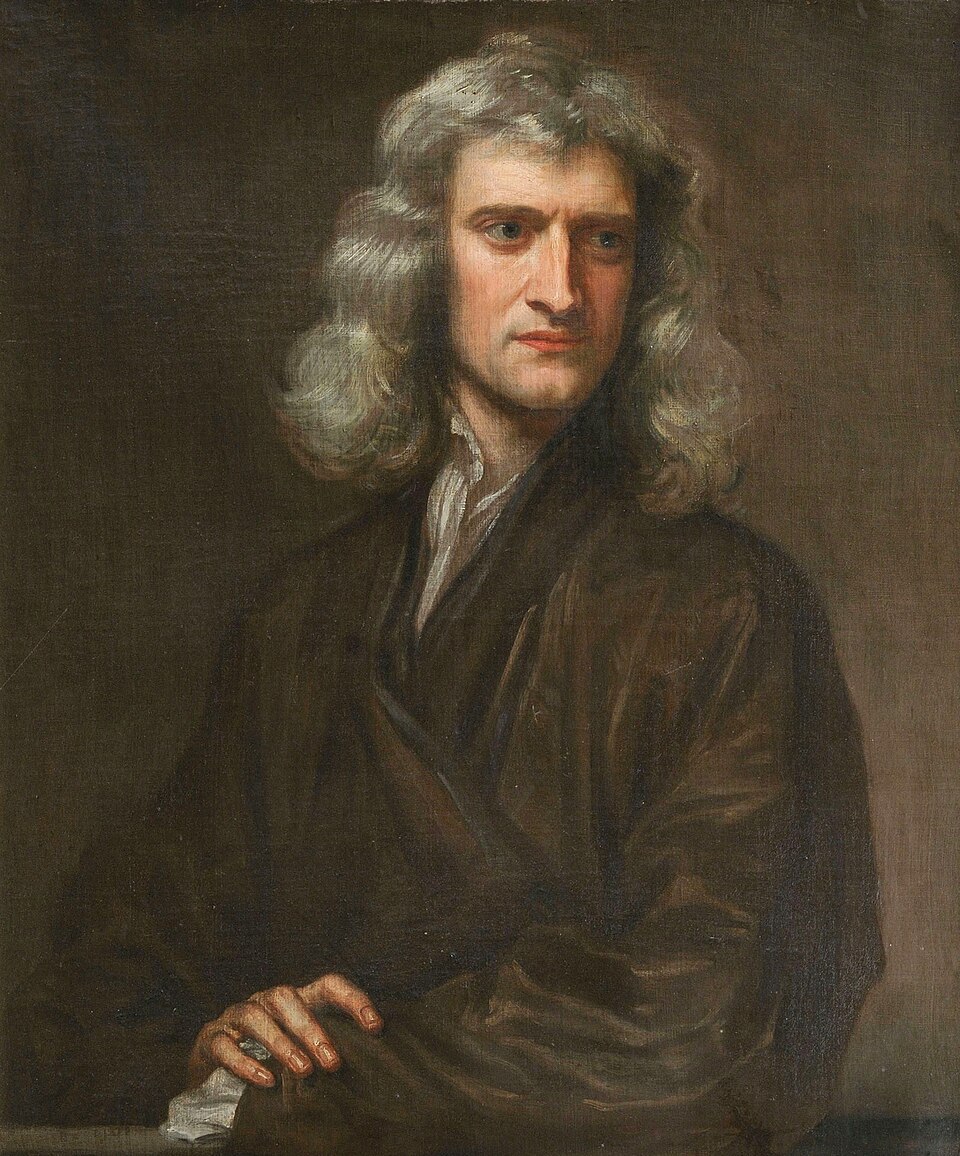
1687Newton's Principia

Isaac Newton's Philosophiæ Naturalis Principia Mathematica, published only because Edmond Halley paid the printing costs himself, derived the motion of planets, moons and tides from three laws and universal gravitation. The ensuing priority war with Leibniz over the calculus split British and continental mathematics for a century — the field's most famous lesson in the cost of pride.

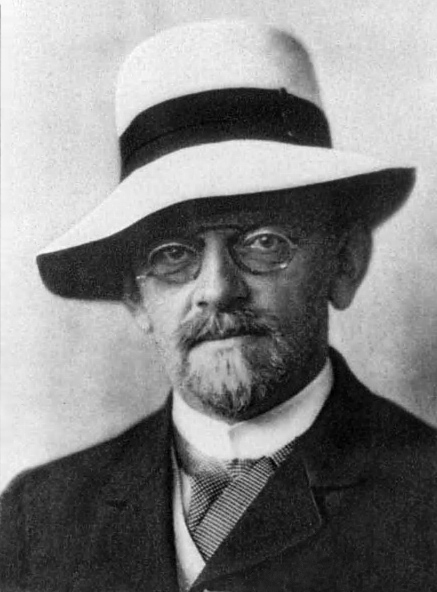
1900Hilbert sets the century's agenda

At the International Congress of Mathematicians in Paris on 8 August 1900, David Hilbert presented ten of a list of twenty-three unsolved problems, declaring that in mathematics "there is no ignorabimus" — no unknowable. The list steered research for a hundred years; several problems, including the Riemann hypothesis, remain open today.

1931Gödel proves incompleteness

A 25-year-old Kurt Gödel in Vienna proved that any consistent formal system rich enough for arithmetic contains true statements it cannot prove. The result demolished Hilbert's program of securing all mathematics on a complete axiomatic foundation, and permanently changed what mathematicians can honestly claim about their own subject.

1976The four color theorem falls to a computer

Kenneth Appel and Wolfgang Haken of the University of Illinois proved that four colors suffice for any planar map, using about 1,200 hours of computer time to check nearly two thousand configurations no human could verify by hand. The department franked its mail "FOUR COLORS SUFFICE" while philosophers argued over whether an uncheckable proof counts — the first great crisis of computer-assisted mathematics.

1995Wiles proves Fermat's Last Theorem

After seven years working in secrecy in his Princeton attic study, Andrew Wiles announced a proof of Fermat's Last Theorem at Cambridge in June 1993 — then spent fourteen months repairing a gap a referee found, closing it with Richard Taylor in September 1994. The proof, published in the Annals of Mathematics in 1995, ended a 358-year-old challenge scribbled in a margin.

2025AI reaches olympiad gold

Systems from Google DeepMind and OpenAI performed at gold-medal standard on International Mathematical Olympiad problems in July 2025, a year after DeepMind's AlphaProof reached silver level. With the Lean proof assistant's mathlib library passing a million-plus lines of formalized mathematics, the profession began seriously debating which parts of proving would remain human work.
The eras

A section of the Rhind Mathematical Papyrus, an ancient Egyptian mathematical text.
unknown ( c. 2000 B.C ) · Public domain · Wikimedia Commons
c. 3000 BCE – 500 CE

Scribes, geometers and the first proofs

Babylonian and Egyptian scribes built mathematics as a salaried administrative craft — taxes, land measurement after the Nile floods, granary volumes — while Greek thinkers from Thales onward converted it into something new: statements established by deductive proof rather than checked by example. Alexandria's Museum housed Euclid, Apollonius and later Hypatia, whose murder by a mob in 415 CE is often taken as the era's symbolic end. The Greek innovation, proof, remains the profession's defining product.

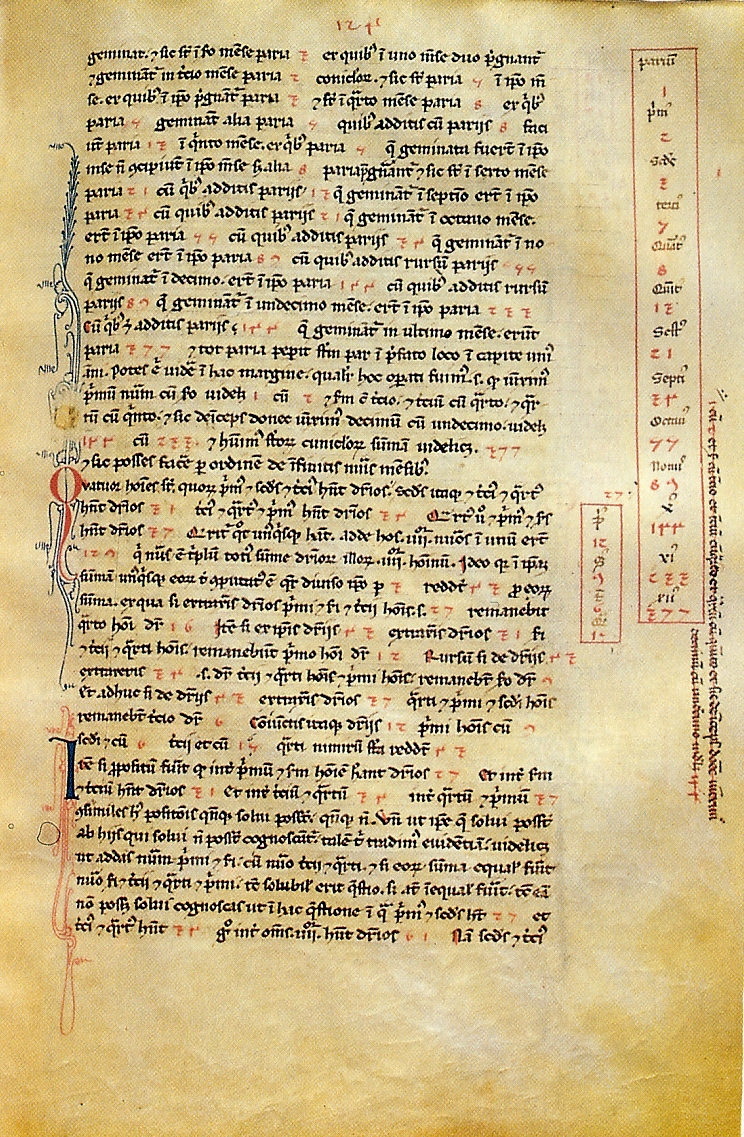
A page from a manuscript of Fibonacci's Liber Abaci, which introduced Hindu–Arabic numerals to Europe.
Unknown author · Public domain · Wikimedia Commons
500 – 1500

Baghdad, Kerala and the medieval bridge

While Latin Europe's mathematics dwindled, the Islamic world built on Greek and Indian foundations: al-Khwarizmi's algebra, Omar Khayyam's geometric cubics, decimal numerals refined and transmitted westward. Fibonacci's Liber Abaci (1202) carried those numerals into European commerce. In Kerala, Madhava of Sangamagrama derived infinite series for pi and the trigonometric functions around 1400 — two centuries before Europe — a school whose work stayed almost unknown outside India until the modern era.

Portrait of Isaac Newton, whose Principia mathematized the physical world.
Godfrey Kneller · Public domain · Wikimedia Commons
1500 – 1800

Courts, academies and the calculus

Renaissance and Enlightenment mathematicians lived on patronage: Cardano and Tartaglia fought public equation duels for reputation and pupils, while Euler spent his career salaried by the imperial academies of St Petersburg and Berlin, and Lagrange succeeded him at Frederick the Great's invitation. Newton and Leibniz built the calculus that made mathematics the engine of the new physics — and their priority war showed that credit, then as now, was the profession's real currency.

Portrait of David Hilbert, whose 23 problems set the agenda for 20th-century mathematics.
Unknown author Unknown author · Public domain · Wikimedia Commons
1800 – 1950

The professorial century of rigor

Nineteenth-century German universities invented the modern job: professor-researchers with doctoral students, specialist journals beginning with Crelle's in 1826, and seminars. Göttingen under Gauss, Riemann, Klein and Hilbert became the world's mathematical capital until the Nazi purges of 1933 emptied it in a single year — asked by the education minister whether his institute had suffered, Hilbert replied that it no longer existed. Rigor itself was rebuilt: Cauchy and Weierstrass's limits, Cantor's set theory, and axiomatics throughout.

1950 – present

Computers, collaboration and the arXiv

Postwar state funding — Cold War science budgets in the US and USSR above all — multiplied the profession, with institutes like Princeton's IAS and Moscow's mech-math faculty as poles. Computers entered as tools and then as provers, from the four color theorem in 1976 onward. The arXiv preprint server (1991) made instant global circulation the norm, and projects like Polymath (2009) showed theorems being proved by open online crowds — the lone-genius model giving way, visibly, to a networked craft.

What this job replaced

Neighbouring trades that no longer exist — absorbed, automated or regulated away.

Human computer

c. 1760–1970

For two centuries, "computer" was a job title: teams of people calculating by hand, from the British Nautical Almanac's network of home-working calculators (begun 1767) to the Harvard Observatory's women computers and NASA's West Area Computing unit, where Katherine Johnson checked orbital trajectories John Glenn refused to fly without. Electronic computers erased the trade within roughly a decade of ENIAC's 1945 debut — the machines took the workers' very name.

Reckoning master

c. 1200–1700

The maestri d'abaco of Italian commercial cities and the Rechenmeister of German towns taught merchants' sons practical arithmetic — currency exchange, interest, partnership divisions — in private schools outside the universities. Adam Ries's German-language arithmetic books (from 1522) were so authoritative that "nach Adam Riese" ("according to Adam Ries") still means "correctly calculated" in German today. Printed textbooks and universal schooling slowly dissolved the trade.

Court astrologer-mathematicus

c. 1450–1700

For centuries the title "mathematicus" meant a court employee who did astronomy, calendar work and astrology as one job: Johannes Kepler, Imperial Mathematician to Rudolf II from 1601, cast horoscopes for the general Wallenstein while writing the laws of planetary motion, and frankly called astrology the "foolish daughter" who fed her sensible mother, astronomy. The scientific revolution split the professions and starved the astrological half of its standing.

Trades that vanished →

The profession has already survived several endings: the loss of its astrological paymasters, the death of the human computer, the four-color shock of proofs no person can read. Each time, the work migrated to a new institutional home — temple, court, academy, university, and now, increasingly, the research lab and the trading floor.

What has never changed is the product. A theorem proved correctly in Alexandria twenty-three centuries ago has needed no maintenance since. No other profession's output comes with that warranty, and it is why societies keep returning, in every era and under every economic system, to paying a few people to produce more of it.

Keep exploring

More in Science & Research