📰Origins & Evolution

Journalist · The witness who finds out what is happening and tells the public — from Rome's Acta Diurna to the Panama Papers, still asking questions power would rather skip.

News existed as an official product long before it was a profession. Rome posted it, imperial China copied it by hand for officials, and Renaissance Venice sold it by subscription — but the people doing the writing were clerks and scribes. The journalist as an independent occupation, someone whose living and loyalty attach to the public rather than to a patron, took shape only after the printing press made news a business and governments discovered they could not entirely control it.

The trade's real turning points are fights over three questions: who may publish, how fast news can travel, and whether the writer answers to the state, the owner or the reader. Every technology from the press to the telegraph to the smartphone reopened all three at once.

Where it began

59 BCERome

In his first consulship, Julius Caesar ordered the daily proceedings of the Senate and the people published. The result, the Acta Diurna, was posted in the Forum on whitened boards and copied by scribes for readers in the provinces — official acts, trials, births, deaths and games, the recognizable ancestor of the news report. Imperial China built the same function independently: hand-copied court gazettes, the dibao, circulated news of edicts and appointments to officials for well over a thousand years.

Timeline

59 BCERome posts the Acta Diurna

Julius Caesar orders the Senate's daily proceedings made public. The Acta Diurna, posted in the Forum and copied for the provinces, carries official acts, court news, births and gladiatorial results — organized public news, though its writers are anonymous state scribes rather than independent reporters.

c. 713 CETang China's court gazette

The Kaiyuan Za Bao, a hand-copied bulletin of court news circulated to officials during the Tang dynasty's Kaiyuan era, stands near the head of China's dibao gazette tradition — government news systematically distributed on paper roughly nine centuries before Europe printed its first newspaper.

1605The first printed newspaper

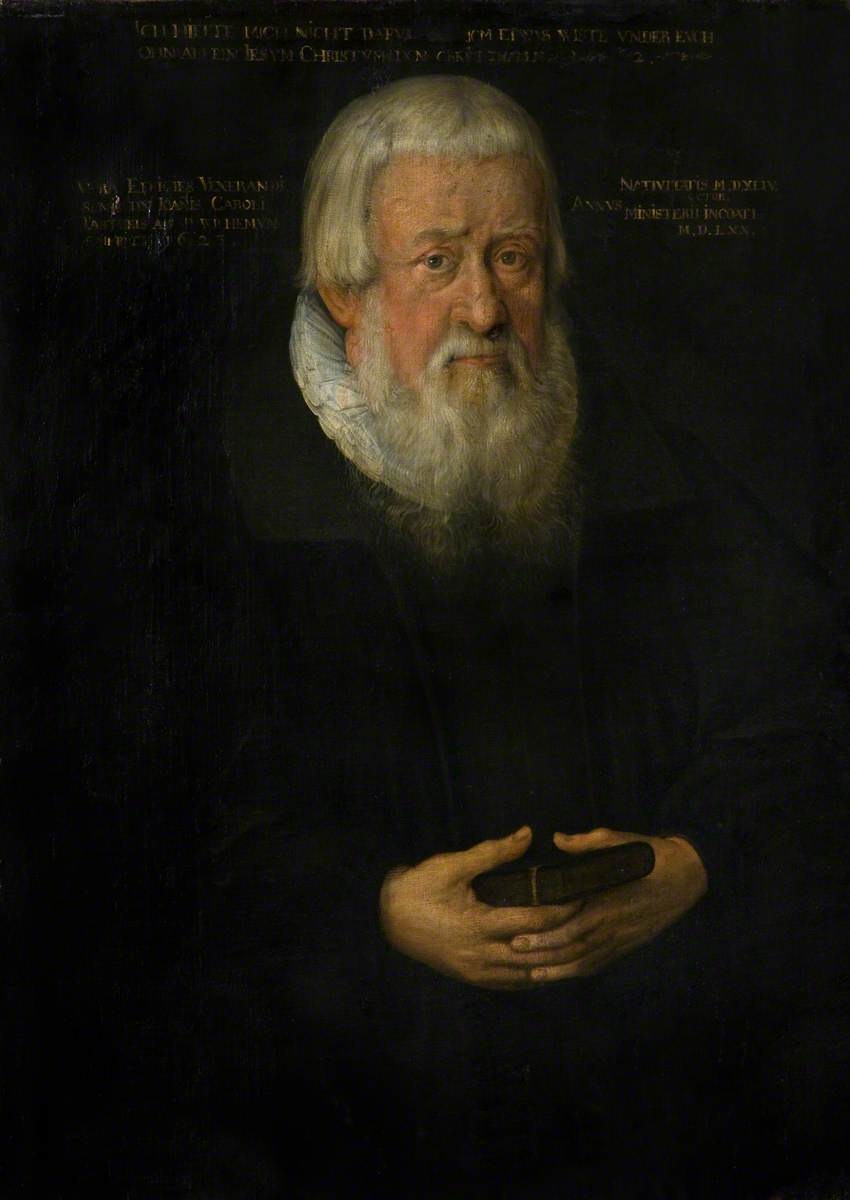
In Strasbourg, printer Johann Carolus, tired of hand-copying his subscription newsletter of dispatches, sets it in type as the Relation aller Fürnemmen und gedenckwürdigen Historien — recognized by the World Association of Newspapers as the world's first printed newspaper.

1735The Zenger verdict

New York printer John Peter Zenger, jailed for seditious libel after his paper attacked Governor William Cosby, is acquitted when lawyer Andrew Hamilton persuades the jury that printing the truth cannot be a crime. The verdict changes no statute but becomes a founding legend of press freedom in the American colonies.

1851Reuter wires the news

Paul Julius Reuter — who a year earlier bridged a gap in the telegraph line with carrier pigeons flown between Aachen and Brussels — opens a telegraph office beside the London Stock Exchange. His agency, alongside Havas in Paris (1835) and Wolff in Berlin, turns news into a wired, traded global commodity.

1887Nellie Bly goes inside

For Joseph Pulitzer's New York World, 23-year-old Nellie Bly feigns insanity to get committed to the Blackwell's Island asylum and spends ten days inside. Ten Days in a Mad-House triggers a grand jury investigation, budget increases follow, and undercover investigation becomes a repeatable journalistic method.

1945Burchett reaches Hiroshima

Slipping away from the official Japanese-surrender coverage, Australian correspondent Wilfred Burchett rides trains alone to Hiroshima and types the first eyewitness account of radiation sickness, published in the Daily Express on 5 September under the words 'I write this as a warning to the world' — while occupation officials deny any such illness exists.

1971The Pentagon Papers

Military analyst Daniel Ellsberg leaks a secret 7,000-page history of the Vietnam War to The New York Times. When the Nixon administration wins an injunction, the US Supreme Court rules 6–3 within weeks, in New York Times Co. v. United States, that the government cannot restrain publication — the modern high-water mark of press freedom.

1972–74Watergate

Two young Washington Post metro reporters, Bob Woodward and Carl Bernstein, follow a burglary at Democratic Party headquarters back toward the White House through two years of source-by-source verification under editor Ben Bradlee's two-source rule. President Nixon resigns in August 1974, and journalism-school enrollment surges for a decade.

2016The Panama Papers

An anonymous source leaks 11.5 million files from the Panamanian law firm Mossack Fonseca to Süddeutsche Zeitung, and the International Consortium of Investigative Journalists coordinates roughly 370 reporters in about 80 countries to mine them in secret for a year. Iceland's prime minister resigns within days of publication.
The eras

59 BCE – 1500

Gazettes before print

For fifteen centuries news was an instrument of administration: Rome's posted Acta Diurna, China's hand-copied dibao carrying edicts and appointments to officials across dynasties, town criers proclaiming ordinances to the unlettered. The writers were scribes and clerks whose loyalty ran to the state or a patron. What did not yet exist was the idea that finding things out and telling the public could be an independent occupation with its own standards and its own risks.

Title page associated with Johann Carolus's Relation, the first printed newspaper.
Unknown author Unknown author · Public domain · Wikimedia Commons
1500 – 1800

Print and the fight to publish

Venice's professional newsletter writers sold handwritten avvisi by subscription; Johann Carolus put the same product on a press in Strasbourg in 1605, and printed weeklies spread across Europe within decades. Governments answered with licensing, stamp taxes and the pillory. England let pre-publication licensing lapse in 1695, the Zenger jury nullified a seditious-libel charge in New York in 1735, and by the century's end press freedom was written into the French Declaration of the Rights of Man and the US First Amendment.

1800 – 1920

The mass press

Steam presses and the penny papers — starting with Benjamin Day's New York Sun in 1833 — made news cheap enough for everyone, and the telegraph made it fast, giving the trade the inverted pyramid and the wire agencies: Havas, AP, Reuters. Circulation wars bred the sensational yellow journalism of Pulitzer and Hearst, but also the interview, the foreign correspondent, the muckrakers — Ida Tarbell's Standard Oil series helped break up the trust in 1911 — and the first journalism schools at Missouri (1908) and Columbia (1912).

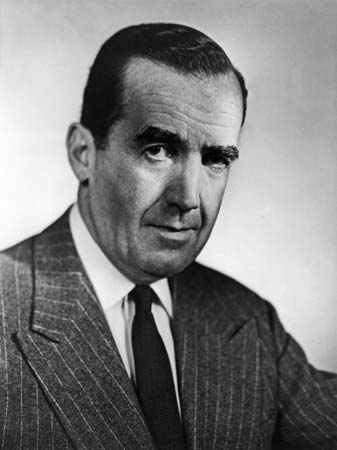
Edward R. Murrow at a CBS microphone, the defining broadcast journalist of the mid-century.
US Information Agency · Public domain · Wikimedia Commons
1920 – 1995

The broadcast century

Radio put news into the ear in real time — Pittsburgh's KDKA began commercial broadcasting in 1920, and Edward R. Murrow's live rooftop reports from the London Blitz made the correspondent's voice itself the medium. Television followed, carrying Vietnam into living rooms and McCarthy's own words to his undoing. The era professionalized the trade: ethics codes, the objectivity norm, Pulitzer Prizes, and after Watergate a peak of prestige and trust that journalists have been measured against ever since.

Visualization of the Panama Papers leak, the largest journalistic data collaboration of its era.
JayCoop · CC BY-SA 4.0 · Wikimedia Commons
1995 – present

Digital collapse and global collaboration

The internet took the classified advertising that had quietly funded newsrooms, and platforms took the rest: US newsroom employment fell about a quarter between 2008 and 2020, and more than a third of American newspapers have closed since 2005. The same tools created new forms — nonprofit newsrooms like ProPublica, subscription-funded giants, open-source investigation, and cross-border consortia whose Panama Papers project put hundreds of reporters on one shared leak — while AI began writing the routine stories first.

What this job replaced

Neighbouring trades that no longer exist — absorbed, automated or regulated away.

Town crier

c. 1300–1900

Before mass literacy, official news reached most people by voice: the crier rang a bell, shouted 'Oyez,' and proclaimed ordinances, markets, wars and executions in the street, protected by law because harming the messenger meant defying the crown. Cheap newspapers and rising literacy erased the trade through the nineteenth century; it survives today only ceremonially, in the competitive town-crier championships of Britain, Canada and Australia.

Linotype operator

1886–1980s

Ottmar Mergenthaler's 1886 Linotype cast whole lines of type in molten lead and made the modern-length newspaper physically possible; every sizable paper on earth came to employ rooms of skilled, well-unionized operators. Phototypesetting and computers erased the craft in barely a decade — The New York Times set its last hot-metal edition on 2 July 1978, a night recorded in the short film Farewell, Etaoin Shrdlu.

Copy boy

c. 1870–1990

Newsrooms ran on sprinting teenagers: reporters shouted 'Copy!' and a copy boy carried the typed take to the editor, the wire desk or the composing room, learning the trade by osmosis. It was journalism's classic apprenticeship — publishers and star reporters liked to boast of having started as one. Computer terminals ended the errand and, with it, the trade's most democratic side door.

Trades that vanished →

Every era of this history rearranged the same triangle: the state that wants control, the owner who wants profit, and the reader who wants the truth cheap or free. The press, the telegraph, radio and the internet each redealt that hand without retiring it.

What has not changed since the Acta Diurna is the function. Someone finds out what happened, decides what matters, and stakes a name on a version of events others can check. The tools for doing it have never been more powerful, and the business for paying for it rarely more fragile — which is the tension the next chapter of this history gets written inside.

Keep exploring

More in Media & Performance