The artist who decides what happens between the drawings — from Reynaud's hand-painted Paris projections to a Latvian Oscar winner made in free software.
Also called: Character animator · Animation artist
Animator: The artist who decides what happens between the drawings — from Reynaud's hand-painted Paris projections to a Latvian Oscar winner made in free software.
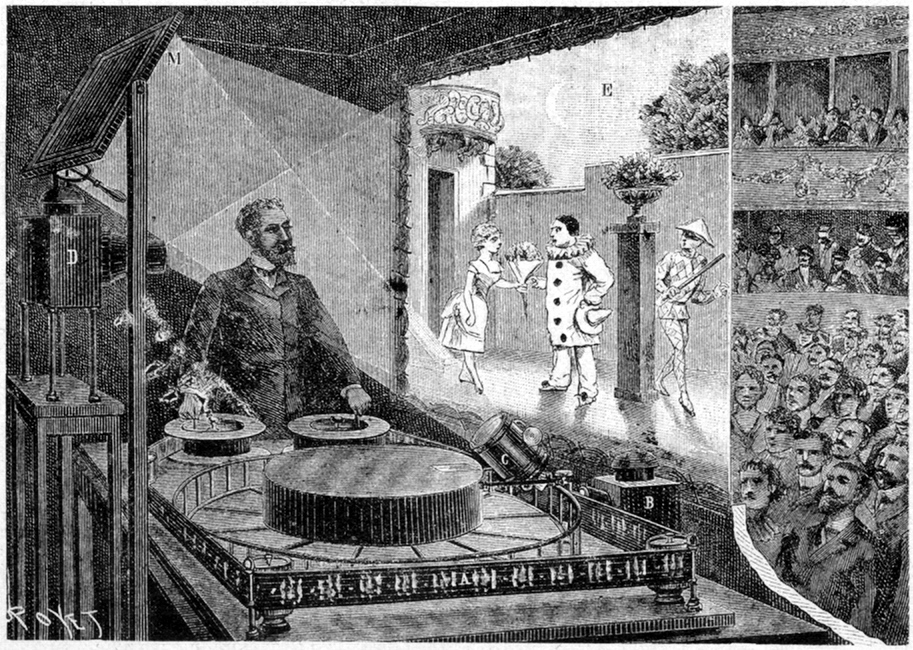
The word comes from the Latin animare, to give breath to, and that is close to the literal job description. An animator does not principally draw pictures; an animator decides what happens between them. Charles-Émile Reynaud projected hand-painted moving pictures to a paying audience at the Musée Grévin in Paris on 28 October 1892, three years before the Lumière brothers' first public film screening, and most of the arguments the trade still has were already latent in that room.
There is no licence, no bar exam and no protected title anywhere in the world. What gates the profession instead is a reel: sixty to ninety seconds of work that a supervisor will judge in about twenty. That makes animation unusually open at the door and unusually hard inside it, because the same standard is applied to a graduate of Gobelins in Paris, a self-taught animator in Manila, and an in-betweener on a Tokyo studio's night shift.
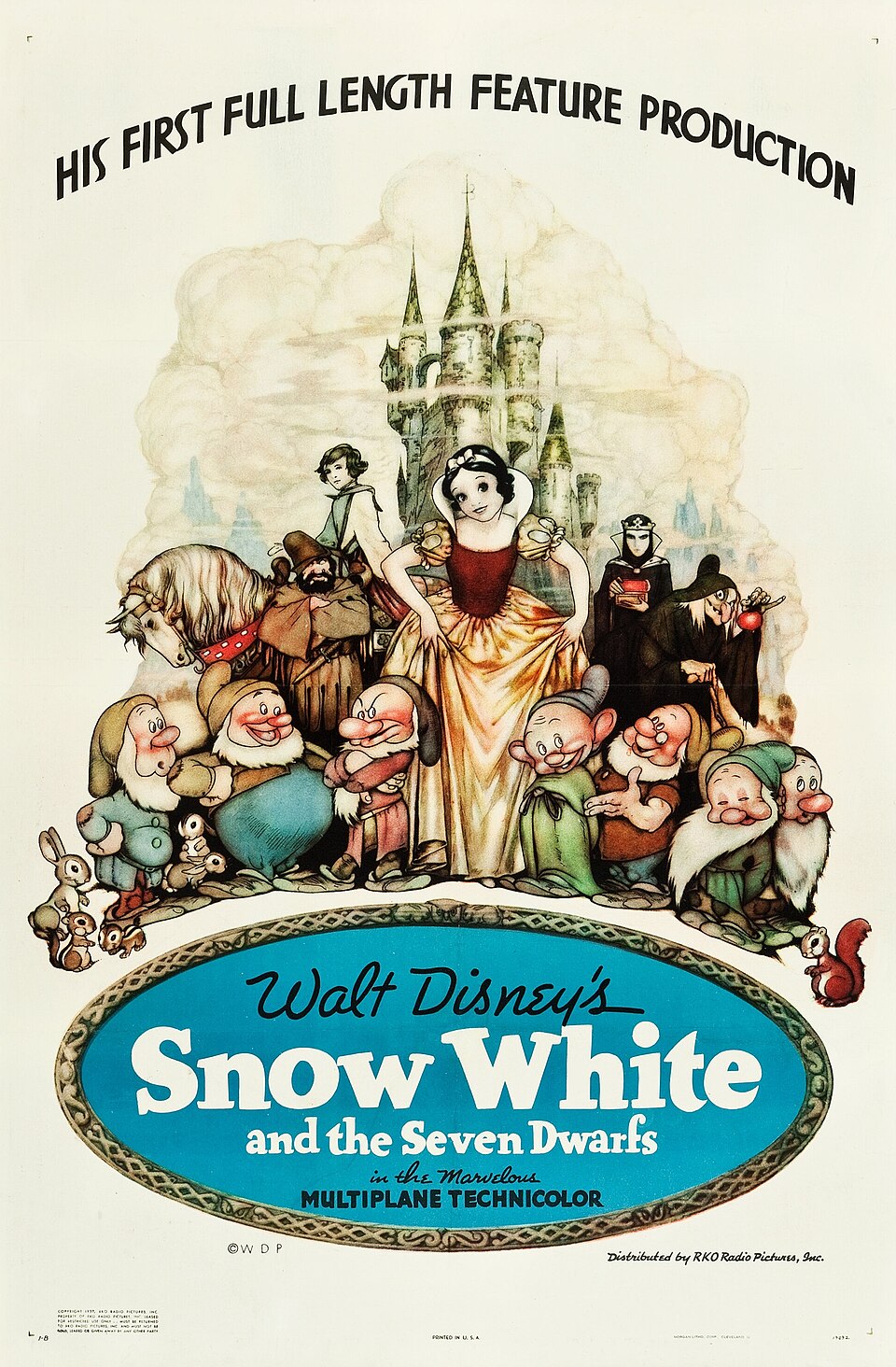
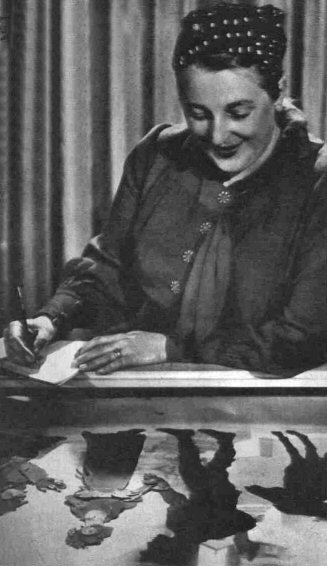
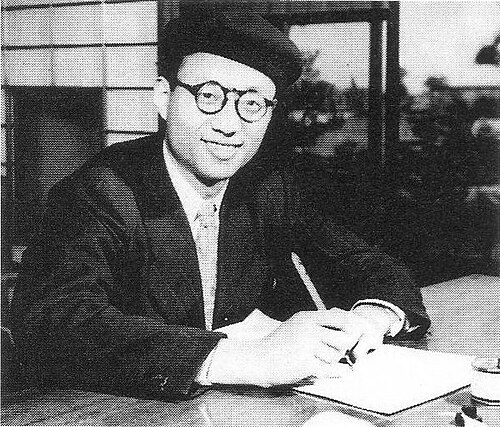
This page follows the craft from optical toys and Émile Cohl's seven hundred drawings, through the celluloid patent that turned it into a factory, Lotte Reiniger's scissors, Osamu Tezuka's television economics and the collapse of hand-drawn features, to a 2025 Academy Award won by a Latvian film made in free software. It covers how people actually get in, what a working day costs, who the craft's giants were, and which parts of the job machines already do.
Inside the profession
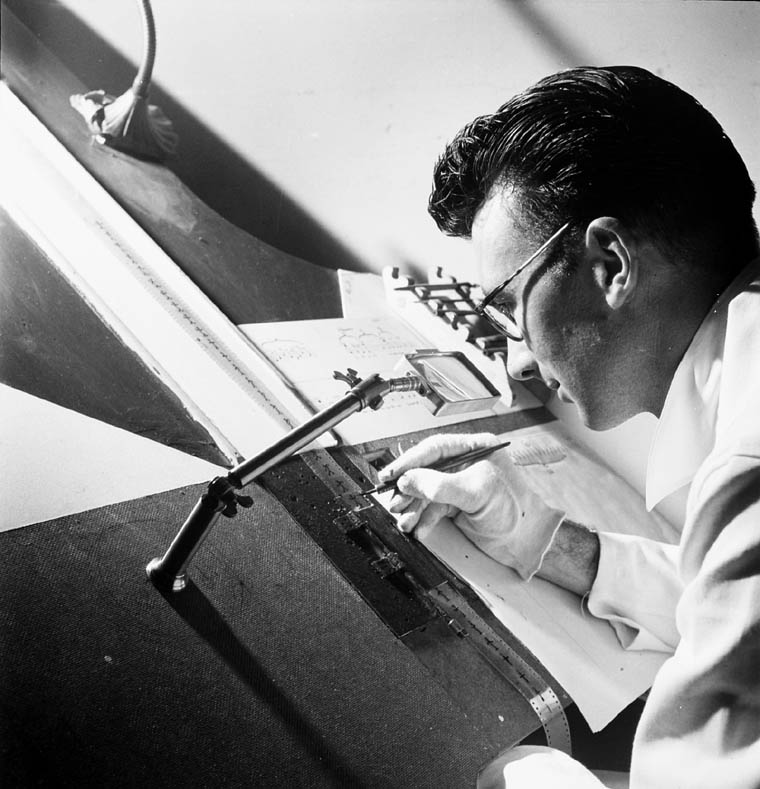
An animator makes still frames read as living motion — timing, weight and performance decisions repeated across hundreds or thousands of drawings, models or keys.
Timing is the joke and the tragedy
Spacing charts, easing and anticipation decide whether a character feels heavy, sly or broken. Software can tween; it cannot choose the beat that makes a glance funny or a fall painful. Animators act through puppets — 2D drawings, 3D rigs, stop-motion figures, game engines — translating emotion into curves and silhouettes. Dailies exist because motion that looked fine alone fails when cut against dialogue and camera.
Pipeline reality versus auteur myth
Feature, TV, games and ads run on pipelines: layout, blocking, polish, lighting, comp. One animator may own a shot; supervisors own continuity across hundreds. Specialisation (walk cycles, creatures, UI motion, crowd) is how schedules survive. The romantic lone genius exists mainly in shorts and student films; paid work is collaborative craft under a shot list and a date that does not move when inspiration fails.
Tools change; observation does not
From pencil tests to Graph Editors, from stopwatches to performance capture, tools accelerate labour and introduce new failure modes. Motion capture still needs cleanup; AI-assisted in-betweening still needs taste. Life drawing, film study and acting classes remain competitive advantages because audiences recognise false weight instantly. The craft's durable core is watching how living things actually move, then exaggerating with intent.
Employment follows production waves
Studios staff up for shows and lay off between them; freelancers patch income across gigs and time zones. Games may offer longer titles with crunch spikes; streaming demand created volume and compression of schedules. Credits, showreels and relationships gatekeep more than certificates. Sustainability is as much about choosing employers and contract terms as about spline technique.
How the work branches
Five common shapes of the same title — specialty, setting or career path.
Feature and series studios
Character animator (film/TV)
Performs acting through drawn or rigged characters under director and supervisor notes.
Interactive studios
Game animator
Builds loops, transitions and responsive moves that must feel good under player input.
Puppet and model studios
Stop-motion animator
Moves physical puppets frame by frame with extreme patience and on-set problem-solving.
Broadcast, brands and UI teams
Motion-graphics animator
Animates type, logos and interface motion under tight brand and delivery constraints.
Studios bridging art and engineering
Technical animator / rigger-adjacent
Solves deformation, tools and pipelines so performance animators can hit poses cleanly.
How it reads by country
Same craft, different gatekeeping, status and daily texture — rewritten for readers in each language.
United States — studio hubs and freelance coasts
Los Angeles, the Bay Area, Vancouver-adjacent pipelines and remote US freelancing dominate English-language work. Union coverage exists in parts of film/TV and is uneven in games. Showreel culture is ruthless; layoffs track theatrical and streaming cycles as much as individual skill.
South Korea — webtoon-adjacent and outsourcing strength
A major global production and subcontracting centre for series and features, with rising domestic IP. Training institutes feed studios that can run intense schedules. Game and webtoon-related motion work expands options beyond classic character animation alone.
Japan — anime production system
Key animation, in-betweening and tight TV schedules define a distinct labour hierarchy. Prestige and poverty can coexist on the same production. Overseas collaboration and digital tools are changing workflows, but deadline culture and complex subcontracting chains remain central facts of the job.
Germany — service studios and public broadcasting
Animation employment mixes local IP, European co-pros and service work for international clients. Film funding systems and broadcasters shape project flow. Games and indie scenes add alternatives; Berlin and southern hubs attract freelancers across EU productions.
United Kingdom — VFX-adjacent and indie features
London and other hubs link animation to VFX, ads and children's TV traditions. Tax-credit dynamics influence where work lands. Framestore-to-indie spectrum means wildly different pay and hours; freelancing across Europe is common for mid-career artists.
Singapore — regional hub and education pipelines
Schools and studios position Singapore as a Southeast Asian base for animation, games and motion design. Projects often serve regional and global clients; teams can be small and multi-skilled. Competition with larger Asian production centres pushes specialisation and reliable delivery.
From the archive
Commons CC/PD images self-hosted for this profession.
Why attitude matters here
An animator's software can be learned in months; what makes shots land in dailies is whether they chase weight, timing and honesty in a performance when the schedule would reward a merely finished curve.
Motion lies in ways still frames do not
A pretty key pose can still feel weightless, late or emotionally false once it plays at speed. Animators who stop watching full-speed playblasts because the graph looks tidy send problems downstream to lighting and editorial. Attitude is the habit of judging the shot as an audience will — not as a node network.
Notes are the job, not an insult
Supervisors will ask for earlier anticipation, less busy hands, a clearer eye dart. Artists who defend every frame as precious slow the film; artists who change nothing and hope also fail. The craft stance is separating ego from the puppet: the character must read, even if yesterday's work gets rebuilt.
Pipelines only work if people flag problems early
A rig that breaks on an extreme pose, a layout camera that fights the acting, a reference that was never approved — hiding these to look fast creates polish nights and broken weekends later. Speaking up early is collaborative character with schedule consequences.
Stances that hold up under pressure
Five concrete postures the work rewards, not slogans.
Playblasts at full speed before calling a shot done
Judging only on stepped keys or beautiful stills misses the live problem. Looping the shot cold, away from the graph editor, is the discipline that catches dead eyes and sliding feet before a supervisor has to say it in a room full of peers.
Acts the beat out before animating the beat
Thumbnailing or performing the emotion — even badly — forces a clear intention. Jumping straight to polishing fingers without a readable spine is how polish time gets wasted on noise that will be cut or noted anyway in tomorrow's dailies.
Leaves neighbouring shots better than found
Matching eyelines, prop continuity and energy across cuts is unglamorous authorship. Animators who only optimise "their" shot create a reel of contradictions for the editor and force expensive fixes when the sequence finally plays together.
Estimates honestly when a note is a new shot
Saying "sure" to a redesign that needs three days, then missing the date, helps no one. Renegotiating scope with a supervisor is professional; silent martyrdom is how crunch becomes expected and how the next show inherits the same lie about capacity.
Shares a fix that saved them an hour
Hoarding a tool tip or a rig workaround as personal advantage slows the show and the people sitting one desk over. Teaching the neighbouring artist is how departments hit dates without hero culture and without the same bug burning five people separately.
Moments that reveal it
Situations that separate résumé language from how someone actually practices.
A director note arrives late on a shot already polished, asking for a clearer emotional turn that breaks preferred curves.
Does the animator rebuild the acting for clarity even though hours of polish disappear, or protect time already spent and deliver a compromise that still confuses the cut when it plays with dialogue and sound?
A rig fails on a needed extreme and the technical contact is overloaded before a deadline.
Does the animator flag it immediately with a clear example movie and an interim workaround, or hide the limitation and force a weaker performance to look on-time until the problem explodes in final lighting?
Two artists share a character across adjacent shots with mismatched physicality.
Do they sync reference and revise toward one performance the sequence can believe, or insist their reel shot stays untouched while continuity suffers and the supervisor has to pick a winner in public?
Production asks for weekend overtime "just this once" on a show that has said that monthly.
Does the animator ask which shot priority changes, get the overtime terms in writing, and protect recovery — or accept unpaid hours because loving animation was framed as the ticket price for staying employable?
Where "calling" turns harmful
Crunch culture sold as devotion to the frame
Studios still narrate eighty-hour weeks as the price of caring about characters, as if sleep-deprived graph editing were a rite of entry. Passion becomes the HR policy that avoids hiring enough people or scheduling honest dates. Good animation comes from clear direction and sustainable hours; crunch is a management failure with art used as camouflage.
The profile
Resists AI56
Pay42
Barrier to entry40
Autonomy46
Demand50
Impact70
How exposed is it to AI?
Moderate
Close to half of what animation departments do is mechanical execution downstream of a creative decision: in-betweening, clean-up, colouring, matting, rotoscoping, lip-sync, motion-capture cleanup and background element generation. Most of that is already automated or automating fast, and the junior rungs where it lived are disappearing first. The performance decision, the consistency of a character across a whole production, and the ability to respond to direction remain outside what current systems do reliably or can be held responsible for.
No country licenses animators or requires a degree. Studios hire on the strength of a demo reel, and plenty of working animators are self-taught or came through a studio's in-house training rather than a university. A degree mainly buys three things: structured life drawing, enforced deadlines, and a cohort of classmates who will hire each other for the next twenty years.
How long does it take to become a working animator?
Typically three to four years of training followed by one to three years on a junior rung — in-between and clean-up work in 2D, blocking passes and background characters in 3D. Being trusted with a shot that carries real acting usually comes five to seven years after starting, and animation directors are normally a decade in.
What is the difference between an animator and an illustrator?
An illustrator makes one image work. An animator makes the space between images work, which is a different skill entirely: the drawings are only the evidence of a decision about timing. Many excellent draughtsmen animate badly, and some superb animators draw roughly. Norman McLaren's formulation is that animation is the art of movements that are drawn.
How much do animators earn?
It splits sharply by country. The US occupation median was roughly $99,000 in May 2023 according to the Bureau of Labor Statistics. In the UK and France, mid-career animators commonly land between £30,000 and £55,000, or €28,000 and €45,000. In Japan, in-between animators are paid per drawing and often earn under ¥2 million a year.
Why are Japanese animators paid so little?
The structure dates to television. When Astro Boy went weekly in 1963, Mushi Production accepted a per-episode fee far below its production cost, subsidised by Osamu Tezuka's manga royalties, and broadcasters were never forced to pay more. Six decades later, in-between animators are still paid per drawing, even though industry revenue passed ¥3 trillion in 2023.
Will AI replace animators?
It is already absorbing tasks. In-betweening, clean-up, colouring, rotoscoping and lip-sync are largely solvable, and studios use generative video for pitching and previsualization. What resists is the acting decision — what a character is thinking one frame before it moves — and the ability to take a director's note and change that decision. Expect fewer junior rungs rather than fewer animators.
Should I learn 2D or 3D?
Learn the principles first, because they are identical. In employment terms, 3D and real-time game animation offer far more salaried positions, while 2D concentrates in television, anime, advertising and independent film. Software is the least transferable part of the training and the least important: timing, weight and acting carry across every tool you will ever use.
What should go on a demo reel?
Sixty to ninety seconds, best shot first, no title sequence and no filler. Two or three pieces of character acting, one clear demonstration of body mechanics, and nothing you would not defend in a review. Show finished shots rather than exercises, name your own contribution precisely on shared work, and cut anything you are only half proud of.
Embed this ranking
Paste this code into your blog or site — the ranking stays up to date.