Esports Pro: From a Stanford lab's 1972 Spacewar tournament to sold-out stadium finals — the youngest, shortest and most-watched playing career in modern sport.
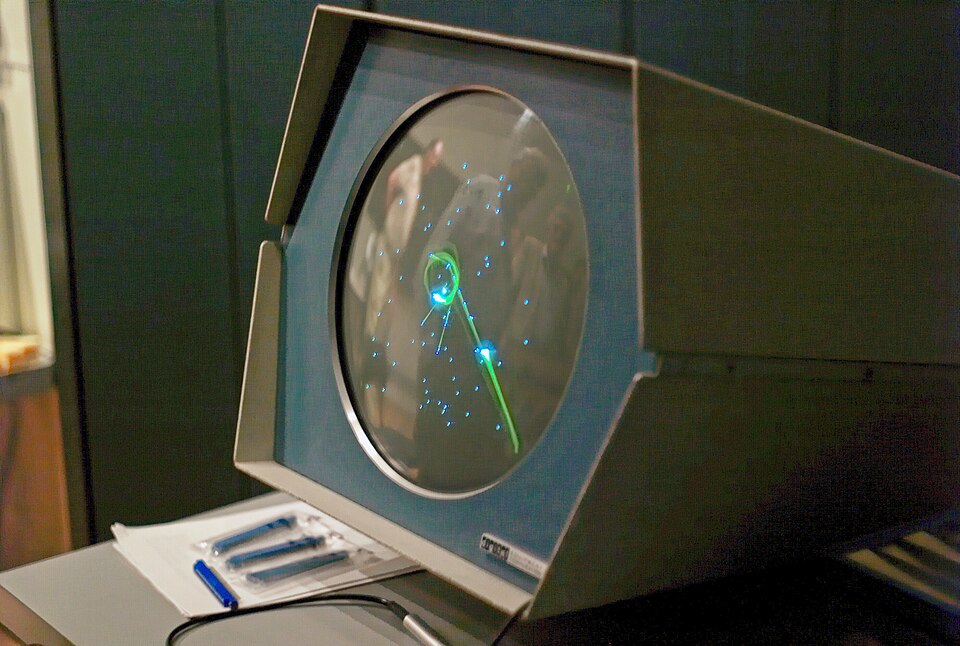
The first video game tournament with a named prize was held at Stanford University in October 1972, and the prize was a magazine subscription. Fifty years later a sixteen-year-old collected three million dollars in a New York tennis stadium for winning at Fortnite, and playing video games had become a salaried, broadcast, medal-carrying profession — one with the shortest careers, the youngest stars and some of the steepest entry odds in modern sport.
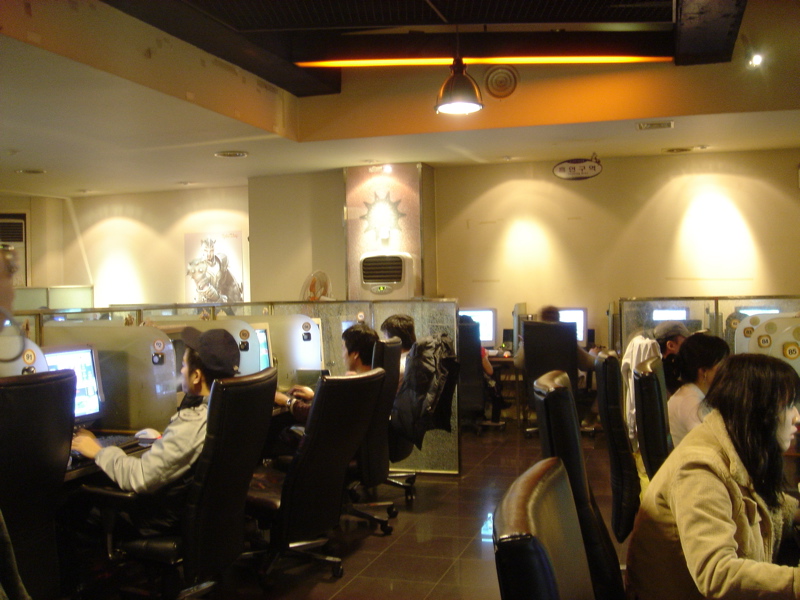
The profession was not invented in Silicon Valley but in South Korea, where the 1997 financial crisis, cheap broadband and PC bang gaming cafés turned StarCraft: Brood War into national television. Korea built the template everyone since has copied — corporate teams, team houses, salaries, celebrity players and a state-recognized association — a full decade before the West caught up through Twitch, franchised leagues and eight-figure franchise fees.
This page traces the trade from that Stanford lab through Korea's broadcast decade, the streaming boom and the franchise gold rush to today's sovereign-funded world cups. It covers how players actually turn pro and what it costs, what a twelve-hour scrim day does to a body, the eight players who defined the craft, and how much of the job survives an era in which AI already beats the best humans at their own games.
Inside the profession
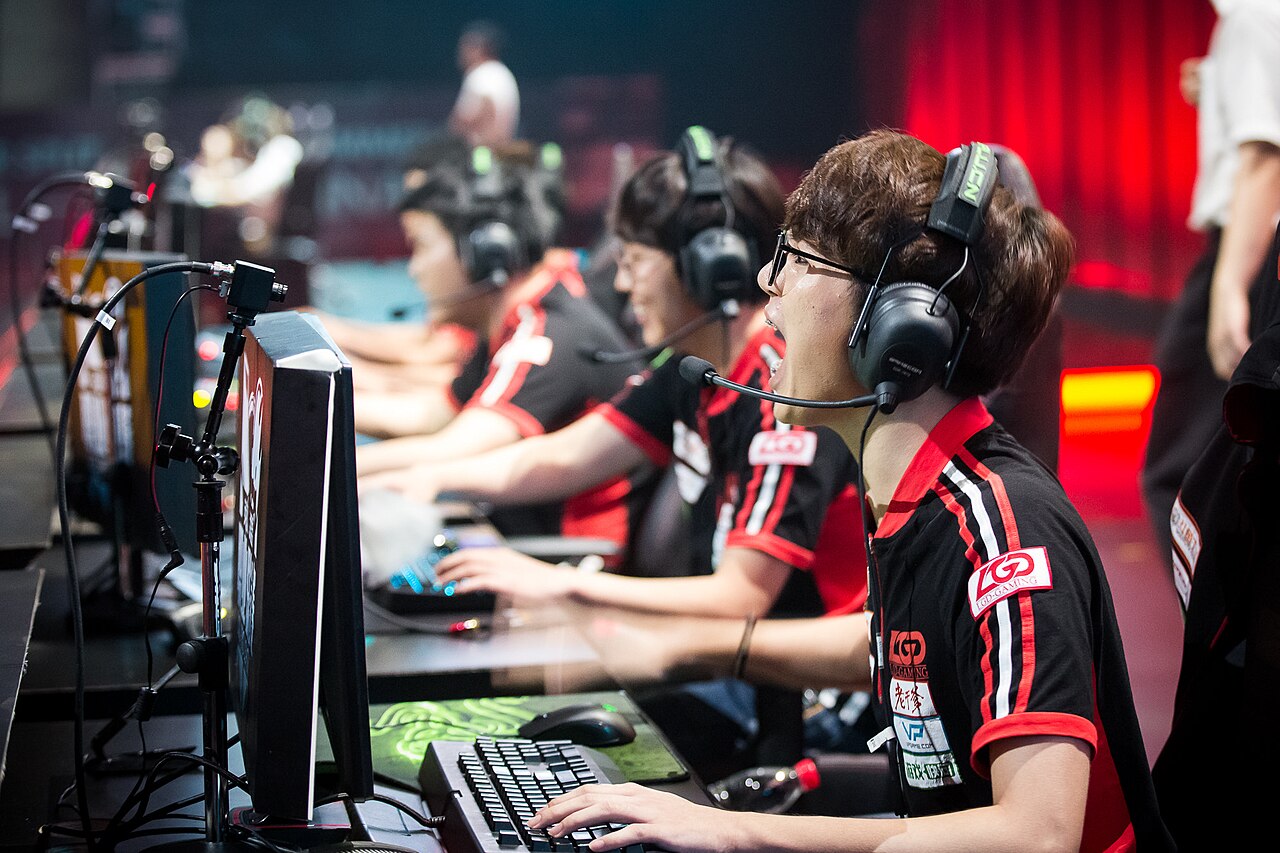
An esports professional competes in video games for leagues, teams and sponsors — a job of mechanical skill, teamwork and schedule discipline under lights that never fully turn off.
Practice is a second full-time job
Ranked grind, Vod review, scrims and aim trainers fill days that look like leisure from outside. Teams schedule like sports clubs: bootcamps, analyst sessions, enforced sleep when staff are competent, chaotic hours when they are not. Mechanical ceilings rise every season; metas shift and erase last month's specialty. The player who only queues without reviewing loses to the one who treats practice as deliberate work.
Roles, egos and silent communication
In team titles, shotcalling, support sacrifice and mid-fight adaptability decide matches as much as raw aim. Contracts put five or six people in a house or facility who must lose together without collapsing. Toxicity that fans perform in public chat becomes unplayable inside a roster. Coaches and sports psychologists exist because teenage talent with audience-sized egos is a volatile material.
Careers peak early and end abruptly
Reaction speed, ambition and life tolerance for monastic practice favour the young. Twenty-four can be veteran; injury here is tendinitis, burnout and motivational collapse as much as wrist damage. Roster cuts arrive by Discord message. Smart players stack education, content skills or coaching paths before the team house dissolves — because most never see a long championship window.
Money is spectacle-shaped
Prize pools make headlines; salaries, housing, gear and health cover vary from comfortable to exploitative across regions and tiers. Streaming and personal brands subsidise many careers and distract from team practice when mismanaged. Publishers own the games; players are talent inside someone else's IP. Labour organising is emerging in places, uneven everywhere, and still easy for orgs to outrun.
How the work branches
Five common shapes of the same title — specialty, setting or career path.
League franchises and club systems
Team-game starter
Plays a fixed role in scrims and official matches under coach-led systems.
Fighting games, chess-like titles, battle royale
Solo / duel competitor
Owns preparation alone, with travel circuits and personal coaching setups.
Tactical shooters and MOBAs
Player-coach / IGL
Combines mechanical play with in-game leadership and mid-series adaptation.
Orgs that monetise audiences
Content-hybrid pro
Splits competitive hours with streaming and brand work that funds the seat.
Tiered club structures
Academy / substitute player
Trains at pro intensity with fewer official minutes and sudden call-up pressure.
How it reads by country
Same craft, different gatekeeping, status and daily texture — rewritten for readers in each language.
United States — franchise leagues and college paths
Franchise models in titles like League and Overwatch shaped salaries and cities; other games remain circuit-based. Collegiate esports offers a parallel development track. Visas, NDAs and org instability are familiar career risks; health insurance quality depends entirely on the employer.
South Korea — factory practice and cultural prestige
The longest-running high-performance culture: gaming houses, intense scrim schedules and public scrutiny. Stardom is real in major titles; so is burnout. Military service interrupts male careers. Broader society now recognises pros more than a decade ago, without removing the grind expectation.
Japan — fighting-game depth and tighter pro scenes
Arcade culture and fighting-game excellence sit beside growing team esports. Full-time salaries are less universal than in Korea or top Western franchises; many elites blend competition with content or sponsor work. Publishers and event organisers heavily shape calendars.
Germany — club traditions and EU competition
Strong clubs, LAN culture and EU league participation define pathways. Labour and youth-protection rules can be stricter than in unregulated houses elsewhere. German players often relocate within Europe for tier-one seats; education parallel tracks are culturally more expected.
United Kingdom — orgs, creators and EU adjacency
British talent feeds European teams; domestic orgs and creator economies intertwine. Post-Brexit travel and residency add friction for EU competition. University societies feed interest; sustainable pro salaries concentrate in a few titles and tiers.
Singapore — SEA hub and regional rosters
A regional base for Southeast Asian competition, with players often joining cross-border teams. Smaller local audiences mean many careers aim at regional or global leagues. Government and school interest in esports has grown; stable contracts still track publisher ecosystems.
From the archive
Commons CC/PD images self-hosted for this profession.
Why attitude matters here
An esports pro's rank proves mechanical hours; what keeps a roster alive is whether they review, communicate and reset after losses when the night is long and nobody outside the team house is watching.
Metas punish ego faster than fans do
A signature champion, weapon or pattern that worked last patch can be grief this patch. Players who refuse to adapt because their identity is tied to one niche become liabilities in scrims. Attitude toward being coached — and toward dropping a comfort pick — decides whether talent stays employable.
Five talented loners still lose
Team games require mid-fight information, accepted shotcalls and silent trust after a throw. Flame in voice chat, solo queues as emotional regulation, or refusing to play around a struggling teammate converts mechanical lead into a series loss. Character is audible on the comms line.
Schedules without sleep are fake practice
Marathon ranked sessions that wreck sleep look like dedication and perform like decline. Pros who protect review quality and recovery outperform heroes who confuse hours with work. In a field that recruits teenagers, this stance often has to come from the player because orgs will happily burn them.
Stances that hold up under pressure
Five concrete postures the work rewards, not slogans.
Reviews Vod with curiosity after a loss, not only with blame
Scrubbing a replay for timing errors and missed information is work; hunting a scapegoat is theatre. The player who takes notes on their own positioning earns the right to critique others — and keeps the review room usable for the next series.
Keeps voice chat usable under pressure
Clear calls beat volume. Players who default to insults when behind destroy the only coordination channel they have. Discipline on comms is a competitive skill with a moral edge, especially when thousands of spectators will never hear how ugly the channel became.
Sleeps before official series even when the rank itch remains
One more hour of solo queue after midnight is often anxiety management, not preparation. Closing the client is a stance toward tomorrow's scrims and the team's investment, not a lack of passion for the game that pays the rent.
Separates personal brand streaming from team practice blocks
Content pays and also fragments focus. Honouring scheduled practice without secretly splitting attention to chat is professionalism in a hybrid economy where orgs sell both wins and personality — and still expect the former on stage.
Helps the academy player learn the system without hazing
Orgs recycle youth. Starters who gatekeep Vods and mock questions reproduce the toxicity that burned them. Teaching the sub is how a club stays good past one roster and how a scene stops eating its own developmental talent.
Moments that reveal it
Situations that separate résumé language from how someone actually practices.
A coach asks a star to switch off their comfort pick for a series because the enemy draft punishes it.
Does the player adapt in scrims and commit on stage, or soft-intimidate the coach until the old pick returns and the team loses the matchup everyone on the analyst desk predicted aloud before the draft locked?
A teammate has a catastrophic game and public chat is already clipping their mistakes.
Does the roster close ranks, review privately and protect the player overnight — or join the pile-on because aligning with the audience feels safer than defending a struggling teammate in public chat?
Bootcamp curfew exists; ranked is still open and anxiety is high after a loss.
Does the player respect rest and schedule a morning review with notes, or break curfew, tank sleep and arrive mechanically sharp but strategically blank for the next official block of a long championship split?
An org delays salary while asking for "loyalty" through a tough split.
Do players document, escalate and seek advice outside the house — or accept unpaid practice because passion for the game was used as a contract substitute when the salary wire transfer failed yet again?
Where "calling" turns harmful
The sleepless grind as proof of seriousness
Esports still confuses monastic sleep deprivation with work ethic — ranking overnight, scrimming through injury, living in a house where "one more" never ends. Orgs and fans praise the grind until a twenty-year-old burns out, then replace them. Sustainable excellence needs practice design and rest, not vocation talk that makes exploitation sound like rank culture.
The profile
Resists AI74
Pay62
Barrier to entry60
Autonomy35
Demand45
Impact40
How exposed is it to AI?
Low
A meaningful share of the work surrounding a pro's day — scouting, stat-keeping, highlight production, sparring — is automatable and much of it already is. The performance itself is not: audiences demonstrably do not pay to watch software win, just as chess audiences grew after Deep Blue. The larger threat to any individual career is the publisher's kill switch and market cycles, not the machine — which is why this score sits low but not negligible.
The route is nearly identical in every title: climb the public ranked ladder into the top fraction of a percent — Challenger in League of Legends means roughly the top few hundred accounts on a server — get scouted into an academy or trainee roster, usually between fifteen and seventeen, then convert that into a tier-one contract. There is no application form; the ladder is the audition, and it runs around the clock.
How much do esports pros actually earn?
The spread is enormous. Top-league minimums run from about ₩60 million in Korea's LCK to $75,000 in the North American LCS (2023); established starters earn low-to-mid six figures, and superstars earn millions — reported peaks passed $5 million a year during China's 2021 salary bubble. Below tier one most players earn very little, while Dota 2's prize skew let one captain, N0tail, retire with about $7.2 million in winnings.
Why do esports players retire in their twenties?
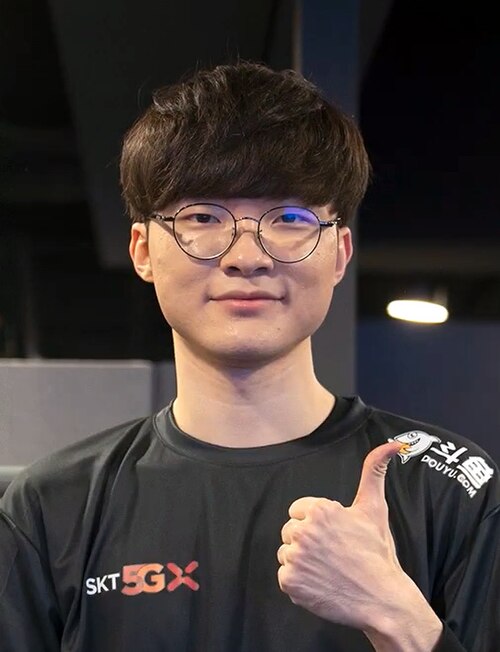
Declining reflexes are the popular explanation and the weakest one. The real drivers are burnout from ten-to-fourteen-hour practice days, overuse injuries — China's biggest star, Jian "Uzi" Zihao, retired at 23 in 2020 citing chronic hand damage — annual roster churn, and the fact that streaming often pays a famous ex-pro better than playing did. Faker winning world titles at 27 and 28 shows the ceiling is moving.
Do you need a degree or any qualification?
No degree, license or diploma is required anywhere; leagues instead enforce age minimums — seventeen in Riot's tier-one leagues, eighteen in the former Overwatch League. Universities have built esports scholarships since Robert Morris University's first varsity program in 2014, and Staffordshire University launched a BA in esports in 2018, but those routes mostly lead to industry jobs — coaching, production, management — rather than playing careers.
Is esports officially a sport?
It depends on the jurisdiction. The United States has issued P-1A internationally-recognized-athlete visas to pro gamers since 2013; China listed "esports player" as an official occupation in 2019; the Asian Games made esports a full medal event at Hangzhou in 2023; and the IOC has announced an Olympic Esports Games. Germany's Olympic Sports Confederation, by contrast, declined to recognize esports as sport in 2018.
How many hours a day do pros practice?
A standard tier-one day contains two scrim blocks of three to five hours against other professional teams, plus individual ranked play and video review — ten to fourteen hours, commonly six days a week. Korean team houses pioneered the format in the 2000s and exported it worldwide; top organizations now temper it with gyms, physiotherapists and sleep coaches, because the schedule was visibly shortening careers.
Can you go pro in any game?
Only in games with sustained competitive circuits: League of Legends, Counter-Strike, Dota 2, VALORANT, the fighting games, and the mobile titles — PUBG Mobile, Mobile Legends, Free Fire — that dominate Southeast and South Asia. The publisher owns the game, and therefore the profession: when Blizzard cancelled Heroes of the Storm's pro league by blog post in December 2018, every career in it ended overnight.
Hasn't AI already beaten the best esports pros?
Yes. OpenAI Five beat OG, the reigning Dota 2 world champions, 2–0 in an April 2019 showmatch, and DeepMind's AlphaStar reached Grandmaster on StarCraft II's European ladder the same year. Demand for human competition did not move — just as chess grew after Deep Blue beat Kasparov in 1997. Audiences pay for human rivalry; the superhuman software quietly became a research footnote and a training idea.
Embed this ranking
Paste this code into your blog or site — the ranking stays up to date.