🔭Origins & Evolution

Astronomer · The scientist who measures the universe, from Babylonian clay tablets to space telescopes, still deciding which flicker in the data is a discovery.

Astronomy's history is unusual among the sciences: its raw material — careful records of where lights were in the sky on a given night — never expires. Ptolemy used Babylonian eclipse records eight centuries old; Edmond Halley used Ptolemy to show stars drift; astronomers today use nineteenth-century plates to see how stars have moved since. Every generation's careful bookkeeping becomes the next generation's experiment.

What changed across three millennia was less the activity than the question. The sky began as a calendar and an omen-book for kings, became a geometry problem for the Greeks, a physics problem after Newton, and finally — once spectroscopy and photography arrived in the nineteenth century — a laboratory of extreme physics no earthly experiment can reach. Each shift redefined who astronomers were and who paid them.

Where it began

c. 1200–700 BCEBabylon & Shang China

Shang-dynasty diviners at Anyang scratched eclipse records onto oracle bones by around 1200 BCE, and Babylonian temple scholars — the scribes of Enūma Anu Enlil — were keeping systematic nightly diaries of the sky by the eighth century BCE, sustaining them for roughly seven hundred years. Ptolemy later anchored his own astronomy on Babylonian eclipse records reaching back to 747 BCE, the era of King Nabonassar. Astronomy is the only modern science whose working data reaches that deep into the ancient world.

Timeline

c. 747 BCEBabylon's nightly diaries begin

Babylonian scribes began systematic astronomical diaries — nightly positions of the Moon and planets, alongside weather, river levels and market prices — that continued for roughly seven centuries, the longest unbroken run of scientific observation ever made. From such records they learned to predict eclipses with the 18-year Saros cycle, and Ptolemy anchored his astronomy to their eclipse observations from 747 BCE onward.

c. 129 BCEHipparchus catalogs the sky

On Rhodes, Hipparchus completed a catalog of about 850 stars with positions and brightnesses on the six-step magnitude scale still in use today. Comparing his measurements with Greek and Babylonian records over a century older, he discovered precession — Earth's axis slowly cones around the sky over roughly 26,000 years — an effect amounting to barely a degree per human lifetime.

964Al-Sufi's Book of the Fixed Stars

Working at the Buyid court in Isfahan and Shiraz, the Persian astronomer Abd al-Rahman al-Sufi published a critical revision of Ptolemy's star catalog with his own magnitude estimates and Arabic star lore. It contains the first surviving record of the Andromeda galaxy, drawn as a "little cloud" — an object whose true nature would take until the 1920s to settle.

1543Copernicus moves the Earth

De revolutionibus orbium coelestium, printed in Nuremberg, put the Sun at the center and made Earth a planet. By the account of his friends, the first printed copy reached Copernicus in Frombork on the day he died, 24 May 1543. The book's real revolution unfolded over the following seventy years in the hands of Tycho, Kepler and Galileo.

1610Galileo publishes the telescope's sky

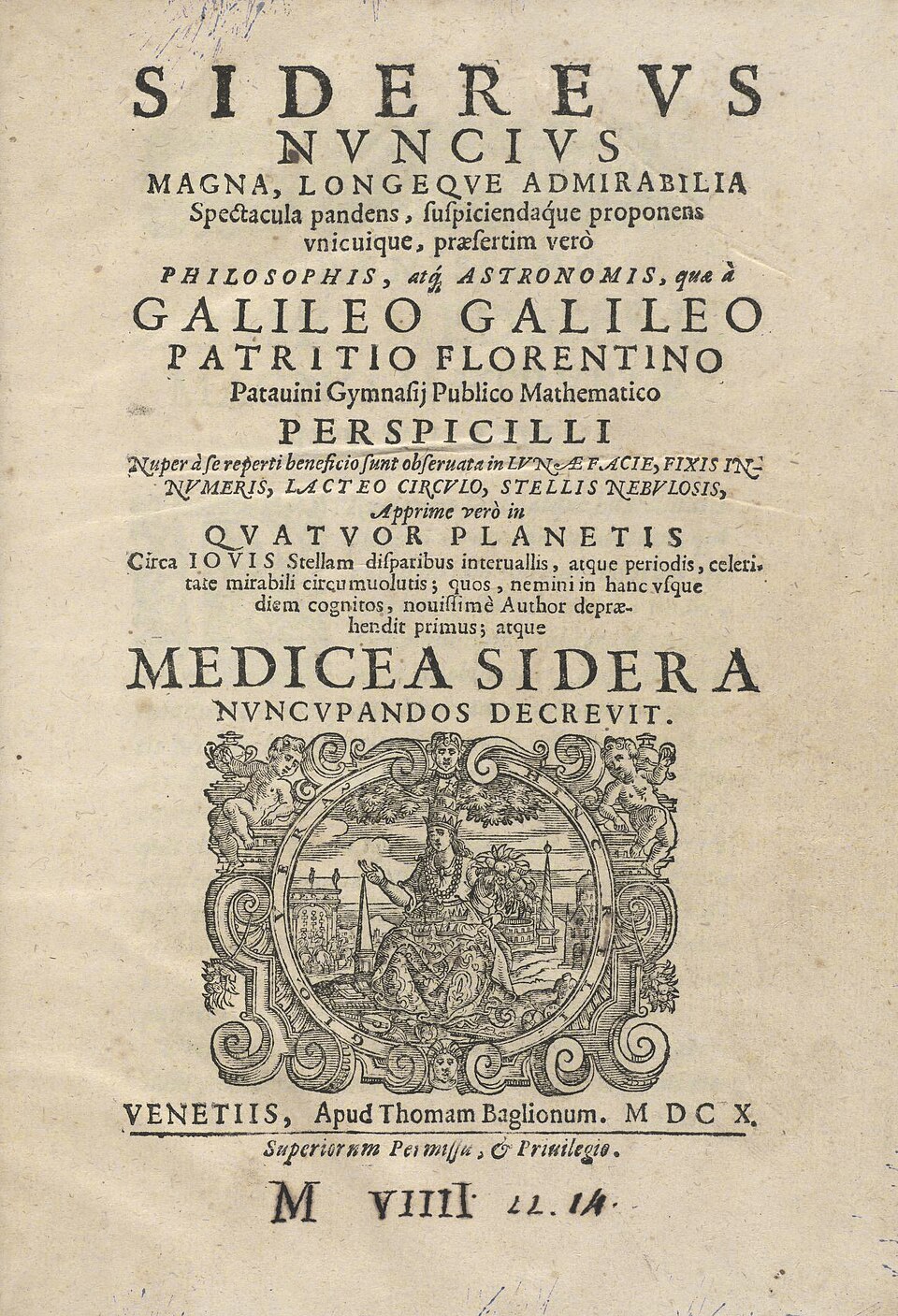
In March 1610 Galileo's Sidereus Nuncius reported what his improved telescope had shown since January: mountains on the Moon, the Milky Way resolved into countless stars, and four moons circling Jupiter — bodies visibly orbiting something other than Earth. He named them the "Medicean stars" after Florence's ruling family and had secured a Medici court position within months.

1838Bessel measures a star's distance

At Königsberg, Friedrich Bessel measured the annual parallax of the star 61 Cygni: about a third of an arcsecond, placing it roughly ten light-years away. The measurement — which rivals Thomas Henderson and Wilhelm Struve nearly beat him to — ended a two-thousand-year argument over whether the distances to stars could ever be known.

1912Leavitt's law creates the cosmic ruler

From photographic plates of the Small Magellanic Cloud, Harvard computer Henrietta Swan Leavitt showed that a Cepheid variable star's pulsation period reveals its true brightness, turning Cepheids into distance markers. Every cosmic distance measured since, including Hubble's, stands on a relation published in a three-page circular issued under the observatory director's name.

1929The universe is expanding

Using Mount Wilson's 100-inch telescope, redshifts largely measured by Vesto Slipher and Milton Humason, and Leavitt's law for distances, Edwin Hubble showed that galaxies recede at speeds proportional to their distance. Georges Lemaître had derived the same law theoretically in 1927 in a French-language Belgian journal; in 2018 the IAU voted to rename it the Hubble–Lemaître law.

1967Bell Burnell finds the pulsars

On 28 November 1967, Cambridge PhD student Jocelyn Bell Burnell confirmed that a quarter-inch of recurring "scruff" on her radio survey's chart paper was a source pulsing every 1.337 seconds — the first pulsar, a spinning neutron star. The 1974 Nobel Prize for the discovery went to her supervisor Antony Hewish, an omission still argued about.

1995A planet around another sun

On 6 October 1995, at a conference in Florence, Michel Mayor and Didier Queloz announced 51 Pegasi b, a Jupiter-mass planet racing around its star every 4.2 days, detected from the star's tiny wobble at the Haute-Provence observatory in France. More than 5,000 exoplanets have followed, and the pair shared the 2019 Nobel Prize in Physics.
The eras

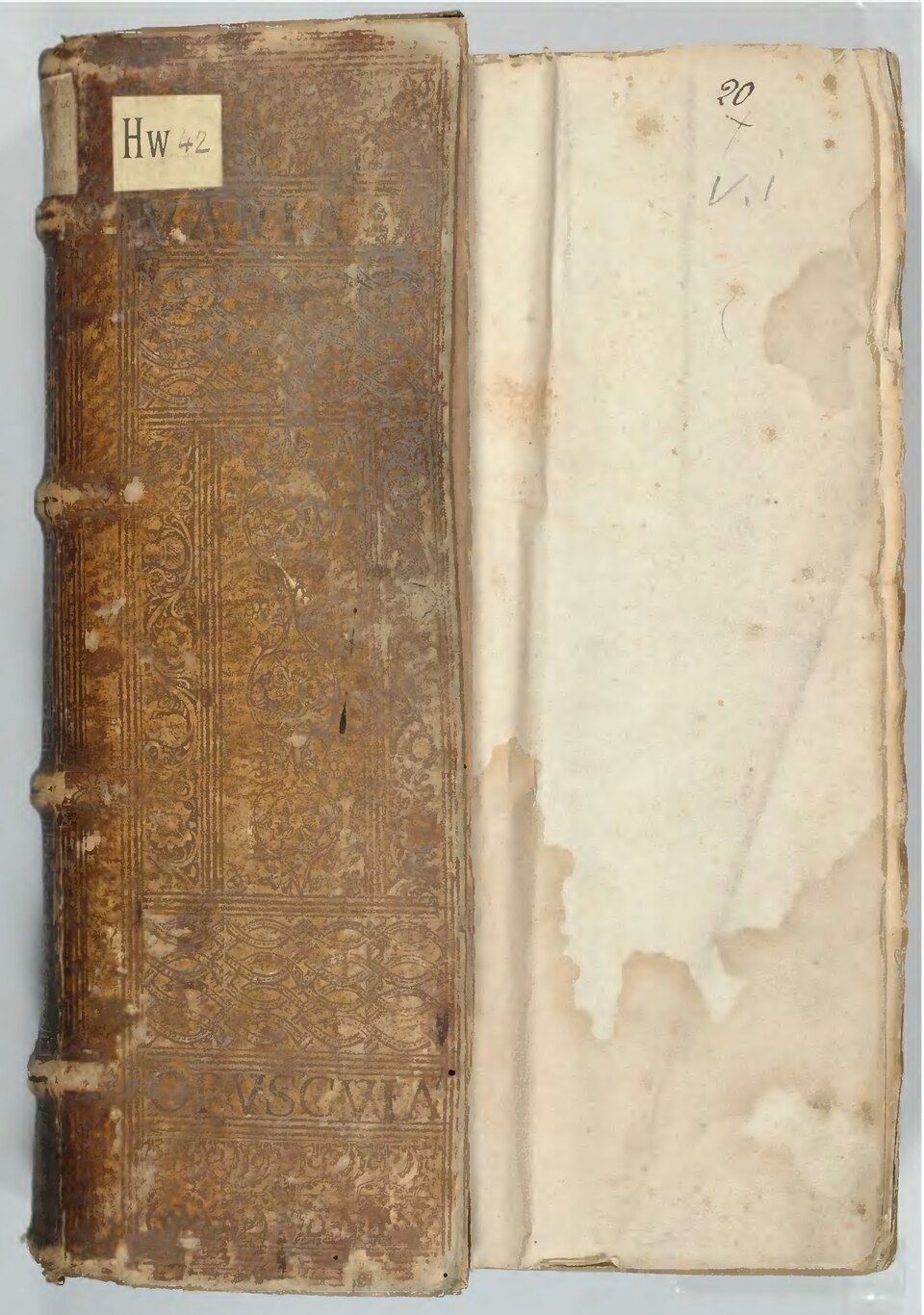
A manuscript page of Ptolemy's Almagest, the astronomy textbook that dominated for fourteen centuries.
Ptolemy · Public domain · Wikimedia Commons
c. 3000 BCE – 500 CE

Priests, calendars and the first catalogs

Egyptian hour-priests tracked star risings to time temple rites, Babylonian scribes turned omen-watching into mathematical prediction, Chinese court astronomers logged eclipses and "guest stars" for the emperor, and Greek geometers from Hipparchus to Ptolemy built models of a cosmos they could calculate. Ptolemy's Almagest, written in Roman Alexandria around 150 CE, compressed this whole inheritance into the textbook that would rule astronomy for fourteen centuries.

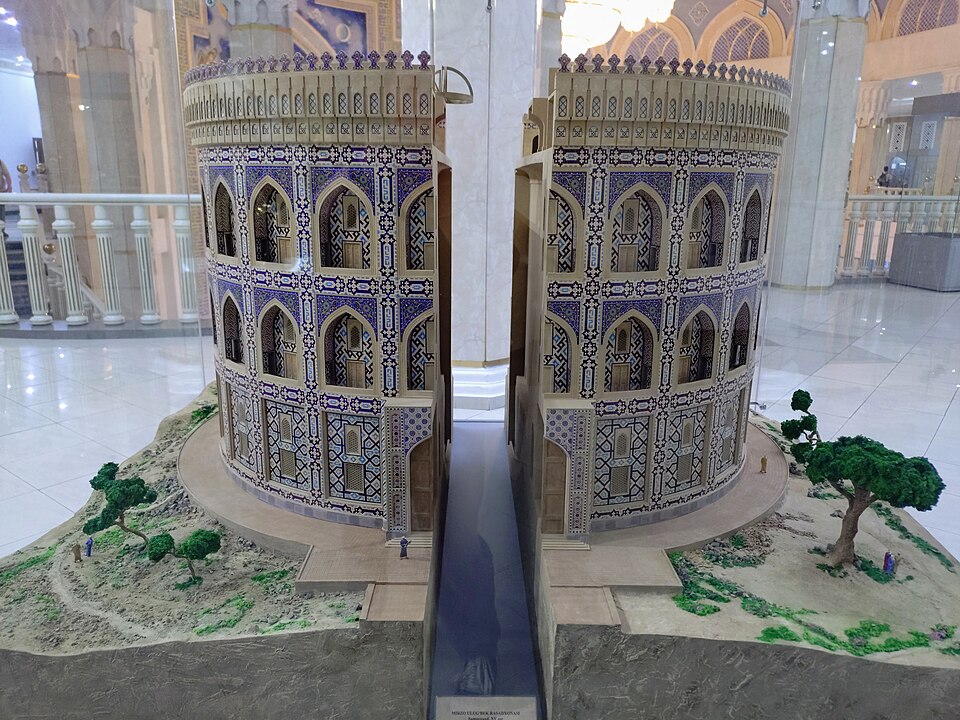
The excavated underground arc of the great meridian instrument at Ulugh Beg's Samarkand observatory.
Victoria · CC BY-SA 4.0 · Wikimedia Commons
500 – 1600

Islamic observatories and the Copernican turn

While European astronomy dozed, observatories at Baghdad, Maragha and Samarkand tested and refined Ptolemy: al-Battani sharpened his solar parameters, al-Sufi rechecked his stars, and Ulugh Beg's team measured over a thousand positions afresh. Star names like Aldebaran, Betelgeuse and Vega still carry this era's Arabic. Copernicus inherited its mathematical devices — including couplings developed at Maragha — and in 1543 used them to move the Earth itself.

Galileo's 1610 Sidereus Nuncius, the first published telescopic observations of the sky.
Galileo Galilei · Public domain · Wikimedia Commons
1600 – 1800

The telescope changes the question

Galileo's telescope made the sky a place with landscapes rather than a pattern of lights; Kepler's laws turned planetary tables into physics; Newton's Principia of 1687 explained both at once. National observatories at Paris (1667) and Greenwich (1675) put astronomers on the state payroll to fix longitude and time, and in 1781 a Hanoverian musician in England, William Herschel, doubled the solar system's known size by finding Uranus from his back garden.

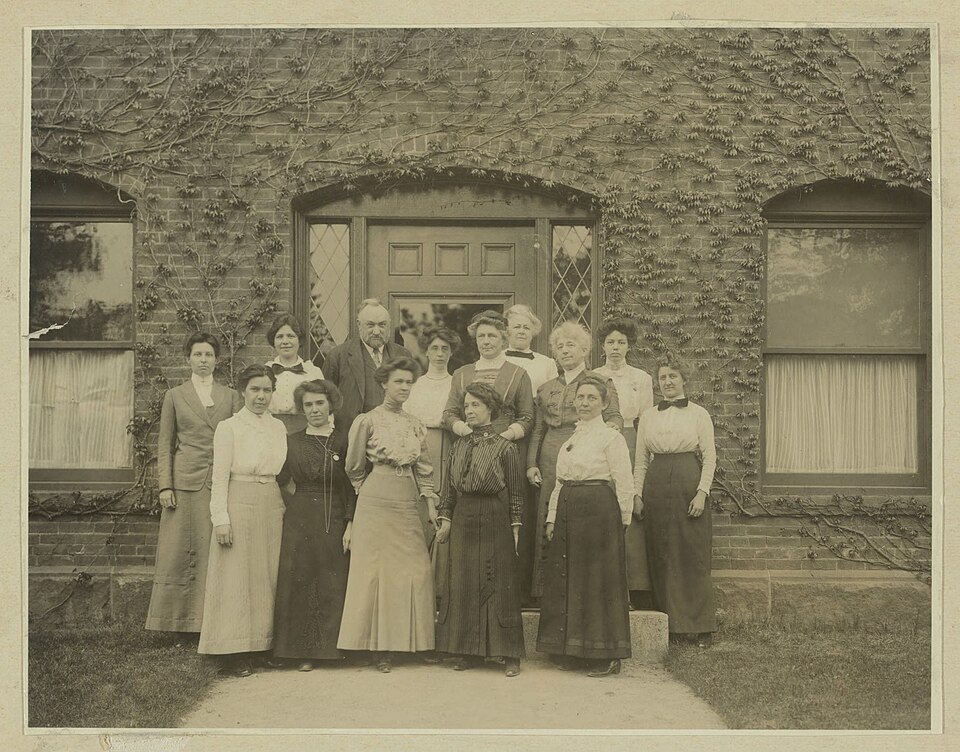
The women computers of Harvard College Observatory at work on photographic plates of the sky.
Unknown author Unknown author · Public domain · Wikimedia Commons
1800 – 1950

Astrophysics is born

Spectroscopy after 1859 let astronomers read starlight's chemistry — helium was found in the Sun in 1868, decades before it was isolated on Earth — and photography let telescopes accumulate light all night onto glass. At Harvard, women "computers" including Annie Jump Cannon, who classified some 350,000 stars, and Henrietta Leavitt turned those plates into the classification and distance tools with which Hubble, in the 1920s, found other galaxies and cosmic expansion.

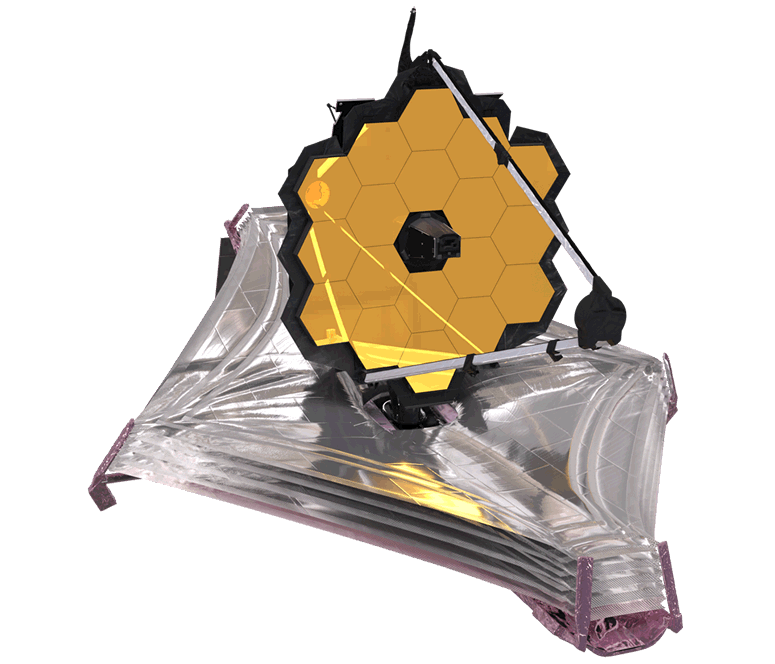
The gold-coated segmented mirror of the James Webb Space Telescope during ground testing.
NASA · Public domain · Wikimedia Commons
1950 – present

The invisible universe

Radio astronomy — begun accidentally by Bell Labs engineer Karl Jansky in 1932 — opened the first non-optical window, followed by X-ray, infrared and space telescopes above the atmosphere entirely; each new window revealed unimagined objects, from quasars and pulsars to the cosmic microwave background. Since 2015, gravitational-wave detectors have added a channel that is not light at all, and machine-scanned surveys now find in one night what a career once held.

What this job replaced

Neighbouring trades that no longer exist — absorbed, automated or regulated away.

Court astrologer

c. 1600 BCE – 1800s

For most of recorded history, casting horoscopes was the astronomer's actual paying job: Babylonian scholars read the sky for kings, China's Astronomical Bureau interpreted portents for emperors into the Qing dynasty, and Johannes Kepler — discoverer of the planets' true orbits — financed his physics as an imperial astrologer, writing that astrology was the foolish daughter who fed her wise mother. European astronomy shed the role during the eighteenth century as universities and academies took over the salaries.

Human computer

1767 – 1960s

Britain's Nautical Almanac, founded in 1767, was calculated by a distributed network of freelance human computers; Harvard College Observatory hired women from 1879 to measure and classify stars on glass plates at around 25 to 30 cents an hour; and NASA's computing pools, made famous by Katherine Johnson, carried the trade into the space age. Electronic computers erased the job title within a generation — though the word itself survives on every desk.

Time-seller

1836 – 1940

Before radio signals, observatories were where time came from: Greenwich dropped its public time ball from 1833 so ships on the Thames could set their chronometers. The Belville family made a business of it — John Belville, and later his daughter Ruth, carried a pocket chronometer nicknamed Arnold from Greenwich to London subscribers each week, selling the time itself. Ruth Belville was still making her rounds in 1940, in her eighties, as the telephone speaking clock finally ended the trade.

Trades that vanished →

Astronomy has survived the loss of its royal patrons, its astrological income and its eyepieces, absorbing each new technology as simply a bigger bucket for light. The through-line from a Babylonian scribe's clay diary to a survey telescope's nightly terabytes is unbroken: watch systematically, write it down, and keep the records where a later generation can check them.

What has changed is scale — one astronomer's lifetime catalog is now a minute of survey data. What has not changed is the job's essential wager: that patient, honest measurement of things no one can touch will keep rewriting what everyone believes about where we are.

Keep exploring

More in Science & Research