🔭The Greats

Astronomer · The scientist who measures the universe, from Babylonian clay tablets to space telescopes, still deciding which flicker in the data is a discovery.

Choosing eight names from humanity's oldest science means leaving out entire civilizations of skilled observers — the anonymous Babylonian diarists, the Chinese officials who logged the supernova of 1054, the Maya calendar-keepers — whose records modern astronomy still uses. The eight below are chosen because each changed what the profession is: not only what was known, but how an astronomer works.

They span twenty-one centuries and seven countries, and include a sultan, a deaf assistant paid thirty cents an hour, and a graduate student passed over for the Nobel Prize her discovery won. What they share is the trade's core act: a measurement made carefully enough to force everyone else to change their minds.

The all-time podium

Ulugh Beg
Ulugh Beg
Timurid Empire (Uzbekistan)
2
Hipparchus
Hipparchus
Greece (Rhodes)
1
Tycho Brahe
Tycho Brahe
Denmark
3

The eight who reached the top

1
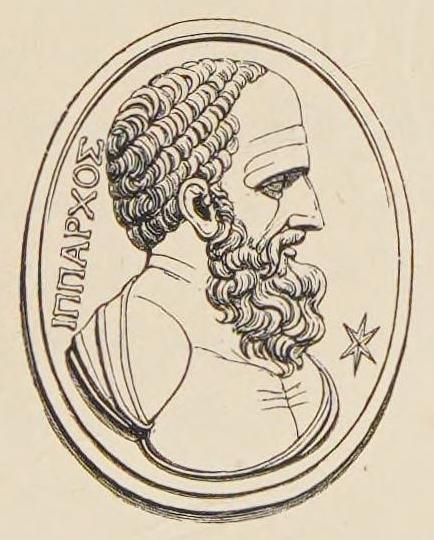
Classical depiction of the Greek astronomer Hipparchus observing the sky. William Henry Smyth · Public domain

Hipparchus

Greece (Rhodes) · c. 190 – c. 120 BCE

Antiquity's greatest observational astronomer: he built a catalog of about 850 stars with the magnitude scale still in use, founded trigonometry to compute the sky, and discovered the precession of the equinoxes by comparing his measurements against records a century and a half older.

The story

Pliny the Elder records that Hipparchus, startled by a star where none had been, resolved to count and fix the stars "for posterity" — so later generations could tell whether the heavens themselves change. The bet paid off within his own lifetime: comparing his position for the star Spica against measurements by Timocharis around 150 years earlier, he found the equinox had drifted about two degrees, revealing the 26,000-year wobble of Earth's axis.

“Measure carefully now so that someone a century later can discover what you cannot.”
Stars cataloged
~850
Precession cycle found
~26,000 yrs
Catalog's working life
1,700 yrs via Ptolemy
2
Portrait of Ulugh Beg, the Timurid sultan-astronomer of Samarkand. Bgag · CC0

Ulugh Beg

Timurid Empire (Uzbekistan) · 1394–1449

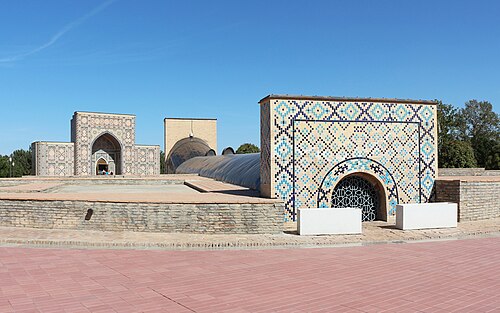
Sultan of Samarkand and a working astronomer, he built an observatory with a meridian arc some 40 meters in radius and led the Zij-i Sultani: 1,018 star positions measured afresh — the first major independent catalog since Ptolemy — plus a year length accurate to within about a minute.

The story

In 1449 Ulugh Beg was assassinated on the orders of his own son while traveling toward Mecca, and religious opponents razed his observatory so completely that its location was forgotten for four and a half centuries, until the Russian archaeologist Vasily Vyatkin unearthed the great sextant's underground arc in 1908. The catalog escaped the wreckage: manuscript copies traveled west, and Oxford printed the star tables in 1665.

“Institutions die with their patrons; well-made data outlives both, if copies travel.”

Stars measured afresh
1,018
Meridian arc radius
~40 m
Year-length accuracy
within ~1 min
3
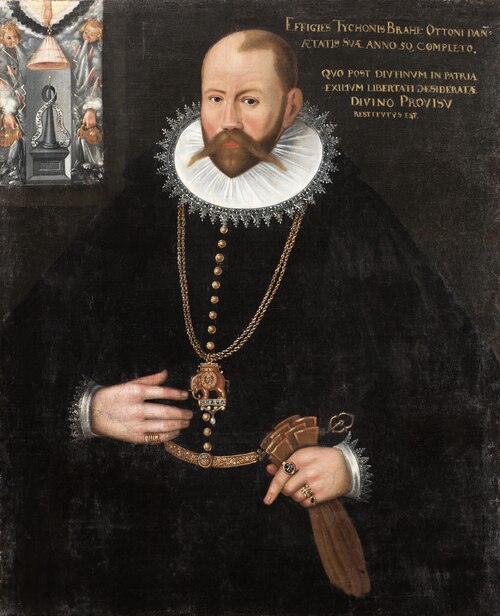
Portrait of the Danish astronomer Tycho Brahe. Unknown author Unknown author · Public domain

Tycho Brahe

Denmark · 1546–1601

The last and greatest naked-eye astronomer: on the island of Hven, funded by the Danish crown on a scale a common estimate puts near 1% of state revenue, he logged twenty years of nightly positions accurate to about an arcminute — the data from which Kepler derived the planets' true orbits.

The story

On an evening in November 1572, walking to supper, Tycho saw a brilliant new star in Cassiopeia and — by his own account — doubted his eyes, calling on servants and passing peasants to confirm it. He then measured its position night after night, showed it had no parallax and so lay far beyond the Moon in the supposedly changeless celestial realm, and published De nova stella in 1573, the book that gave the word "nova" to science.

“An instrument you have calibrated beats a doctrine you have inherited.”

Positional accuracy
~1 arcminute, no lens
Nightly data on Hven
~20 years
Crown revenue consumed
~1% of Denmark's
4
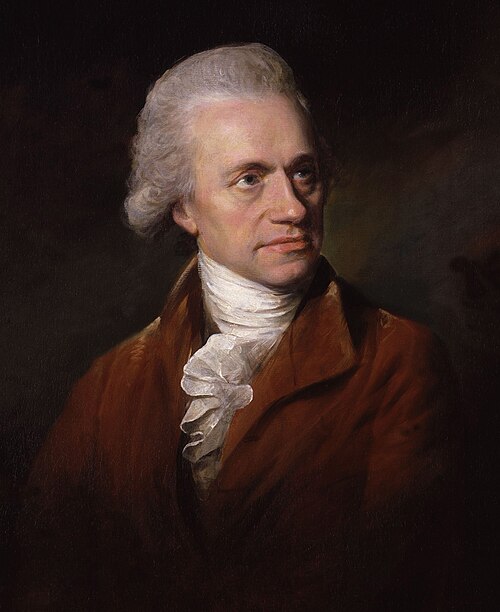
Portrait of William Herschel, musician turned discoverer of Uranus. Lemuel Francis Abbott · Public domain

William Herschel

Germany / Britain · 1738–1822

A Hanoverian oboist who settled in England as a music teacher, taught himself to grind the best telescope mirrors of the age, and became the model of the self-made astronomer: discoverer of Uranus and of infrared radiation, and cataloger — with his sister Caroline — of some 2,500 nebulae and clusters.

The story

On the night of 13 March 1781, between music engagements, Herschel turned his homemade 6.2-inch reflector on the sky from the garden of 19 New King Street, Bath, and noted a "curious either nebulous star or perhaps a comet" that showed a disk. He reported a comet; within months, computed orbits showed a planet beyond Saturn — the first ever discovered. He named it Georgium Sidus for George III, who answered with a royal pension; everyone else eventually called it Uranus.

“Build a better instrument than anyone else and the sky will hand you what others missed.”

First planet ever discovered
Uranus, 1781
Telescope mirrors made
400+
Nebulae cataloged
~2,500 (with Caroline)
5
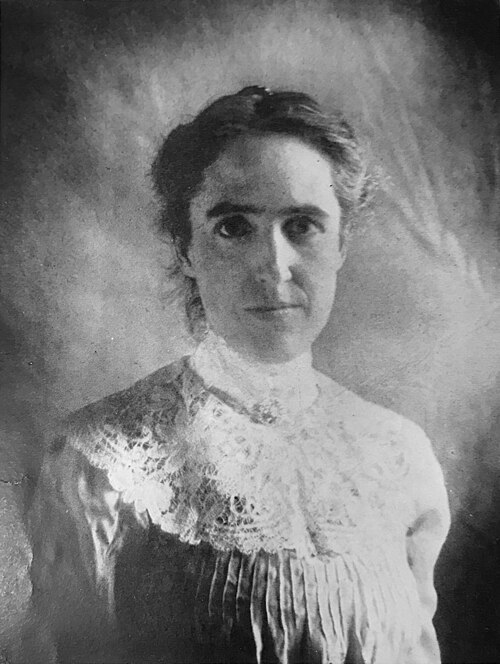
Photograph of Harvard astronomer Henrietta Swan Leavitt at her desk. Unknown author Unknown author · Public domain

Henrietta Swan Leavitt

United States · 1868–1921

A Harvard "computer" paid about thirty cents an hour, deaf from her twenties, Leavitt found roughly 2,400 variable stars on photographic plates and in 1912 published the period–luminosity relation of Cepheids — the first reliable ruler for distances beyond our galaxy, and still the distance ladder's foundation.

The story

In 1925 the Swedish mathematician Gösta Mittag-Leffler wrote to Leavitt at Harvard to say he intended to nominate her for the Nobel Prize in Physics for her Cepheid work. Director Harlow Shapley had to answer for her: Leavitt had died of cancer in 1921, aged 53, and the prize cannot go to the dead. By then her relation had already carried Hubble to Andromeda and was about to underwrite the expanding universe.

“A quiet, correct relation in the data can outweigh every title its finder was denied.”

Variable stars discovered
~2,400
Hourly wage at Harvard
~$0.30 (1900s)
Distance ladder today
Still rung one
6
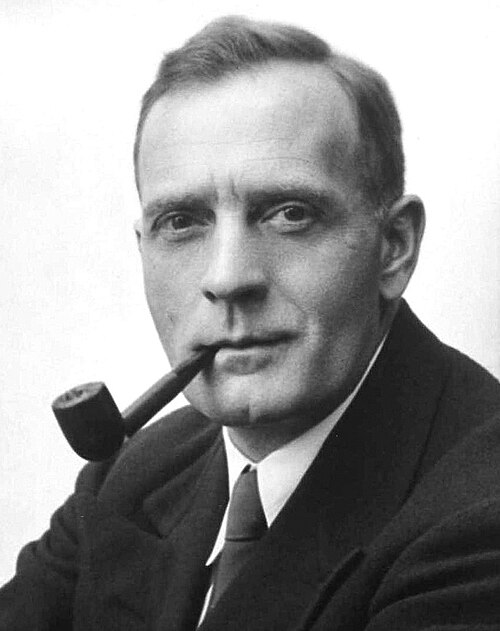
Edwin Hubble at the eyepiece of a large telescope on Mount Wilson. Johan Hagemeyer · Public domain

Edwin Hubble

United States · 1889–1953

A Rhodes scholar and trained lawyer who returned to astronomy, Hubble used Mount Wilson's 100-inch Hooker telescope to settle the scale of the universe twice in one decade: proving in 1923–25 that the spiral nebulae are separate galaxies, then showing in 1929 that they recede — the expanding universe.

The story

On the night of 5–6 October 1923 Hubble exposed plate H335H of the Andromeda nebula and marked three suspected novae "N." Checking earlier plates, he realized one was no nova but a Cepheid variable; he crossed out the N and wrote "VAR!" in red. Leavitt's law put the star at roughly 900,000 light-years — far outside the Milky Way — ending with one star the "island universe" debate that Shapley and Curtis had argued to a draw in 1920.

“One correctly identified data point can end an argument a generation of rhetoric could not.”

M31 distance (his 1925 est.)
~900,000 ly
Instrument
100-inch Hooker
The law's name today
Hubble–Lemaître
7

Jocelyn Bell Burnell

United Kingdom (Northern Ireland) · b. 1943

As a Cambridge PhD student she spent two years helping hammer together a four-acre radio telescope, then analyzed its paper charts by eye — nearly 30 meters of them a day — and in 1967 recognized the "scruff" that proved to be the first pulsar. The 1974 Nobel went to her supervisor; the discovery is hers in every textbook.

The story

In 2018 Bell Burnell won the Special Breakthrough Prize in Fundamental Physics — worth $3 million, one of the largest awards in science — for the pulsar discovery and a lifetime of leadership. She gave away the entire sum to the Institute of Physics to fund doctoral scholarships for students from under-represented groups, remarking that people like her, who do not look like the standard-issue physicist, notice things others miss.

“Chase the anomaly your survey was never designed to find — and mind who gets the credit.”

First pulsar's period
1.337 s
Chart paper read by eye
~30 m per day
Prize money given away
$3M (2018)
8

Vera Rubin

United States · 1928–2016

With instrument-maker Kent Ford at the Carnegie Institution, Rubin measured how fast stars orbit within spiral galaxies and found the curves stubbornly flat: dozens of galaxies spinning as if wrapped in unseen mass. Her measurements made dark matter — most of the material universe — an observational fact to explain.

The story

In 1965 Rubin became the first woman formally permitted to observe at Palomar Observatory, which had no women's restroom. She cut a skirt shape from paper and stuck it over the male figure on a door, announcing, "There is your ladies' room." A decade later her flat rotation curves — starting with Andromeda in 1970 — forced the field to accept that roughly 85% of the universe's matter is something no telescope has ever seen.

“When clean data keep saying something absurd, consider that the universe, not the measurement, is strange.”

Spiral galaxies measured
60+ rotation curves
Matter that turned out dark
~85%
Named in her honor
Rubin Observatory, Chile

Bars are scaled to the leader in this list.

Comparison Lab

Toggle names on and off — every bar rescales to the leader of your selection.

5 / 8

The argument

Ptolemy's own place is genuinely contested: from the astronomer Delambre in the 1800s to Robert Newton's 1977 book The Crime of Claudius Ptolemy, critics have argued that parts of the Almagest's star catalog were recomputed from Hipparchus rather than freshly observed. Defenders answer that adaptation was ancient practice, not fraud; the argument continues in the journals.

Bell Burnell's missing Nobel remains the profession's most argued omission — sharpened by the fact that she herself has publicly defended the committee's 1974 decision, saying supervisors bear the responsibility for a project, while much of the field regards the omission as indefensible.

Any such list overweights the well-documented West. The Chinese officials who recorded the 1054 supernova that became the Crab Nebula, the Maya eclipse-table makers, and the Islamic observers whose star names we still speak were astronomers of the first rank whose individual names history mostly failed to keep.

Keep exploring

More in Science & Research