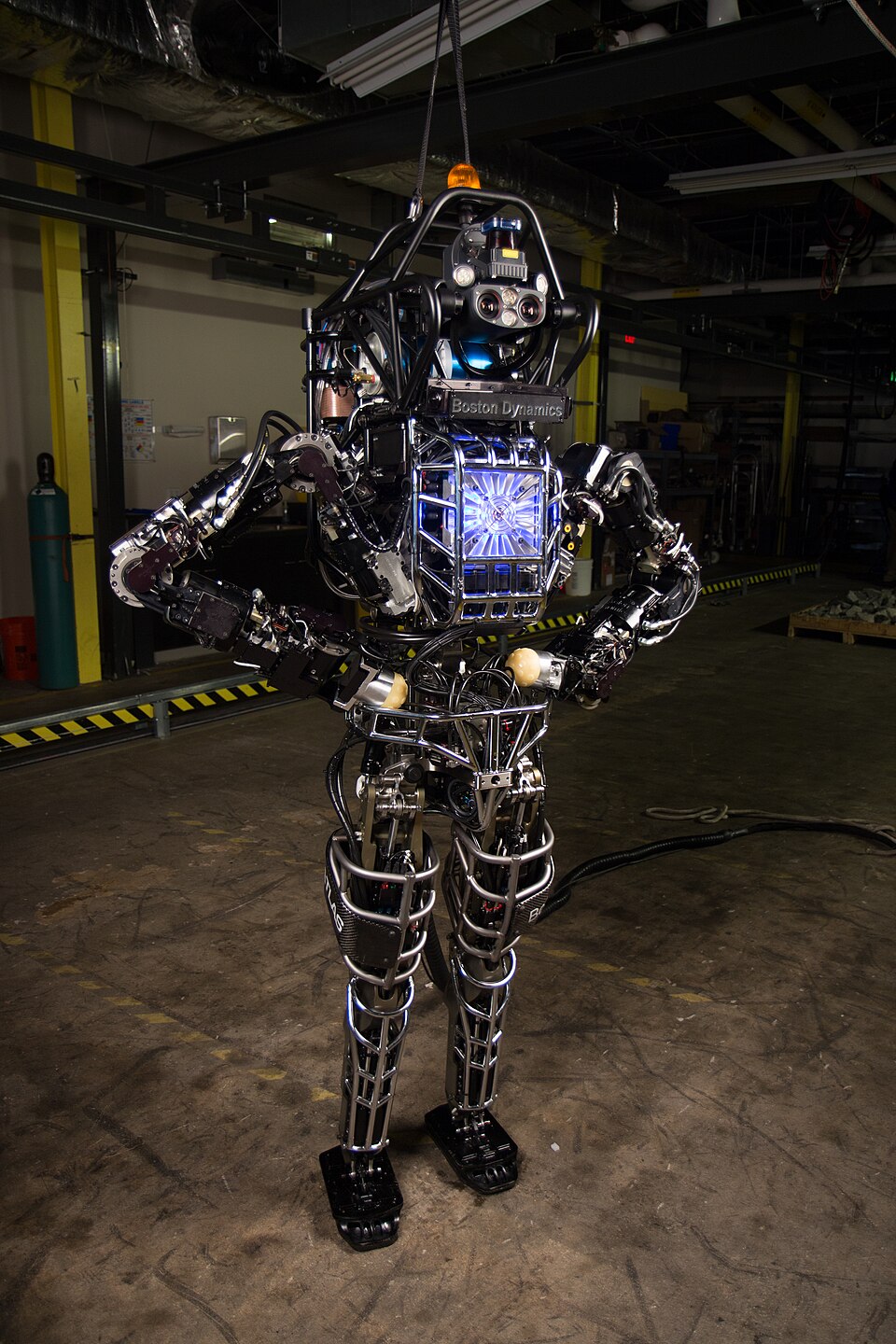
Robotics Engineer: Designs the machines that sense, decide and act in the physical world, where the hard problem was never intelligence but the world itself.
A robotics engineer designs, builds and integrates machines that sense their environment, decide what to do and physically act on the world — industrial arms welding car bodies, surgical systems guiding a scalpel, warehouse robots moving shelves, or legged machines crossing rubble. The discipline pulls together mechanical design, electronics, control theory and increasingly machine learning, and a single working robot usually needs specialists in several of those areas cooperating, since almost no one masters kinematics, embedded firmware and perception equally well.
The word ‘robot’ is barely a century old — Karel Čapek's brother Josef coined it in 1920 for a Czech stage play about manufactured workers who revolt — but the profession itself is younger still, dating to George Devol's 1954 patent for a programmable mechanical arm and Joseph Engelberger's decision to sell it. Japan then industrialized the idea faster than anywhere else, and by the 1980s had more robots working its factory floors than the rest of the world combined.
What sets robotics engineering apart from most computing disciplines is that its output has to survive contact with a physical, uncooperative world: dust, vibration, worn gears, a box that isn't quite where a sensor expected it. AI has made the decision-making half of that problem much easier in the last decade — but the mechanical and electrical half, the part that actually moves, still fails in the same stubborn, physical ways it always has, which is why the job still starts on a workbench, not just a screen.
Inside the profession
A robotics engineer turns sensing, actuation and software into machines that must work in factories, hospitals, warehouses and outdoor sites—not only in a clean lab demo. The craft sits between mechanical design, control theory and systems integration, and most of the hard work is making a robot survive contact with the real world.
Integration is the real craft
A robot that works in a video still has to meet cycle time, safety ratings, cable routing, thermal limits and the quirks of a particular gripper or weld torch. Much of the week is debugging why a vision pipeline fails under factory lighting, why a joint overshoots after a payload change, or why a stop button trip logic fails a risk assessment. The job rewards people who can read a mechanical drawing, a ladder diagram and a ROS graph in the same afternoon. Pure algorithm work matters, but shipping robots means owning the seams between disciplines.
Safety and standards shape the design
Industrial and collaborative robots are constrained by standards such as ISO 10218 and ISO/TS 15066, plus local machinery directives and plant lockout rules. Engineers translate those into force/torque limits, guarding, safety PLCs and documented risk assessments rather than treating safety as a sticker after the prototype works. Medical, automotive and aerospace deployments add further certification paths. The difference between a research platform and a product is often months of hazard analysis, not a better controller gain.
Where the work actually happens
Some robotics engineers spend years inside OEM labs building arms, AMRs or surgical platforms; others work at system integrators, commissioning cells on customer floors with compressed schedules and incomplete CAD. Field service and application engineering sit close to operators who will blame the robot for a bad fixture. Academic and research-institute roles emphasize novel sensing or learning, then hand off messy industrialisation. The title is shared; the week is defined by whether the customer is a production line, a hospital or a paper deadline.
What is changing underfoot
Learning-based perception and motion planning reduce hand-tuned heuristics for some unstructured tasks, while simulation and digital twins shorten early design loops. They do not remove the need for someone who can explain a near-miss, qualify a change against a safety case, or decide when a model is good enough to touch a human co-worker. Vendors still certify specific controllers and teach pendants; engineers still own the cell around them. Automation of coding assistants speeds boilerplate; accountability for a moving mass does not transfer to the model.
How the work branches
Five common shapes of the same title — specialty, setting or career path.
Factories and production cells
Industrial automation / systems integrator
Designs and commissions robot cells around conveyors, fixtures and PLCs; measured on uptime, cycle time and safe handover to operators.
Warehouses, hospitals, campuses
Mobile robotics / AMR engineer
Owns navigation, fleet behavior and facility integration where maps, traffic rules and human pedestrians keep changing.
Device makers and hospitals
Medical / surgical robotics
Works under device regulation, sterile workflows and clinical validation far stricter than typical industrial shipping cycles.
Universities and corporate labs
Research robotics engineer
Prototypes new sensing, learning or manipulation methods; success is a reproducible experiment more often than a CE-marked product.
Customer sites worldwide
Field application / service engineer
Tunes paths, tooling and recovery procedures on live equipment; domain knowledge of the customer's process often outweighs novel algorithms.
How it reads by country
Same craft, different gatekeeping, status and daily texture — rewritten for readers in each language.
United States — OEMs, integrators and PE paths
Careers cluster around automotive, logistics and medical-device corridors, with PE licensure available in mechanical or electrical tracks for some roles. Startup and Big Tech robotics compete with established OEMs; interview filters often mix controls fundamentals with shipping evidence.
South Korea — electronics and factory automation
Chaebol manufacturing, semiconductor fabs and dense supplier networks create strong demand for cell design and robot application work. KAIST and other engineering schools feed both corporate R&D and factory IT; overtime around line launches remains culturally visible.
Japan — robot makers and kaizen floors
Home to major industrial robot manufacturers and long-standing factory-automation practice. Careers often grow inside manufacturer or keiretsu networks; precision, documentation and on-site troubleshooting matter as much as novel software stacks.
Germany — Industrie 4.0 and Mittelstand integrators
Automotive OEMs, machine builders and specialist integrators shape the market. Formal engineering titles and works-council norms matter; safety cases and CE conformity are everyday design constraints rather than afterthoughts.
United Kingdom — CEng and mixed sectors
Chartered Engineer routes sit beside roles in automotive, warehousing, defence and university spinouts. London and Midlands clusters differ sharply; many mid-career engineers move between integrator firms and OEM application teams.
Singapore — high-mix manufacturing hub
Electronics, biomedical and logistics facilities hire engineers who can commission cells under tight floor space and multilingual crews. Regional travel for ASEAN sites is common; public grants and multinational plants set much of the project pipeline.
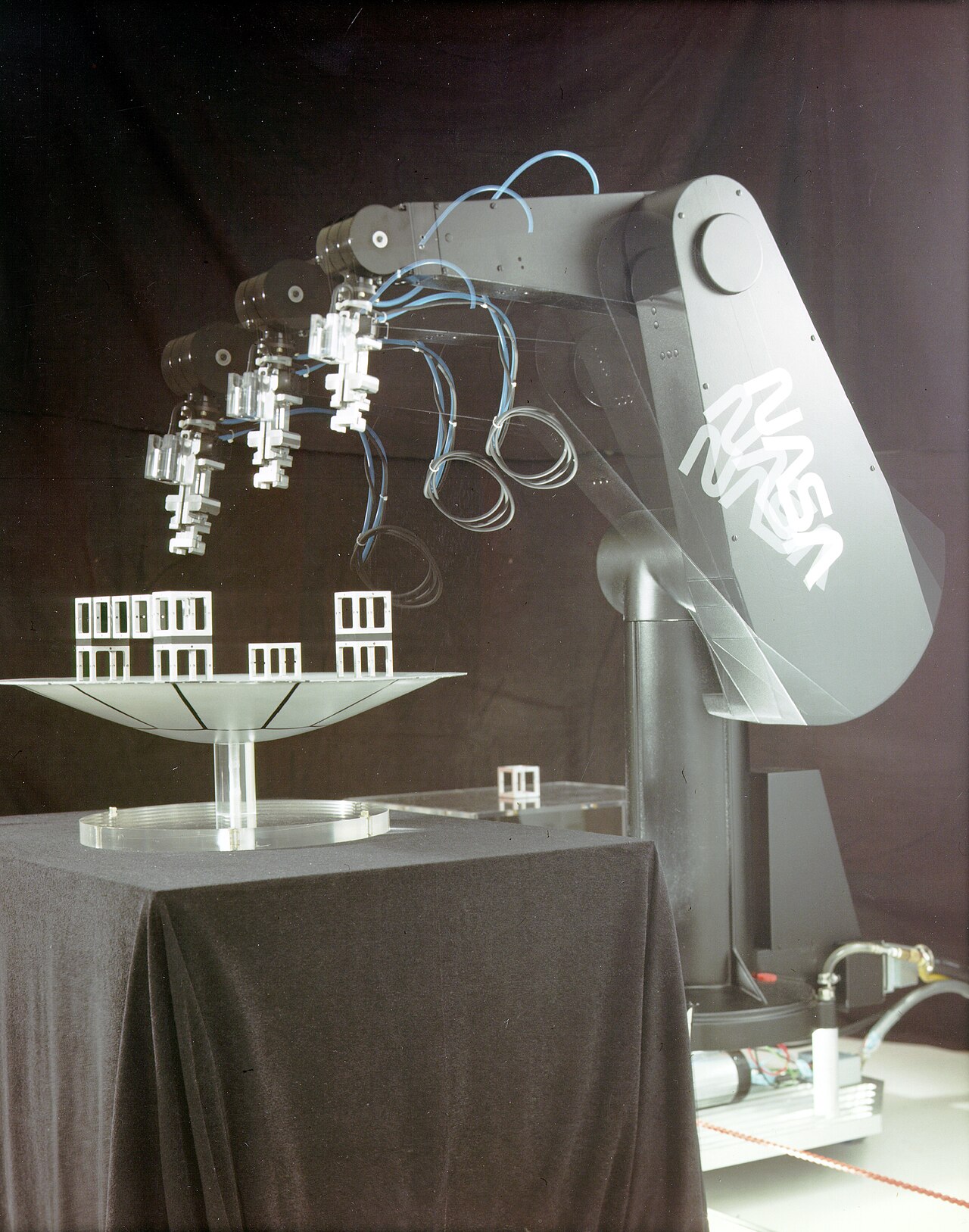
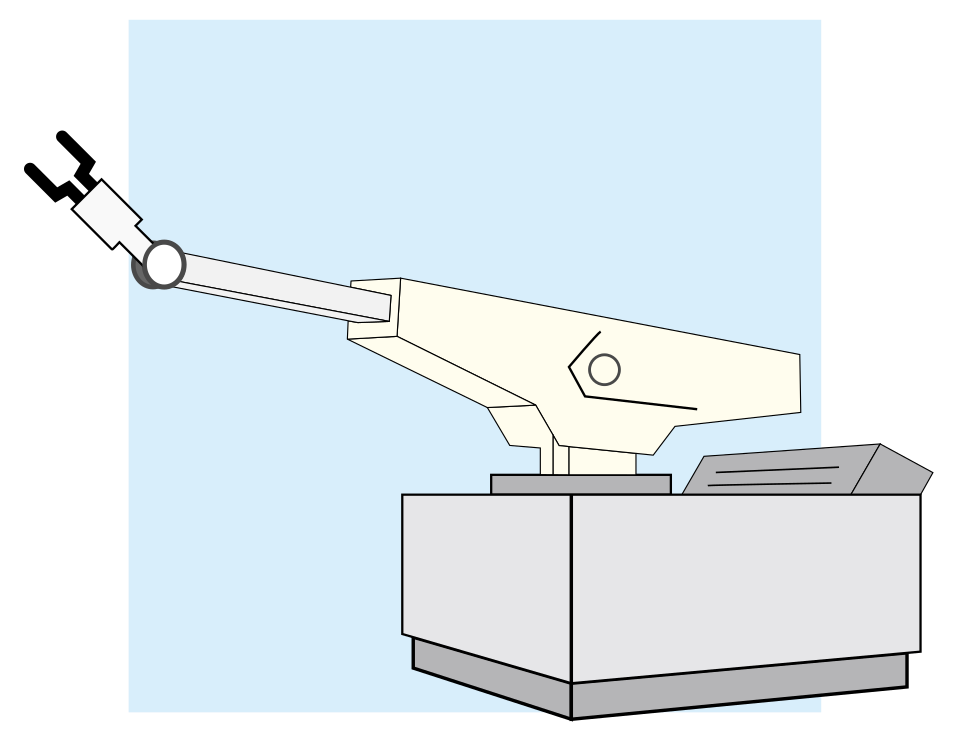
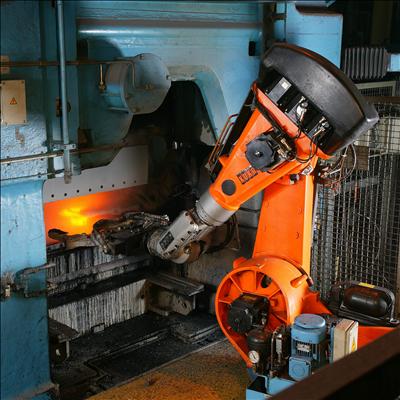
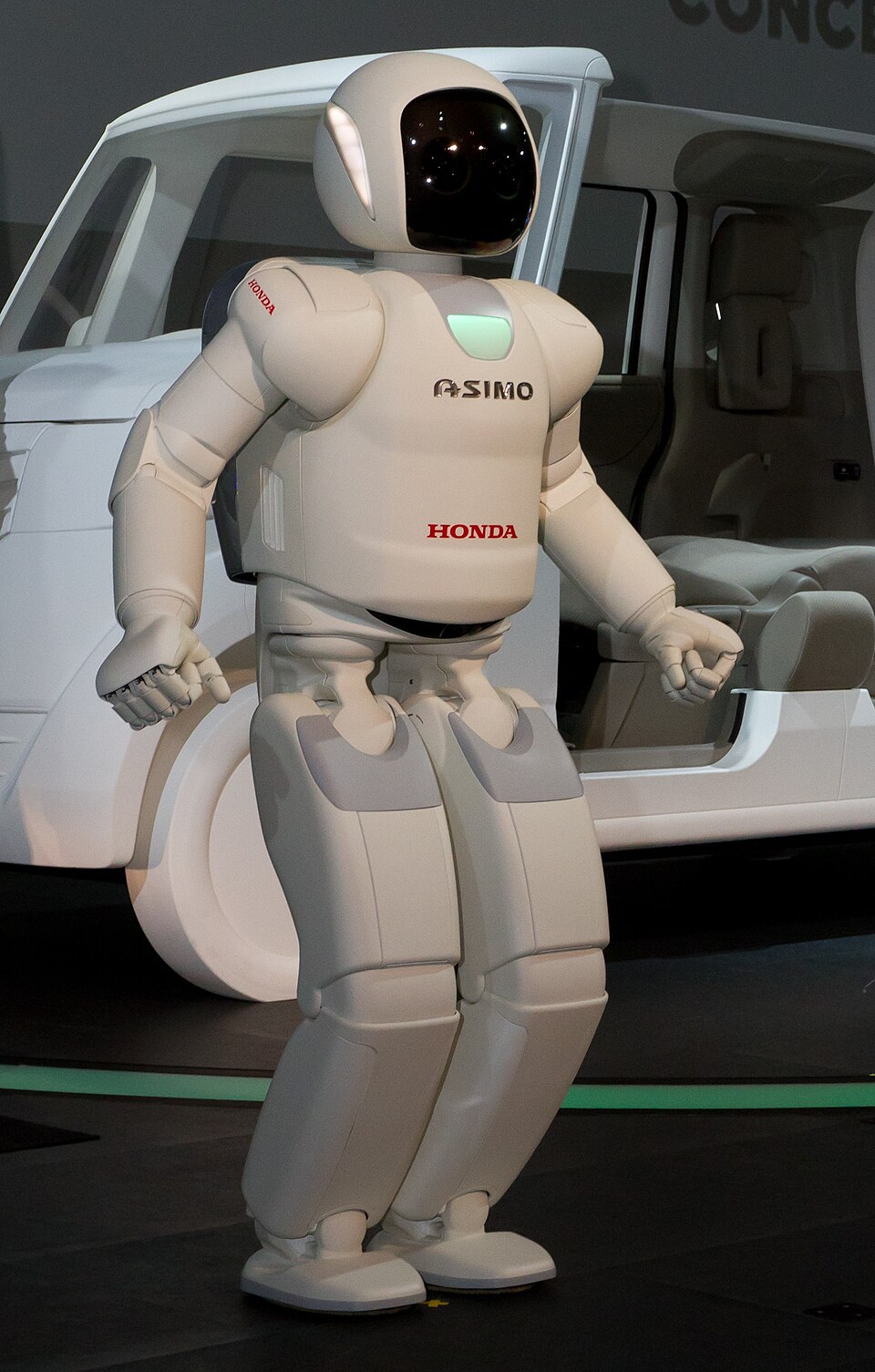
From the archive
Commons CC/PD images self-hosted for this profession.
Why attitude matters here
Robotics engineering rewards clever kinematics, but attitude decides whether a moving machine is safe to leave running when the person who tuned it has gone home.
A wrong assumption becomes kinetic energy
A mis-set payload, an ignored soft limit or a vision false positive does not stay on a screen—it moves metal toward a person or a part. Engineers who treat edge cases as someone else's paperwork discover them during a near-miss; those who insist on proving the hazard analysis before enabling auto mode catch them earlier. Skill writes the trajectory; attitude toward incomplete certainty decides whether the cell runs.
The integrator owns seams nobody fully specified
Vendors ship arms, cameras and PLCs with manuals that assume ideal mounting and clean power. Real plants have flexed floors, reflective parts and operators who bypass a fence panel. Someone has to refuse a go-live when the guarding story is incomplete. Waiting for a ticket that names the gap is how unsafe provisional setups become permanent.
Maintenance inherits what commissioning hides
A workaround left undocumented—manual recovery steps, a temporary speed limit, a cable routed through a pinch point—fails months later for a technician who was never in the design review. The decision to leave an honest as-built and recovery procedure is invisible at demo day and decisive for the people who keep the line alive.
Stances that hold up under pressure
Five concrete postures the work rewards, not slogans.
Stops the cell when the safety story is incomplete
Refuses to enable automatic mode, or insists on a documented temporary measure with an owner and expiry, rather than waving through a customer deadline when interlocks, fencing or teach-mode behavior still have open hazards.
Measures on the real payload, not the datasheet
Re-validates reach, cycle time and force limits after tooling or part changes instead of trusting the brochure mass and an unchanged path that was tuned on a lighter dummy.
Writes recovery for the night shift
Documents fault codes, manual release steps and who to call in language a third-shift technician can follow, rather than leaving tribal knowledge in a chat thread with the commissioning engineer.
Treats a near-miss as a design input
Escalates and redesigns after an unexpected motion or stop that hurt nobody, instead of resetting and treating luck as proof the system is fine.
Says the model is not ready for contact
Keeps a learning-based grasp or navigation stack in supervised or simulated evaluation when edge cases remain uncharacterized, rather than equating a polished demo reel with plant readiness.
Moments that reveal it
Situations that separate résumé language from how someone actually practices.
Customer wants auto mode before guarding sign-off
A plant manager needs volume before a holiday and asks to run with temporary barriers and a verbal promise to finish fencing later. Whether the engineer holds the safety case or softens to keep the relationship intact is the real credential check.
A teach-pendant recovery only one person understands
A brittle fault requires a sequence never written down. Leaving for the airport without documenting it, or staying to make the night shift self-sufficient, separates résumé ownership language from practice.
Vision works in the lab and fails under skylights
A pipeline trained indoors drops parts on the line. Patching thresholds until the demo passes, versus stopping to redesign lighting or fixtures, shows whether reliability or appearance is the actual goal.
A colleague proposes bypassing an interlock 'just for debug'
Jumping a gate switch to move faster through a test is a recurring temptation. Challenging it in the moment, not in a retrospective after someone is hurt, is the attitude the standards assume exists.
Where "calling" turns harmful
Passion for robots as unpaid commissioning overtime
Integrators and startups often frame nights on a customer floor as proof someone 'loves robots,' then treat unpaid go-live crunch as normal rather than a staffing failure. Equity or 'portfolio experience' is offered instead of overtime pay, while safety sign-off pressure falls on the engineer who cares enough to stay. Loving the machines is not a waiver of labor law or of the right to refuse an unsafe provisional setup.
The profile
Resists AI65
Pay74
Barrier to entry70
Autonomy52
Demand82
Impact85
How exposed is it to AI?
Moderate
Perception, motion planning and even some mechanical design exploration are increasingly generated or accelerated by AI tools. What resists automation is physical debugging on real hardware, integration judgment across mechanical, electrical and software layers that no single model has full visibility into, and legal accountability for a machine that can injure someone.
What does a robotics engineer actually do day to day?
Most robotics engineers specialize in one layer of the system — mechanical design, embedded control, perception, or software architecture — and spend their time in CAD or code, running the robot through repeated tests, and debugging why a joint drifts or a camera misreads a shelf. Very little of the job is dramatic; most of it is patient, repeated testing on real hardware.
Do I need a specific robotics degree to become a robotics engineer?
No. Most working robotics engineers hold a degree in mechanical, electrical or computer engineering rather than a dedicated robotics degree, since standalone robotics or mechatronics programs are still fairly new and less common than the core disciplines. A strong hands-on project background — a competition team, a research lab, a personal build — matters as much as the major on the diploma.
What's the difference between robotics and AI?
AI is about decision-making — recognizing an object, planning a route, choosing an action — and can run entirely inside a computer. Robotics is about acting on that decision in the physical world: moving a motor precisely, gripping without crushing, staying balanced. A robot usually needs both, but a robotics engineer's distinct expertise is the physical half, the part that fails for reasons no AI model predicts.
Is robotics engineering at risk from AI?
Parts of it, yes — perception, motion planning and even some mechanical design exploration are increasingly automated or accelerated by AI tools. What resists automation is physical debugging: figuring out why a real robot behaves differently from its model, and the accountability for a machine that can injure someone if a judgment call is wrong. AI is changing the tools, not yet removing the job.
How much do robotics engineers earn?
It varies sharply by country and sector. In the United States the median is roughly $105,000–$110,000 a year; in Germany a mid-career engineer typically earns €55,000–€75,000; in Japan and South Korea, salaries run lower in dollar terms despite those countries' dominance in industrial robot manufacturing. Senior roles at humanoid-robot startups pay considerably above these medians.
What industries actually hire robotics engineers?
Automotive and electronics manufacturing remain the largest employers by volume, using arms for welding, painting and assembly. Warehouse and logistics automation, surgical robotics, agriculture, and a fast-growing humanoid-robot sector are hiring most aggressively in the 2020s, alongside defense applications like bomb-disposal robots that have used similar engineering since the 2000s.
What's the hardest part of the job that people don't expect?
Not the algorithms — the physical world's refusal to cooperate. A control loop that works perfectly in simulation can fail on real hardware because of a sensor's slight miscalibration, a cable's friction, or a floor that isn't quite as flat as assumed. Robotics engineers spend a disproportionate share of their careers chasing exactly this kind of gap between the model and the machine.
Can robotics engineers move between industries, like from industrial arms to surgical robots?
Yes, more easily than the industries' different reputations suggest — the underlying skills in kinematics, control theory and systems integration transfer well. Surgical robotics and aerospace both demand far stricter safety certification than warehouse automation, so engineers moving into those fields typically need to learn a new regulatory regime more than new core engineering skills.
Embed this ranking
Paste this code into your blog or site — the ranking stays up to date.