🕹️Origins & Evolution

Esports Pro · From a Stanford lab's 1972 Spacewar tournament to sold-out stadium finals — the youngest, shortest and most-watched playing career in modern sport.

Every other performing profession existed before its technology; this one could not. The job of professional video game player is younger than the moon landing, and for its first twenty-five years it barely paid at all — the 1972 Stanford tournament's prize was a magazine subscription, and the arcade champions of the 1980s toured on sponsor goodwill and television novelty spots rather than wages.

The profession proper required three separate inventions to align: a game worth mastering, an audience able to watch, and someone willing to pay salaries. South Korea assembled all three first, around 1999–2000, out of a financial crisis, a broadband build-out and a real-time strategy game from California. Everything since — Twitch, franchised city leagues, Saudi-funded world cups — has been a renegotiation of who pays and who watches.

Where it began

October 1972Stanford University, California

On 19 October 1972, students at the Stanford Artificial Intelligence Laboratory held the "Intergalactic Spacewar Olympics," the first video game tournament on record, played on a PDP-10 with a year's subscription to Rolling Stone as first prize. Bruce Baumgart won the five-man free-for-all, and Stewart Brand's account for the magazine — "Fanatic Life and Symbolic Death Among the Computer Bums" — is competitive gaming's founding document: proof that people would gather, compete and spectate before there was any money at all.

Timeline

1972The Intergalactic Spacewar Olympics

Stanford AI Lab students compete at Spacewar! on a PDP-10 in the first recorded video game tournament. Bruce Baumgart wins the free-for-all; the prize is a year of Rolling Stone, whose writer Stewart Brand documents the night — spectating included — for the magazine.

1980Atari's Space Invaders Championship

Atari runs the first mass gaming tournament, drawing more than ten thousand players through US regional heats to a New York final. The winner, Rebecca Heineman, later co-founds the studio Interplay — the first person to parlay a national gaming title into a games-industry career.

1997A Ferrari for a Quake champion

Around two thousand players enter the online Red Annihilation Quake tournament; sixteen finalists meet at E3 in Atlanta, where Dennis "Thresh" Fong wins id Software programmer John Carmack's own Ferrari 328 GTS. Weeks later Angel Muñoz founds the Cyberathlete Professional League in Dallas, the first standing pro circuit.

2000Korea builds the first esports industry

After the 1997 financial crisis, cheap broadband and tens of thousands of PC bang cafés make StarCraft: Brood War a national pastime. OnGameNet launches as a 24-hour game channel, the government-approved Korea e-Sports Association (KeSPA) forms, and corporations begin salarying full-time players — the first true pro class.

2011Twitch and the million-dollar International

Twitch.tv launches in June; in August, Valve stages the first Dota 2 International at Gamescom in Cologne with a then-unheard-of $1.6 million prize pool. Ukraine's Natus Vincere take the $1 million first prize, and free worldwide streaming turns every subsequent tournament into a broadcast.

2013Salaried leagues and athlete visas

Riot Games opens the League of Legends Championship Series, a salaried league with regular weekly play rather than scattered tournaments. The same year the United States grants Canadian pro Danny "Shiphtur" Le a P-1A visa — the category for internationally recognized athletes — legally classing pro gamers with baseball players.

2014Amazon buys Twitch for $970 million

Amazon acquires Twitch for about $970 million in cash, outbidding expectations barely three years after the site launched. The deal validates the streaming economy that pays players between tournaments and makes a personal audience, not just a trophy shelf, the core asset of a playing career.

2018The $20 million franchise seat

The Overwatch League debuts with twelve city-based franchises reportedly sold at $20 million each, to owners including New England Patriots owner Robert Kraft. Traditional-sport and venture money floods into esports, bringing player minimum salaries, benefits and the language of stick-and-ball leagues.

2019A sixteen-year-old wins $3 million

The Fortnite World Cup fills Arthur Ashe Stadium in New York with a $30 million total prize pool. Kyle "Bugha" Giersdorf, sixteen, wins the solo title and $3 million — a payout in the same range as that summer's Wimbledon singles purses, earned by a teenager discovered entirely through open online qualifiers.

2023A medal at the Asian Games

Esports becomes a full medal sport at the 19th Asian Games in Hangzhou, with seven titles contested. South Korea's League of Legends gold — with Faker on the roster — carries the exemption from mandatory military service granted to medal-winning athletes, and the IOC announces its own Olympic Esports Games the following year.

The eras

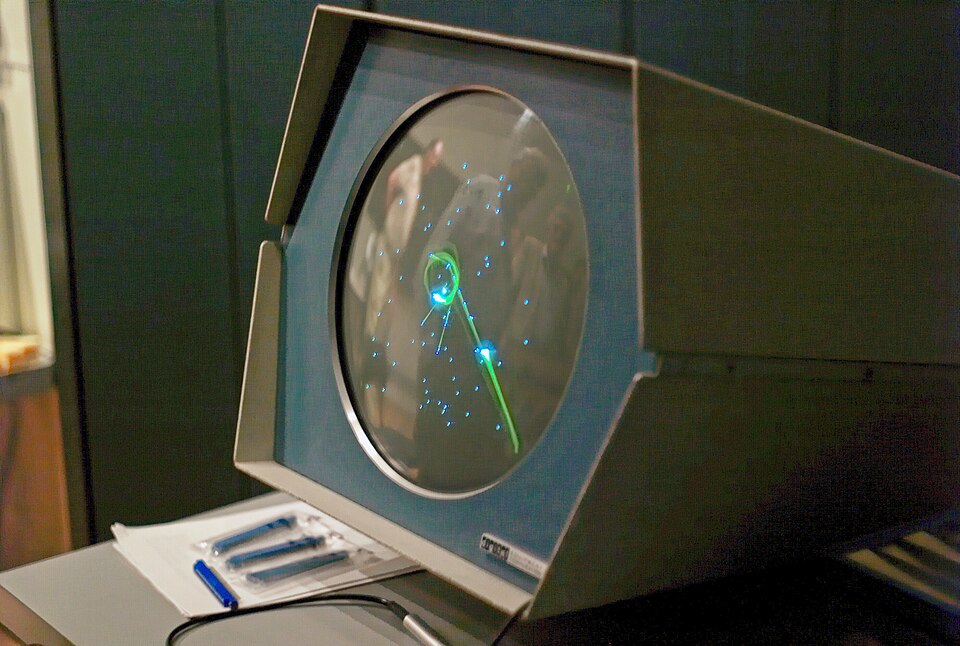
Spacewar! running on a PDP-1 computer, the game behind the first video game tournament.
Joi Ito from Inbamura, Japan · CC BY 2.0 · Wikimedia Commons
1972–1996

High scores and LAN cables

For a quarter century, competitive gaming ran on novelty rather than wages. Twin Galaxies, founded by Walter Day in Ottumwa, Iowa in 1981, adjudicated arcade world records for Guinness; Atari's 1980 Space Invaders Championship drew ten thousand entrants; Nintendo toured its 1990 World Championships across the United States. Champions got television spots and sponsor trips, not salaries, and the idea that any of this could be a job belonged to science fiction and one prescient Rolling Stone article.
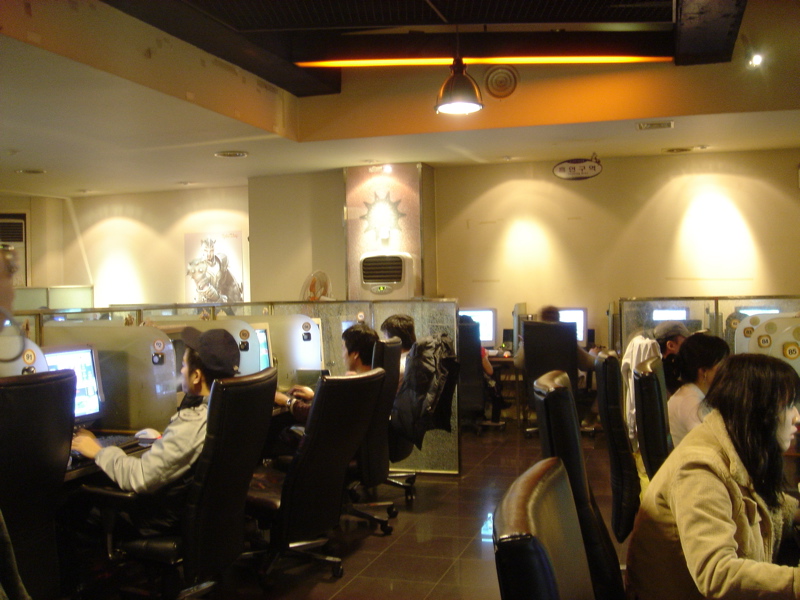

Rows of gaming PCs inside a South Korean PC bang, the cafés that incubated Korean esports.
by Hachimaki · CC BY-SA 2.0 · Wikimedia Commons
1997–2010

Korea builds the profession

South Korea's post-crisis broadband build-out filled cities with PC bang cafés, and StarCraft: Brood War became a broadcast sport with two dedicated cable channels, corporate teams run by SK Telecom, KT and Samsung, dormitory team houses and a licensing association under the culture ministry. Lim "BoxeR" Yo-hwan drew a fan club in the hundreds of thousands, and the World Cyber Games, backed by Samsung from 2001, styled itself an Olympics. The West, meanwhile, ran prize circuits — the CPL, Major League Gaming — on far thinner money.

The Twitch streaming platform, whose 2011 launch created a year-round audience for pro gaming.
Twitch Interactive · Public domain · Wikimedia Commons
2011–2016

Streaming makes the market

Twitch, launched in June 2011, solved the profession's oldest problem: distribution. Valve's first International that August put $1.6 million on Dota 2, Riot's League Championship Series brought weekly salaried play from 2013, and Amazon's $970 million purchase of Twitch in 2014 confirmed that watching other people play games was a mainstream business. Players stopped being tournament nomads and became year-round broadcast personalities whose ladder practice was itself content.

2017–2021

The franchise gold rush

Blizzard sold Overwatch League city slots at a reported $20 million, Riot franchised its North American and European leagues, and NBA owners, football clubs and venture funds bought in. Player pay exploded — Chinese League of Legends salaries reportedly reached seven figures for stars — while the Fortnite World Cup's $30 million pool and The International's crowd-funded $40 million pool in 2021 set records. The pandemic pushed viewership up further even as it emptied the arenas.

2022–present

Winter, sovereign money and the Olympics

Venture money retreated — the "esports winter" — and the Overwatch League folded after 2023, replaced by an open circuit. Into the gap moved states: Saudi Arabia's Savvy Games Group bought ESL and FACEIT for a combined $1.5 billion in 2022, the first Esports World Cup in Riyadh in 2024 carried more than $60 million in prizes, and the IOC awarded Saudi Arabia the first Olympic Esports Games. The profession's paymaster changed again: first sponsors, then platforms, then franchises, now sovereign funds.

What this job replaced

Neighbouring trades that no longer exist — absorbed, automated or regulated away.

Arcade high-score referee

1981–c. 2014

Twin Galaxies, founded in an Ottumwa, Iowa arcade in 1981, employed and deputized referees who verified marathon high-score attempts from videotape and witness statements, feeding Guinness World Records and crowning champions like the Donkey Kong rivals of The King of Kong. Online leaderboards, streamed attempts and input-logging made the human adjudicator redundant — and the 2018 stripping of Billy Mitchell's records showed even the archive being re-refereed by software.

Licensed Brood War progamer

1999–2012

Korea's first pro generation held formal KeSPA licenses, earned through the semi-pro "Courage" qualifying tournament, and lived in corporate team dormitories run by SK Telecom, KT, Samsung and even the Air Force. A 2010 match-fixing scandal that ended eleven careers, and the scene's forced migration to StarCraft II in 2012, killed the license, the dormitory system's first form and the last television league within two years.

LAN-circuit shareware pro

1997–2008

The Cyberathlete Professional League's traveling circuit created the West's first pros: players who hauled their own CRT monitors through airports to Dallas, Cologne and Singapore for weekend prize brackets in Quake and Counter-Strike, living event to event without salaries. Online qualifiers, publisher leagues and streaming income dissolved the lifestyle, and the CPL itself shut down in 2008.

Trades that vanished →

The profession has already survived four complete changes of paymaster — sponsors, television, platforms and franchises, and now sovereign funds — without the core transaction changing: a very young person converts an absurd number of practice hours into public excellence before their mid-twenties.

What history suggests is fragility at the edges and durability at the center. Individual games, leagues and even national industries have collapsed abruptly — Brood War Korea in 2012, the Overwatch League in 2023 — yet the audience for watching the best humans compete at games has grown through every collapse.

Keep exploring

More in Media & Performance