🎞️The Greats

Animator · The artist who decides what happens between the drawings — from Reynaud's hand-painted Paris projections to a Latvian Oscar winner made in free software.

Any list of eight is unfair to a craft whose labour has been overwhelmingly anonymous. Most of the drawings in most of the films anyone has seen were made by people whose names appear nowhere, in departments and countries that took the volume and none of the credit. The eight below are chosen because a specific, documented decision by each one is still visible in how animation is made.

They run from 1908 to the present across France, the United States, Germany, China, Japan and Russia, and they got there by entirely different routes: a fifty-one-year-old caricaturist, a vaudeville headliner, a woman with a pair of scissors, three brothers teaching themselves from imported reels, a manga millionaire who underpriced his own industry, and a man who has spent forty-four years on one unfinished film.

The all-time podium

Winsor McCay
Winsor McCay
United States
2
Émile Cohl
Émile Cohl
France
1
Lotte Reiniger
Lotte Reiniger
Germany
3

The eight who reached the top

1
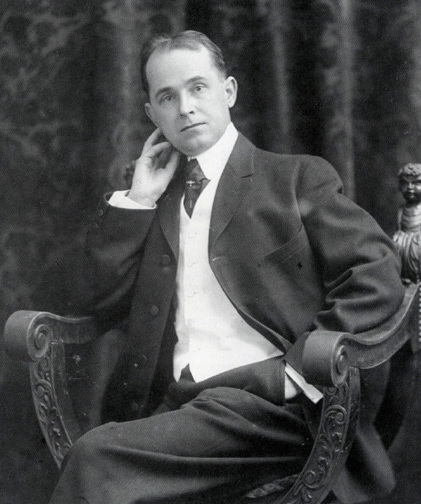
Portrait of the American cartoonist and animator Winsor McCay. Winsor McCay · Public domain

Émile Cohl

France · 1857–1938

A Paris caricaturist and Incoherent-movement satirist who came to film at fifty and made Fantasmagorie in 1908 — roughly seven hundred ink drawings, the first film animated entirely from drawings. He went on to make some two hundred and fifty films in fifteen years and effectively invented the grammar of metamorphosis animation.

The story

In 1907 Cohl saw a Gaumont film poster that had lifted one of his own drawings and marched to the studio to complain. Instead of paying him off, Léon Gaumont hired him as a scenario writer, and within a year the fifty-one-year-old cartoonist was shooting his drawings one frame at a time. He died in a Villejuif hospice in January 1938, destitute, while the industry he started was releasing Snow White.

“The person who invents a medium is rarely the person who profits from it, and often arrives by accident and late.”

Drawings in Fantasmagorie
~700, on paper
Films made, 1908–1923
~250
Age when he started
51 years old
2
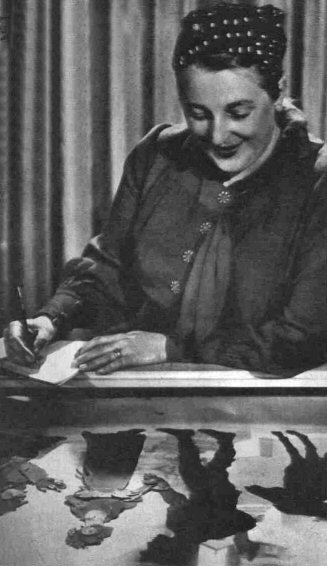
The German silhouette animator Lotte Reiniger at work. NA · Public domain

Winsor McCay

United States · c. 1867–1934

Already famous for the newspaper strip Little Nemo in Slumberland, McCay animated his own films single-handed to a standard nobody matched for two decades, inventing character personality on screen with Gertie in 1914 and the animated documentary with The Sinking of the Lusitania in 1918.

The story

McCay performed Gertie live from the stage of Chicago's Palace Theater in February 1914, cracking a whip and speaking to the screen while the drawn dinosaur obeyed, refused, wept and finally accepted a real apple he threw toward her — which appeared in her mouth as a drawing. He then walked behind the screen and reappeared animated, riding away on her back. His employer, William Randolph Hearst, later pressured him to stop touring.

“Personality, not motion, is what makes an audience believe a drawing is alive — and McCay proved it before anyone had a word for it.”

Drawings for Gertie
~10,000 by hand
Drawings for the Lusitania
~25,000, 22 months
Made without a studio
Nearly all of it solo
3
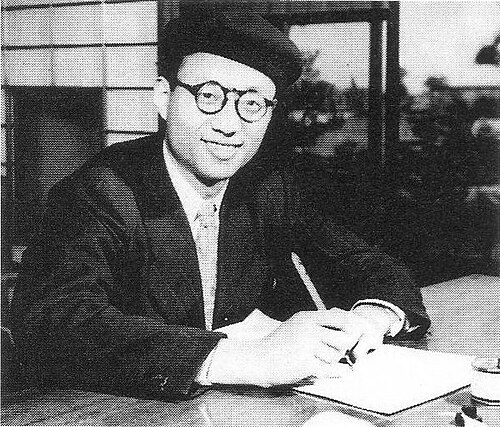
The Japanese manga artist and animator Osamu Tezuka. Unknown author Unknown author · Public domain

Lotte Reiniger

Germany · 1899–1981

Reiniger made The Adventures of Prince Achmed in Potsdam between 1923 and 1926 — the oldest surviving animated feature — animating jointed black paper silhouettes under glass. She kept working for sixty years, through exile from Nazi Germany and a long later career in Britain, and made more than forty films.

The story

She cut every figure freehand, holding the scissors still and turning the paper against the blade, and never used a drawn pattern. Working above her patron Louis Hagen's garage in Potsdam, she and Carl Koch built a layered trick table with stacked glass levels — sand and soap solution on the upper plates for clouds and sea — producing depth effects roughly a decade before the Disney studio's multiplane camera was built.

“A constraint chosen deliberately, and kept for sixty years, becomes a technique nobody else can copy.”

Years to finish Prince Achmed
3 years, 1923–26
Frames exposed
~250,000
Career length
60+ years cutting
4
The American artist and Disney colour stylist Mary Blair. MichaelNetzer · CC BY-SA 3.0

Wan Laiming and the Wan brothers

China · 1900–1997

Wan Laiming, his twin Guchan and their brothers taught themselves animation in 1920s Shanghai and made Princess Iron Fan in 1941, Asia's first animated feature. Two decades later Wan Laiming directed Havoc in Heaven at the Shanghai Animation Film Studio, which built a Chinese visual language out of opera movement and ink painting.

The story

The brothers reverse-engineered the craft by studying imported American reels frame by frame, having no manual and no teacher. Princess Iron Fan was completed in occupied Shanghai over about sixteen months with roughly a hundred staff, and it reached Japanese cinemas in 1942, where a teenage Osamu Tezuka saw it and later credited it as the reason he wanted to make animation at all.

“A film made under occupation with no training reached the person who would build another country's entire industry.”

Princess Iron Fan crew
~100, in 16 months
First animated feature in Asia
1941, Shanghai
Havoc in Heaven
2 parts, 1961–64
5
The Russian animator Yuri Norstein. X-Javier · CC BY-SA 3.0

Osamu Tezuka

Japan · 1928–1989

Already Japan's dominant manga artist, Tezuka founded Mushi Production and put Astro Boy on television weekly from January 1963, inventing the production method — limited animation, cel banks, held drawings — that made a domestic anime industry possible and set the economics it still labours under.

The story

To get the show commissioned, Mushi Pro accepted a per-episode fee widely reported at around ¥550,000 against production costs several times higher, with Tezuka covering the difference from manga royalties and pioneering character merchandising to fill the gap. It worked: the industry exists. It also fixed the price broadcasters expected to pay for animation, and Mushi Production itself went bankrupt in 1973.

“Undercutting your own market to prove it exists can create an industry and impoverish everyone who inherits it.”

Astro Boy episodes
193, weekly, 1963–66
Fee accepted per episode
~¥550k, below cost
Drawings per second on TV
As few as 8
6
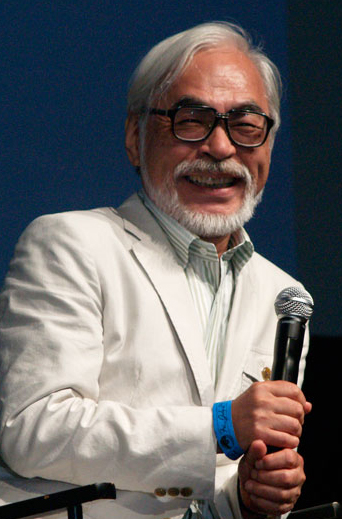
The Japanese animator and director Hayao Miyazaki. Natasha Baucas at https://www.flickr.com/photos/sdnatasha/ · CC BY 2.0

Faith Hubley

United States · 1924–2001

With her husband John, an ex-Disney art director blacklisted in the 1950s, Faith Hubley built an independent studio that took commercial work to fund personal films. The partnership won three Academy Awards, and after John's death she made around twenty-five solo films drawing on myth, science and cosmology.

The story

On marrying in 1955 the Hubleys made a pact: one independent film a year, never for a client, paid for by advertising work. John died during heart surgery in 1977 while they were making A Doonesbury Special; Faith finished it, and it took the Special Jury Prize at Cannes in 1978. She then kept the pact alone for another twenty-three years, delivering a personal film almost every year until her death.

“A rule you set once and keep annually will outproduce any amount of waiting for the right opportunity.”

The annual pact
1 personal film a year
Solo films after 1977
~25
Academy Awards with John
3 (1960, 1963, 1967)
7

Yuri Norstein

Soviet Union / Russia · b. 1941

Norstein animates flat paper cut-outs on stacked glass levels, moving them with tweezers a fraction of a millimetre per frame, with his wife Francheska Yarbusova as designer. Hedgehog in the Fog (1975) and Tale of Tales (1979) are routinely voted the finest animated films ever made.

The story

The fog in Hedgehog in the Fog is a sheet of very thin translucent paper slid between the camera and the artwork, closer or further away frame by frame — no optical effect, no post-production. Norstein began adapting Gogol's The Overcoat in 1981 and is still working on it more than forty years later; Soyuzmultfilm dismissed him in 1985 for missing his schedule, and he simply carried on.

“The simplest physical trick, executed with absolute patience, beats any effect that can be switched on.”

Years on The Overcoat
1981–, unfinished
Tale of Tales in polls
Voted best ever, 1984
Movement per frame
Fractions of a millimetre
8

Hayao Miyazaki

Japan · b. 1941

Miyazaki joined Toei Animation as an in-betweener in 1963 and served as chief secretary of its labour union before co-founding Studio Ghibli in 1985. Spirited Away won the Academy Award for Best Animated Feature in 2003 and The Boy and the Heron won it again in 2024, forty years apart.

The story

He never stopped being an animator. On Princess Mononoke, a film of roughly 144,000 cels, Miyazaki personally checked and reworked a large share of the key drawings himself rather than delegating to his animation directors, and on Ponyo in 2008 he pushed the studio back to about 170,000 hand-drawn frames with no computer-generated imagery at all, at the age of sixty-seven.

“Directing animation well seems to require never fully leaving the desk where the drawings are corrected.”

Cels in Princess Mononoke
~144,000 (1997)
Hand-drawn frames in Ponyo
~170,000 (2008)
Started as
In-betweener, 1963

Bars are scaled to the leader in this list.

Comparison Lab

Toggle names on and off — every bar rescales to the leader of your selection.

5 / 8

The argument

Who made the first animated film depends entirely on the definition. Reynaud projected hand-painted moving images to a paying audience in 1892 but never photographed a frame; J. Stuart Blackton's Humorous Phases of Funny Faces in 1906 mixes stop-motion chalk with real-time drawing; Cohl's Fantasmagorie in 1908 is the first film animated wholly from drawings. Each claim is defensible and each excludes the others.

Attribution inside studios is genuinely contested. Ub Iwerks designed and animated Mickey Mouse while Walt Disney owned and voiced him, and left the studio in 1930 over it; Retta Scott's screen credit as an animator on Bambi in 1942 was itself an exception granted grudgingly. In Japan, sakuga fandom has spent two decades reconstructing who actually animated which cut, precisely because the credits do not say.

The deepest bias in a list like this is geographic. Enormous volumes of the animation the West considers its own were executed in Seoul, Manila, Ho Chi Minh City, Hyderabad and Shenzhen by animators whose names never reached a credit roll, on rates set on another continent. Their technique is in the finished films; their authorship is not recorded anywhere it can be recovered.

Keep exploring

More in Media & Performance