🦾The Greats

Robotics Engineer · Designs the machines that sense, decide and act in the physical world, where the hard problem was never intelligence but the world itself.

Robotics engineering's canon runs through a short list of countries that industrialized the idea fastest — the United States, which invented the industrial robot, and Japan, which built more of them than anywhere else — with a late-century widening into legged, social and android robotics that reopened the question of what a robot is even for.

The eight people here span several countries and more than half a century, from an inventor who met his business partner at a cocktail party to a professor who builds androids modeled on his own face.

The all-time podium

🥈
Joseph Engelberger
United States
2
🥇
George Devol
United States
1
🥉
Ichiro Kato
Japan
3

The eight who reached the top

1

George Devol

United States · 1912–2011

Inventor of Unimate, the first programmable industrial robot, patented in 1954 and installed at General Motors in 1961 — the single device that turned robotics from science fiction into a manufacturing tool, though he remained far less famous than his business partner.

The story

In 1956, engineer Joseph Engelberger struck up a conversation with Devol at a cocktail party after learning of his 1954 patent application for a reprogrammable mechanical arm; both men were fans of Isaac Asimov's robot stories, and the conversation led directly to founding Unimation, the company that built and sold the first Unimate five years later.

“A patent is just paper until someone with a taste for the science-fiction idea decides to sell it.”

Unimate patent filed
1954
Unimation founded
1956
Years before first Unimate sale
~5 yrs
2

Joseph Engelberger

United States · 1925–2015

Co-founded Unimation in 1956 to commercialize Devol's robot arm, sold the first Unimate to General Motors in 1961, and spent decades promoting industrial and service robotics so tirelessly that the field's top honor, the Engelberger Robotics Award, is named for him.

The story

In 1966, Engelberger brought a Unimate arm onto The Tonight Show Starring Johnny Carson, where it poured a beer, putted a golf ball and conducted the studio orchestra live on air — a publicity stunt that introduced millions of American television viewers to the idea of a working industrial robot for the first time.

“Selling a genuinely new machine takes showmanship as much as engineering.”

First Unimate sold to GM
1961
Engelberger Robotics Award established
1977
Years leading Unimation
~20 yrs
3

Ichiro Kato

Japan · 1925–1994

Led the Waseda University laboratory that built WABOT-1 in 1973, the first full-scale humanoid robot able to walk, grip objects and converse, then WABOT-2 in 1984, which could read sheet music and play a keyboard — founding Japan's humanoid-robotics tradition.

The story

At its 1984 debut, WABOT-2 sat at an electronic organ, read a musical score placed in front of it with a camera 'eye,' and played the accompaniment to a song while a human singer performed alongside it — a demonstration Kato's lab designed specifically to show a robot handling a task built for human senses and human timing, not industrial repetition.

“Build robots that meet people in human tasks — not just efficient ones, comprehensible ones.”

WABOT-1 unveiled
1973
WABOT-2 unveiled
1984
Years leading Waseda's robotics lab
~25 yrs
4
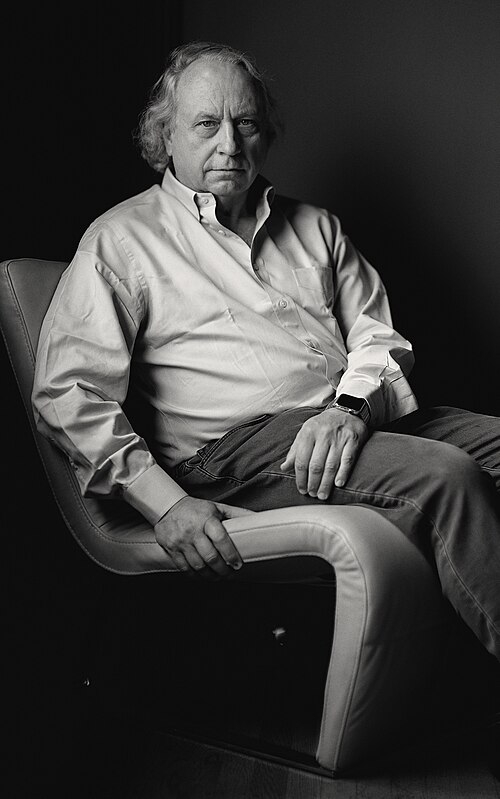
Photograph of Rodney Brooks Christopher Michel · CC BY-SA 4.0

Rodney Brooks

Australia / United States · b. 1954

MIT professor whose 1986 subsumption-architecture papers argued robots need no internal world model to act, only layered reactive behaviors — a rebellion against symbolic AI that reshaped mobile robotics, then co-founded iRobot in 1990 and Rethink Robotics in 2008.

The story

Brooks titled a widely read 1990 paper ‘Elephants Don't Play Chess,’ arguing that an elephant navigates a jungle brilliantly without ever building a symbolic model of the world the way chess-playing AI programs did — a provocation aimed squarely at the field's dominant research paradigm, delivered by someone whose own reactive-robot designs were, at the time, still widely dismissed as toys.

“The dominant theory in a field is worth attacking directly if your machines can out-navigate it.”

Subsumption paper published
1986
iRobot co-founded
1990
Rethink Robotics' Baxter unveiled
2012
5
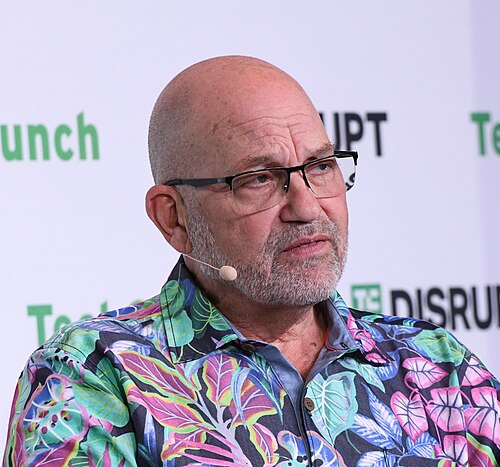
Photograph of Marc Raibert TechCrunch · CC BY 2.0

Marc Raibert

United States · b. 1949

Built the MIT Leg Lab's hopping and running machines through the 1980s, then founded Boston Dynamics in 1992, whose BigDog, Atlas and Spot robots became the field's most widely recognized demonstrations of dynamic balance and legged locomotion.

The story

Raibert's early one-legged hopping robot at MIT in the early 1980s could balance and hop across a room using a control algorithm simple enough to run on the primitive computers of the era, proof that dynamic balance didn't require exhaustively modeling every physical detail — an insight that shaped three decades of Boston Dynamics' legged machines.

“A simple control principle, proven on the smallest version of a problem, scales further than complexity does.”

Boston Dynamics founded
1992
BigDog unveiled
2005
Atlas backflip demo
2017
6
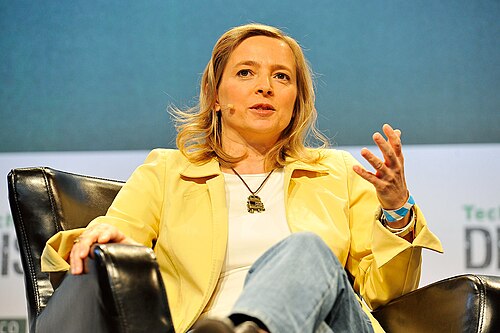
Photograph of Helen Greiner SAN FRANCISCO, CA - SEPTEMBER 21: CEO of CyPhy Works Helen Greiner speaks onstage during day one of TechCrunch Disrupt SF 2015 at Pier 70 on September 21, 2015 in San Francisco, California. (Photo by Steve Jennings/Getty Images for TechCrunch) · CC BY 2.0

Helen Greiner

United Kingdom / United States · b. 1967

Co-founded iRobot in 1990 with Rodney Brooks and Colin Angle, drove development of the PackBot military robot used for bomb disposal in Iraq and Afghanistan and at Fukushima, and led the Roomba into becoming the first robot in millions of ordinary homes.

The story

After the March 2011 Fukushima Daiichi nuclear accident, iRobot's PackBots — originally built for bomb disposal and battlefield reconnaissance — were among the first robots sent into the damaged reactor buildings to measure radiation levels too dangerous for human workers, a use Greiner's team had not designed the robot for but that its rugged, teleoperated design made possible.

“Build a robot rugged and general enough, and it will end up doing jobs you never designed it for.”

iRobot co-founded
1990
Roomba launched
2002
PackBot deployed to Afghanistan
2002
7

Cynthia Breazeal

United States · b. 1967

MIT Media Lab researcher who built Kismet in the late 1990s, one of the first robots designed to read and display human emotional expression, founding the field of social robotics and later launching the home robot Jibo in 2014.

The story

As a PhD student in Brooks's lab, Breazeal built Kismet with expressive ears, eyebrows and eyes that could widen, tilt and shift to mimic curiosity, surprise or fatigue purely through mechanical movement and camera-tracked eye contact — a robot designed not to complete a task but to hold a believable social exchange, a research direction colleagues initially considered a distraction from 'real' robotics.

“A robot's job is sometimes to be understood by a person, not just to complete a task.”

Kismet built at MIT
1997–2000
Jibo unveiled
2014
Years at MIT Media Lab
>20 yrs
8

Hiroshi Ishiguro

Japan · b. 1963

Osaka University professor who builds android robots modeled on real people's appearance and movement, including a Geminoid double of himself in 2006, using the discomfort and fascination they provoke to study what makes a robot feel human — or not.

The story

Ishiguro built Geminoid HI-1, an android modeled on his own face, voice and mannerisms, and used it to teleoperate lectures and meetings from a remote location while his own likeness sat in the room; students and colleagues reportedly grew uneasy holding conversations with it, unsure whether to treat the machine as Ishiguro himself or as an object.

“The most useful robot for studying human perception can be a deliberately unsettling one.”

Geminoid HI-1 unveiled
2006
Android Erica project
2015
Years researching android science
>20 yrs

Bars are scaled to the leader in this list.

Comparison Lab

Toggle names on and off — every bar rescales to the leader of your selection.

5 / 8

The argument

Whether George Devol or Joseph Engelberger deserves the title 'father of robotics' is a real, ongoing disagreement: Devol held the founding patent, but Engelberger built the company, sold the first machine and spent decades promoting the field — which is why the industry's own top honor bears the promoter's name rather than the inventor's.

Rodney Brooks's subsumption architecture, which argued robots need no internal world model, remains contested inside the field: it produced fast, cheap, reactive robots like early Roombas, but most modern robots — including Brooks's own later designs — blend reactive control with the planning and world-modeling his 1986 papers set out to reject.

Keep exploring

More in Engineering & Technology