🎮Origins & Evolution

Game Designer · The architect of play — the person who decides what a game asks of its players, from Senet's ancient board to Tetris and today's three-billion-player industry.

Games are older than writing — boards and dice turn up in graves from Egypt to the Indus Valley — but the game designer as a person with a name, a credit and a paycheck is barely a century old, and as a formal profession younger than many people working in it. For most of history, games evolved the way languages do: anonymously, over generations, with no author to thank or pay.

The story of the profession is therefore really three inventions stacked on top of each other: the invention of the authored game in the nineteenth century, the invention of the video game in the mid-twentieth, and the invention of the credited, titled designer — a fight that was still being lost inside Atari as late as 1979, when the company refused to print its creators' names.

Where it began

c. 3100 BCEEgypt & Mesopotamia

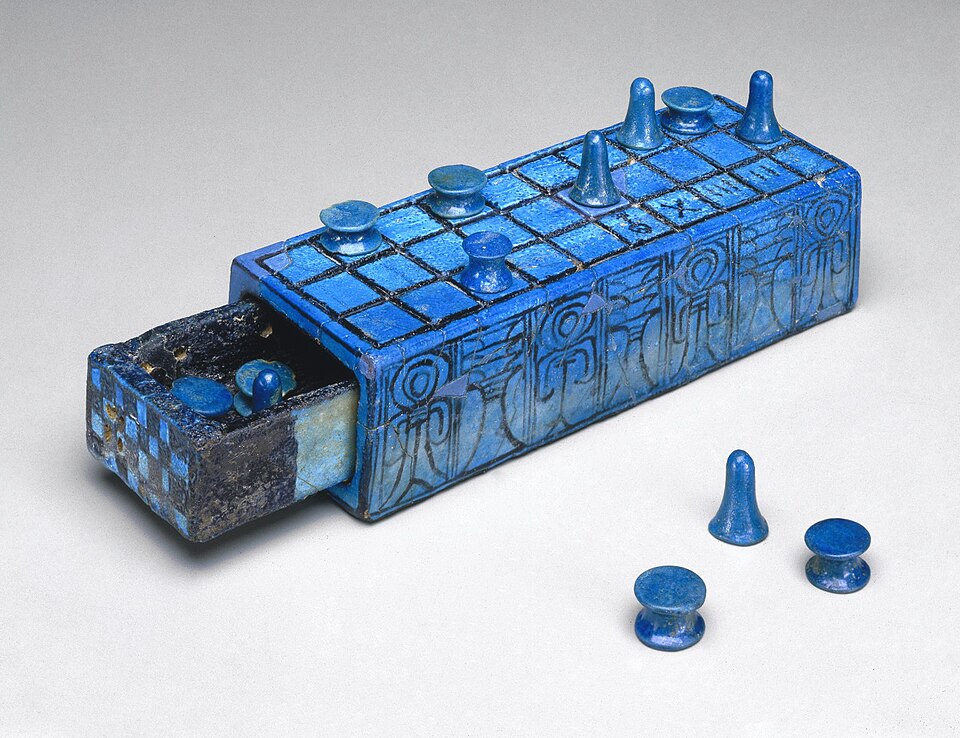
Senet boards appear in Egyptian burials from around 3100 BCE, and Tutankhamun was entombed with several sets; in Mesopotamia, the Royal Game of Ur was played by around 2600 BCE, and a Babylonian tablet from 177 BCE deciphered by the British Museum's Irving Finkel preserves its rules — the oldest surviving rulebook for any game. Whoever designed these games designed things compelling enough to be carried into the afterlife, yet not one designer's name from three millennia of ancient play has survived.

Timeline

c. 3100 BCESenet enters Egyptian graves

Boards for Senet, a race game with an afterlife theme, appear in First Dynasty Egyptian burials and stay in fashion for three thousand years — Tutankhamun's tomb held several sets. Its rules were never written down and have had to be partially reconstructed by modern scholars, the fate of nearly every game designed before authorship existed.

1824Kriegsspiel: design becomes an instrument of state

Prussian lieutenant Georg von Reisswitz presented his refined Kriegsspiel — a map-based wargame with dice-driven combat resolution and an umpire — to the Prussian general staff. Chief of staff Karl von Müffling reportedly declared it not a game but training for war and ordered it supplied to the army, making rule design a matter of military policy.

1904Lizzie Magie patents The Landlord's Game

Washington stenographer and Georgist Lizzie Magie received US Patent 748,626 for a board game designed to demonstrate how rents enrich landlords and impoverish tenants. Three decades later Parker Brothers bought her patent for a flat $500 while publishing Monopoly, the derivative Charles Darrow had sold them as his own invention — the profession's founding lesson in authorship.

1958Tennis for Two at Brookhaven

Physicist William Higinbotham wired an analog computer to an oscilloscope for visitors' day at Brookhaven National Laboratory, New York, letting the public bat a glowing dot over a net. Queues formed around the exhibit. Higinbotham never patented it, considering it a trivial use of laboratory equipment.

1962Spacewar! escapes the lab

Steve Russell and fellow MIT students wrote Spacewar!, a two-ship dueling game, on a PDP-1 minicomputer. Passed freely between university computer labs, it became the common ancestor of the arcade generation: both Nolan Bushnell's Computer Space (1971) and the industry that followed began as attempts to sell Spacewar! to the public.

1972Pong and the Odyssey found an industry

Ralph Baer's Magnavox Odyssey, the first home console, and Atari's Pong — built by engineer Allan Alcorn as a training exercise — both shipped in 1972. Pong's prototype at Andy Capp's Tavern in Sunnyvale famously stopped working because its milk-jug coin box had jammed full of quarters, the moment coin-operated video games proved themselves a business.

1980–81Pac-Man and Donkey Kong give games characters

Namco's Toru Iwatani designed Pac-Man deliberately to draw women and couples into arcades dominated by shooting games; it became the era's biggest hit. A year later Nintendo's Shigeru Miyamoto, a staff artist with no engineering training, turned roughly 2,000 unsold Radar Scope cabinets into Donkey Kong — and games acquired stories, characters and named designers.

1984Tetris is designed inside the Soviet Academy of Sciences

Researcher Alexey Pajitnov wrote Tetris at Moscow's Dorodnitsyn Computing Centre on an Elektronika 60 with no graphics — the falling pieces were drawn from bracket characters. The state agency Elorg controlled all rights; the most-ported game in history earned its designer nothing until 1996.

1988The profession convenes in a living room

Chris Crawford hosted the first Computer Game Developers Conference in his San Jose living room with about 27 attendees. The gathering grew into GDC, now the profession's global annual meeting, awards ceremony and job market — the clearest sign that game design had become a self-aware discipline rather than a byproduct of programming.

2005–2009Engines and stores democratize the craft

Unity launched in 2005, Apple's App Store opened in 2008, and in 2009 Markus Persson released an early build of Minecraft, eventually the best-selling video game ever made. Free engines plus digital distribution meant a single designer could reach a global market — the conditions that produced the indie boom of the 2010s.

The eras

An ancient Egyptian Senet board with playing pieces.
Charles Edwin Wilbour Fund · No restrictions · Wikimedia Commons
c. 3100 BCE – 1800 CE

The anonymous millennia

Senet, the Royal Game of Ur, Go, chess, mancala and playing cards were all designed by someone, and refined by everyone: games spread and mutated like folklore, with no notion of a designer to credit. Where names attach at all, they attach to codifiers and masters rather than inventors. Dice games drew religious and legal suspicion in many cultures, which kept the making of games a trade practiced quietly rather than a title worn proudly.
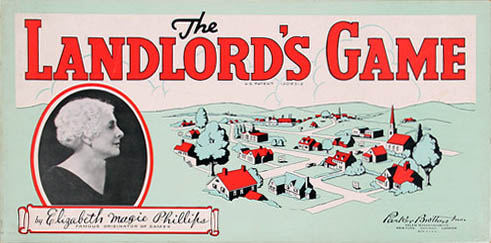

The original board of Lizzie Magie's The Landlord's Game, patented in 1904.
Unknown author Unknown author · Public domain · Wikimedia Commons
1800 – 1950

The authored game

The nineteenth century invented the game author twice: von Reisswitz's 1824 Kriegsspiel made rule design a military science, and industrial lithography made parlor games a business — Milton Bradley's The Checkered Game of Life sold some 45,000 copies in its first year, 1860–61. Yet authorship rarely paid: Lizzie Magie's $500 for the patent behind Monopoly, against Charles Darrow's millions, showed exactly how little the industry valued the person who designed the rules.

Spacewar! running on a PDP-1 computer's circular display.
Joi Ito from Inbamura, Japan · CC BY 2.0 · Wikimedia Commons
1950 – 1983

Engineers at play

The first video games were designed by physicists and programmers as side effects of the machines they tended — Higinbotham's Tennis for Two in 1958, MIT's Spacewar! in 1962. When Atari industrialized the form after 1972, its games were still built by lone engineers who designed, coded and often cabinet-tested their own work, uncredited by company policy. Warren Robinett hid his name inside Adventure in 1979 as a protest; four colleagues left that year to found Activision, the first studio to put designers' names on the box.

Shigeru Miyamoto, designer of Donkey Kong, Super Mario Bros. and The Legend of Zelda.
Minister's Secretariat Personnel Division · CC BY 4.0 · Wikimedia Commons
1983 – 2005

The designer as auteur

After the 1983 North American crash, Japanese console makers rebuilt the industry and elevated its first global auteurs: Miyamoto's Super Mario Bros. and Zelda, then Sid Meier — whose name went on the box of Pirates! in 1987 as a marketing idea — Will Wright, Roberta Williams and Hideo Kojima. Design split from programming as a titled discipline, the Computer Game Developers Conference convened in 1988, and by the 1990s a shipped credit had become the profession's true currency.

2005 – present

Engines for everyone

Unity, Unreal and the open-source Godot put professional tools in every bedroom, and digital stores removed the publisher gate: Minecraft, built initially by one Swedish programmer, became the best-selling game in history, and Stardew Valley, designed, coded, drawn and scored by Eric Barone alone, passed 30 million copies by 2024. The same era industrialized the other end — thousand-person live-service teams, economy designers, and now generative AI drafting content inside the pipeline.

What this job replaced

Neighbouring trades that no longer exist — absorbed, automated or regulated away.

Electro-mechanical arcade engineer

c. 1930–1978

Before video, arcade amusements were built from relays, motors, lamps and mirrors — periscope gun games like Sega's Periscope (1966), driving cabinets with spinning painted drums. Their designers were mechanical engineers who sculpted play out of physical linkages. Within roughly five years of Pong, microprocessor video games had erased the trade; pinball survived only by converting to solid-state electronics itself in 1977–79.

Full-motion-video game director

1983 – c. 1998

Don Bluth's laserdisc hit Dragon's Lair (1983) and the CD-ROM boom of the early 1990s briefly created a hybrid profession: designers who directed film shoots — actors, sets, branching scripts — for interactive movies like Night Trap. Real-time 3D graphics after Doom (1993) made filmed footage look rigid and quaint, and the discipline collapsed within five years, surviving only in occasional revivals.

Flash portal designer

1996–2020

For two decades, one-person designers shipped free browser games to portals like Newgrounds and Kongregate, iterating in public and living off ad and sponsorship deals — the training ground for hits like Super Meat Boy's creators. Adobe ended Flash support on 31 December 2020, browsers deleted the plugin, and the trade dissolved into mobile and itch.io; volunteer projects now preserve tens of thousands of its games as history.

Trades that vanished →

The profession's entire history is a fight to be named: from three millennia of anonymous boards, through Magie's $500 patent and Atari's no-credits policy, to names above the title and lifetime-achievement awards at GDC. Each generation of tools — lithography, microprocessors, engines, app stores — widened who could design a game, and each widening forced the question of credit all over again.

What has not changed since Senet is the object itself: a set of rules that strangers willingly submit to because submitting is a pleasure. Every era has renegotiated who gets paid and who gets named for building that; none has changed what is being built.

Keep exploring

More in Arts & Creation