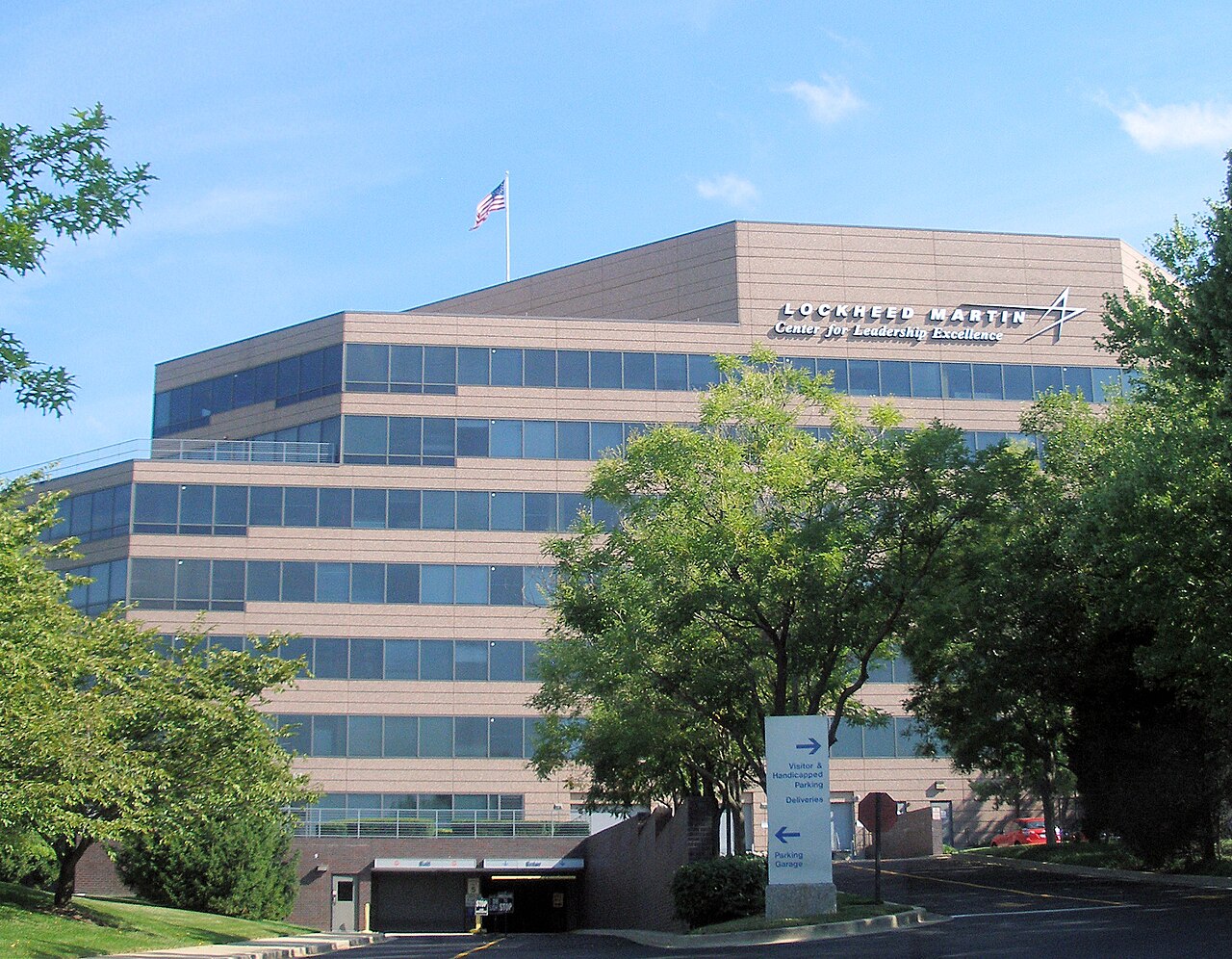
Lockheed Martin is a 1995 merger name laid over two older aviation companies. Allan Lockheed's firm (1926 in its famous form) became the Skunk Works of the U-2 (1955 first flight) and SR-71, the F-104 Starfighter, and the C-130 Hercules. Glenn L. Martin's company (1912) built bombers and, later as Martin Marietta, Titan missiles and space hardware. The merger was a post-Cold War industrial event: fewer primes, larger lobbying, a "last supper" of US defence consolidation.
This page is firm history -- plants, programmes, hearings -- not a product brochure and not a how-to for any aircraft or missile. Kelly Johnson and Ben Rich are the English vernacular of the secret shop. Norman Augustine is the vernacular of the 1990s executive who wrote about the industry's shrink. Marillyn Hewson and James Taiclet are later public CEOs.
Korean procurement memory is thick: F-16, then F-35, and a century of US types in ROK service. That is an alliance-industrial fact on the ROK military page too. Intensity is low (a company, not a campaign). TechShift is high because Skunk Works types changed reconnaissance and, later, the F-35 changed a generation of air-force politics.
Merger1995, Lockheed + Martin Marietta
Skunk WorksKelly Johnson / Ben Rich lore
Cold War typesU-2, SR-71, F-104, C-130
Missile / spaceFleet ballistic missile work; NASA contractors
F-35Late joint-strike political object
Korea tieF-16, F-35, and earlier types in ROK service -- procurement history
Profile
Scale
44
Intensity
25
Duration
68
Tech shift
70
Political impact
55
Cultural memory
38
Pin a cost beat to a legacy beat
On this topic, pick one published cost band and one legacy lesson already on the page. Educational pairing — not a nation league.
Documented ranges and memory notes only. No ranking of countries, peoples, or armed forces as teams. Not operational advice.
Cost beat already published
Legacy beat already published
Cost or lesson
Theme reading only. Not a nation league.
Deep introduction
Two companies, one Pentagon dialect
Lockheed Martin is what US defence consolidation looked like after 1991 -- a letterhead that still carries a California shop myth.
Lockheed before the hyphen
Vegas, Electras, then war transports and the postwar Skunk Works. The F-104's German crash scandal and the C-130's endless career are two morals in one catalogue.
U-2 and SR-71 are reconnaissance politics, not flight manuals.
Martin to Marietta
Glenn Martin's bombers; Titan as an ICBM and a space launcher; a Denver-and-Maryland industrial geography.
See the ICBM page for the missile type; this page for the contractor.
1995 and after
The merger, the F-22 and F-35 as political objects, and a services-and-C4ISR expansion. Hearings on cost and concurrency are the public file.
No classified performance table belongs here.
Korea as a customer
ROK F-16 and F-35 buys are dated procurement stories -- offset, industrial participation, alliance signalling.
Aircraft carrierA different industrial politics -- ships vs airframes -- useful contrast.
Key terms
Skunk Works
Lockheed's advanced-development shop -- a memoir brand as much as a place.
Martin Marietta
The 1961-95 missile-and-space company in the merger.
Last supper
The 1990s US defence-consolidation dinner story -- an industry legend.
Concurrency
Building while testing -- the F-35 hearing word.
Offset
Industrial participation demanded by import states, including the ROK -- a procurement term.
U-2
1955 reconnaissance type -- a Cold War political aircraft.
Memoir vs archive
Johnson and Rich wrote the English textbook. Programme office files and crash boards are less filmed.
Read the memoirs as advocacy.
Consolidation
1995 is a political date as much as a Wall Street date.
Fewer primes meant a different kind of public oversight fight.
Alliance exports
A type sold to the ROK is a force-structure fact and a domestic US jobs fact at once.
Keep Alliance exports pinned to 1961-95 (Martin Marietta years): Missiles and space on the other letterhead. Lockheed Martin remains a 1995 merger (Lockheed 1926; Glenn L. Martin Company 1912) file in US plants and Pentagon offices; export customers; Skunk Works as a California myth, not a playbook.
44scaleEditorial 0-100 browsing score
25intensityEditorial 0-100 browsing score
68durationEditorial 0-100 browsing score
70techShiftEditorial 0-100 browsing score
Lockheed Martin: concrete atlas depth on Tool-Lifes.
Frequently asked questions
Are the scores a ranking of nations or armies?
No. Scores are browsing aids inside an era-bounded atlas — not live league tables of countries.
What is Skunk Works?
Lockheed's advanced-development organisation, associated with Kelly Johnson and later Ben Rich, and with types such as the U-2 and SR-71. A historical shop, not a visitor workshop.
What did Martin bring?
Bomber heritage and, as Martin Marietta, Titan missiles and space contracting -- the other half of the hyphen.
Why does Korea appear here?
Because ROK purchases of Lockheed types (notably F-16 and F-35) are a dated alliance-industrial story. See also the ROK military page.
Is the F-35 "history"?
Its procurement and politics are already a thick public file. Performance claims stay out of this encyclopedia except as disputed hearing objects.
Who is Kelly Johnson?
The engineer-manager name of mid-century Skunk Works. Memoir fame exceeds any single airframe.
What was the "last supper"?
A 1990s US defence-industry consolidation story: Pentagon hints that too many primes would not survive the budget drawdown.
Is this a how-to or a catalogue of specs?
No. Firm and programme history only. No design or employment content.