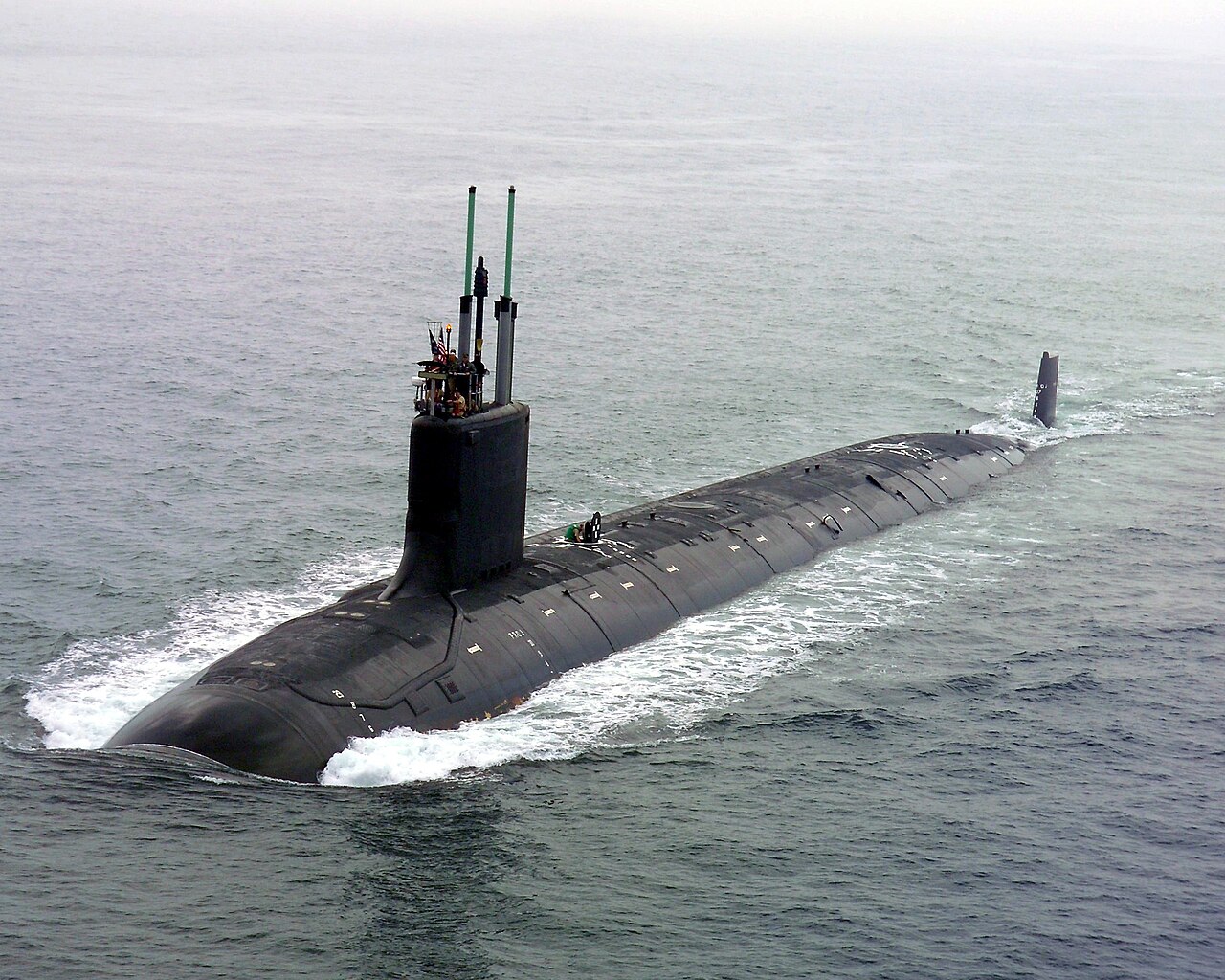
Practical military submarines arrived with Holland and early-century types; they became a strategic fact in 1914-18 when German U-boats threatened Britain's food. Unrestricted submarine warfare (1917) helped bring the United States into the First World War. The type's politics were always about merchant lives and law, not only about naval glory.
1939-45 repeated and enlarged the Atlantic fight; US boats in the Pacific destroyed Japan's merchant marine -- a campaign of tonnage, historically described. Nuclear propulsion (Nautilus, 1954) and then ballistic-missile submarines recast the type as a deterrent holder. This page names that arc. It does not teach how to dive, hide, or attack.
English memory is Das Boot, U-571 myths, and a "silent service" brand. Korean memory includes 1950s UN submarine-adjacent war at sea and a later ROK KSS industrial line (Chang Bogo and successors) -- a defensive force-structure story, not a live order of battle. Duration in this atlas is long; the type has not left.
Early war use1914 U-boats
Unrestricted1917 / 1939-45 debates
PacificUS submarine campaign 1941-45
NuclearNautilus 1954; SSBNs after
Cold WarA second, quieter war
ROKChang Bogo / KSS line -- industrial history
Profile
Scale
40
Intensity
38
Duration
80
Tech shift
84
Political impact
58
Cultural memory
56
Pin a cost beat to a legacy beat
On this topic, pick one published cost band and one legacy lesson already on the page. Educational pairing — not a nation league.
Documented ranges and memory notes only. No ranking of countries, peoples, or armed forces as teams. Not operational advice.
Cost beat already published
Legacy beat already published
Cost or lesson
Theme reading only. Not a nation league.
Deep introduction
Law, tonnage, and a nuclear afterlife
The submarine is a legal and logistic problem that became a deterrent -- told as history.
1914-18
U-boats, the Lusitania, and 1917 unrestricted war as a political hinge. Convoy was the reply that worked -- a historical sentence, not a present ASW manual.
Q-ships and atrocity stories are part of the memory, not a technique list.
1939-45
Donitz, Enigma, the "happy time," and the 1943 Atlantic turn. In the Pacific, US boats and mines closed Japan's economy.
Tonnage is the honest unit of that campaign.
1954-91
Nautilus; then SSBNs (George Washington, Resolution, Red October-as-fiction). A quieter Cold War with collisions and close calls in the public record.
No sonar tradecraft here.
After 1991
More states with boats; ROK KSS as an industrial-national chapter; accidents (Kursk 2000) as a civilian-memory shock. Still not a how-to.
After 1991 stays dated: 1939-43 (Atlantic crisis and turn) in Atlantic 1914-45, Pacific 1941-45, then a nuclear-deterrent undersea. Dudley Pound / Atlantic (RN) is a named witness -- The convoy-war institutional British side -- Western Approaches as a system. Cost band: not a war -- merchant and navy dead sit on U-boat and Pacific war ledgers. Encyclopedia, not a method.
Prize rules vs starvation blockades -- the type's first politics.
Lusitania is a memory hinge, not a targeting case study.
Tonnage
Japan 1944-45 and Britain 1917/1942 are logistic stories.
Shipyards and yards' repair rates decided more than "ace" skippers.
Deterrent hide
SSBNs recast the type as a political insurance -- described, not as a patrol guide.
Keep Deterrent hide pinned to 1954 (Nautilus): Nuclear propulsion. Submarine remains a 1900s-present (as a war type; ancestors earlier) file in Atlantic 1914-45, Pacific 1941-45, then a nuclear-deterrent undersea, not a playbook.
40scaleEditorial 0-100 browsing score
38intensityEditorial 0-100 browsing score
80durationEditorial 0-100 browsing score
84techShiftEditorial 0-100 browsing score
Submarine: concrete atlas depth on Tool-Lifes.
Frequently asked questions
Are the scores a ranking of nations or armies?
No. Scores are browsing aids inside an era-bounded atlas — not live league tables of countries.
What was unrestricted submarine warfare?
A policy of sinking without the old prize rules. Germany's 1917 choice helped bring the US into the First World War. It is a legal-political history, not a method to apply.
Did U-boats almost starve Britain?
In 1917 and again in 1942 the threat was real. Convoy, radar, aircraft, and (in 1943) intelligence turned the Atlantic. Exact "almost" is a historians' argument.
What did US boats do in the Pacific?
They sank a large share of Japan's merchant tonnage -- a campaign of blockade, historically described. This is not a hunting guide.
What is an SSBN?
A nuclear-powered boat that carries ballistic missiles as a hidden deterrent. See also the ICBM page for the land cousin. No patrol or launch content here.
How does Korea fit?
A later ROK submarine industrial line (Chang Bogo and successors) as defensive force structure. Not a 1950 U-boat war, not a live ORBAT.
Why Das Boot?
It is the late-twentieth-century civilian textbook of the U-boat war's misery -- a memory fact, not a log.