
🤖The Greats

AI Researcher · Designs and tests the algorithms behind machine intelligence, in a field now racing to automate a growing share of its own research process.

AI research's canon runs from a mathematician who never saw a working computer built on his ideas to researchers who spent decades defending an unfashionable technique before it remade the entire field almost overnight. The eight people here span more than seventy years and four countries.

What connects them is not agreement — several have publicly disagreed about credit, safety and the field's own direction — but a shared willingness to keep working on an idea years before anyone else thought it would pay off.

The all-time podium

Geoffrey Hinton
Geoffrey Hinton
United Kingdom / Canada
2
Alan Turing
Alan Turing
United Kingdom
1
Yann LeCun
Yann LeCun
France / United States
3

The eight who reached the top

1
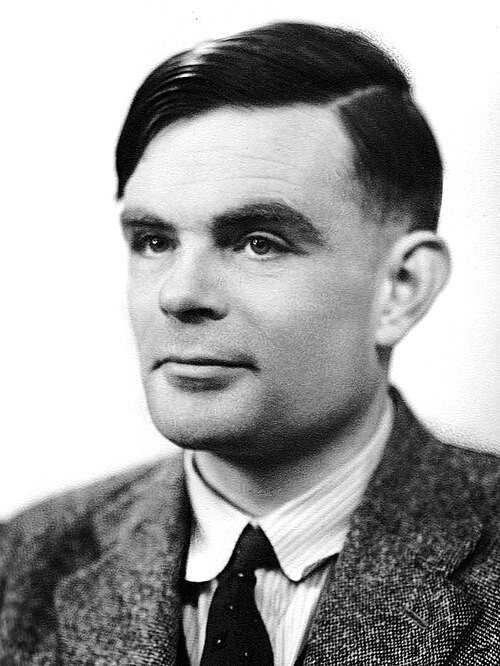
Photograph of Alan Turing Elliott & Fry · Public domain

Alan Turing

United Kingdom · 1912–1954

Laid mathematical foundations for computing a decade before any usable computer existed, then in 1950 proposed a practical test for machine intelligence — could a computer's conversation fool a human judge — that reframed 'can machines think' as something testable rather than purely philosophical.

The story

In his 1950 paper for the journal Mind, Turing predicted that within fifty years a computer with around a billion bits of storage would fool an average human interrogator at least 30% of the time after five minutes of questioning — a specific, falsifiable forecast he put his name to decades before anyone could actually test it.

“State an abstract claim about intelligence as a concrete, testable prediction — not just a definition.”

'Computing Machinery and Intelligence' published
1950, journal Mind
Royal pardon for 1952 conviction
2013, posthumous
Age at death
41
2
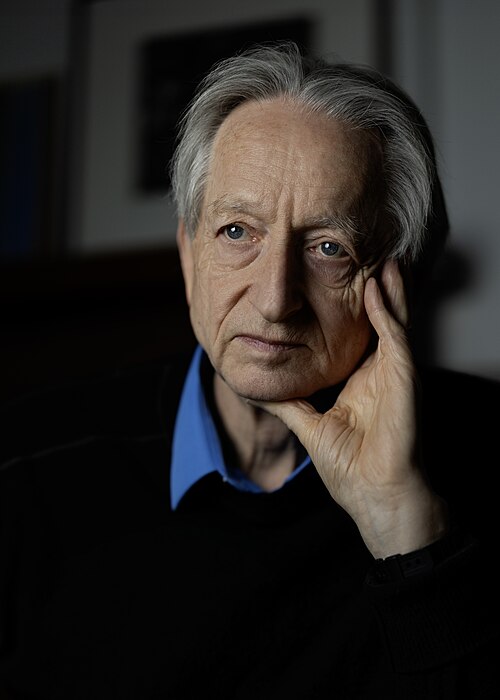
Photograph of Geoffrey Hinton Cmichel67 · CC BY-SA 4.0

Geoffrey Hinton

United Kingdom / Canada · b. 1947

Co-authored the 1986 paper that popularized backpropagation for training neural networks, then spent decades as one of deep learning's few consistent believers through two AI winters until his student's AlexNet won the 2012 ImageNet competition and reshaped the field almost overnight.

The story

After AlexNet's 2012 ImageNet win, Hinton auctioned his three-person startup, DNNresearch, from a hotel room at that year's NeurIPS conference in Lake Tahoe; Google, Microsoft, Baidu and DeepMind bid against each other before Google won at $44 million, a single afternoon that turned deep learning from an academic curiosity into a commercial priority.

“Persisting with an unfashionable idea through repeated rejection can pay off once the evidence, not the fashion, catches up.”

Turing Award
2018, with LeCun and Bengio
Nobel Prize in Physics
2024
Years at University of Toronto
~40 years
3
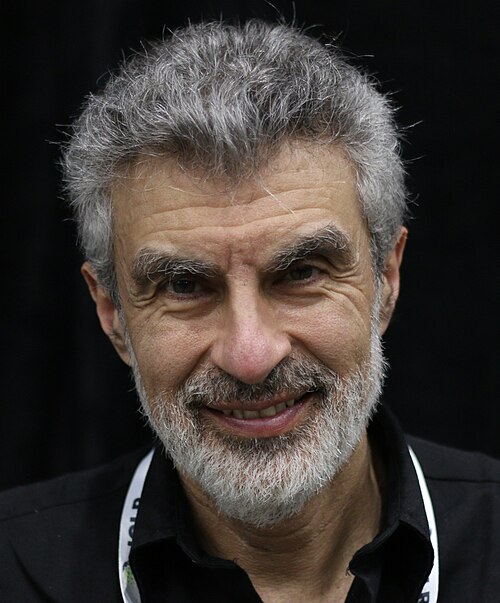
Photograph of Yann LeCun Jérémy Barande · CC BY-SA 2.0

Yann LeCun

France / United States · b. 1960

Built the convolutional neural network at Bell Labs in the late 1980s and had it reading handwritten checks commercially by the 1990s — a working deep-learning deployment more than fifteen years before the field's mainstream breakthrough. Now Meta's chief AI scientist and a vocal skeptic that today's language models lead to general intelligence.

The story

In the 1990s, LeCun's convolutional network LeNet, developed at Bell Labs, was deployed to read handwritten digits on checks for American banks; at its peak, systems built on his architecture were reportedly reading a meaningful share of all checks processed in the United States, proof the approach worked in production well before 2012 made it famous.

“A system proven in a real deployment teaches lessons no benchmark score can — even if the field has moved on.”

Turing Award
2018, with Hinton and Bengio
LeNet developed
1989, Bell Labs
Meta Chief AI Scientist since
2013
4
Photograph of Yoshua Bengio Xuthoria · CC BY-SA 4.0

Yoshua Bengio

Canada · b. 1964

Advanced neural language modeling and, with colleagues, introduced the attention mechanism that fed directly into the Transformer architecture, while building the Université de Montréal's Mila into one of the world's largest concentrations of deep-learning researchers. Later became one of the field's most prominent voices calling for AI-risk regulation.

The story

In May 2023, Bengio co-signed a one-sentence public statement, alongside Geoffrey Hinton and hundreds of other researchers, declaring that mitigating the risk of extinction from AI should be a global priority alongside other societal-scale risks such as pandemics and nuclear war — a stark public turn for a researcher who had spent thirty years building the technology being warned about.

“Building a powerful technology and warning publicly about its risks are not contradictory positions to hold at once.”

Turing Award
2018, with Hinton and LeCun
Mila founded
1993, Montreal
AI-risk statement co-signed
2023
5
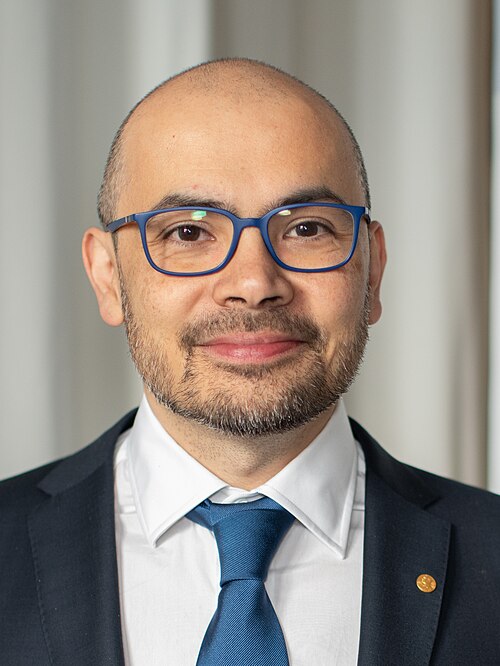
Photograph of Demis Hassabis John Sears · CC BY-SA 4.0

Demis Hassabis

United Kingdom · b. 1976

A former chess prodigy and video-game designer who co-founded DeepMind in 2010, then led the teams that built AlphaGo, the first program to beat a top professional Go player, and AlphaFold, which predicted the 3D structure of nearly every known protein. Shared the 2024 Nobel Prize in Chemistry for AlphaFold.

The story

In game two of AlphaGo's March 2016 match against Go champion Lee Sedol in Seoul, the program played move 37 on the fifth line — a placement so unconventional that commentator Michael Redmond initially called it a probable mistake. Lee left the room to compose himself before returning; the move is now widely cited as the moment a machine produced something resembling creative intuition.

“A system trained only on the rules of a narrow game can still surprise the humans who built it.”

Nobel Prize in Chemistry
2024, with John Jumper
AlphaGo vs. Lee Sedol
4–1, March 2016
DeepMind founded
2010, London
6
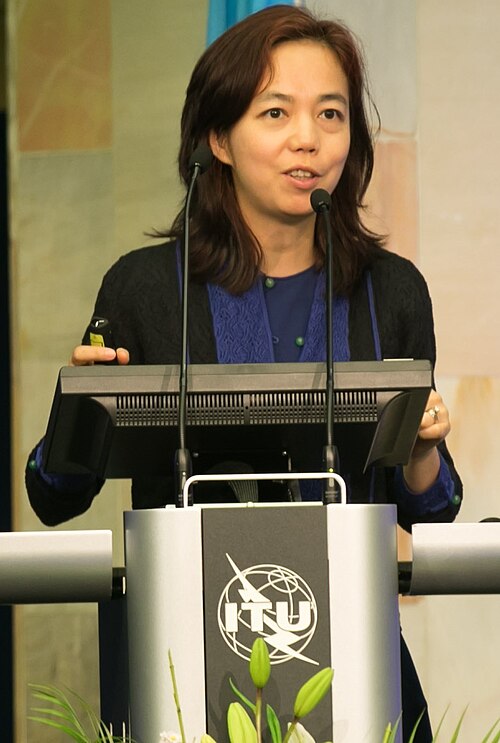
Photograph of Fei-Fei Li ITU Pictures · CC BY 2.0

Fei-Fei Li

China / United States · b. 1976

Built ImageNet, a hand-labeled dataset of roughly 14 million everyday photographs, turning image recognition into a measurable annual competition; the AlexNet system that won it in 2012 is widely credited with starting the deep-learning boom. Now co-director of Stanford's Human-Centered AI Institute.

The story

Starting around 2007, Li's team used Amazon's Mechanical Turk to have crowdworkers hand-label more than fourteen million images into roughly twenty thousand categories drawn from the WordNet lexical database — a years-long, unglamorous project some colleagues reportedly told her was wasting a promising researcher's career. Five years later, AlexNet's win on that same dataset kicked off the deep-learning boom.

“A dataset can matter as much as an algorithm — sometimes the unglamorous infrastructure work is the real breakthrough.”

ImageNet images labeled
~14M, ~20k categories
ImageNet challenge launched
2010
Stanford HAI co-director since
2019
7

John McCarthy

United States · 1927–2011

Coined the term 'artificial intelligence' while organizing the 1956 Dartmouth workshop, then invented the Lisp programming language the following year, giving the young field both its name and, for decades, its primary research tool. Won the 1971 Turing Award for founding the field's theoretical foundations.

The story

In a 1955 proposal seeking $14,000 from the Rockefeller Foundation, McCarthy and three co-authors coined 'artificial intelligence,' partly to distinguish the project from Norbert Wiener's cybernetics; the foundation funded roughly half the request, the resulting eight-week Dartmouth workshop the next summer produced no single technical breakthrough, and yet the deliberately chosen name outlived every idea actually discussed there.

“Naming a field decisively can shape its identity for decades, independent of what its founders accomplish that same year.”

Turing Award
1971
Dartmouth proposal funding sought
$14,000, 1955
Lisp invented
1958
8

Karen Spärck Jones

United Kingdom · 1935–2007

Developed inverse document frequency in 1972 at Cambridge, the statistical insight behind TF-IDF that still underlies most search engines and much of natural-language processing, decades before the deep-learning models that now dominate the field. A lifelong, outspoken advocate for women entering computing.

The story

Spärck Jones's 1972 paper proposed weighting rare words more heavily than common ones when ranking a document's relevance — the idea now called inverse document frequency, and still a component inside modern search and retrieval systems. She became equally known for a blunt catchphrase, 'Computing is too important to be left to men,' which the British Computer Society later adopted as the title of an annual lecture series.

“A single, precisely stated statistical idea can outlast entire architectures built decades later on top of it.”

Inverse document frequency published
1972
BCS Lovelace Medal
2007
ACL Lifetime Achievement Award
2004

Bars are scaled to the leader in this list.

Comparison Lab

Toggle names on and off — every bar rescales to the leader of your selection.

5 / 8

The argument

Whether passing Turing's 1950 test is a meaningful measure of intelligence remains disputed — critics argue that a chatbot fooling a judge demonstrates persuasive fluency, or human gullibility, more than genuine understanding.

The 2018 Turing Award's framing of Hinton, LeCun and Bengio as deep learning's founders is contested by other researchers, most vocally Jürgen Schmidhuber, who argues that techniques his own lab published earlier were not adequately credited.

Keep exploring

More in Engineering & Technology