🤖Origins & Evolution

AI Researcher · Designs and tests the algorithms behind machine intelligence, in a field now racing to automate a growing share of its own research process.

AI research is a field that keeps declaring itself born and then re-born. Its founders in the 1950s expected machine intelligence within a generation; when it did not arrive, funding collapsed not once but twice, and each time a small group of researchers who had not given up on neural networks kept the idea alive through years most of the field considered a dead end.

Two threads run through the whole story: a philosophical argument over whether intelligence can be reduced to symbols and rules or must be learned statistically from data, and a practical one over whether the field's champions or its skeptics have correctly predicted how fast progress would come. Both arguments remain unresolved, but the second one has repeatedly gone the champions' way faster than critics expected.

Where it began

1956Dartmouth College, Hanover, New Hampshire, US

In a 1955 funding proposal to the Rockefeller Foundation, mathematician John McCarthy and three co-authors — Marvin Minsky, Nathaniel Rochester and Claude Shannon — coined the phrase 'artificial intelligence' to describe a summer workshop they wanted to hold, built on the conjecture that every aspect of learning could in principle be so precisely described that a machine could be made to simulate it. The Rockefeller Foundation funded only about half of the requested $14,000. Roughly ten researchers gathered at Dartmouth for about eight weeks that summer; the meeting produced no single technical breakthrough, but the deliberately chosen name — and the field it named — outlived everything actually discussed there.

Timeline

1943McCulloch and Pitts model the neuron mathematically

Warren McCulloch and Walter Pitts publish 'A Logical Calculus of the Ideas Immanent in Nervous Activity,' showing that networks of simplified, all-or-nothing neurons could in principle compute any logical function — a theoretical seed later credited as the ancestor of the artificial neural network.

1950Turing proposes the imitation game

In 'Computing Machinery and Intelligence,' published in the journal Mind, Alan Turing sidesteps the question 'can machines think' and proposes a practical test instead, predicting that within fifty years a machine with about a billion bits of storage would fool an average interrogator at least 30% of the time.

1956The Dartmouth workshop names the field

John McCarthy, Marvin Minsky, Nathaniel Rochester and Claude Shannon's eight-week Dartmouth summer workshop coins the term 'artificial intelligence' and brings together roughly ten researchers who would go on to found much of the field's early research agenda.

1958Rosenblatt builds the Perceptron

Frank Rosenblatt's Perceptron, first implemented in software and then in custom hardware at Cornell, learns to classify simple images by adjusting its own connection weights — the first working demonstration of a trainable artificial neural network.

1969–1974The first AI winter begins

Marvin Minsky and Seymour Papert's 1969 book 'Perceptrons' proves mathematically that single-layer networks cannot solve simple problems like XOR, and Britain's 1973 Lighthill Report concludes AI has failed to deliver on its promises; funding for neural-network and general AI research collapses on both sides of the Atlantic.

1986Backpropagation is popularized

David Rumelhart, Geoffrey Hinton and Ronald Williams publish 'Learning representations by back-propagating errors' in Nature, showing multi-layer neural networks can be trained efficiently by propagating error signals backward — the algorithm still used to train nearly every neural network built since.

1987–1993The second AI winter

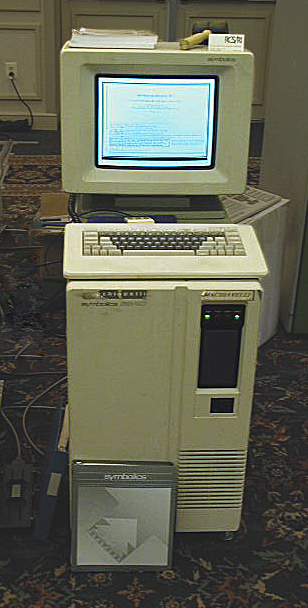
The market for specialized Lisp machines collapses almost overnight as cheaper general-purpose workstations catch up, and rule-based expert systems prove too brittle and costly to maintain at scale; AI funding contracts again, and many researchers quietly drop the term from their work.

1989LeCun proves convolutional networks work — on real checks

Yann LeCun's convolutional neural network, developed at Bell Labs, is soon deployed commercially to read handwritten digits on checks; by the late 1990s, systems built on his architecture are reading a meaningful share of checks processed in the United States, a rare working deep-learning deployment well before the field's mainstream breakthrough.

2012AlexNet wins ImageNet and starts the deep-learning boom

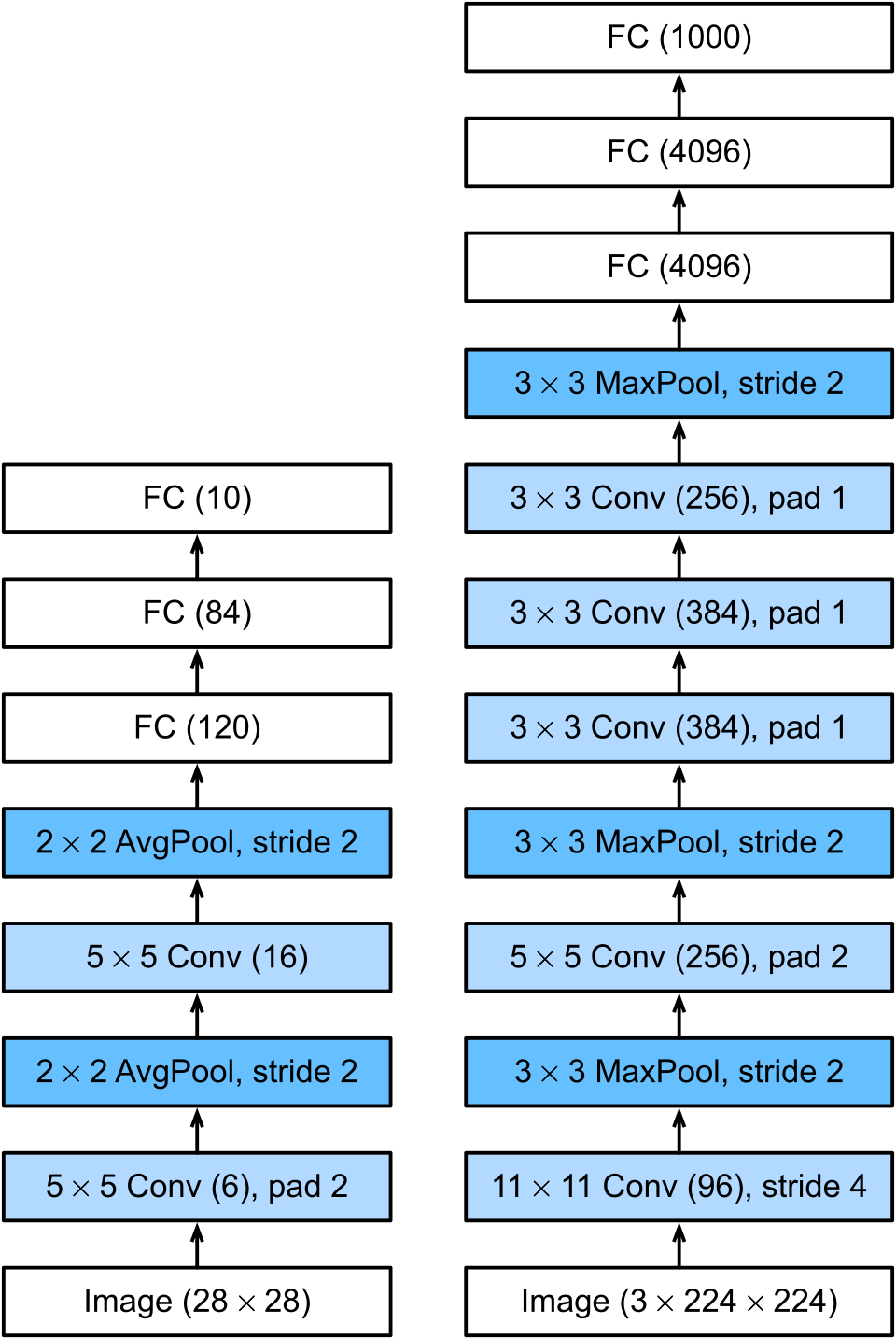
Alex Krizhevsky, Ilya Sutskever and Geoffrey Hinton's deep convolutional network wins the ImageNet competition with a 15.3% error rate against the next-best entry's 26.2%, a margin so large it convinces most of the field, almost overnight, that deep learning had solved computer vision's central benchmark.

2017–2022Transformers and the scaling era

Google researchers publish 'Attention Is All You Need,' introducing the Transformer architecture behind nearly every major language model since; OpenAI's GPT-3 (2020) and ChatGPT (2022) then demonstrate that scaling that same architecture with more data and compute keeps producing new capabilities, launching an industry-wide race to build ever larger models.

The eras

1943–1956

The idea and the name

Warren McCulloch and Walter Pitts' 1943 paper modeling neurons as simple logical switches gave later researchers a mathematical starting point, and Alan Turing's 1950 proposal of a practical test for machine intelligence gave the question a public shape. Both ideas fed into the 1956 Dartmouth workshop, where John McCarthy and three colleagues coined 'artificial intelligence' for a summer meeting that produced far less technical progress than its organizers hoped, but permanently named the field they had just founded.
1957–1973

Perceptrons and the first winter

Frank Rosenblatt's Perceptron (1958) showed a machine could learn to classify simple patterns by adjusting its own connection weights, and early optimism ran high enough that some researchers predicted human-level machine intelligence within a generation. Marvin Minsky and Seymour Papert's 1969 book 'Perceptrons' then proved mathematically that single-layer networks like Rosenblatt's could not solve basic problems, and Britain's 1973 Lighthill Report concluded AI research had failed to deliver — triggering deep funding cuts on both sides of the Atlantic and the field's first 'winter.'

Illustration representing a rule-based expert system, the commercial AI technology of the 1980s
Symbolics3640.JPG : Michael L. Umbricht and Carl R. Friend / Retro-Computing Society of Rhode Island Native name Retro-Computing Society of Rhode Island Location Providence Coordinates 41° 49′ 06.92″ N, 71° 26′ 45.82″ W Established 1994 Website rcsri.org Authority file : Q18857750 institution QS:P195,Q18857750 derivative work: Ubcule ( talk ) · CC BY-SA 3.0 · Wikimedia Commons
1974–1993

Expert systems, boom and bust

The field found a second wind in rule-based 'expert systems' that encoded a human specialist's knowledge as thousands of if-then rules — Digital Equipment Corporation's XCON reportedly saved the company tens of millions of dollars a year configuring computer orders. Specialized Lisp-machine hardware companies sprang up to run them, and Japan's ambitious Fifth Generation Computer Systems project poured government funding into the approach through the 1980s. The rules proved too brittle and expensive to maintain at scale, the Lisp-machine market collapsed almost overnight in 1987, and a second AI winter set in.

1994–2011

The quiet statistical turn

Away from the public eye, the field's center of gravity shifted from hand-written rules toward statistical machine learning — support vector machines, Bayesian methods, and neural networks kept alive mainly by researchers including Geoffrey Hinton, Yann LeCun and Yoshua Bengio, who kept refining the approach through years when 'neural network' was an unfashionable phrase in a grant proposal. IBM's Deep Blue beat world chess champion Garry Kasparov in 1997 using brute-force search rather than learning, a reminder that narrow, rule-based methods still had real power even as the field quietly rebuilt its statistical foundations for what came next.

Diagram of the AlexNet convolutional neural network architecture that won the 2012 ImageNet competition
Zhang, Aston and Lipton, Zachary C. and Li, Mu and Smola, Alexander J. · CC BY-SA 4.0 · Wikimedia Commons
2012–present

Deep learning, transformers and the scaling era

Alex Krizhevsky, Ilya Sutskever and Geoffrey Hinton's AlexNet won the 2012 ImageNet competition by a huge margin, convincing most of the field almost overnight that deep learning worked. Google researchers' 2017 Transformer architecture then gave the approach a design that scaled unusually well with more data and compute, and OpenAI's GPT-3 (2020) and ChatGPT (2022) demonstrated that scaling that same architecture kept producing new capabilities rather than diminishing returns — launching an industry-wide race, backed by unprecedented capital, to build ever larger models.

What this job replaced

Neighbouring trades that no longer exist — absorbed, automated or regulated away.

Knowledge engineer

1970s–1990s

Specialists who interviewed human experts — doctors, geologists, chemists — and hand-translated their know-how into thousands of if-then rules for expert systems like MYCIN and XCON. The job largely vanished when expert systems proved too brittle and expensive to maintain, and statistical machine learning replaced hand-written rules with rules learned automatically from data.

Hand-crafted feature engineer

1990s–2012

Before deep learning, getting a computer-vision or speech system to work well depended on researchers hand-designing the right input features — edge detectors like SIFT and HOG for images, cepstral coefficients for audio — a specialized craft in itself. Networks that learn their own features directly from raw data made most of this design work obsolete within a few years of 2012.

Lisp machine engineer

c. 1975–1988

Companies like Symbolics and Lisp Machines Inc. built and sold specialized workstations optimized to run the Lisp programming language AI research depended on, employing engineers to design, sell and maintain them. Cheaper general-purpose workstations caught up in raw performance by the late 1980s, and the entire Lisp-machine industry collapsed within about two years — a symbol of the second AI winter.

Trades that vanished →

Every collapse in this history shares a pattern: a specific, oversold promise goes unmet on schedule, funders pull back hard, and a minority of researchers keep working through years when the label 'artificial intelligence' actively hurt a grant application.

The people reading this profile now are living inside the field's third great boom, one built on scale rather than a single new idea. Whether it ends the way the previous two did, or proves different this time, is the live argument running underneath everything else in this profile.

Keep exploring

More in Engineering & Technology