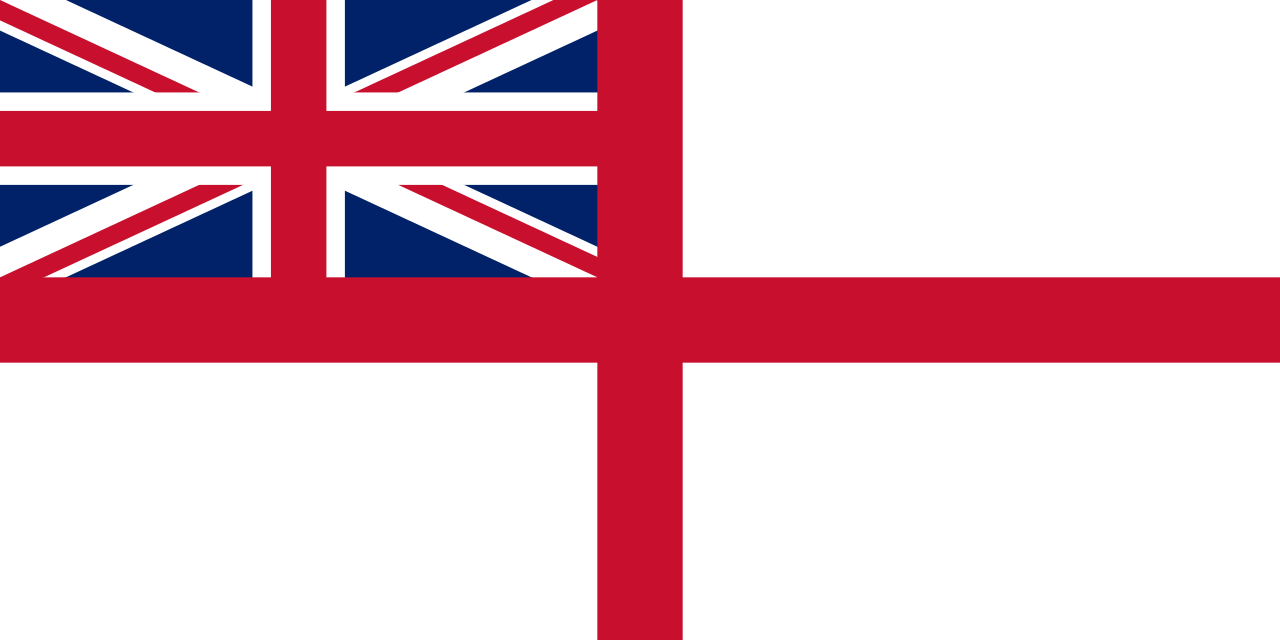
The Royal Navy is an English-then-British state institution whose popular statue is Horatio Nelson at Trafalgar (21 October 1805) and whose industrial truth is coal, then oil, then a 1914 dreadnought race and a 1939-45 convoy war. Samuel Pepys is the Restoration administrative name; John Fisher is the 1900s reform name (Dreadnought, 1906); Jellicoe and Beatty split Jutland (31 May-1 June 1916) into a century of argument. This page is force-structure history -- manning, yards, doctrine as dated debate -- not a live order of battle and not a how-to for any ship.
Political impact is high because the fleet was the hardware of a global empire and then of a declining great power that chose the US alliance. The two Atlantic U-boat crises (1917, 1940-43) recast the RN as an escort-and-air navy as much as a battle-line navy. Andrew Cunningham's Mediterranean 1940-43 is the other English still. Intensity is mid-atlas: an institution, not a single battle's peak.
Korean contact is real and under-taught in London: UN naval operations in 1950-53, including British light carriers HMS Theseus and Glory and a minesweeping story. William Andrewes is a named RN figure in that war. Tsushima (1905) is a Japanese-Russian file the RN watched as a student of gunnery -- see that battle page. This is not a current ROKN-RN ORBAT.
Popular hingeTrafalgar, 21 Oct 1805
Industrial peak1914-18 and 1939-45 fleets
Jutland31 May-1 Jun 1916
Atlantic1917 and 1939-43 as convoy politics
KoreaHMS Theseus, Glory, and a UN carrier footnote
Today noteA smaller alliance navy -- history, not a current ORBAT
Profile
Scale
60
Intensity
48
Duration
88
Tech shift
65
Political impact
80
Cultural memory
76
Pin a cost beat to a legacy beat
On this topic, pick one published cost band and one legacy lesson already on the page. Educational pairing — not a nation league.
Documented ranges and memory notes only. No ranking of countries, peoples, or armed forces as teams. Not operational advice.
Cost beat already published
Legacy beat already published
Cost or lesson
Theme reading only. Not a nation league.
Deep introduction
A battle line that became a convoy and an alliance
The RN's honest twentieth-century sentence is not Trafalgar repeated; it is yards, oil, escorts, and a handoff of maritime primacy.
Tudor to Nelson
A standing navy, press gangs, and a 1756-1815 near-continuous war with France. Trafalgar froze the popular image. Pepys froze the administrative one.
No sail-handling lesson.
Fisher to Jutland
Dreadnought (1906) and the German race. Jutland as a tactical draw and a strategic hold -- the argument English memoirs never ended.
No gunnery table.
Two Atlantics
1917 and 1939-43 made convoy, air, and intelligence the surviving arts. See the submarine page for the opponent type.
Western Approaches is a place and a system -- history, not a present ASW manual.
Alliance navy
1945-present shrinkage, the US special relationship at sea, Korea 1950-53 as a UN footnote, and later carriers as political objects. History of a smaller fleet, not a current list of hulls.
Alliance navy stays dated: 1916-05-31 (Jutland) in Home waters, the Atlantic, the Mediterranean, and a global imperial-then-alliance map. John Jellicoe, 1st Earl Jellicoe (Admiral) is a named witness -- Jutland's Grand Fleet commander -- the cautious name in the English split. Cost band: not one war -- an institution; human cost sits in the wars the fleet fought. Encyclopedia, not a method.
The long British institution that Trafalgar mythologised and the Atlantic industrialised.
See also
Napoleonic WarsTrafalgar and the long French war as the popular hinge.
Battle of TsushimaA 1905 gunnery lesson the RN studied -- Japanese-Russian, not British.
World War IIThe Atlantic and Mediterranean industrial peak.
United States militaryThe alliance that inherited maritime primacy -- history, not a current comparison table.
Key terms
Senior Service
British nickname -- a cultural fact.
Dreadnought
1906 type that reset a race -- a political ship.
Western Approaches
The 1939-45 convoy-command geography.
Two-power standard
A dated strength rule of thumb -- history of a slogan.
Press gang
Manning violence of the sailing navy -- part of the cost file.
HMS Theseus / Glory
British light carriers in the Korean War -- a named UN footnote.
Image vs oil
Nelson is the statue. Fisher and tanker routes are the twentieth-century truth.
A statue that hides oil is a children's book.
Jutland argument
Jellicoe vs Beatty is an English civil religion of 1916.
The strategic fact (blockade held) sits beside the tactical disappointment.
Korea footnote
A real UN naval war that London under-teaches beside Imjin.
Andrewes and the light carriers belong in the paragraph.
60scaleEditorial 0-100 browsing score
48intensityEditorial 0-100 browsing score
88durationEditorial 0-100 browsing score
65techShiftEditorial 0-100 browsing score
Royal Navy: concrete atlas depth on Tool-Lifes.
Frequently asked questions
Are the scores a ranking of nations or armies?
No. Scores are browsing aids inside an era-bounded atlas — not live league tables of countries.
Why Trafalgar?
21 October 1805 ended a combined Franco-Spanish battle fleet as a threat in that war and killed Nelson into a civic religion. It did not freeze naval history.
What was Jutland?
The 31 May-1 June 1916 North Sea clash. Tactically disappointing for British hopes; the blockade continued. Memoirs split Jellicoe and Beatty for a century.
How did U-boats change the RN?
In 1917 and again in 1940-43 they made escort, air, and convoy the surviving problem. See the submarine page.
Did the RN fight in Korea?
Yes -- UN naval operations, including British light carriers and minesweeping. Thinner in UK public memory than the Glorious Glosters' Imjin story.
Is this a current fleet list?
No. Era-bounded force-structure history. No live hull list, no patrol tracker.
How does Tsushima relate?
The RN studied 1905 as a gunnery and Togo story. The battle is Japanese-Russian -- see that page.