🫀The Greats

Surgeon · The physician who operates to cure, from Sushruta's ancient rhinoplasty to today's robotic operating rooms, still alone with the decision at the table.

Choosing eight names from a trade practiced on every inhabited continent for thousands of years is necessarily unfair to countless equally skilled surgeons who left no written record, especially outside the handful of countries whose medical histories get written down and translated. The eight below are chosen because their influence is well documented and still visible in operating rooms today.

They span twenty-five centuries and six countries, and reached the top by very different routes: an ancient text whose author is barely more than a name, a battlefield improvisation, a Civil War prison exchange, an unrecognized laboratory technician, a hospital in Addis Ababa built from nothing. What they share is that surgery today is measurably different because of what each one did.

The all-time podium

Ambroise Paré
Ambroise Paré
France
2
Sushruta
Sushruta
India
1
John Hunter
John Hunter
Scotland / England
3

The eight who reached the top

1
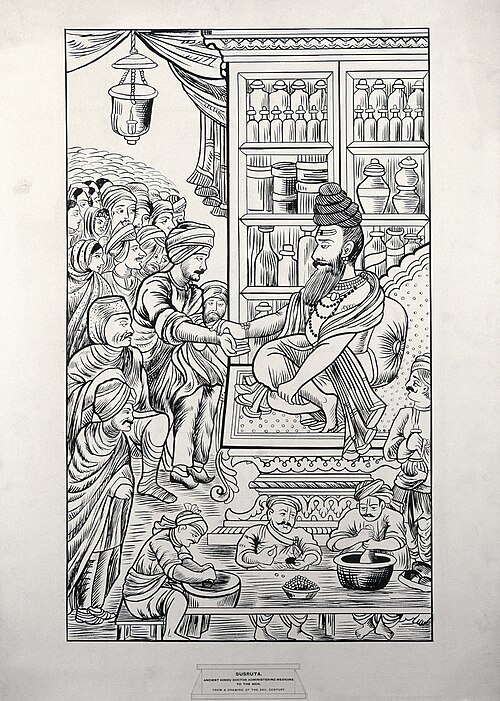
Traditional depiction of the ancient Indian surgeon Sushruta. Unknown author · CC BY 4.0

Sushruta

India · fl. c. 6th century BCE (traditional; exact era debated)

Sushruta is the name behind the Sushruta Samhita, an ancient Sanskrit surgical text describing over 300 procedures and more than 100 instruments, including a forehead-flap technique for reconstructing an amputated nose. Scholars debate exactly when the text reached its final form, but the tradition it records demonstrably endured for centuries.

The story

In 1793, near Pune, a bullock-cart driver named Cowasjee had his nose cut off by Tipu Sultan's soldiers as punishment for serving the British. A local craftsman reconstructed it using a forehead-skin flap, a technique "practiced from time immemorial" in India, witnessed by British surgeons Thomas Cruso and James Findlay, who published it in London's Gentleman's Magazine in 1794 — reintroducing Sushruta's ancient method to European surgery well over a thousand years after it was first written down.

“A written technique can outlive its author by centuries and still work exactly as described, if a tradition keeps practicing it.”
Procedures described
300+ (Sushruta Samhita)
Instruments catalogued
120+ types
Technique's continuous use
1,000+ years
2
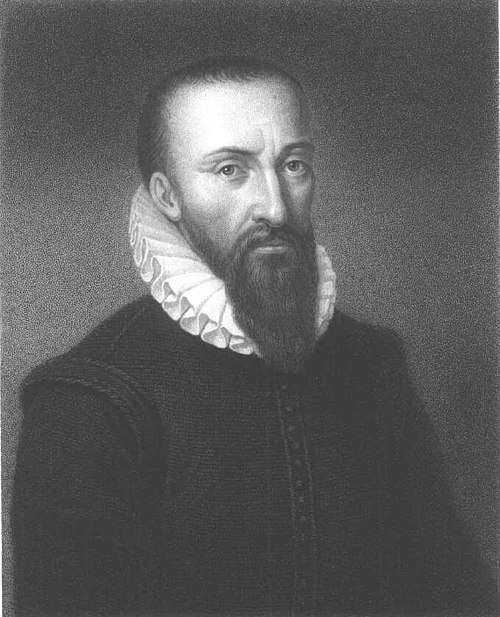
Portrait of the French battlefield surgeon Ambroise Paré. William Holl · Public domain

Ambroise Paré

France · 1510–1590

A barber-surgeon who never learned Latin, Paré became his era's most influential military surgeon across decades on French, Dutch and Italian battlefields. He replaced boiling-oil cautery with gentler dressings, revived tying off blood vessels instead of burning them shut, and wrote his findings in French rather than Latin.

The story

At the 1537 Siege of Turin, Paré ran out of the boiling elderberry oil surgeons used to cauterize gunshot wounds and improvised a dressing of egg yolk, rose oil and turpentine instead, expecting his patients to suffer badly overnight. Checking on them the next morning, he found the untreated men resting quietly while the oil-cauterized soldiers were in agony, and recorded that he resolved never to cruelly burn wounded men again.

“Running out of the standard treatment can force a better one into existence, if you check the results honestly afterward.”

Years of military surgery
~40 years
Surgical texts published
In French, not Latin
French kings served
4 successive kings
3
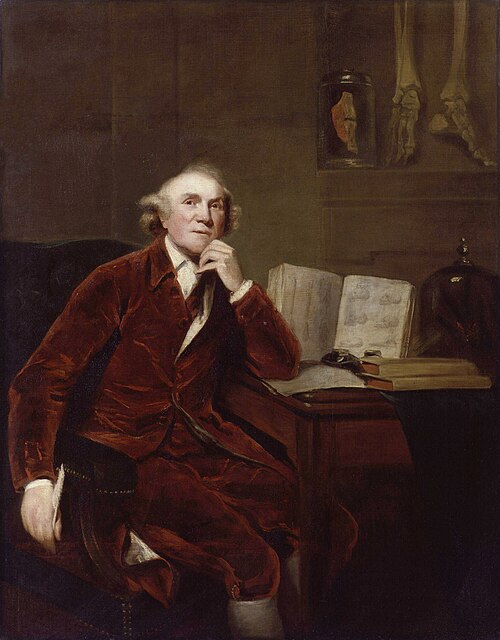
Portrait of the Scottish surgeon and anatomist John Hunter. anonymous · Public domain

John Hunter

Scotland / England · 1728–1793

Hunter insisted surgery be grounded in observation and experiment rather than inherited authority, dissecting and collecting specimens obsessively while running a private anatomy school in London. His 1785 treatment of a popliteal aneurysm by tying off the artery above the damage, instead of amputating, remained standard practice for over a century.

The story

In December 1785 at St George's Hospital, Hunter treated a 45-year-old coachman's dangerous popliteal aneurysm not by the standard, often-fatal amputation but by tying off the femoral artery well above the damaged section with four separate ligatures, leaving the aneurysm itself untouched to slowly shrink. The coachman left hospital six weeks later and returned to driving his cab, and the "Hunterian ligation" became the standard treatment for a century.

“Question the standard treatment by testing an alternative on one real case, then let the result argue for itself.”

Specimens in his collection
Thousands (Hunterian)
Ligation technique's lifespan
100+ years standard
Notable students trained
Incl. Edward Jenner
4
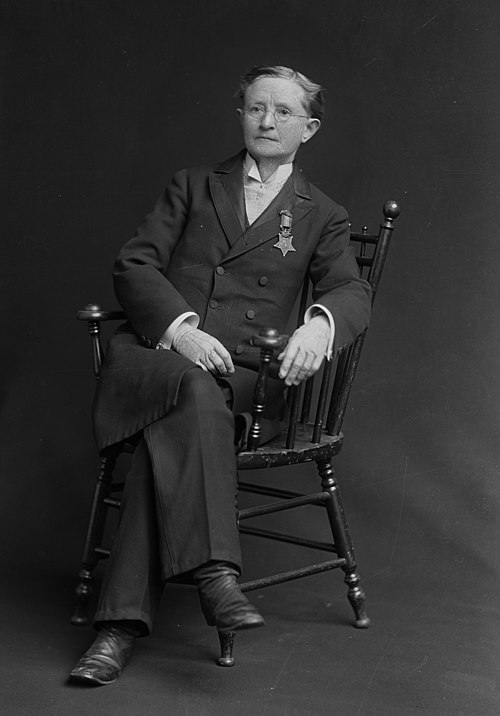
Photograph of surgeon and Medal of Honor recipient Mary Edwards Walker. C.M. Bell · Public domain

Mary Edwards Walker

United States · 1832–1919

One of the first American women to earn a medical degree, Walker served as a Union Army contract surgeon during the Civil War, at a time when women were barred from military medicine entirely. She remains the only woman ever awarded the Medal of Honor, America's highest military decoration.

The story

Captured by Confederate troops in April 1864 just after assisting a Confederate doctor with an amputation, Walker was arrested as a spy and held roughly four months at Richmond's Castle Thunder prison. She was released that August in a formal prisoner exchange for a Confederate surgeon — a rare, practical acknowledgment of her status as a legitimate army surgeon in an era that officially refused to commission women as one.

“Demonstrated competence, sustained under real conditions, can force recognition an institution refuses on principle.”

Medal of Honor recipients like her
1 of 1, ever
Months held as a POW
~4 months, 1864
Years practicing medicine
60+ years
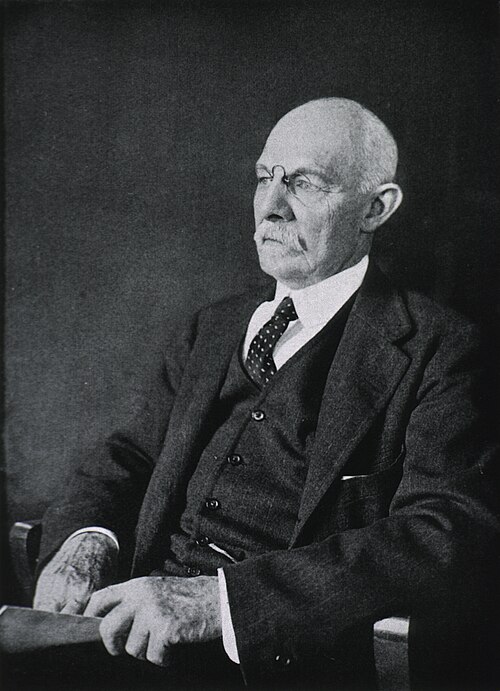
5
Portrait of surgeon William Stewart Halsted. John H. Stocksdale · Public domain

William Halsted

United States · 1852–1922

As Johns Hopkins Hospital's first surgeon-in-chief from 1890, Halsted founded the first formal American surgical residency and taught the gentle, meticulous operative principles — controlled hemostasis, minimal tissue trauma, sterile technique — still known as Halstedian surgery. He also introduced the sterile rubber surgical glove into routine American practice.

The story

In 1884, Halsted and colleagues self-experimented with injecting cocaine to block nerve pain, a genuine advance in anesthesia that also left him addicted; treatment at a Rhode Island sanatorium substituted a lifelong secret morphine dependency he never fully escaped. He hid it well enough to become, while still addicted, the most influential surgical educator in American history.

“A person's private struggle and their professional legacy can both be entirely real at the same time.”

Residency model still in use
Template since 1889
Infection rate after gloves
17% down to <2%
Years as surgeon-in-chief
32 yrs, Johns Hopkins
6

Vivien Thomas

United States · 1910–1985

After the 1929 crash wiped out his savings and his plans for medical school, Thomas took a laboratory job and spent years developing the technique behind the Blalock–Thomas–Taussig shunt for "blue baby syndrome," then coached surgeon Alfred Blalock through the first human operation in 1944 without ever holding a medical degree.

The story

Despite designing the instruments and the operation itself, Thomas spent decades formally classified and paid at a technician's low wage, watching credit and the name go to Blalock while training a generation of Johns Hopkins surgeons himself. Only in 1976, twelve years after Blalock's death, did Johns Hopkins award him an honorary doctorate and hang his portrait beside his former boss's, finally letting his own students call him "Doctor."

“Being the one who actually solves the problem does not guarantee being remembered for it, until someone insists.”

Years before formal credit
32 years (1944–76)
Surgeons he trained
Generations, Johns Hopkins
Recognition finally formalized
Renamed BTT shunt
7

Christiaan Barnard

South Africa · 1922–2001

Leading a team of about thirty at Cape Town's Groote Schuur Hospital, Barnard performed the world's first human-to-human heart transplant in December 1967, instantly becoming one of medicine's most famous names. He had trained partly in the US before returning to South Africa to build one of the era's most advanced cardiac surgery programs.

The story

On 3 December 1967, Barnard's team transplanted the heart of Denise Darvall, a 25-year-old fatally injured in a road accident, into 53-year-old grocer Louis Washkansky during a nine-hour operation. Washkansky woke, spoke with his wife and lived 18 days before dying of pneumonia brought on by the immune-suppressing drugs that kept his body from rejecting the new heart, which itself never stopped working.

“Being first to perform an operation others were also close to solving still changes medicine, and still takes nerve.”

Operation length
9 hours
Patient survival
18 days
Team members involved
~30 people
8

Catherine Hamlin

Australia / Ethiopia · 1924–2020

Arriving in Ethiopia in 1959 on what was meant to be a three-year contract, Hamlin and her husband Reg spent the rest of their lives there, founding the Addis Ababa Fistula Hospital in 1974 — the world's first hospital dedicated entirely to surgically repairing obstetric fistula — and personally operating on thousands of women.

The story

Obstetric fistula, a childbirth injury that leaves women incontinent and frequently outcast by their own communities, had been almost eliminated in wealthy countries by safer childbirth but remained common and untreated across much of rural Ethiopia. Hamlin kept operating into her nineties, and by the time of her death in 2020 the hospital she and Reg founded had treated tens of thousands of women the wider medical system had never reached.

“A three-year contract can become a life's work, if the need you find there turns out to be real and unmet.”

Years practicing in Ethiopia
61 years (1959–2020)
Age still operating
Into her 90s
Women treated (hospital total)
70,000+

Bars are scaled to the leader in this list.

Comparison Lab

Toggle names on and off — every bar rescales to the leader of your selection.

5 / 8

The argument

Sushruta's dates are genuinely contested: some historians place the Samhita's earliest layer in the mid-first millennium BCE, others argue the surviving text was not finalized until several centuries CE, and "Sushruta" himself may be a name attached to a tradition built by many hands rather than one person.

Barnard's 1967 "first" is sometimes qualified by historians who note that surgeon Norman Shumway's team at Stanford had spent years perfecting the same transplant technique in the laboratory and was widely expected to operate on a human first; Barnard's South African team simply had a suitable donor and recipient ready sooner.

A list like this one inevitably favors surgeons whose work was written down, translated and preserved. Countless skilled operators working in oral or non-Western medical traditions, or simply without access to a journal willing to publish them, left just as much real technique behind with far less credit attached to a name.

Keep exploring

More in Medicine & Life