⚛️Origins & Evolution

Physicist · Derives and tests the mathematical laws governing matter, energy, space and time, from a lone chalkboard to a 3,000-author particle-collider paper.

Physics is unusual among academic disciplines for how far back its recorded history runs and how directly its oldest results are still used: an engineering student today learns Archimedes' principle of buoyancy essentially unchanged from how he stated it in the third century BCE, more than two thousand years before anyone used the word 'physicist.'

The story runs through the Islamic Golden Age's insistence on controlled experiment, the Scientific Revolution's marriage of mathematics and observation, the nineteenth century's unification of electricity, magnetism and light, and a twentieth century that dismantled Newton's clockwork universe twice — first with relativity, then with quantum mechanics — before turning physics itself into a state-scale collaborative enterprise.

Where it began

c. 250 BCESyracuse, Sicily

Archimedes works out the principle of buoyancy — that a floating or submerged body displaces a weight of fluid equal to the force pushing it up — and the mathematics of levers and simple machines, reportedly testing King Hiero II's crown for gold purity by measuring how much water it displaced. His method, using mathematics to derive precise, testable rules about physical objects, is the earliest surviving example of what would later be called physics.

Timeline

c. 250 BCEArchimedes formulates the principle of buoyancy

Archimedes works out that a body displaces its own volume of fluid, reportedly to test whether King Hiero II's crown was pure gold, and derives the mathematics of levers and simple machines in Syracuse.

1021Ibn al-Haytham completes the Book of Optics

Working in Cairo, Ibn al-Haytham finishes the seven-volume Kitab al-Manazir, using controlled experiments to show that vision works by light entering the eye rather than the eye emitting rays, a foundational text for the experimental method.

1609Galileo turns a telescope to the sky

Galileo builds his own telescope in Padua, observes the mountains of the Moon and, within months, four moons orbiting Jupiter — evidence that not everything in the heavens circles the Earth.

1687Newton publishes the Principia

Isaac Newton's Philosophiae Naturalis Principia Mathematica sets out the laws of motion and universal gravitation, unifying the physics of falling apples and orbiting planets under one mathematical framework.

1831Faraday discovers electromagnetic induction

Michael Faraday shows that a changing magnetic field induces an electric current, the principle behind every electric generator, transformer and motor built since.

1865Maxwell unifies electricity, magnetism and light

James Clerk Maxwell publishes equations showing that electricity and magnetism are two faces of one field, and that light itself is an electromagnetic wave travelling at a predictable speed.

1900Planck introduces the quantum

Max Planck shows that a hot object's radiation only matches observation if energy is emitted in discrete packets, or quanta — an assumption he treats as a mathematical trick that turns out to describe something real.

1905Einstein's miracle year

Working as a patent clerk in Bern, Albert Einstein publishes four papers in a single year on special relativity, the photoelectric effect and Brownian motion, reshaping physics' basic concepts of space, time, mass and light.

1942Fermi achieves the first controlled chain reaction

Enrico Fermi's team starts Chicago Pile-1, the first human-made self-sustaining nuclear chain reaction, built under a University of Chicago football stadium — the moment physics stops being a small-group discipline and becomes state-scale 'Big Science.'

2012The Higgs boson is discovered at CERN

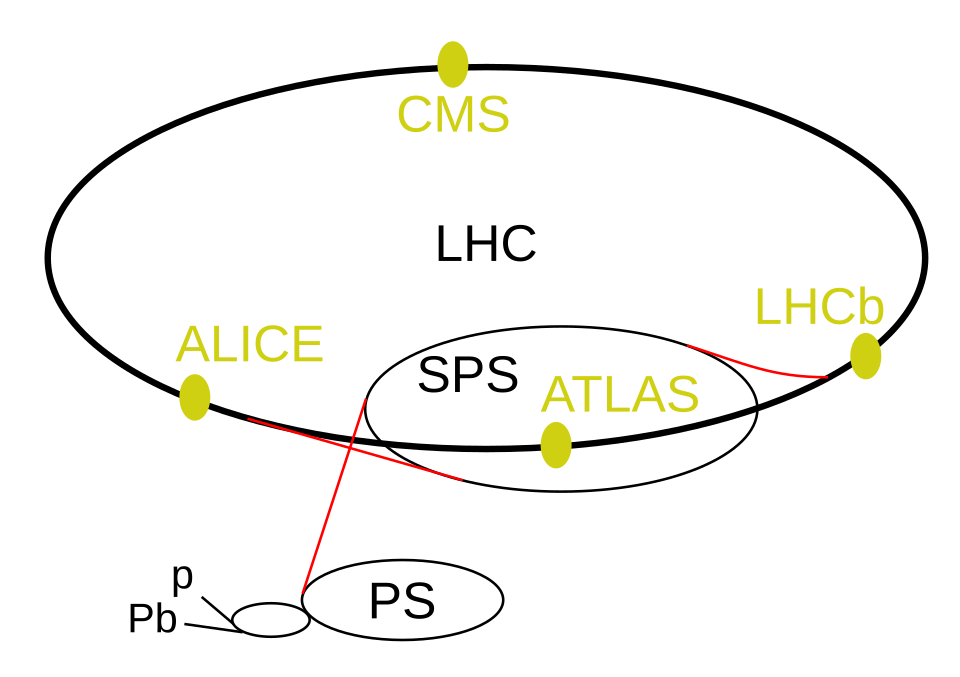
Two international collaborations of roughly 3,000 physicists each, ATLAS and CMS, announce the discovery of the Higgs boson at the Large Hadron Collider, confirming the last unconfirmed piece of the Standard Model nearly 50 years after it was predicted.

The eras

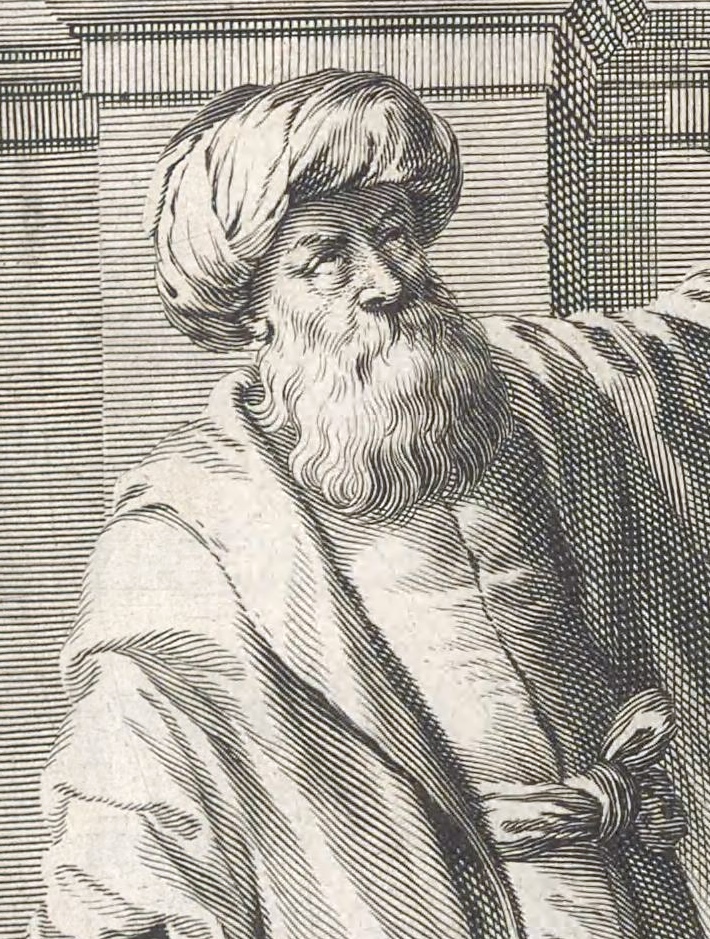
Depiction of Ibn al-Haytham, the medieval scholar who pioneered experimental optics
Adolph Boÿ, engraved by Jeremias Falck. Used as the frontispiece to Johannes Hevelius, Selenographia, 1647 · Public domain · Wikimedia Commons
c. 250 BCE – 1543

Natural philosophy before the scientific method

From Archimedes to Ibn al-Haytham, investigators of the physical world worked as part of a broader tradition of natural philosophy, mixed with theology, mathematics and medicine, and without a separate professional identity. Ibn al-Haytham's insistence on controlled, repeatable experiment in his Book of Optics (1021) is often credited as the clearest early statement of what became the scientific method, centuries before Europe's Scientific Revolution.
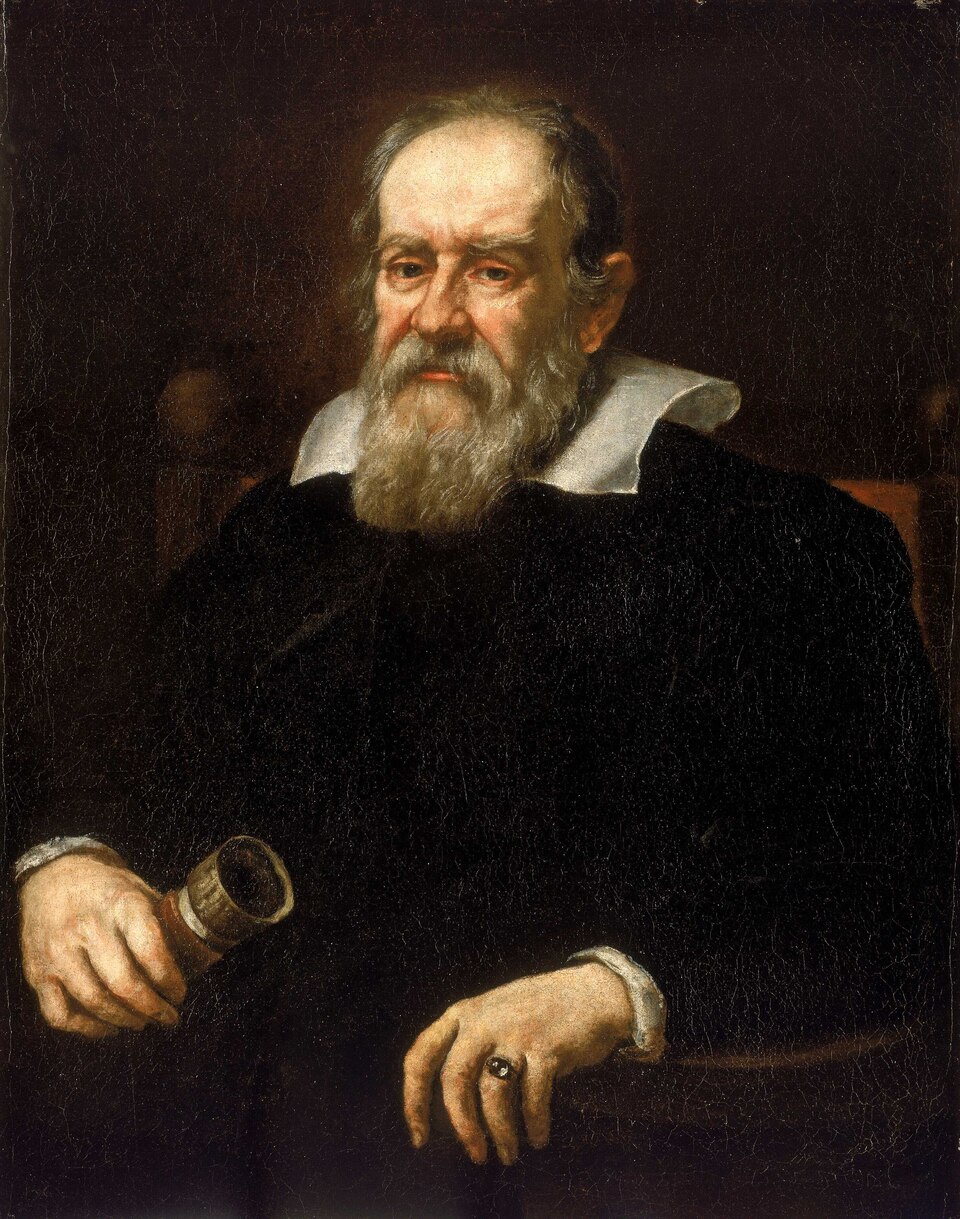
Portrait of Galileo Galilei
Justus Sustermans · Public domain · Wikimedia Commons
1543–1687

The Scientific Revolution

Copernicus's 1543 heliocentric model, Galileo's telescopic observations and his 1633 trial by the Inquisition, and Kepler's laws of planetary motion together broke the authority of ancient and church-sanctioned physics. Newton's 1687 Principia then supplied the mathematical synthesis — laws of motion and universal gravitation — that the rest of the era's evidence had been pointing toward.

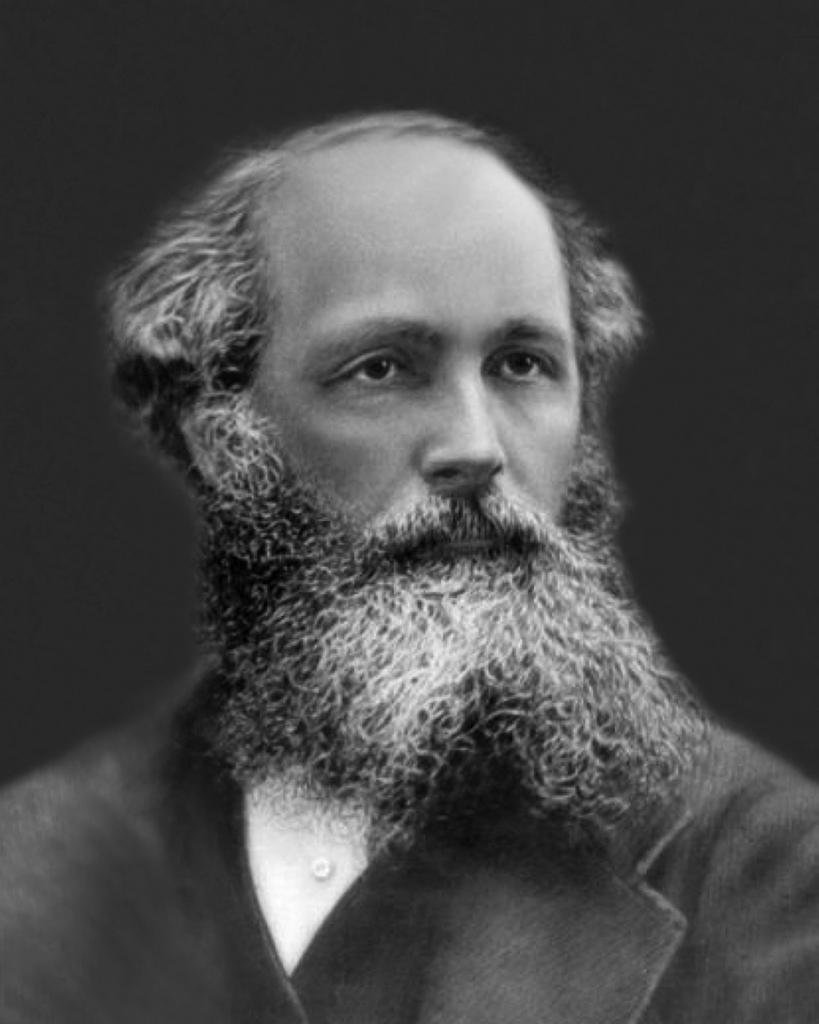
Portrait of James Clerk Maxwell
Unknown author Unknown author · Public domain · Wikimedia Commons
1687–1900

Classical physics matures

Newtonian mechanics extended into thermodynamics, statistical mechanics and, through Faraday's experiments and Maxwell's equations, a full theory of electromagnetism that predicted light itself was an electromagnetic wave. The word 'physicist' was coined only in 1840, by the English polymath William Whewell, as universities began creating dedicated chairs and journals for a discipline that had outgrown the older label of natural philosophy.

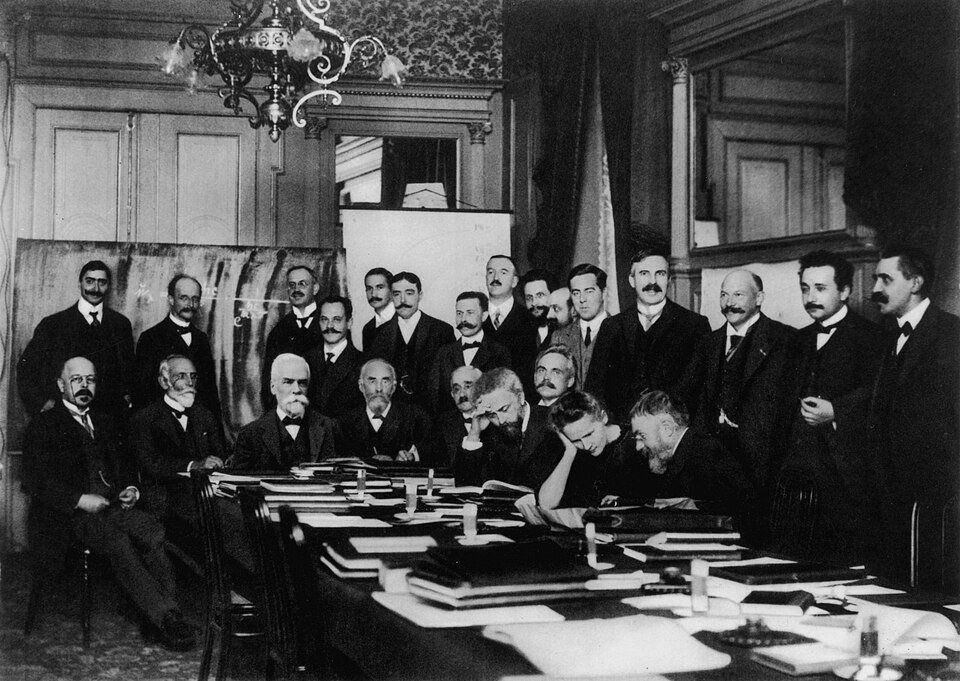
Group photograph of physicists at the 1927 Solvay Conference
Benjamin Couprie · Public domain · Wikimedia Commons
1900–1945

The quantum and relativity revolution

Planck's quantum hypothesis, Einstein's relativity, and the quantum mechanics developed by Bohr, Heisenberg and Schrodinger overturned Newton's deterministic universe twice within three decades, debates captured most famously in photographs from the 1927 Solvay Conference. The era closed with physics mobilized for war: the Manhattan Project turned theoretical nuclear physics into an industrial-scale weapons program.

Interior of a Large Hadron Collider tunnel at CERN
Arpad Horvath · CC BY-SA 2.5 · Wikimedia Commons
1945–present

The age of Big Science

Postwar physics shifted from single laboratories to state-funded mega-facilities: CERN, founded in 1954 by twelve European states, now runs the Large Hadron Collider, whose Higgs boson discovery in 2012 required collaborations of roughly 3,000 physicists each. Space telescopes, gravitational-wave detectors and thousand-author papers have made large-team collaboration, not individual genius, the field's dominant working model.

What this job replaced

Neighbouring trades that no longer exist — absorbed, automated or regulated away.

Natural philosopher

to 1840s

Before the word 'physicist' was coined by William Whewell in 1840, people investigating the physical world called themselves natural philosophers, a title that covered chemistry, biology and what would later separate out as physics under one broad umbrella. As universities created dedicated physics chairs and journals through the nineteenth century, the older, broader title faded out of use.

Human computer

1900s–1950s

Before electronic computers, physics research groups — including the Manhattan Project at Los Alamos — employed rooms of people, disproportionately women, to perform the repetitive numerical calculations a theory needed checked by hand or with mechanical calculators. Electronic computers such as ENIAC (1945) and its successors took over that work through the 1950s, and the job title disappeared.

Itinerant electrical demonstrator

1740s–1850s

Before physics settled into universities, showmen toured Europe and America performing electricity and magnetism as public spectacle — charging Leyden jars, 'electrifying' volunteers pulled from the audience — part entertainment, part popular science education. As the discipline professionalized into laboratories and lecture courses, the traveling demonstrator largely disappeared.

Trades that vanished →

Nearly every leap in this history follows the same pattern: an anomaly existing theory could not explain — a crown that might not be pure gold, starlight bending near the Sun, a nucleus that would not stop splitting — forces a new mathematical framework, which is then tested against nature until it either survives or breaks.

The shift from Newton working largely alone to a Higgs boson paper with roughly three thousand co-authors is the field's most consequential recent change, and it raises a question the rest of this profile keeps returning to: what does individual scientific credit even mean in an era when no single person can plausibly claim to have made the discovery alone?

Keep exploring

More in Science & Research