🏔️Origins & Evolution

Mountain Guide · The certified professional who leads strangers up — and above all back down — the world's great mountains, a trade Chamonix organized in 1821.

Guiding is older than mountaineering: medieval travelers crossing the Alps between Italy and northern Europe hired professional pass guides centuries before anyone thought a summit worth reaching. What changed in the late 18th century was the destination. When science and then romanticism made the peaks themselves desirable, the hunters and crystal seekers who knew the glaciers became the world's first mountain guides, and one valley — Chamonix — organized them into a profession.

The trade's history since then is a series of expansions: from Mont Blanc to every Alpine summit in the Golden Age, from the Alps to the Andes and Himalaya with the expedition era, and from a European guild to an international certified profession in which the most famous names of the 21st century are Nepali. At every stage the same question recurs — who carries responsibility when a paying client's life is on the rope.

Where it began

c. 1000–1786Alpine passes & Chamonix

Medieval documents record professional pass guides — the marrons of the Great St Bernard and Mont Cenis — leading pilgrims and merchants over snowbound cols from at least the 11th century. Guiding people up mountains for the mountains' own sake began in the Chamonix valley: local chamois hunters and crystal seekers knew the ice, and when Geneva scientist Horace Bénédict de Saussure offered a reward in 1760 for the first ascent of Mont Blanc, that knowledge acquired a market price. Twenty-six years later two locals collected it.

Timeline

1786Mont Blanc falls to a crystal hunter and a doctor

On 8 August 1786, crystal hunter Jacques Balmat and village physician Michel-Gabriel Paccard reached the roughly 4,806 m summit of Mont Blanc, watched through telescopes from Chamonix, claiming the prize de Saussure had offered in 1760. The ascent created a trade: the following year de Saussure himself was led up by Balmat with a team of local guides and porters.

1821The world's first guides' company

After an avalanche on Mont Blanc killed three Chamonix guides on the scientific Hamel expedition of 1820, the valley founded the Compagnie des Guides de Chamonix — the world's first professional guides' association, with fixed tariffs, a rotation system for sharing work, and a relief fund for the widows and children of guides killed on duty.

1854The Wetterhorn opens the Golden Age

English judge Alfred Wills' ascent of the Wetterhorn above Grindelwald, guided by Auguste Balmat, is the conventional start of alpinism's Golden Age. Two young locals, Christian Almer and Ulrich Kaufmann, gate-crashed the climb carrying a young fir tree to plant on the summit; mistaken at first for rivals, they finished the climb with Wills' party. Guides then led first ascents of nearly every great Alpine peak within eleven years.

1865Triumph and disaster on the Matterhorn

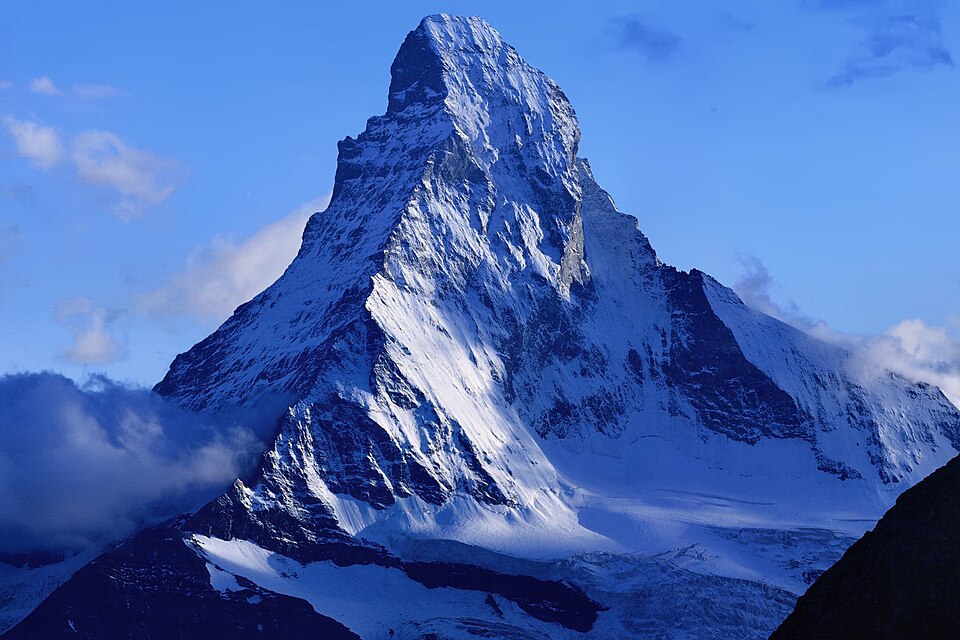
On 14 July 1865 Edward Whymper's party of seven made the first ascent of the Matterhorn, led on the mountain by Chamonix guide Michel Croz. On the descent the least experienced client slipped, the rope snapped, and Croz and three clients fell about 1,200 m to their deaths. The Zermatt inquiry cleared the survivors, and the disaster fixed the guide's dilemma — whose life answers for whose — in the public mind.

1921Everest work becomes a Sherpa profession

The first British Mount Everest reconnaissance hired Sherpa and Bhotia porters in Darjeeling, after chemist-mountaineer Alexander Kellas had spent years documenting their extraordinary performance at altitude. Within a generation expedition work was a recognized Sherpa profession — though Western record-keeping went on classifying even lead climbers as porters for decades.

1953Tenzing Norgay stands on Everest

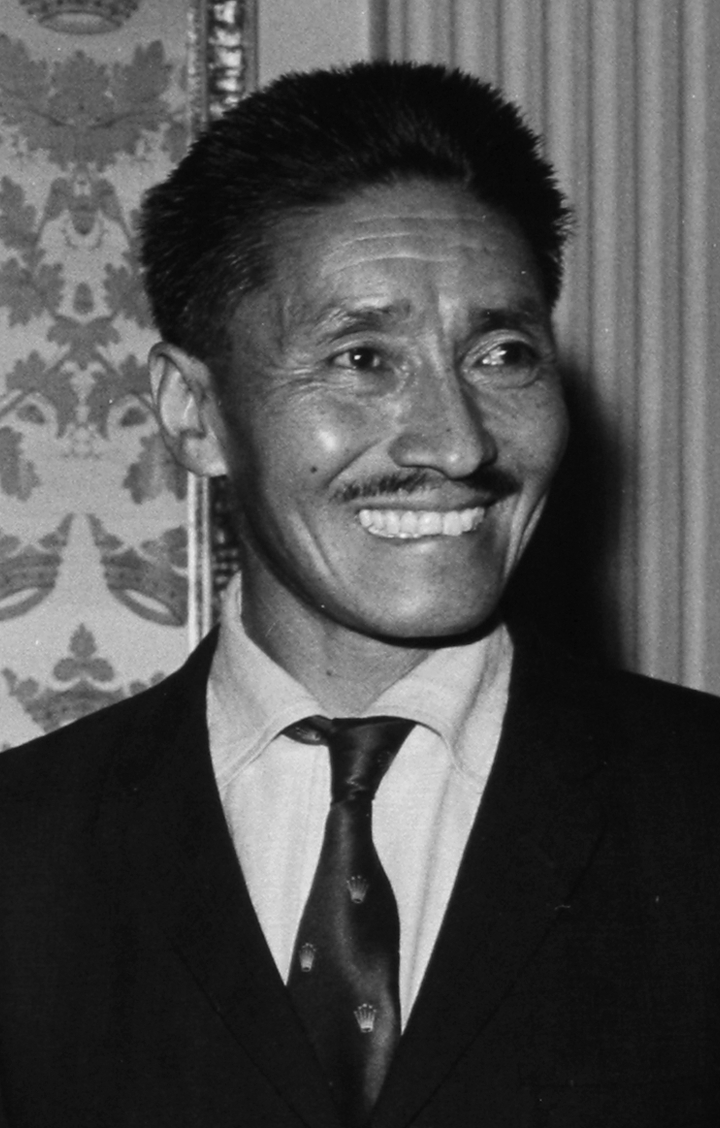
On 29 May 1953, on his seventh Everest expedition, Tenzing Norgay reached the summit with Edmund Hillary. The photograph Hillary took of Tenzing on top, ice axe raised with four flags flying, went around the world; a working mountain professional from the Khumbu became one of the most famous people alive, and Himalayan guiding had its first global figure.

1965The IFMGA is founded in Zermatt

A century after the Matterhorn disaster, the guide associations of Austria, France, Switzerland and Italy federated as the International Federation of Mountain Guides Associations at Zermatt, creating a shared training standard and the carnet that lets a certified guide work across borders. More than twenty national associations belong today, from Peru to Japan to Nepal.

1983Martine Rolland breaks the oldest barrier

French climber Martine Rolland passed the high-mountain guide diploma at ENSA in Chamonix, becoming the first woman in Europe certified as a full mountain guide, in a profession that had been exclusively male for its entire organized history. Nicole Niquille followed as Switzerland's first woman guide in 1986; four decades on, women are still only about 2% of IFMGA guides.

1996The Everest disaster puts commercial guiding on trial

A storm on 10–11 May 1996 killed eight climbers on Everest, among them expedition leaders Rob Hall and Scott Fischer, whose companies were competing to put paying clients on the summit. Jon Krakauer's Into Thin Air turned the disaster into a worldwide argument about what guiding can honestly promise at 8,000 m, where no guide can carry an exhausted client down.

2014The Khumbu Icefall avalanche and the Sherpa reckoning

On 18 April 2014 a serac collapse in the Khumbu Icefall killed sixteen Nepali high-altitude workers fixing the route for clients — Everest's deadliest day to that point. The season ended in a labor standoff, Nepal raised mandatory insurance cover for mountain workers, and the disaster accelerated the shift of Everest guiding toward Nepali-owned companies staffed by internationally certified Sherpa guides.
The eras

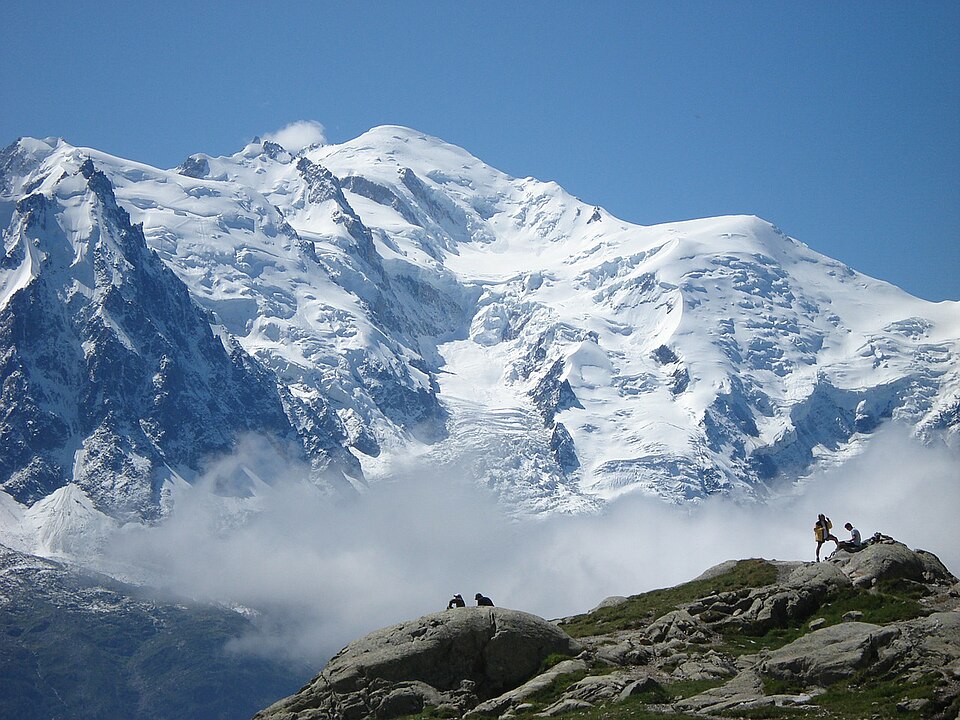
Mont Blanc rising above the Chamonix valley.
Hseugut · CC BY-SA 4.0 · Wikimedia Commons
c. 1000 – 1786

Pass guides, hunters and crystal seekers

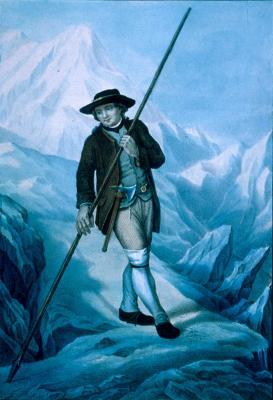
For centuries the Alps were something to get across, not up. Professional pass guides shepherded pilgrims and merchants over the great cols, while in the high valleys chamois hunters and crystal seekers built the practical glacier craft — reading snow bridges, cutting steps, judging weather — that guiding would later be made from. The summits themselves were considered useless and widely believed cursed; nobody paid to stand on one.

Monument to Jacques Balmat in Chamonix, pointing toward Mont Blanc.
Unknown author Unknown author · Public domain · Wikimedia Commons
1786 – 1854

Chamonix invents the profession

Balmat and Paccard's 1786 ascent of Mont Blanc, and de Saussure's heavily guided repeat a year later, made Chamonix the birthplace of a new trade. Ascents of Mont Blanc became a fashionable, expensive tour: parties hired guides and porters by the dozen under tariffs the valley fixed itself. The Compagnie des Guides, founded in 1821 after three guides died serving a scientific expedition, gave the trade rules, shared work and a welfare fund — a guild for a profession barely thirty-five years old.

The Matterhorn above Zermatt, scene of the 1865 disaster.
Photo: chil, on Camptocamp.org Derivative work: Zacharie Grossen · CC BY-SA 3.0 · Wikimedia Commons
1854 – 1914

The Golden Age and the great guides

Between Wills' Wetterhorn climb in 1854 and the First World War, guides led first ascents of nearly every major Alpine summit, mostly with British clients of the Alpine Club. The best — Christian Almer of Grindelwald, Melchior Anderegg of Meiringen, Michel Croz of Chamonix — became celebrities whose testimonial books clients competed to sign. The 1865 Matterhorn disaster, which killed Croz and three clients, showed the other side of the ledger and made guiding's responsibilities a matter of courts and newspapers.

Tenzing Norgay, who reached the summit of Everest in 1953.
SAS Scandinavian Airlines · Public domain · Wikimedia Commons
1921 – 1965

The Himalaya and the rise of the Sherpa guide

The great expedition era took guiding out of Europe. British Everest expeditions from 1921 hired Sherpa high-altitude workers in Darjeeling, and names like Ang Tharkay — sirdar of the French Annapurna expedition of 1950 — became famous in mountaineering circles long before the profession granted them equal titles. Tenzing Norgay's 1953 Everest ascent crowned the shift, and his later decades training climbers at the Himalayan Mountaineering Institute in Darjeeling built an Asian pipeline into the profession.

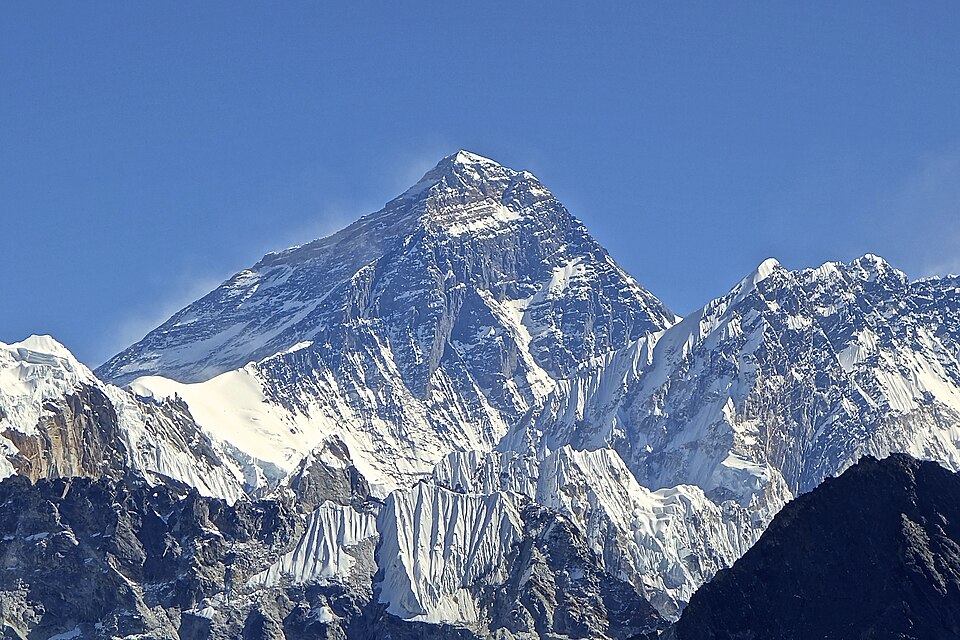
Mount Everest, center of the modern commercial guiding industry.
Rdevany · CC BY-SA 3.0 · Wikimedia Commons
1965 – present

Certification, commerce and a warming range

The IFMGA's founding in 1965 standardized training across borders, and commercial expedition guiding grew into an industry — spectacularly and controversially on Everest, where the 1996 storm and the 2014 icefall avalanche each forced a reckoning. Nepal's association earned full IFMGA membership in 2012, and Nepali-owned companies now dominate the world's highest guiding market, while in the Alps climate change is melting the very routes the profession was built on.

What this job replaced

Neighbouring trades that no longer exist — absorbed, automated or regulated away.

Marron (Alpine pass guide)

c. 1000–1810

From at least the 11th century, organized brotherhoods of marrons guided travelers over the Great St Bernard and Mont Cenis passes, breaking trail through snow, carrying passengers' baggage and running sledge descents on the Italian side. Napoleon's carriage road over Mont Cenis, finished around 1810, and the railways and tunnels that followed erased the trade within two generations.

Guide-porter (Träger)

c. 1820–1960

Nineteenth-century Alpine tariffs listed a second, cheaper class of professional below the guide: the porter, who hauled provisions, firewood and clients' baggage to the high huts and could be promoted to guide after years of service. Cable cars, supply lifts and finally helicopters removed the loads, and the rung vanished from the profession's ladder, surviving only in the aspirant guide's apprentice status.

Summit chair porter

c. 1780–1875

In the first age of Alpine tourism, teams of porters carried wealthy visitors up viewpoint peaks like the Rigi in sedan chairs — Mark Twain still described the busy Rigi tourist machine in A Tramp Abroad in 1880. Europe's first mountain rack railway, opened up the Rigi from Vitznau in 1871, ended the trade almost overnight; the railways kept the tourists and dropped the porters.

Trades that vanished →

Two hundred years after Chamonix wrote its first tariff, the profession's center of gravity is shifting east: the most-climbed big mountains are in Asia, the busiest operators are Nepali-owned, and the record book is dominated by Sherpa guides whose grandfathers were listed as porters.

What has not moved since 1821 is the transaction at the heart of the job. A client buys not a summit but a judgment — someone whose name is attached to the decision to go on or turn around. Every era's tools, from hemp ropes to satellite forecasts, have only raised the stakes of that signature.

Keep exploring

More in Frontier & Field