c. 650 BCEAshurbanipal's library at Nineveh
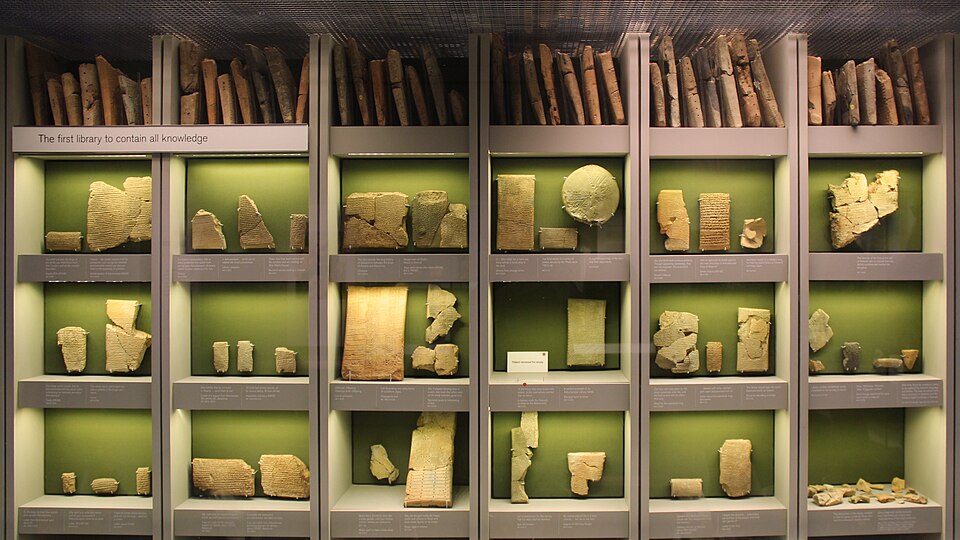
The Assyrian king builds the first library we can call systematically organized: around 30,000 tablets and fragments arranged by subject, acquired by royal agents across Babylonia, with ownership colophons threatening tablet thieves with the wrath of the gods. Buried when Nineveh fell in 612 BCE, it preserved the Epic of Gilgamesh for modern readers.
c. 245 BCECallimachus catalogs Alexandria
At the Library of Alexandria, the poet-scholar Callimachus compiles the Pinakes — "Tables of those eminent in every branch of learning" — running to 120 scrolls, organizing Greek literature by genre and author with biographical notes. It is the first known systematic library catalog, and the ancestor of every finding aid since.
859Fatima al-Fihri founds al-Qarawiyyin
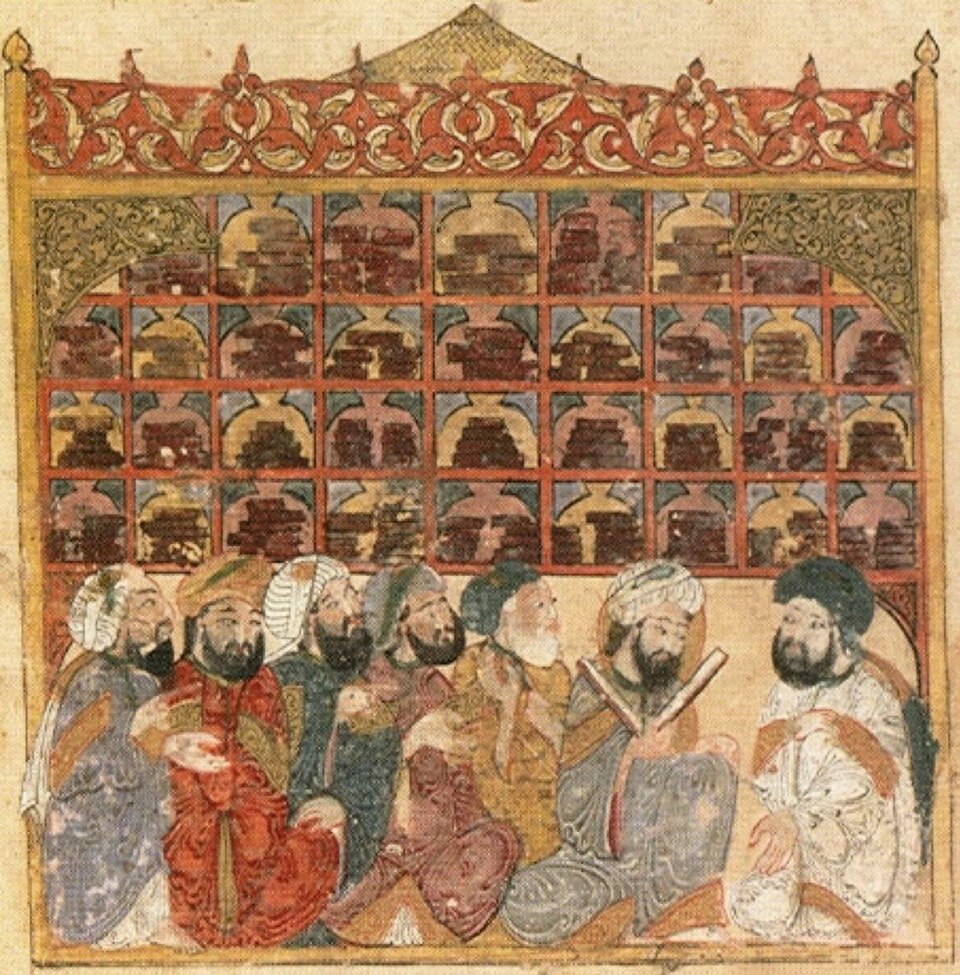
In Fez, Morocco, Fatima al-Fihri, daughter of a wealthy merchant, endows the Qarawiyyin mosque and its center of learning. Its library, holding manuscripts including a ninth-century Quran, is often cited as the world's oldest continuously operating library; Moroccan-Canadian architect Aziza Chaouni led its restoration, completed in 2016.
1602The Bodleian opens at Oxford
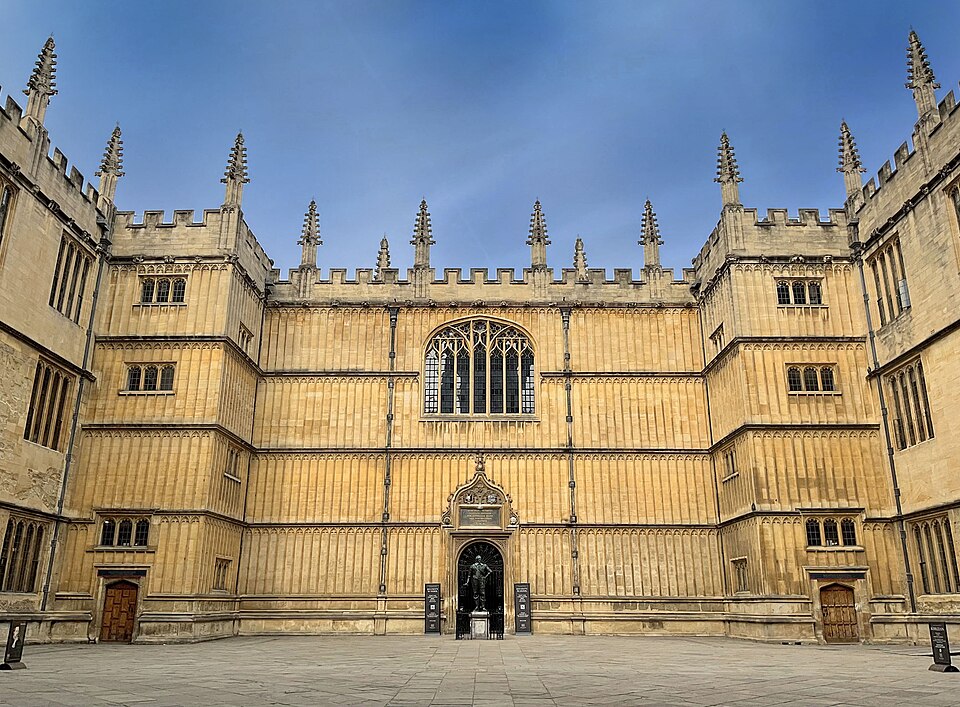
Thomas Bodley refounds Oxford's university library, and in 1610 strikes an agreement with the Stationers' Company of London to receive a copy of every book they register — the ancestor of legal deposit, the mechanism national libraries still use to collect everything published. Readers still formally promise not to "kindle therein any fire or flame."
1627Naudé writes the first manual of librarianship
Gabriel Naudé, a 27-year-old French scholar, publishes the Advis pour dresser une bibliothèque — advice on building a library — arguing that a great collection should be systematically acquired, sensibly arranged and, radically, opened to any scholar who asks. He later practices what he preached as librarian to Cardinal Mazarin in Paris.
1841Panizzi's 91 cataloguing rules
Antonio Panizzi, an Italian political exile risen to Keeper of Printed Books at the British Museum, publishes 91 rules for constructing its catalog — the first rigorous cataloguing code, forcing consistency in how authors, titles and editions are recorded. Every later code, from AACR to today's RDA, descends from the arguments Panizzi won.
1876The modern profession is born in one year
In a single American year: Melvil Dewey publishes the Dewey Decimal Classification, the American Library Association is founded in Philadelphia, Library Journal begins publication, and Charles Ammi Cutter publishes his Rules for a Dictionary Catalog. Librarianship acquires a professional association, a literature and its two most influential organizing tools almost simultaneously.
1883–1929Carnegie builds 2,509 libraries
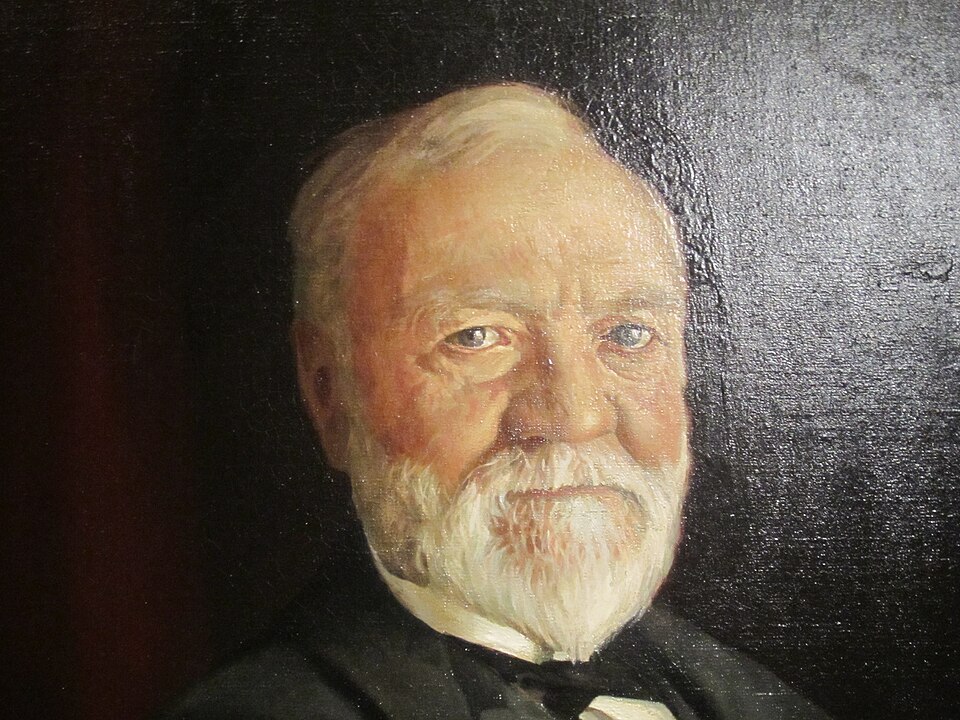
Steel magnate Andrew Carnegie funds 2,509 library buildings across the English-speaking world — 1,689 in the United States — on a strict formula: he pays for the building, the town must provide the site and commit roughly ten percent of the grant every year to run it. The free public library becomes ordinary civic furniture on three continents.
1931Ranganathan's Five Laws
S. R. Ranganathan, university librarian of Madras, publishes The Five Laws of Library Science — books are for use; every reader his book; every book its reader; save the time of the reader; the library is a growing organism. Eighty years on, they remain the profession's most quoted statement of purpose in any language.
1966–1971MARC and the shared catalog
At the Library of Congress, systems analyst Henriette Avram designs the MARC format for machine-readable cataloging; a pilot distributes electronic records to 16 US libraries from 1966. In 1971 Ohio's OCLC brings shared online cataloging live, meaning a book need only be cataloged once for thousands of libraries — the catalog leaves the card drawer for good.