📖The Greats

Librarian · The keeper and guide of recorded knowledge, from Nineveh's clay tablets to the e-lending fight — organizing what humanity knows so that anyone can find it.

A list like this is biased by the record itself: for every catalog whose maker was named, thousands of keepers of tablets, scrolls and manuscripts organized knowledge anonymously, and whole traditions — Baghdad's House of Wisdom, Timbuktu's manuscript families — survive with almost no individual librarians' names attached. The eight below are chosen because their specific methods are documented and still in use.

They span twenty-three centuries and seven countries, and almost none of them fit the stereotype: a Greek poet, a French pamphleteer, an Italian under a death sentence, an American whose own profession later stripped his honors, a mathematician from Madras, a Black American woman passing as white in the rare-book trade, a blind Argentine writer, and a systems programmer who never cataloged a book by hand.

The all-time podium

Gabriel Naudé
Gabriel Naudé
France
2
Callimachus of Cyrene
Cyrene (modern Libya) / Ptolemaic Egypt
1
Anthony Panizzi
Anthony Panizzi
Italy / United Kingdom
3

The eight who reached the top

1
Classical bust traditionally associated with the Greek poet and scholar Callimachus. The Egypt Exploration Society · Public domain

Callimachus of Cyrene

Cyrene (modern Libya) / Ptolemaic Egypt · c. 310 – c. 240 BCE

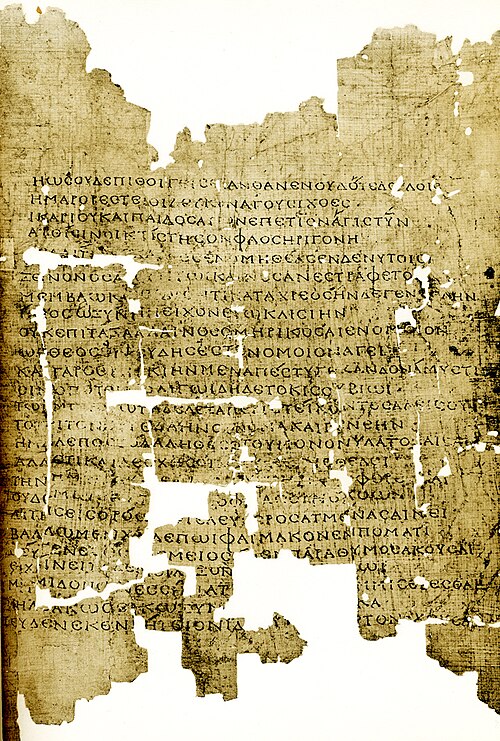
A poet and scholar at the Library of Alexandria, Callimachus compiled the Pinakes — 120 scrolls cataloguing Greek literature by genre and author, with biographical notes and opening lines. It is the first known systematic library catalog, and the distant ancestor of every bibliography, index and search result since.

The story

The collection he had to tame was built by force: the physician Galen records that ships docking at Alexandria were searched, their books confiscated and copied — the owners got the copies back, the library kept the originals, filed as "from the ships." Ptolemy III even borrowed Athens's official texts of the great tragedians against a deposit of fifteen talents, then forfeited the enormous sum and kept the originals. Callimachus's Pinakes was the instrument that turned this plunder into an organized, searchable whole — yet the surviving list of Alexandria's chief librarians never includes his name.

“Whoever builds the catalog, not the collection, decides what can be found — and is usually forgotten first.”
Length of the Pinakes
120 scrolls
Works credited to him by the Suda
800+
Named chief librarian of Alexandria
Never
2
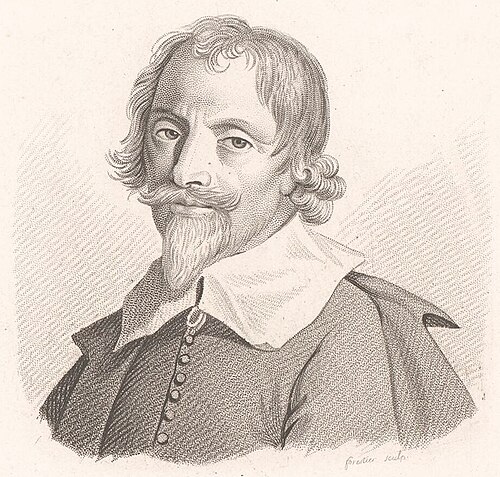
Engraved portrait of the French librarian and scholar Gabriel Naudé. Rijksmuseum · CC0

Gabriel Naudé

France · 1600–1653

At 27, Naudé wrote the Advis pour dresser une bibliothèque (1627), the first modern treatise on running a library, arguing collections should be built systematically and opened to any scholar. As Cardinal Mazarin's librarian he assembled roughly 40,000 volumes — then Europe's greatest library — and opened it weekly to the public from 1643.

The story

During the Fronde rebellion, Naudé watched his life's work destroyed by politics: in 1652 the Parlement of Paris, moving against the exiled Mazarin, ordered the cardinal's property sold, and the library Naudé had spent a decade assembling book by book across Europe was dispersed at auction. Naudé spent his own savings to buy back the medical books, then accepted Queen Christina of Sweden's invitation to Stockholm. When Mazarin returned to power and began reassembling the collection, Naudé set out for home — and died at Abbeville in 1653, en route to his library.

“Write the method down: Naudé's library was scattered, but his rules for building one outlived every collection he kept.”

Volumes assembled for Mazarin
~40,000
First manual of librarianship
Advis, 1627
Public opening of the Mazarine
Weekly, from 1643
3
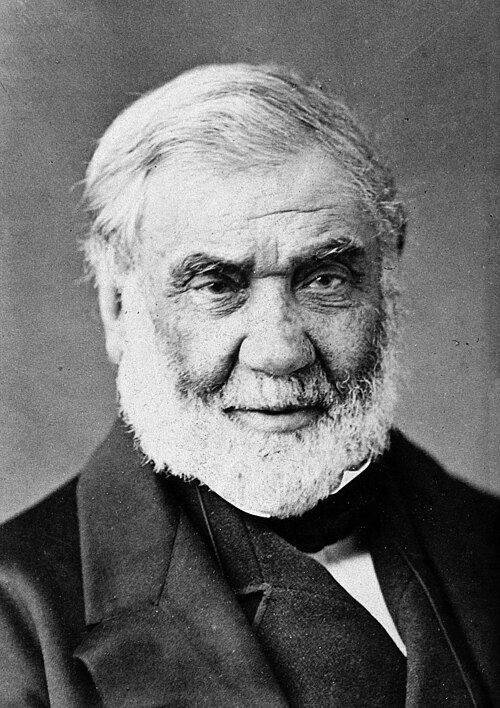
Portrait of Anthony Panizzi, Principal Librarian of the British Museum. Elliott & Fry. · CC BY 4.0

Anthony Panizzi

Italy / United Kingdom · 1797–1879

A lawyer from Modena condemned to death in absentia for revolutionary conspiracy, Panizzi fled to England in 1823 nearly penniless and rose to Principal Librarian of the British Museum. His 91 cataloguing rules of 1841 founded modern cataloging, and he conceived the great round Reading Room, opened in 1857.

The story

Testifying before a parliamentary committee in 1836, the refugee librarian declared his ambition that the poorest student in Britain should have the same means of pursuing learning as the richest man in the kingdom — and then built it: he enforced legal deposit against reluctant publishers, drove the printed-book collection from roughly 240,000 to over 540,000 volumes, and sketched the domed Reading Room himself, its 140-foot span rising in the Museum's courtyard in 1857. The state that had sentenced him to death watched Britain knight him in 1869.

“Access is engineered, not proclaimed: rules, deposit laws and a well-designed room did what manifestos could not.”

Cataloguing rules of 1841
91 rules
Printed books under his keepership
240k → 540k+
Reading Room dome span
140 ft (1857)
4
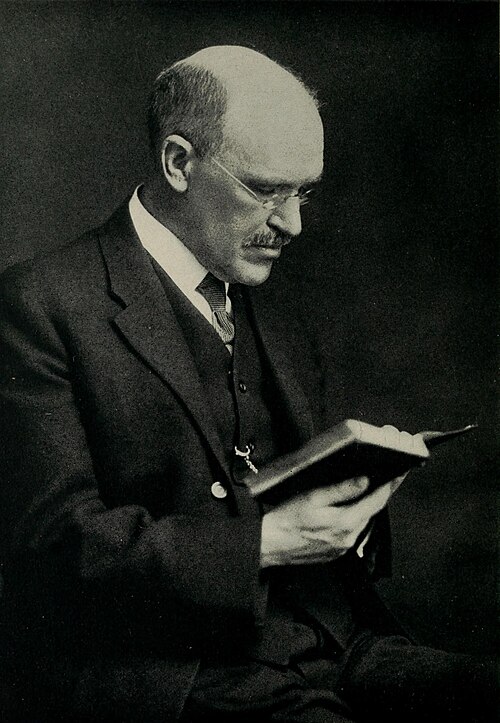
Photographic portrait of Melvil Dewey, creator of the Dewey Decimal Classification. Pach Brothers · Public domain

Melvil Dewey

United States · 1851–1931

In one year, 1876, Dewey published the Dewey Decimal Classification and co-founded both the American Library Association and Library Journal; in 1887 he opened the world's first library school at Columbia. He was also, by ample contemporary testimony, a racist, antisemite and serial harasser whose own profession eventually revoked his honors.

The story

When Columbia's trustees refused to admit women to his new School of Library Economy, Dewey held the first class anyway on 5 January 1887 — seventeen of its twenty students women — in an unused storeroom above the chapel, off the trustees' books. The gambit helped cost him his Columbia post; the school followed him to Albany in 1889. The same man was later forced from ALA leadership after women librarians reported his persistent harassment, and in 2019 the association stripped his name from its highest professional medal.

“A tool can be better than its maker; the profession that uses his numbers daily no longer gives out his name.”

Countries using his classification
135+
First library school class, 1887
17 of 20 women
Name struck from ALA's medal
2019
5
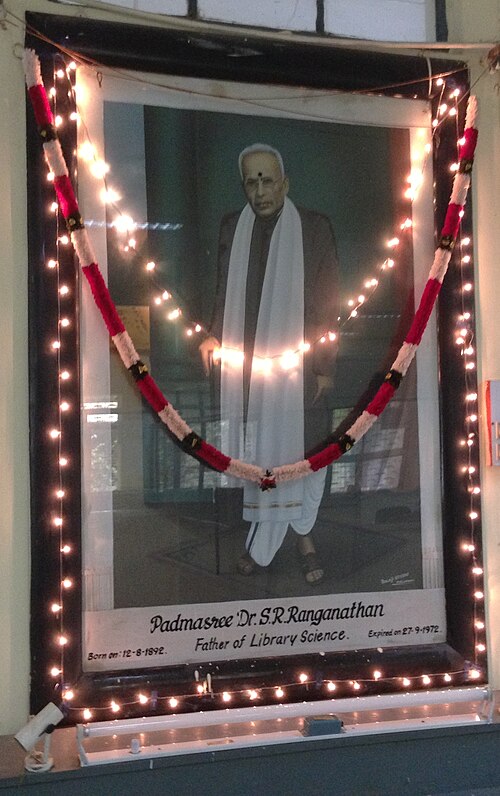
Portrait of the Indian library scientist S. R. Ranganathan. Krzna · Public domain

S. R. Ranganathan

India · 1892–1972

A mathematics lecturer who took the Madras University librarian's post almost reluctantly, Ranganathan became the field's foremost theorist: the Five Laws of Library Science (1931), the faceted Colon Classification (1933), and a research tradition that earned him the title of father of library science in India. India marks Librarians' Day on his birthday.

The story

Sent to University College London in 1924 to learn the trade he had just joined, Ranganathan found existing classifications rigid — every subject had to fit a pre-printed list. The insight arrived, he later recounted, in a London department store, watching a demonstration of a Meccano construction set: standard parts and connectors could build anything. His Colon Classification assembled a subject's number the same way, from facets — personality, matter, energy, space, time — joined by punctuation, letting the scheme express subjects its designers had never imagined.

“Borrow your model from anywhere: a toy in a shop window can restructure a discipline, if you are the one watching.”

Laws of library science
5 (1931)
Books and treatises written
60+
India's Librarians' Day
Aug 12, his birthday
6
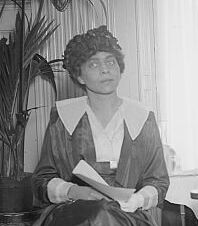
Portrait photograph of Belle da Costa Greene, librarian of the Morgan Library. The Library of Congress · No restrictions

Belle da Costa Greene

United States · 1879–1950

Hired in 1905 as J. P. Morgan's personal librarian, Greene became the most powerful figure in the American rare-book world and, from 1924, the founding director of the Morgan Library. Born Belle Marion Greener — daughter of Harvard's first Black graduate — she navigated her entire celebrated career passing as white.

The story

In December 1908, not yet thirty, Greene pulled off the coup that made her name: with Lord Amherst's celebrated library headed to auction after his solicitor embezzled his fortune, she negotiated privately on the eve of the sale and secured sixteen books printed by William Caxton, England's first printer, for Morgan at a stroke — beating every rival collector without a single bid. Decades of such victories built the Morgan into a world collection; before her death she burned her personal papers, keeping her own story catalogued by no one.

“Expertise plus nerve can beat money at its own auction — and the person who controls the records controls the story.”

Caxtons secured before the 1908 sale
16, in one night
Years directing the Morgan Library
24 (1924–48)
Personal papers she left
Burned by her own hand
7

Jorge Luis Borges

Argentina · 1899–1986

The great Argentine writer spent nine years as a cataloguer in a minor Buenos Aires municipal branch — where colleagues told him to slow down so the work would last — and wrote "The Library of Babel" from that desk. From 1955 to 1973 he directed the National Library of Argentina, the profession's most famous literary embodiment.

The story

Perón's government removed Borges from his library post in 1946 and "promoted" him to inspector of poultry and rabbits in the municipal markets; he resigned rather than accept the insult. Nine years later, with Perón deposed, Argentina named him director of the National Library — in the same months his hereditary blindness became complete. Borges noted the magnificent irony of being granted 800,000 books and darkness at once, observed that he was the library's third blind director, and ran it for eighteen years, resigning when Perón returned to power in 1973.

“The library repaid its humiliated clerk with its highest chair; institutions remember longer than governments.”

Years directing the National Library
18 (1955–73)
Books he could no longer read
~800,000
"The Library of Babel" published
1941
8

Henriette Avram

United States · 1919–2006

A systems programmer who had worked at the National Security Agency in the early 1950s and never trained as a librarian, Avram joined the Library of Congress in 1965 and designed MARC, the machine-readable cataloging format. Known as the mother of MARC, she made the online catalog — and every shared library database — possible.

The story

To encode a catalog card, Avram first had to discover what one actually was: she spent months dissecting cataloguers' practice field by field, translating a century of typographic convention — the significance of a comma, an indentation, a parenthesis — into tagged, subfielded, machine-readable structure. The MARC pilot began distributing electronic records to sixteen American libraries in 1966; the format became a US national standard in 1971 and an international one in 1973, and half a billion WorldCat records later, her design still underlies nearly every library search on Earth.

“Automating a craft begins with respecting it: months of listening to cataloguers produced a format that lasted sixty years.”

Libraries in the MARC pilot
16 (1966)
International standard since
ISO 2709, 1973
WorldCat records on her format
500M+

Bars are scaled to the leader in this list.

Comparison Lab

Toggle names on and off — every bar rescales to the leader of your selection.

5 / 8

The argument

Dewey is the list's open wound: the profession's most famous name was a documented racist, antisemite and serial harasser, forced from ALA leadership in his own lifetime and stripped of the association's medal named for him in 2019. Historians still argue whether his organizational genius can be honored apart from the women he drove from the field he claimed to open to them.

The list's gender arithmetic understates the profession's reality: librarianship has been a majority-women trade for a century — roughly four in five US librarians are women — yet the recorded "legends" skew male because leadership, publication and credit did. Figures like Anne Carroll Moore, who invented American children's librarianship at the New York Public Library, have as strong a claim as several names above.

Alexandria itself is half legend: its scroll counts are ancient boasts, its "burning" was more likely a slow decline through budget cuts, purges and neglect than one catastrophic fire, and the famous list of its librarians omits Callimachus while including men who were chiefly royal tutors. The most-cited story in library history is, fittingly, a lesson in source criticism.

Keep exploring

More in Education & Humanities