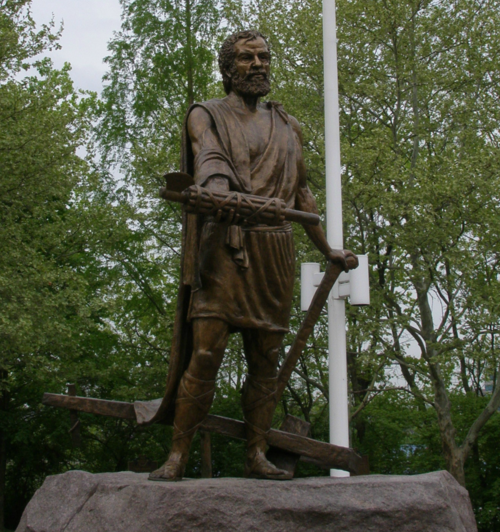
 Chris Light · Public domain
Cincinnatus
A patrician reduced to farming a few acres across the Tiber, Cincinnatus became Western culture's defining image of the citizen-farmer: the man who holds absolute power only as long as duty requires, then goes back to his plough. The story, told by Livy, made farming synonymous with civic virtue for two millennia.
In 458 BCE, with a Roman army trapped by the Aequi on Mount Algidus, the Senate's envoys found Cincinnatus ploughing his small farm. He sent his wife for his toga, accepted the dictatorship, defeated the Aequi, and resigned after roughly fifteen days of a six-month term to return to his fields. George Washington was celebrated as the American Cincinnatus for likewise surrendering power, and the veterans' Society of the Cincinnati — from which Cincinnati, Ohio takes its name — was founded on the ideal in 1783.
“The plough can outrank the throne: power taken for duty and returned promptly is remembered longer than power kept.”