🕊️Origins & Evolution

Diplomat · From ancient royal envoys and Venice's resident ambassadors to the Congress of Vienna and the UN, still negotiating peace one careful sentence at a time.

Diplomacy is older than writing survives to prove, but the moment it becomes visible in the historical record — cuneiform tablets recording kings addressing each other as "brother" — it already looks recognizably like the job practiced today: formal titles, careful wording, and messengers whose safety both sides had strong reasons to guarantee. What changed over the following three thousand years was not the basic need for a trusted go-between, but how permanent, professional and legally protected that go-between's position became.

For most of that history, an envoy was a temporary role: a trusted noble, priest or merchant sent for one mission and recalled once it ended. The idea of a diplomat as a permanent, salaried professional — living for years at a foreign court, filing regular written reports, protected by an accumulating body of law rather than personal favor alone — is largely a product of the last six centuries, and much of it was invented in a handful of competing Italian city-states.

Where it began

c. 1350 BCEAmarna, Egypt

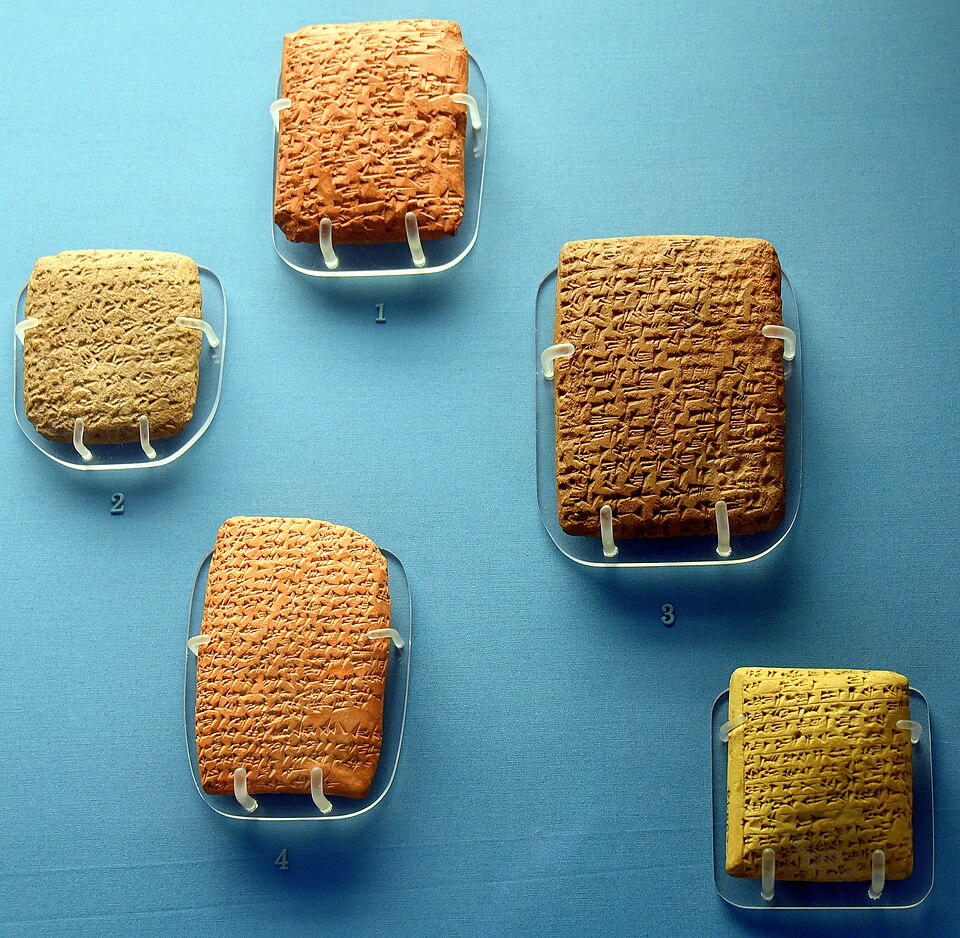
Diplomatic correspondence is visible at scale for the first time in the Amarna letters — roughly 380 cuneiform tablets excavated from Akhetaten, the short-lived capital of Pharaoh Akhenaten. Written mostly in Akkadian, the era's diplomatic lingua franca, they record Egyptian pharaohs exchanging gifts, marriage proposals and grievances with the rulers of Babylon, Assyria, Mitanni and the Hittites — addressing each other as royal "brothers" in a system built on reciprocal gift-giving rather than formal treaties.

Timeline

c. 1350 BCEThe Amarna letters

Roughly 380 cuneiform tablets found at Akhetaten record Egyptian pharaohs corresponding with the rulers of Babylon, Assyria, Mitanni and the Hittites as royal "brothers," using a shared diplomatic language, Akkadian, and a system of reciprocal gifts — the oldest large diplomatic archive to survive.

c. 450 BCEAthens formalizes the proxenos

Greek city-states appointed a prominent citizen of one city, a proxenos, to look after another city's interests without formal accreditation, while custom held that a herald's person was sacred and could not lawfully be harmed even by an enemy at war — an early substitute for both embassies and diplomatic immunity.

1455Milan pioneers the resident ambassador

Duke Francesco Sforza stationed a permanent envoy at the Florentine court rather than dispatching one-off missions, a practice Venice and the other Italian powers quickly copied. Historians generally credit this Italian rivalry, not any single treaty, with inventing the standing embassy as a fixture of statecraft.

1524Venice codifies the ambassador's report

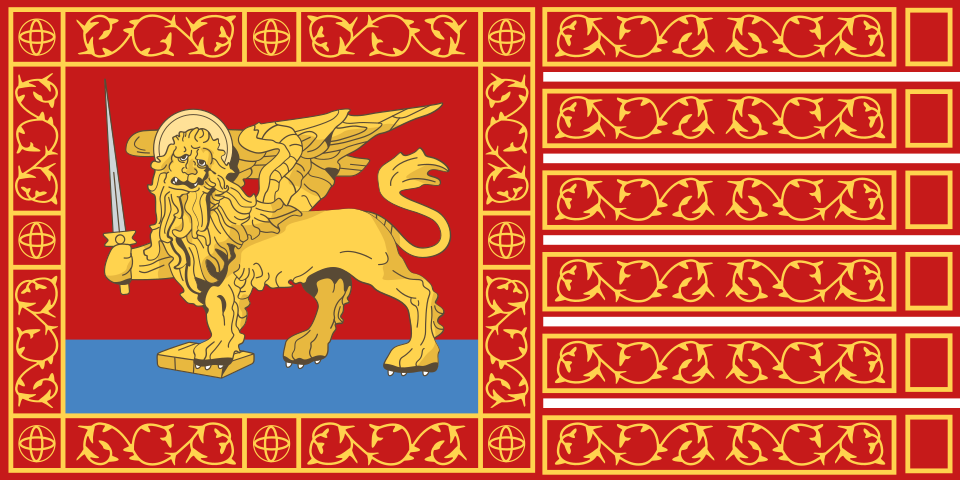
The Venetian Senate formalized a requirement that every returning ambassador deliver a detailed written relazione on the state, resources and character of the court he had served, building a systematic archive of political intelligence that historians still mine today for its unusual candor.

1626Richelieu creates the first foreign ministry

Cardinal Richelieu established a dedicated department of state for foreign affairs under Louis XIII, centralizing what had been scattered royal correspondence into a standing professional bureaucracy — the direct ancestor of the foreign ministries most governments still run today.

1648The Peace of Westphalia

The treaties ending the Thirty Years' War, negotiated at Münster and Osnabrück, established that sovereign states deal with each other as legal equals regardless of religion — the foundational assumption behind the state-to-state diplomatic system still in use.

1720–1721An Ottoman embassy studies Paris

Sultan Ahmed III sent Yirmisekiz Mehmed Çelebi to the court of Louis XV with instructions to study French institutions closely, not merely deliver greetings. His written report is widely credited with helping inspire the reform-minded Tulip Era and the empire's first printing press in 1727.

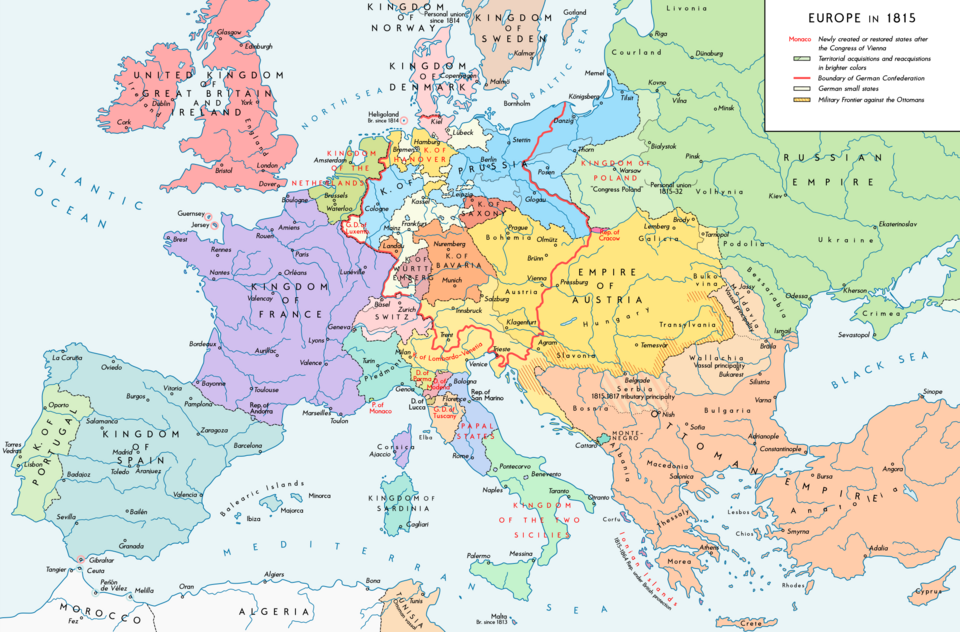
1814–1815The Congress of Vienna

Meeting after Napoleon's defeat to redraw Europe's borders, the Congress also settled a long-running dispute over diplomatic rank by adopting fixed rules of precedence among ambassadors. French foreign minister Talleyrand, representing the defeated power, split the victors' coalition over Poland and Saxony and secured France a seat among the great powers.

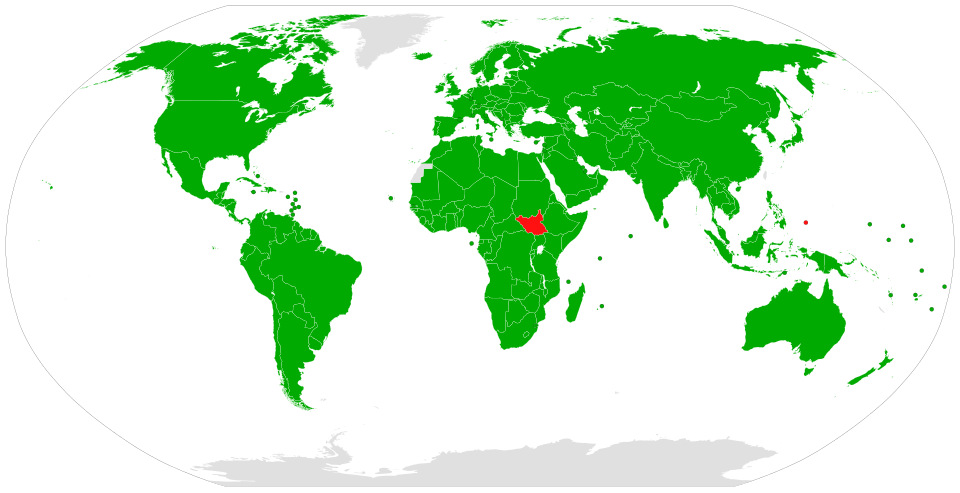
1961The Vienna Convention on Diplomatic Relations

Codifying centuries of customary practice into binding treaty law, the Convention fixed the rules nearly every state now follows: the inviolability of embassies and the diplomatic bag, and the personal immunity of accredited diplomats from arrest and prosecution in the country where they serve.

1978The Camp David Accords

US President Jimmy Carter secluded Egyptian President Anwar Sadat and Israeli Prime Minister Menachem Begin at the Camp David retreat for thirteen days of closed-door negotiation, producing the framework for the first peace treaty between Israel and an Arab state, signed the following year.
The eras

A cuneiform tablet from the Amarna letters, the oldest large surviving diplomatic archive.
Osama Shukir Muhammed Amin FRCP(Glasg) · CC BY-SA 4.0 · Wikimedia Commons
c. 1350 BCE – 450 BCE

Ancient envoys and sacred heralds

From the Amarna letters' royal "brothers" to the Greek proxenos and the sanctity of the herald, the earliest diplomacy ran on personal messengers, exchanged gifts and a widely observed, if unwritten, rule that harming an envoy was different from harming an ordinary enemy. There was no permanent embassy anywhere yet; every mission was a single, temporary journey.

A depiction of a Byzantine imperial court receiving foreign envoys with elaborate ceremony.
Unknown author · Public domain · Wikimedia Commons
450 BCE – 1450 CE

Rome, Byzantium and papal legates

Rome sent legates backed by the threat of its legions and developed an early law of nations, ius gentium, governing how states should treat each other. Byzantium turned diplomacy into theater, dazzling foreign envoys with elaborate court ceremony and mechanical marvels to project a power its shrinking empire no longer fully possessed, while the medieval papacy dispatched legates across Christendom carrying the pope's own authority.

A view of the Doge's Palace in Venice, seat of the Republic that pioneered systematic diplomatic reporting.
Samhanin · CC BY-SA 3.0 · Wikimedia Commons
1450 – 1648

The Italian invention of the resident embassy

Milan, Venice, Florence and their rivals began stationing permanent ambassadors at each other's courts rather than sending one-off missions, and Venice required every returning envoy to file a detailed relazione — turning diplomacy into continuous intelligence-gathering rather than occasional ceremony. The Ottoman Sublime Porte, meanwhile, hosted resident European embassies for over a century before sending its own permanent envoys to European capitals.

A painting depicting delegates at the Congress of Vienna, 1814–1815.
Alexander Altenhof · CC BY-SA 4.0 · Wikimedia Commons
1648 – 1945

Foreign ministries and the balance of power

Sovereign equality after Westphalia let states build permanent, professional foreign ministries on Richelieu's model, staffed increasingly by career officials rather than aristocratic favorites. The Congress of Vienna fixed formal diplomatic ranks in 1815, and secret alliance treaties became the era's dominant, and eventually catastrophic, negotiating tool — a system that collapsed so completely in 1914 that Woodrow Wilson later demanded "open covenants, openly arrived at."

The Vienna International Centre, home to United Nations offices where diplomatic treaties are negotiated.
User:Allstar86 , User:L.tak , User:Danlaycock , et. al. · CC BY-SA 3.0 · Wikimedia Commons
1945 – present

Multilateral diplomacy and codified law

The United Nations gave diplomacy a permanent multilateral forum, and the 1961 Vienna Convention codified diplomatic immunity into binding law nearly every state has ratified. Cold War summitry and Henry Kissinger's shuttle diplomacy in the 1970s showed how much a single negotiator's mobility could accomplish, and today's diplomats increasingly work public and digital channels — speaking to foreign publics directly — alongside the traditional government-to-government channel.

What this job replaced

Neighbouring trades that no longer exist — absorbed, automated or regulated away.

Herald

c. 3000 BCE – 500 CE

Protected by a near-universal ancient taboo against harming a messenger, heralds carried declarations of war, truce offers and formal challenges between rulers who might otherwise have killed any other stranger crossing into hostile territory. As permanent embassies, written treaties and professional diplomats took over the messenger's function, the herald survived mainly as a ceremonial court title rather than a working diplomatic role.

Dragoman

c. 1500–1900s

Interpreter-diplomats fluent in Ottoman Turkish, Arabic, Persian and European languages, dragomans were indispensable intermediaries for European embassies in Constantinople, often wielding real influence over negotiations their employers could not otherwise conduct. Rising European language training, consular reform and the Ottoman Empire's own dissolution after 1922 gradually eliminated the specialized, often hereditary dragoman families that had once controlled the role.

Cipher clerk

c. 1870s–1980s

Before computers, every classified telegram or cable had to be hand-encrypted and hand-decrypted using codebooks and cipher machines by dedicated clerks working around the clock in embassy communications rooms. Electronic encryption and, later, computerized cable systems automated the work almost completely by the 1980s, eliminating a role once considered one of an embassy's most sensitive postings.

Trades that vanished →

None of this history is finished. A job that already survived the collapse of the secret-alliance system in 1914 and reinvented itself around codified international law after 1945 is now absorbing social media, encrypted communications and AI-assisted drafting as just the latest tools in a very long line.

What has not changed since the Amarna letters is the basic shape of the job: someone has to represent one government's interests to another, honestly enough that both sides can trust the channel, and skillfully enough that a disagreement gets settled at the table instead of on a battlefield. Every era has renegotiated the tools; none has removed that person.

Keep exploring

More in Law & Public Service