🕊️The Greats

Diplomat · From ancient royal envoys and Venice's resident ambassadors to the Congress of Vienna and the UN, still negotiating peace one careful sentence at a time.

Choosing eight names from a role practiced in every organized society for millennia inevitably leaves out countless skilled negotiators whose work was never written down, or was written down in archives no later historian ever translated. The eight below are included because their specific, documented actions changed outcomes still visible today.

They span roughly twenty-four centuries and five continents, and reached the top through very different routes: an orator prosecuting his own delegation, a defeated power's foreign minister splitting his victors, a mediator shuttling between hotel suites because the two sides would not share a room. What they share is that the map, or the law, looks different because of what each one did.

The all-time podium

Zhou Enlai
Zhou Enlai
China
2
Charles-Maurice de Talleyrand-Périgord
France
1
Eleanor Roosevelt
Eleanor Roosevelt
United States
3

The eight who reached the top

1
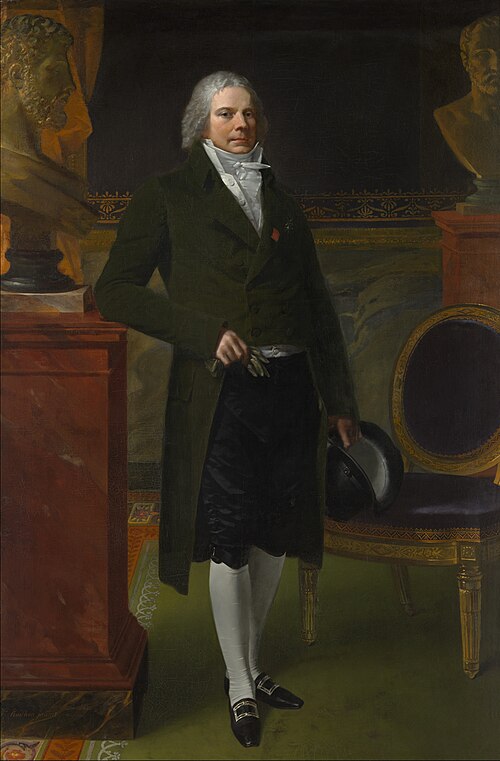
Portrait of French statesman and diplomat Talleyrand. Pierre-Paul Prud'hon · CC0

Charles-Maurice de Talleyrand-Périgord

France · 1754–1838

Talleyrand served the French monarchy, the Revolution, Napoleon's empire and the restored Bourbons in turn, outliving nearly every regime that trusted him. At the 1814–15 Congress of Vienna, representing a defeated France, he split the victorious powers over Poland and Saxony and secured his country a seat among the great powers again.

The story

Arriving at Vienna in September 1814 representing a France still occupied by Allied troops, Talleyrand exploited a bitter dispute between Russia and Prussia on one side and Austria and Britain on the other over who would control Saxony and Poland. By January 1815 he had secretly negotiated a defensive treaty with Austria and Britain against Russia and Prussia, transforming France from a defeated outsider into a decisive power broker within four months.

“A defeated power can still split its victors' coalition and buy itself a seat, if it finds the fault line fast.”
French regimes served
5 regimes
Years as foreign minister
~13 years total
Time to secure Austria-Britain pact
~4 months, Vienna
2
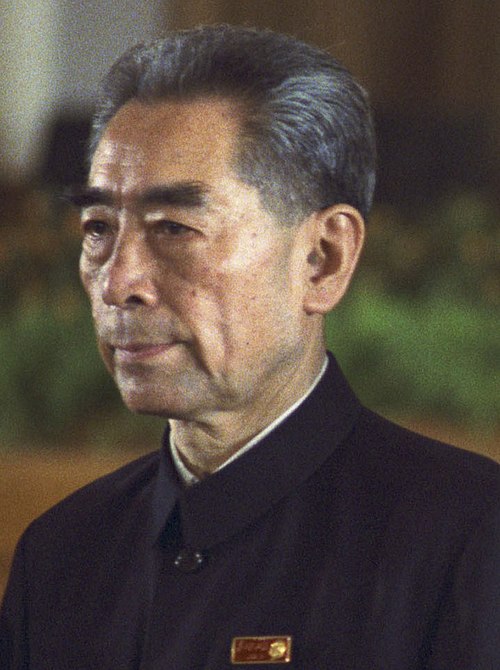
Photograph of Chinese premier and diplomat Zhou Enlai. President (1969-1974 : Nixon). White House Photo Office. 1969-1974; General Services Administration. National Archives and Records Service. Office of Presidential Libraries. Office of Presidential Papers. 1/20/1969-ca. 12/1974 · Public domain

Zhou Enlai

China · 1898–1976

As the People's Republic of China's first premier and foreign minister, Zhou built Chinese diplomacy almost from scratch after 1949, co-authoring the Five Principles of Peaceful Coexistence in 1954 and steering China's outreach to newly independent Asian and African nations at the 1955 Bandung Conference.

The story

Zhou had originally been booked on the Kashmir Princess, an Air India charter flight to the 1955 Bandung Conference, but changed his travel plans at the last minute. Taiwanese agents had planted a bomb aboard intending to kill him; it exploded mid-flight on 11 April 1955, killing 16 of the people aboard. Zhou arrived safely days later and delivered a deliberately moderate speech that reassured non-aligned delegates wary of communist China.

“Show up moderate and reassuring exactly when your rivals expect the extreme version of you to appear.”

Years as PRC premier
1949–1976, 27 yrs
Years as foreign minister
1949–1958, 9 yrs
Nations at Bandung Conference
29 nations, 1955
3
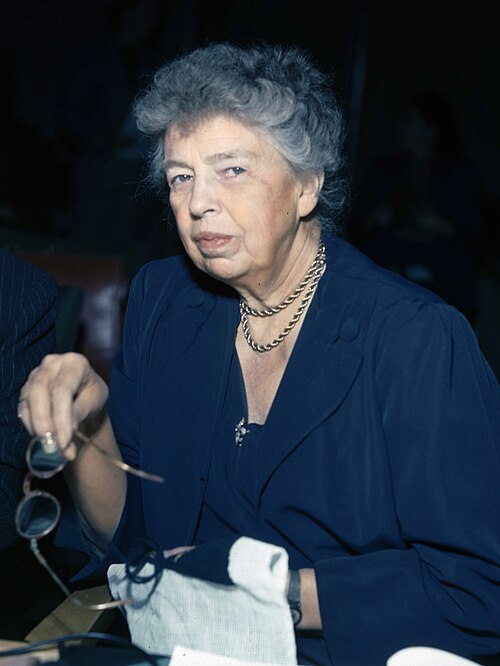
Photograph of Eleanor Roosevelt, US diplomat and human-rights advocate. FDR Presidential Library & Museum · CC BY 2.0

Eleanor Roosevelt

United States · 1884–1962

Appointed a US delegate to the United Nations in 1945, Roosevelt chaired the UN Commission on Human Rights and drove the drafting of the Universal Declaration of Human Rights, adopted by the General Assembly in December 1948 — one of the most consequential multilateral negotiations of the twentieth century.

The story

Chairing the drafting committee through roughly eighty sessions over nearly two years, Roosevelt worked to keep delegates from the Soviet bloc, Latin America, the Middle East and Asia at the table on language that had to satisfy sharply different legal and religious traditions at once. When the General Assembly voted on 10 December 1948, the Declaration passed 48 in favor, none against, with 8 abstentions.

“Draft language broad enough that opposed traditions can sign the same sentence for different reasons.”

Drafting committee sessions
~80, over 2 yrs
General Assembly vote
48–0–8, Dec 1948
Years as UN delegate
1945–1953
4
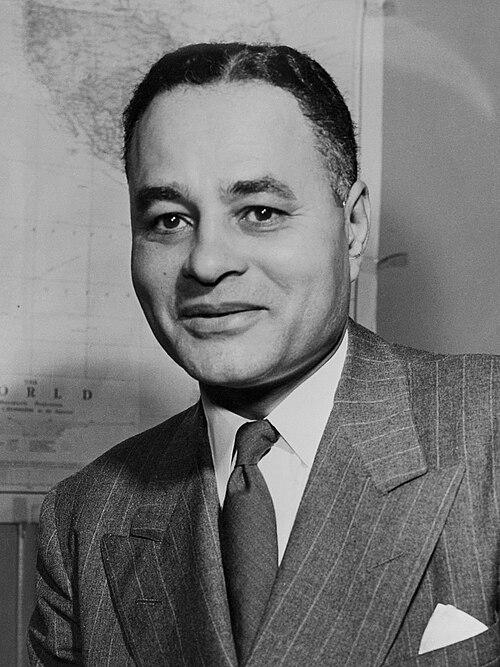
Photograph of diplomat and Nobel laureate Ralph Bunche. Bettmann Archive · Public domain

Ralph Bunche

United States · 1904–1971

A political scientist turned UN mediator, Bunche took over armistice negotiations between Israel and its Arab neighbors after chief mediator Folke Bernadotte was assassinated in 1948, and secured signed agreements with four Arab states by mid-1949 — becoming the first Black recipient of the Nobel Peace Prize in 1950.

The story

Negotiating the Israel-Egypt armistice on the island of Rhodes in early 1949, Bunche kept two delegations who refused to sit in the same room talking for roughly eleven weeks by shuttling between separate hotel suites, reportedly working past the point of exhaustion. He secured a signed agreement on 24 February 1949, the first of four armistice agreements he brokered with Arab states that year.

“When two parties will not share a room, the mediator can still be the only real channel between them.”

Armistice agreements brokered, 1949
4 Arab states
Weeks of Rhodes negotiations
~11 weeks
First Black Nobel Peace laureate
1950
5
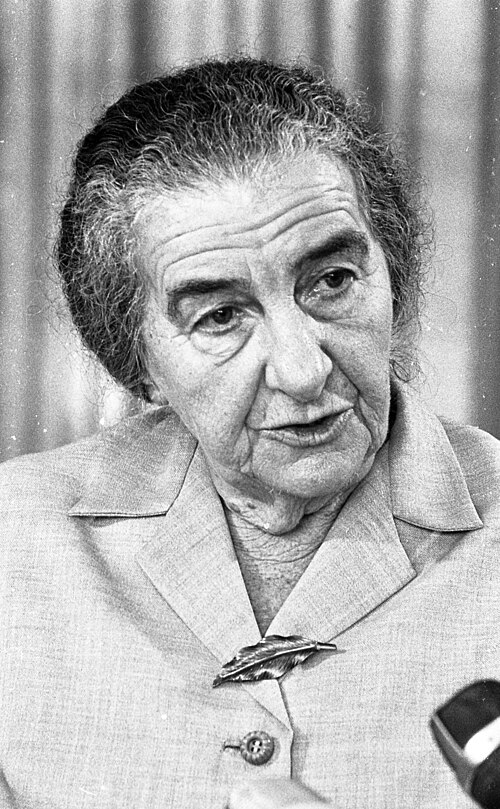
Photograph of Golda Meir, Israeli diplomat and prime minister. Israel Press and Photo Agency (I.P.P.A.) photographer · CC BY 4.0

Golda Meir

Israel (born Kyiv, Russian Empire) · 1898–1978

Born in Kyiv and raised in Milwaukee, Meir signed Israel's 1948 declaration of independence, served as its first envoy to the Soviet Union, then spent eight years as foreign minister before becoming Israel's fourth prime minister in 1969, the world's third elected female head of government.

The story

As Israel's newly arrived envoy to Moscow, Meir attended Rosh Hashanah services at the Moscow Choral Synagogue in September 1948, where tens of thousands of Soviet Jews — living under a state that actively suppressed Jewish identity — spontaneously filled the streets outside to see her. Meir later said the outpouring moved her to tears and convinced her Soviet Jewry's ties to Israel could never be fully severed.

“Sometimes a diplomat's most consequential act is simply being visibly present in the right place.”

Years as foreign minister
1956–1966, 8 yrs
Months as envoy to USSR
~7 months, 1948–49
Crowd at Moscow synagogue
Est. tens of thousands
6

Sir Thomas Roe

England · 1581–1644

Sent by King James I to the Mughal court of Emperor Jahangir in 1615, Roe spent four years securing the trading concessions that gave the English East India Company its first legal foothold in India, and left one of the most detailed European accounts of Mughal court life.

The story

To be treated as a king's ambassador rather than dismissed as a mere merchant's agent, Roe refused the full prostration other visitors performed before Jahangir and instead cultivated the emperor's curiosity with English paintings and a coach. The relationship he built helped win a 1618 farman permitting the East India Company to trade and build a factory at Surat, the concession Roe had been sent to secure.

“Insisting on the protocol your rank is due can be worth more than the gifts you brought.”

Years at the Mughal court
1615–1619, 4 yrs
Trading concession secured
Surat factory, 1618
Years his account stayed a key source
200+ years
7

Yirmisekiz Mehmed Çelebi

Ottoman Empire · d. 1732

Sent by Sultan Ahmed III to the court of Louis XV in 1720–21, Çelebi was instructed to study French institutions in detail rather than simply deliver formal greetings, and his written embassy report helped trigger the Ottoman Empire's reform-minded Tulip Era.

The story

Touring Paris, Versailles and French factories, hospitals and the Royal Observatory for nearly a year, Çelebi compiled his observations into a detailed sefâretname (embassy report) describing French printing, opera and technology. The report reached the Ottoman court and is widely credited with helping inspire the empire's own first official printing press, established by İbrahim Müteferrika in 1727, six years after Çelebi's return.

“An ambassador's most lasting achievement can be the written report he brings home, not the reception abroad.”

Months touring France
~11 months, 1720–21
Years until Ottoman printing press
6 yrs (1727)
Report's lasting influence
Key Tulip Era text
8

Demosthenes

Greece (Athens) · 384–322 BCE

Athens' leading orator, Demosthenes served on the city's embassies to Philip II of Macedon in the 340s BCE, first backing a negotiated peace and then becoming its loudest critic once he judged Philip's expansion had made further negotiation dangerous.

The story

As one of ten Athenian envoys who negotiated the Peace of Philocrates with Philip II in 346 BCE, Demosthenes grew convinced Philip was deliberately stalling the embassy to buy time for a military campaign. On returning to Athens he delivered "On the False Embassy," formally prosecuting fellow ambassador Aeschines for allegedly misleading the assembly about Philip's intentions — a diplomat publicly indicting his own delegation.

“A diplomat's duty to report honestly can outweigh loyalty to the colleagues who traveled with him.”

Years opposing Philip II
~20 yrs, 357–336 BCE
Surviving orations on the embassy
2 major speeches
Athenian embassies to Macedon
2 documented missions

Bars are scaled to the leader in this list.

Comparison Lab

Toggle names on and off — every bar rescales to the leader of your selection.

5 / 8

The argument

Talleyrand's reputation stays deeply contested: admired by some historians as the pragmatist who spared France harsher post-Napoleonic terms, condemned by others as a serial turncoat who personally profited, often through bribes, from nearly every regime he served.

Historians still argue over how much credit belongs to Folke Bernadotte's original mediation groundwork versus Bunche's own execution once he inherited the file after Bernadotte's assassination — a common dispute whenever a successor completes work a predecessor began.

A widely repeated story claims US Secretary of State John Foster Dulles refused to shake Zhou Enlai's hand at the 1954 Geneva Conference; historians still dispute whether the incident happened as commonly told, a reminder that a diplomatic legend can outrun the documentary record it claims to describe.

Keep exploring

More in Law & Public Service