🏅The Greats

Athlete · The body as a career: from Olympia's crowned victors to today's global stars, a short, brutal, winner-take-most profession watched by billions.

Choosing eight athletes from every sport, every era and every continent is an impossible brief, and any such list quietly favors sports that kept records, courted cameras and admitted women late or not at all. The eight below were chosen because each one moved the ceiling of the whole profession — not just their own sport — in a way that is documented and checkable.

They span roughly 2,500 years and six countries. Between them they include a wrestler known mostly through ancient sources, two athletes who dismantled propaganda simply by winning, a mother of two written off as too old, and a marathoner who treats discipline as philosophy. What they share is that the profession's sense of what is possible changed because of them.

The all-time podium

Babe Didrikson Zaharias
United States
2
Milo of Croton
Milo of Croton
Greece (Magna Graecia)
1
Jesse Owens
Jesse Owens
United States
3

The eight who reached the top

1
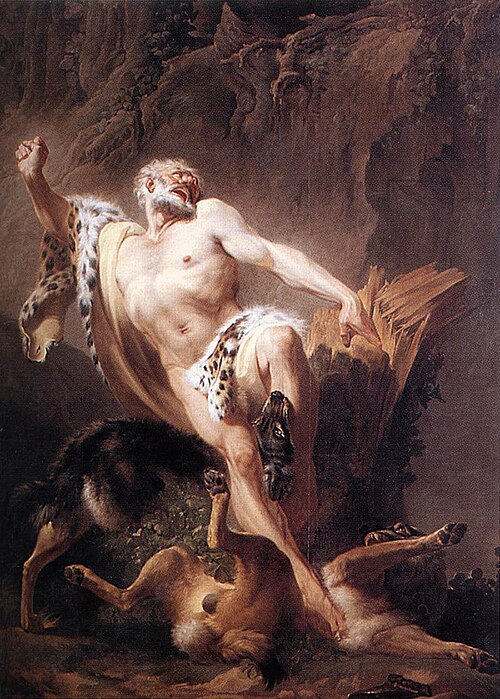
Classical sculpture depicting the ancient Greek wrestler Milo of Croton. Joseph-Benoît Suvée · Public domain

Milo of Croton

Greece (Magna Graecia) · fl. 540–516 BCE

Milo of Croton dominated ancient wrestling as no athlete has dominated any sport since: six Olympic titles across roughly a quarter century, plus a stack of Pythian, Isthmian and Nemean crowns. Prize money, civic honors and standing armies of anecdotes made him antiquity's first great sporting celebrity.

The story

Ancient writers preserved his training method: Milo was said to have lifted a newborn calf daily as it grew, until he could carry a four-year-old bull on his shoulders around the stadium — the earliest description of progressive overload, the principle beneath all modern strength training. The stories are part legend, but Pausanias records the verifiable core: six Olympic wrestling victories, and a statue of himself at Olympia that Milo, characteristically, was said to have carried into place.

“Progressive, patient overload — the calf that becomes a bull — is still the foundation of every strength program on earth.”
Olympic wrestling titles
6 (540–516 BCE)
Major crowns, ancient sources
30+ across four games
Years at the top
~25 years
2
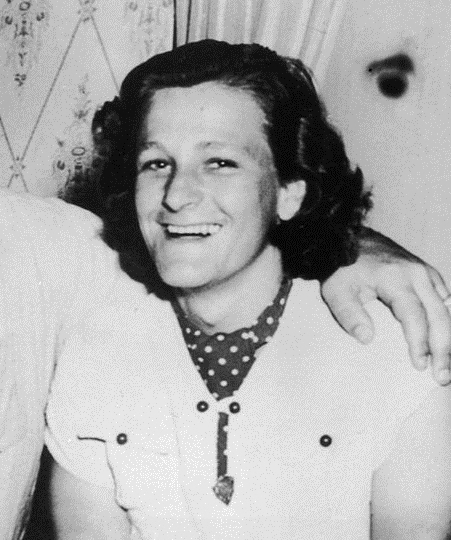
Babe Didrikson Zaharias in athletic dress, mid-1930s. ACME · Public domain

Babe Didrikson Zaharias

United States · 1911–1956

Didrikson won Olympic gold in the javelin and 80-meter hurdles at Los Angeles 1932, then reinvented herself as the best woman golfer of her era, winning ten major championships and co-founding the LPGA in 1950 — the widest range any modern athlete has mastered at world level.

The story

At the 1932 US women's track championships in Evanston, Illinois — doubling as Olympic trials — Didrikson entered as a one-woman team for her Dallas employer's club. In a single afternoon she competed in eight events, won five outright, tied for first in a sixth and set world records along the way, scoring 30 points. The runner-up club, the Illinois Women's Athletic Club, fielded 22 athletes and scored 22.

“Athletic ability transfers. The champion's deepest skill is knowing how to win, and it can be aimed at a new game.”

Events won at 1932 trials
5 of 8, alone
Golf majors after switching
10 (LPGA era)
Sports played at elite level
Track, golf, basketball
3
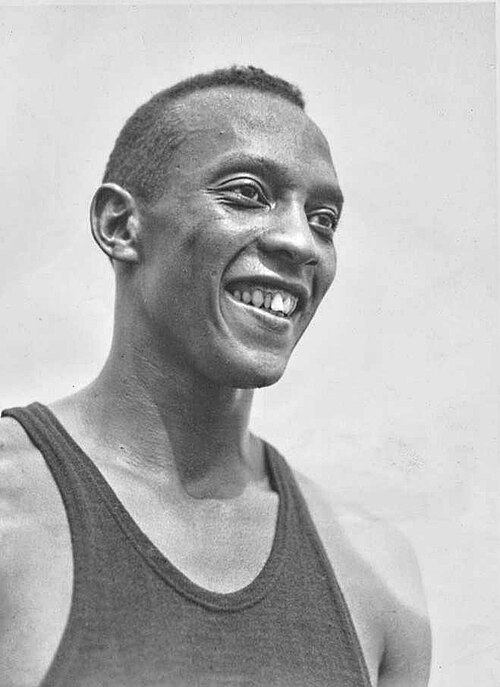
Jesse Owens at the start of a sprint at the 1936 Berlin Olympics. Acme News Photos · Public domain

Jesse Owens

United States · 1913–1980

The son of an Alabama sharecropper, Owens won four golds — 100m, 200m, long jump and 4×100m relay — at the 1936 Berlin Olympics that Hitler's regime had staged as racial propaganda. His 1935 long jump world record stood for a quarter of a century.

The story

On 25 May 1935, at the Big Ten championships in Ann Arbor, Michigan, Owens — nursing a back injury from a fall down stairs days earlier — set three world records and equalled a fourth in about 45 minutes: the 100-yard dash, the long jump (8.13 meters, unbeaten for 25 years), the 220-yard sprint and the 220-yard low hurdles. Sports historians still call it the greatest single afternoon in the history of athletics.

“Peak form is rare and perishable. When it arrives, spend all of it.”

World records in 45 minutes
3 set, 1 tied (1935)
Berlin 1936 gold medals
4
Long jump record lifespan
25 years
4
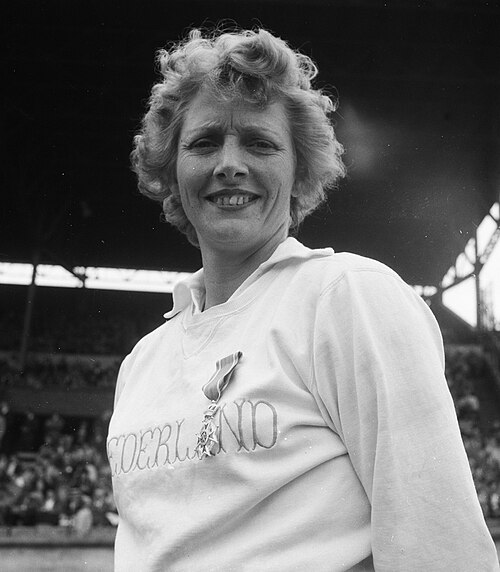
Fanny Blankers-Koen sprinting at the 1948 London Olympics. Daan Noske / Anefo · CC0

Fanny Blankers-Koen

Netherlands · 1918–2004

A 30-year-old mother of two, Blankers-Koen won four golds — 100m, 200m, 80m hurdles and 4×100m relay — at the London 1948 Olympics, still the most by a woman in athletics at a single Games. In 1999 the IAAF named her Female Athlete of the Century.

The story

Before London 1948, a British team official dismissed Blankers-Koen as too old to make the grade, and Dutch commentators told her to stay home with her children. She held world records in the high jump and long jump but was barred by the rules from entering more than three individual events — so she skipped both jumps, entered the sprints and hurdles, and won every event she started. Amsterdam's welcome-home gift was a bicycle, so she would not have to run so much.

“Other people's schedule for your decline is an opinion. Answer it with entries, not arguments.”

London 1948 golds
4 of 4 entered
Age, with two children
30 (1948)
IAAF honor
Athlete of the Century
5
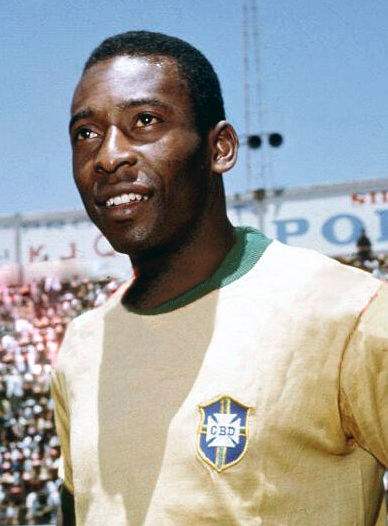
Pelé in Brazil's yellow shirt controlling a football. Unknown author Unknown author · Public domain

Pelé

Brazil · 1940–2022

Pelé won three World Cups — 1958, 1962 and 1970 — still the only player to do so, scoring in finals twelve years apart and turning Brazil's number 10 shirt into a global symbol. Guinness credits him with 1,279 career goals, a figure that includes friendlies and is still argued over.

The story

In the 1958 World Cup final in Stockholm, the 17-year-old Pelé — whom Brazil's team psychologist had assessed as too immature to select, advice coach Vicente Feola overrode — scored one of the tournament's most replayed goals: a chest control, a lob over defender Bengt Gustavsson's head, and a volley past the goalkeeper. He scored twice in the 5–2 win, the Swedish crowd applauded a goal against their own team, and at the final whistle Pelé fainted and had to be revived by teammates.

“Big stages do not require experience of big stages — only the skill and nerve already trained.”

World Cups won
3 (1958, 1962, 1970)
Career goals (Guinness)
1,279 incl. friendlies
Age at first World Cup win
17 years
6
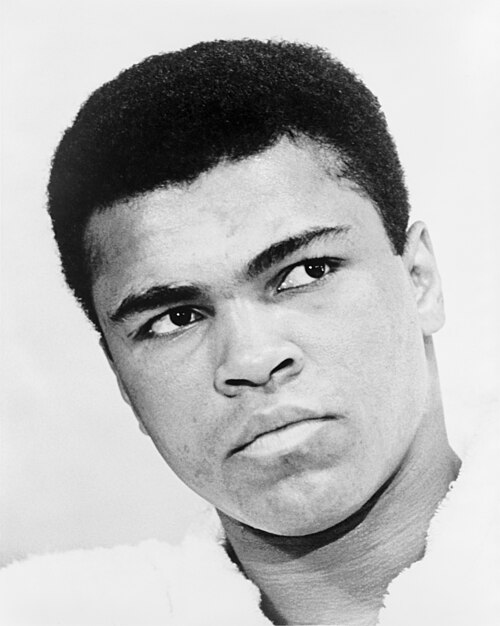
Muhammad Ali in boxing stance during his championship years. Ira Rosenberg · Public domain

Muhammad Ali

United States · 1942–2016

Ali won the world heavyweight title in three separate reigns across fifteen years, fought with a style that broke every textbook, and made the athlete a global political figure — sacrificing his title, his license and three and a half peak years rather than be drafted for Vietnam.

The story

In Kinshasa on 30 October 1974, the 32-year-old Ali met George Foreman, the undefeated champion seven years younger who had flattened Joe Frazier in two rounds. Instead of dancing, Ali lay back on the ropes round after round, absorbing Foreman's heaviest punches and taunting him to throw more — the tactic later named the rope-a-dope. Foreman punched himself into exhaustion; Ali knocked him out in the eighth as sixty thousand chanted "Ali, boma ye."

“When you cannot win the expected fight, change what kind of fight it is.”

Heavyweight title reigns
3 (1964–79)
Professional record
56–5, 37 KOs
Peak years lost to the ban
3.5 (1967–70)
7

Nadia Comăneci

Romania · b. 1961

At 14, Comăneci scored the first perfect 10 in Olympic gymnastics history on the uneven bars at Montreal 1976, added six more that week, and won three golds. Trained from age six in Onești, Romania, she redefined what judges — and machines — thought the sport's ceiling was.

The story

On 18 July 1976, the Montreal Forum's scoreboards could not display her score: before the Games, organizers had asked the manufacturer whether four digits were needed and were told a perfect 10 was impossible. When Comăneci's uneven bars routine received the first 10.00 in Olympic history, the board showed 1.00, and the crowd sat baffled until the announcement explained it. She scored seven perfect 10s at those Games.

“Systems are built around what is considered possible. A performance can outrun the scoreboard.”

First Olympic perfect 10
18 July 1976
Perfect 10s in Montreal
7
Age at the time
14 years
8

Eliud Kipchoge

Kenya · b. 1984

Kipchoge won Olympic marathon gold in 2016 and 2021, set world records in Berlin in 2018 (2:01:39) and 2022 (2:01:09), and lives spartan-simple at a training camp in Kaptagat, Kenya, sharing the chores — the defining marathoner of his era and the sport's resident philosopher.

The story

In Vienna's Prater park on 12 October 2019, Kipchoge covered the marathon distance in 1:59:40 — the first human under two hours. The INEOS 1:59 Challenge used 41 rotating pacemakers in a laser-guided formation and a pace car, so the time stands outside the record books, which bothered him not at all: "No human is limited," he said at the line. Back at camp, he still cleans the toilets when the weekly rota says it is his turn.

“Discipline in small shared chores builds the mind that can hold two-hour pace.”

Marathon barrier broken
1:59:40 (2019)
Olympic marathon titles
2 (2016, 2021)
Official world record
2:01:09 (Berlin 2022)

Bars are scaled to the leader in this list.

Comparison Lab

Toggle names on and off — every bar rescales to the leader of your selection.

5 / 8

The argument

Cross-sport greatness is close to incommensurable, which keeps every such list contested: Don Bradman's 99.94 batting average is statistically the most dominant career in any major sport, Wayne Gretzky holds more points than anyone else has games, and Usain Bolt's 9.58 may outlive everyone here — none of them fit in eight slots.

Even individual entries carry live disputes. Pelé's 1,279 goals include hundreds in friendlies and tour matches, and official-match counts are far lower; Milo's feats reach us through sources written centuries later; Comăneci's achievement is now discussed alongside hard questions about how child gymnasts of her era were trained.

The deepest bias is structural: this list can only draw on sports that kept records and admitted the whole of humanity. Women were barred from Olympic distance running until 1984, and most of history's athletic talent was born in places and centuries where no circuit, league or archive existed to notice it.

Keep exploring

More in Media & Performance