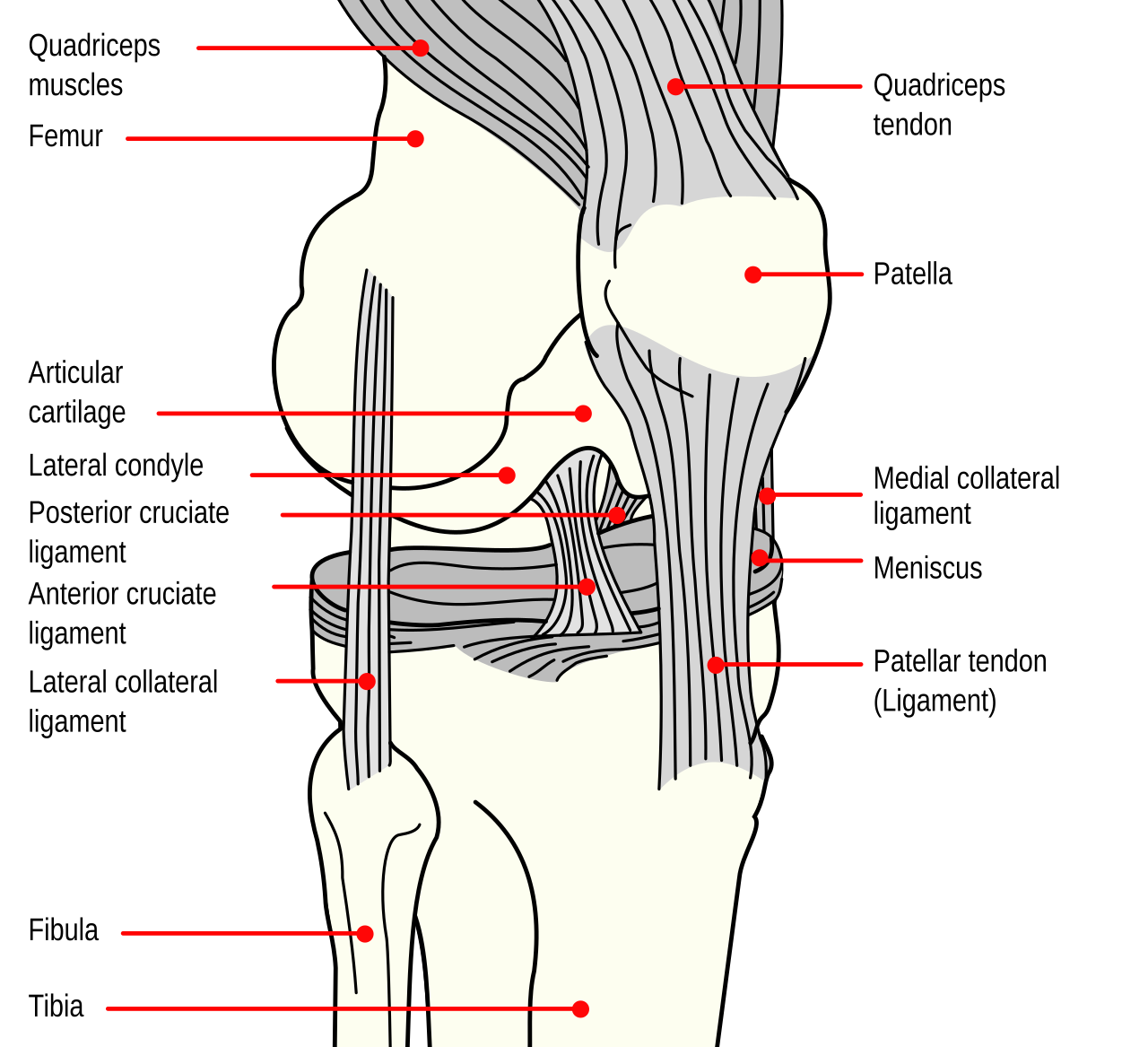
The anterior cruciate ligament stabilizes the knee against pivoting and forward-sliding forces, and its rupture is one of the most studied and rehabilitation-intensive sports injuries.
Also called: Anterior Cruciate Ligament · ACL Injury
Non-contact pivoting injuries in sportCommon cause
9–12 months after reconstructionTypical recovery
Reconstruction or structured conservative rehabManagement options
Locked knee or signs of associated fractureRed-flag signs
The anterior cruciate ligament (ACL) is one of four major ligaments stabilizing the knee, running diagonally through the center of the joint to resist forward sliding of the shin bone and excessive rotation. It is put under particularly high strain during rapid deceleration, pivoting, and landing from a jump.
ACL injuries are among the most extensively studied injuries in sports medicine, most often occurring during non-contact movements such as cutting or landing rather than direct collision. They are especially common in sports involving frequent pivoting, such as soccer, basketball, and skiing, and disproportionately affect younger athletes.
Management of an ACL tear can involve surgical reconstruction or, in some cases, a structured non-surgical rehabilitation approach, with the choice depending on factors such as activity goals, associated injuries, and knee stability. This page covers the ligament's anatomy and role, related conditions, assessment, and the extensive exercise progression typically involved in ACL rehabilitation.
The profile
Pain frequency50
Recovery length90
Exercise load85
Clinician need90
Self-care fit25
Recurrence risk40
Clinician need
The anterior cruciate ligament stabilizes the knee against pivoting and forward-sliding forces, and its rupture is one of the most studied and rehabilitation-intensive sports injuries.
The anterior cruciate ligament (ACL) is one of four major ligaments stabilizing the knee, running diagonally through the center of the joint to resist forward sliding of the shin bone and excessive rotation. It is put under particularly high strain during rapid deceleration, pivoting, and landing from a jump.
When should I stop and seek care for ACL?
Locked knee or inability to fully extend — A knee that cannot be fully straightened after injury may indicate a displaced meniscus fragment and should be evaluated promptly.
What is a starter exercise for ACL?
Quad set — 3 × 10, held 5s — Sitting with the leg straight, gently tighten the thigh muscle to press the back of the knee down, without moving the leg.
How does ACL load progression usually start?
Early recovery and motion restoration — 0–6 weeks — Reducing swelling, restoring full knee extension, and reactivating the quadriceps are the primary early goals following injury or surgery.
What should I avoid with ACL?
Returning to pivoting sport before criteria are met — Resuming cutting, pivoting, or jumping sports based on time elapsed alone, without meeting strength and performance benchmarks, is generally discouraged given the elevated re-injury risk in under-prepared knees.
Does every ACL tear require surgery?
Not necessarily — some individuals, particularly those with lower activity demands or good dynamic knee stability, can do well with structured non-surgical rehabilitation, while others, especially those returning to pivoting sports, are more often advised toward reconstruction.
How long does ACL reconstruction recovery typically take?
Most rehabilitation protocols and return-to-sport guidelines describe a recovery period of roughly nine to twelve months before a full return to pivoting sport, reflecting the time needed for graft maturation and functional readiness.
What graft options are used for ACL reconstruction?
Common graft choices include the patient's own patellar tendon, hamstring tendon, or quadriceps tendon, or occasionally donor tissue, each with different considerations regarding strength, donor-site symptoms, and recovery.