🧩Origins & Evolution

Psychologist · The scientist of mind and behavior, from Wundt's 1879 Leipzig laboratory to the therapy room — trained to hear what a person cannot yet say themselves.

Psychology's history is unusual: the questions are among humanity's oldest — what is thinking, why do we suffer — but the profession answering them for a living is barely 150 years old. For millennia the mind belonged to philosophers, priests and physicians. The idea that it could be studied by experiment, and that studying it could be a paid occupation, dates to a single Leipzig laboratory opened in 1879.

What built the modern profession was less any single theory than a series of practical demands: schools needed children assessed, armies needed recruits sorted, and above all two world wars sent home millions of psychologically wounded soldiers whom psychiatry alone could not treat. Each demand pulled psychology further out of the laboratory and into clinics, courts, schools and workplaces.

Where it began

1879Leipzig, Germany

Wilhelm Wundt, a physiologist holding a philosophy chair, opened the first laboratory dedicated to experimental psychology at the University of Leipzig in 1879 — a modest room in the Konvikt building where sensations and reaction times were clocked with brass instruments. Students came from across Europe, America and Japan, and went home to found the discipline's first departments. The prehistory is far older — Aristotle's treatise on the soul, Avicenna's clinical accounts of melancholia around 1025 — but the paid, credentialed profession starts in that room.

Timeline

1879Wundt opens the Leipzig laboratory

Wilhelm Wundt founds the first laboratory dedicated to experimental psychology at the University of Leipzig, measuring reaction times and sensory judgments with brass instruments. Over his career he supervises more than 180 doctorates, and his students — G. Stanley Hall, James McKeen Cattell, Edward Titchener among them — seed psychology departments across three continents.

1890James publishes The Principles of Psychology

William James delivers his two-volume, nearly 1,400-page textbook to publisher Henry Holt twelve years after promising it in two, calling it proof that psychology was not yet a science. The book — on habit, attention, emotion and the "stream of consciousness" — becomes the founding text of American psychology and is still quoted today.

1896Witmer opens the first psychological clinic

At the University of Pennsylvania, Lightner Witmer — a Wundt-trained experimentalist — begins seeing schoolchildren with learning difficulties, starting with a 14-year-old referred as a "chronic bad speller." He later coins the term "clinical psychology" and founds the first journal devoted to it, turning laboratory psychology toward helping individual people.

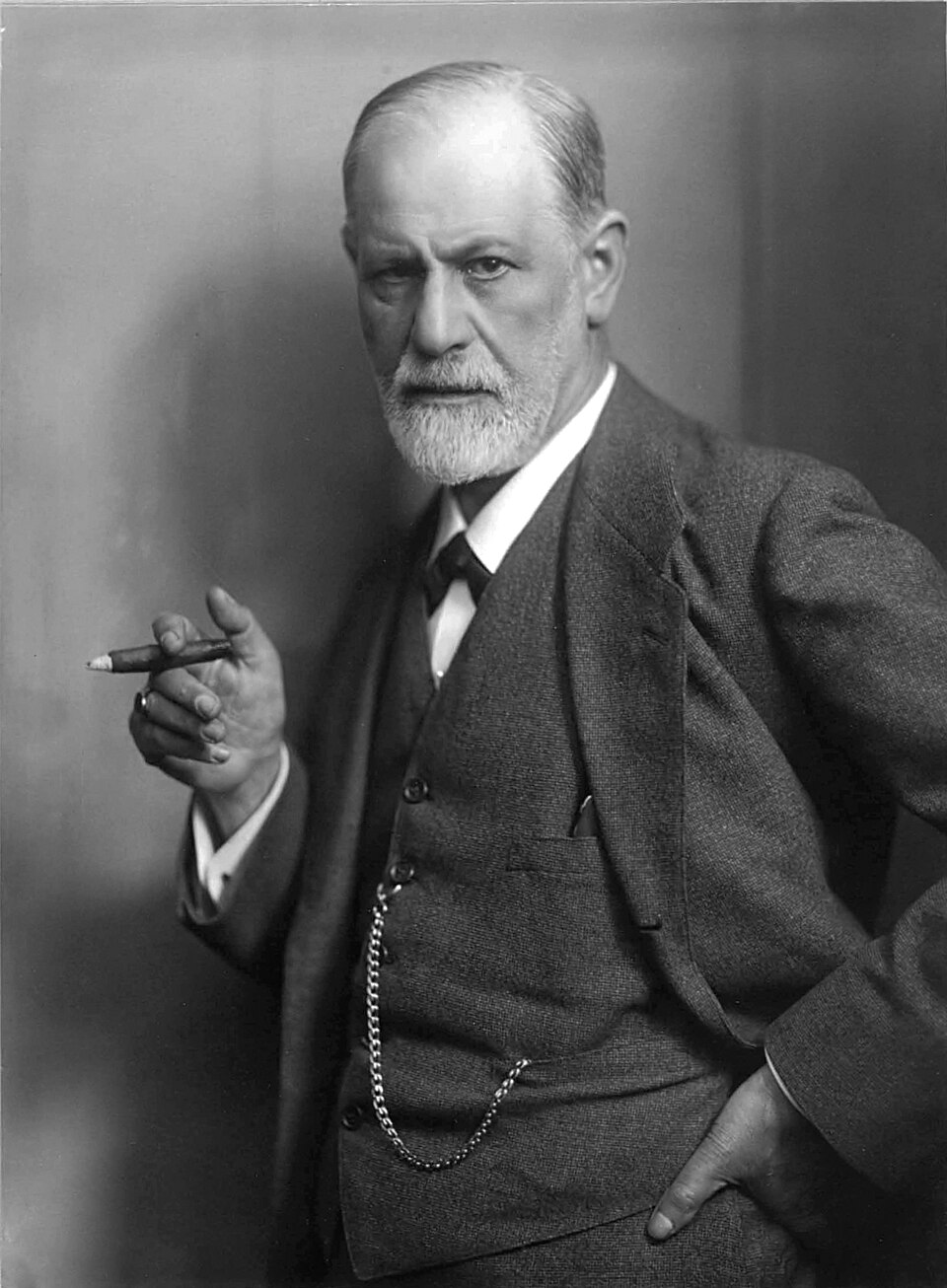
1900Freud's The Interpretation of Dreams

Sigmund Freud publishes Die Traumdeutung in Vienna, arguing that dreams are meaningful and that much of mental life is unconscious. The first print run of 600 copies takes eight years to sell out, but the book launches psychoanalysis — the first systematic talking therapy — and a vocabulary the wider culture never gave back.

1905Binet builds the first practical intelligence test

Commissioned by France's education ministry to identify schoolchildren needing extra help, Alfred Binet and Théodore Simon publish the first practical intelligence scale in Paris. Binet warns that the score is not a fixed measure of worth — a caution widely ignored as translated versions fuel a global testing industry within a decade.

1913Watson's behaviorist manifesto

John B. Watson's lecture-turned-paper "Psychology as the Behaviorist Views It" declares that psychology should abandon introspection and study only observable behavior. Behaviorism — extended by Pavlov's conditioning work in Russia and later B. F. Skinner's operant chambers — dominates academic psychology in the English-speaking world for half a century.

1949The Boulder model creates the clinical profession

With the US Veterans Administration overwhelmed by psychologically wounded veterans of the Second World War, 73 delegates meet for two weeks in Boulder, Colorado and define the scientist-practitioner model: clinical psychologists would be trained as researchers and therapists at once. Government funding then expands doctoral programs, and licensure spreads state by state after Connecticut's first law in 1945.

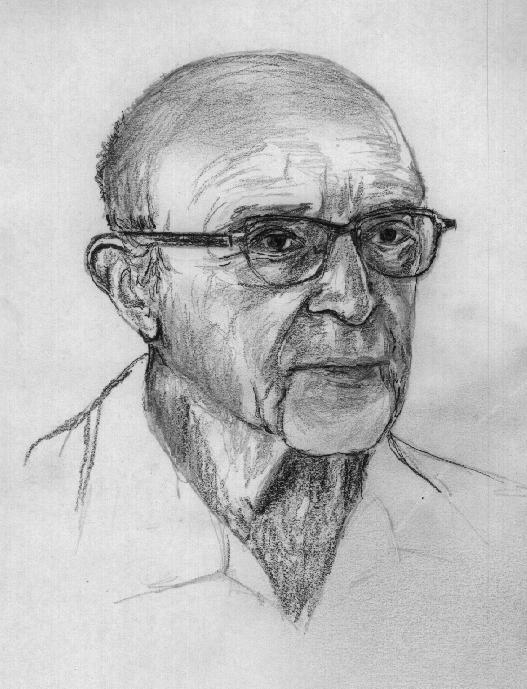
1951Rogers publishes Client-Centered Therapy

Carl Rogers, who had scandalized colleagues by making verbatim recordings and transcripts of real therapy sessions, publishes Client-Centered Therapy, arguing that empathy, genuineness and unconditional positive regard — not the therapist's interpretations — drive change. His stance reshapes counseling worldwide and makes therapy itself a researchable process.

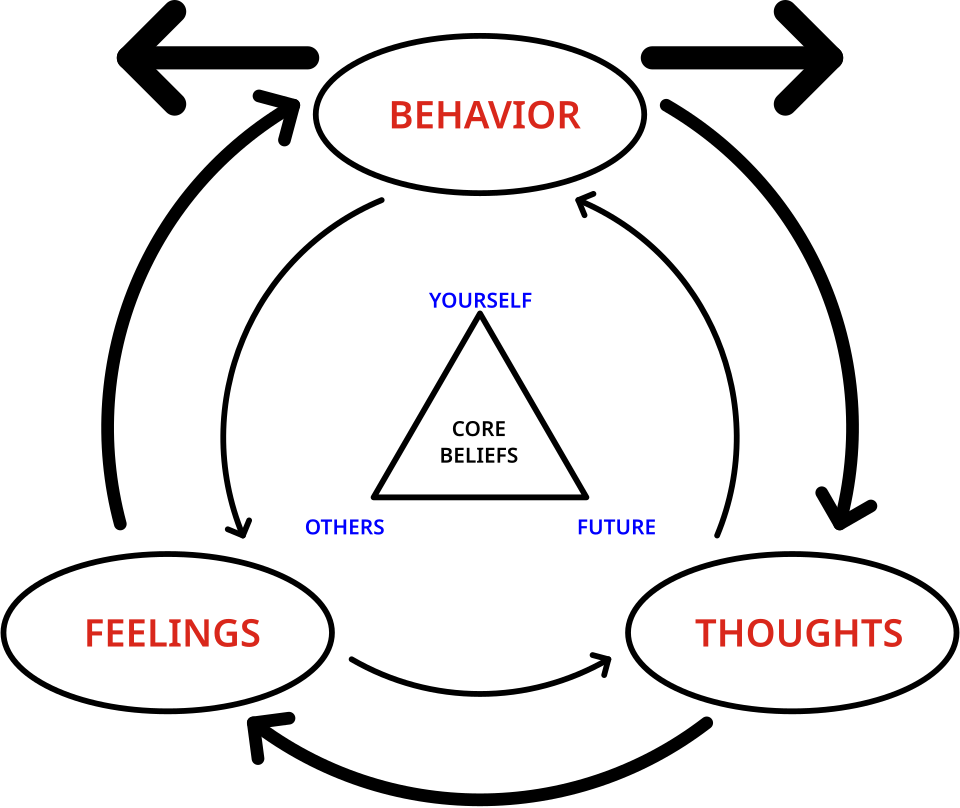
1960s–70sBeck's cognitive revolution in therapy

At the University of Pennsylvania, psychoanalyst Aaron Beck finds his dream-study data contradicts Freud's theory of depression, begins collecting patients' unspoken "automatic thoughts," and builds cognitive therapy: brief, testable, focused on evidence rather than childhood excavation. Merged with behavior therapy, CBT becomes the most researched psychotherapy in the world.

2020The pandemic moves therapy online

COVID-19 lockdowns force psychology's fastest transformation on record: surveys of US psychologists found telepsychology jumped from a small fraction of clinical work before the pandemic to the overwhelming majority within months. Video therapy, having proven workable at scale, remains a permanent, regulated part of practice in most countries.
The eras

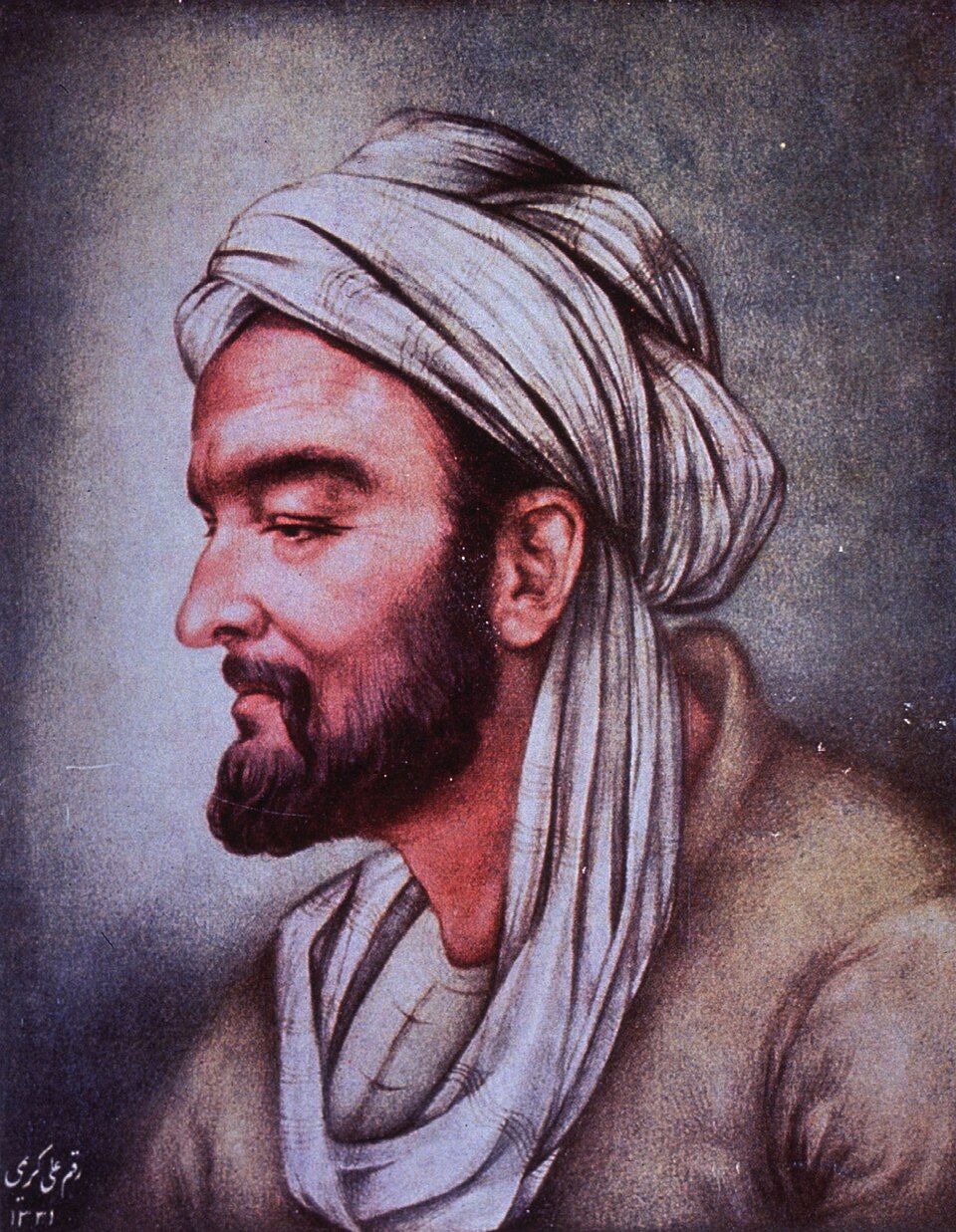
Portrait of the Persian physician and philosopher Avicenna, an early clinical observer of the mind.
National Library of Medicine · No restrictions · Wikimedia Commons
Antiquity – 1878

The philosopher's psyche

For over two millennia the mind was studied without laboratories. Aristotle's De Anima catalogued perception, memory and desire around 350 BCE; the Persian physician Avicenna described melancholia and famously diagnosed a case of lovesickness from a racing pulse around 1025; Descartes split mind from body in 1641 and left psychology arguing about the split ever since. "Psychologia" appears as a Latin book title in the 16th century, but the word named a branch of philosophy, not a job.

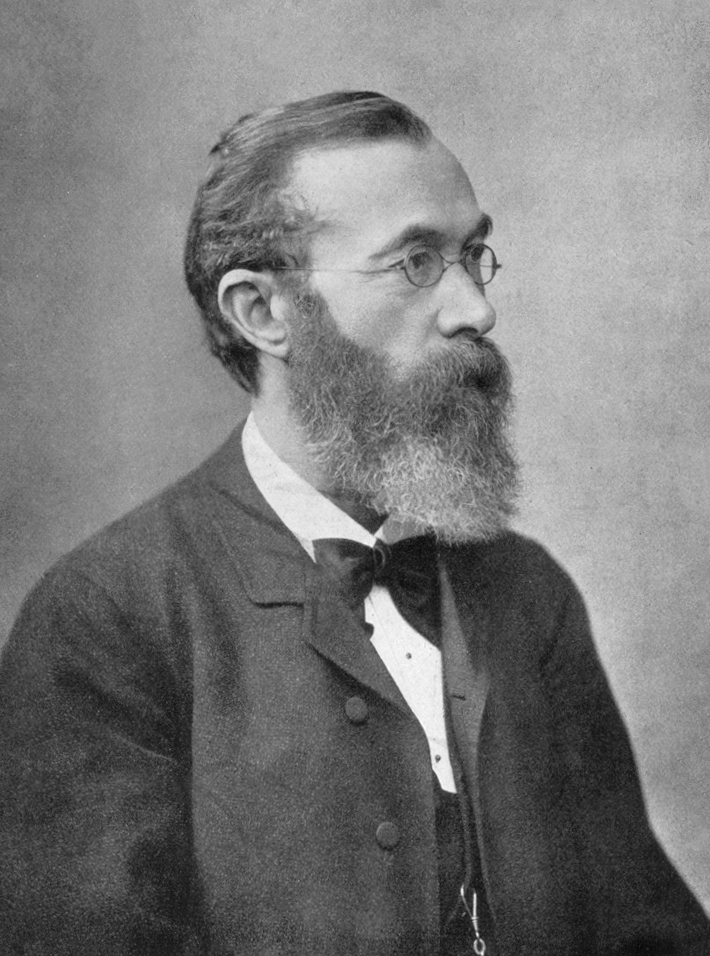
Wilhelm Wundt, founder of the first experimental psychology laboratory, seated with colleagues.
Unknown author Unknown author · Public domain · Wikimedia Commons
1879 – 1913

The laboratory era

Wundt's Leipzig laboratory made the mind an experimental subject: reaction times, attention spans, memory curves. Hermann Ebbinghaus memorized thousands of nonsense syllables to plot the first forgetting curve in 1885; William James wrote the new science's defining textbook in 1890; Lightner Witmer opened the first psychological clinic in 1896. By 1900 the laboratories had spread from Germany to the United States, Britain, Japan and Russia — a science, though not yet a helping profession.

Sigmund Freud, founder of psychoanalysis, whose consulting room defined the early talking cure.
Max Halberstadt · Public domain · Wikimedia Commons
1900 – 1945

Psychoanalysis, behaviorism and the testing boom

Three forces pulled the young field apart. Freud's psychoanalysis gave it a therapy and a cultural mythology; Watson, Pavlov and later Skinner's behaviorism gave academic departments a hard-nosed program that banished the inner life entirely; and mental testing gave psychologists their first mass employment — France's Binet scale became America's Stanford–Binet in 1916, and the US Army tested some 1.7 million recruits with the Alpha and Beta exams during the First World War.

Carl Rogers, founder of client-centered therapy and pioneer of recording real therapy sessions.
The original uploader was Didius at Dutch Wikipedia . · CC BY 2.5 · Wikimedia Commons
1945 – 1980

The clinical profession is born

The Second World War created modern clinical psychology almost overnight: the US Veterans Administration, facing hundreds of thousands of psychiatric casualties, funded doctoral training at scale, and the 1949 Boulder conference defined the scientist-practitioner it was paying for. Connecticut passed the first psychologist licensing law in 1945. Carl Rogers made therapy studiable, Hans Eysenck's 1952 attack on its effectiveness forced it to prove itself, and Aaron Beck's cognitive therapy began the era of evidence-based treatment.

A therapist and client in a cognitive behavioral therapy session, the most researched modern psychotherapy.
Urstadt · CC BY-SA 3.0 · Wikimedia Commons
1980 – present

Evidence, brains and bandwidth

DSM-III's checklist diagnoses in 1980 standardized what psychologists treat; randomized trials and meta-analysis standardized how; neuroimaging opened a window on the living brain. The field also turned its methods on itself: a 2015 replication project in Science reproduced barely a third of 100 published findings, forcing sweeping methodological reform. Meanwhile therapy went mainstream and then online — the pandemic made video sessions ordinary, and stepped-care systems like England's NHS Talking Therapies now treat over a million people a year.

What this job replaced

Neighbouring trades that no longer exist — absorbed, automated or regulated away.

Phrenologist

c. 1800–1900

Building on Franz Joseph Gall's claim that character faculties sat in specific brain organs readable as skull bumps, phrenologists read heads for a fee across Europe and America — the Fowler brothers' New York firm made it a mass business, examining clients including Walt Whitman. The science was demolished by mid-century, but the trade lingered for decades; its one durable idea, that brain functions localize, survived into real neuroscience.

Mesmerist

c. 1775–1850

Franz Anton Mesmer treated fashionable Paris with "animal magnetism," inducing trances and convulsive crises around magnetized tubs. A 1784 French royal commission that included Benjamin Franklin and Antoine Lavoisier found no magnetic fluid whatsoever — one of history's first placebo-controlled investigations — yet mesmerism thrived for decades more. Scottish surgeon James Braid stripped away the theatrics and renamed the residue "hypnotism" in 1843, handing it on to Charcot, and through him to Freud.

Alienist

c. 1800–1920

The 19th century's physician of the insane — from the French aliéniste — presided over the era's vast public asylums, testifying in courtrooms on "moral insanity" and managing institutions that often held thousands. The title faded in the early 20th century as "psychiatrist" replaced it and treatment began moving out of asylums; clinical psychology grew up partly in the space the asylum system left behind.

Trades that vanished →

The profession's arc is a steady widening of who gets listened to: from experimental subjects in Leipzig, to wealthy Viennese analysands, to shell-shocked soldiers, to schoolchildren, and now to anyone with a phone signal. Each expansion forced the field to prove its methods worked on people the last generation's theories had never met.

What has not changed since Witmer's first "chronic bad speller" is the basic transaction: a person who is struggling sits with a person trained to understand minds, and together they try to work out what is happening and what might help. Every era has rewritten the theory; none has replaced that room.

Keep exploring

More in Education & Humanities