✈️Origins & Evolution

Pilot · The professional flyer who turns weather, machinery and 200 lives into a routine arrival — a craft rebuilt after every crash that taught it something.

Flying is the only major profession whose entire history fits inside a photograph album: the first person ever to pilot a powered aircraft, Orville Wright, died in 1948, by which time airliners were already crossing oceans on schedule. In little more than a century the job went from a stunt that killed a large share of its practitioners to the safest form of long-distance transport ever engineered — and the story of how is largely the story of pilots learning, writing down and enforcing lessons paid for in crashes.

Three shifts organize that century: from seeing to instruments, which let flying survive weather and darkness; from lone airmanship to crew procedure, which tamed human error; and from hand-flying to supervised automation, which is still rewriting the job today.

Where it began

November 1783Paris, France

On 21 November 1783, Jean-François Pilâtre de Rozier and the Marquis d'Arlandes lifted off from the Château de la Muette in a Montgolfier hot-air balloon and drifted roughly nine kilometres across Paris in about 25 minutes — the first free flight by human beings, watched by crowds that included Benjamin Franklin. De Rozier also became flight's first professional casualty, dying in 1785 while attempting to cross the English Channel by balloon. Piloting as a steerable craft, though, begins with the Wright brothers' flights of 17 December 1903 at Kill Devil Hills, North Carolina — the first time a human controlled a powered machine through three dimensions and landed it intact.

Timeline

1783First humans aloft over Paris

Pilâtre de Rozier and the Marquis d'Arlandes made the first free balloon flight on 21 November 1783, crossing Paris for about 25 minutes in a paper-and-cloth Montgolfier balloon. Benjamin Franklin, then America's envoy in Paris, watched from the crowd; ballooning became a craze, and its first professionals — and first fatalities — followed within two years.

1903The Wrights fly at Kill Devil Hills

On 17 December 1903, Orville Wright flew the Wright Flyer for 12 seconds and about 37 metres over North Carolina sand, with five witnesses present; Wilbur's fourth flight that morning covered 260 metres in 59 seconds. Their real breakthrough was not power but control — a machine that could be steered in three axes — which is what made "pilot" a possible occupation.

1909Blériot crosses the Channel; licences begin

Louis Blériot flew his Type XI monoplane from Calais to Dover in about 37 minutes on 25 July 1909, winning the Daily Mail's £1,000 prize and proving aircraft could cross national borders. The same year the Aéro-Club de France began issuing the world's first pilot licences; the first batch was listed alphabetically, which put Blériot's name at No. 1.

1914The first scheduled airline flight

On 1 January 1914, Tony Jannus flew a Benoist flying boat 23 minutes across Tampa Bay for the St. Petersburg–Tampa Airboat Line — the world's first scheduled airline service. The first ticket was auctioned for $400 to former St. Petersburg mayor Abram Pheil; the airline flew for only a few months, but the job of airline pilot dates from it.

1919The Atlantic falls; airlines take root

In June 1919 John Alcock and Arthur Brown flew a converted Vickers Vimy bomber nonstop from Newfoundland to Ireland in about 16 hours, ending nose-down in a Connemara bog. The same year sustained daily international service began between London and Paris, and KLM was founded — the oldest airline still flying under its original name.

1927Lindbergh and the flying boom

Charles Lindbergh flew the Spirit of St. Louis solo from New York to Paris in 33.5 hours on 20–21 May 1927, winning the $25,000 Orteig Prize; a crowd estimated at 150,000 mobbed Le Bourget when he landed. The flight set off a worldwide boom in flying, with applications for US pilot licences multiplying within a year.

1929Doolittle flies blind

On 24 September 1929 at Mitchel Field, New York, Jimmy Doolittle took off, flew a circuit and landed with his cockpit fully hooded, using a Sperry artificial horizon, a directional gyro and a Kollsman precision altimeter. The demonstration proved flight was possible without seeing outside — the foundation of all instrument flying, and of every airline schedule kept in bad weather since.

1952The jet age opens with the Comet

On 2 May 1952 a BOAC de Havilland Comet flew the first scheduled jet airliner service, London to Johannesburg, cruising nearly twice as high and fast as the piston airliners it replaced. Two fatal crashes in 1954, traced to metal fatigue, grounded the type — a costly lesson in how the jet age would demand new engineering and new piloting alike.

1977Tenerife and the invention of CRM

On 27 March 1977 two Boeing 747s collided in fog on the runway at Tenerife, killing 583 people, after a senior KLM training captain began his takeoff without clearance while his junior crew hesitated to challenge him. The disaster, followed by a 1979 NASA workshop, produced crew resource management — training every airline pilot now receives in speaking up and being questioned.

2009The Hudson ditching

On 15 January 2009, US Airways Flight 1549 lost both engines to Canada geese at about 2,800 feet over New York. Captain Chesley Sullenberger and First Officer Jeffrey Skiles glided the Airbus A320 onto the Hudson River 208 seconds later; all 155 aboard survived. The event became the standard answer to what human pilots are still for.
The eras

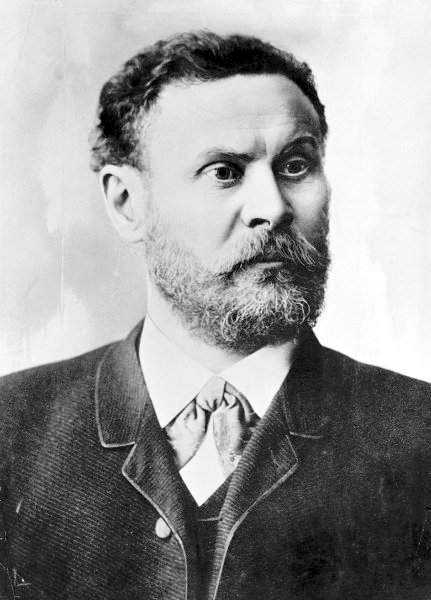
Otto Lilienthal flying one of his gliders near Berlin in the 1890s.
Photographer: A. Regis · Public domain · Wikimedia Commons
1783–1903

Balloonists and glider men

For 120 years humans flew but could barely steer. Balloons crossed the English Channel as early as 1785, and France fielded the first military observation balloons at the Battle of Fleurus in 1794, but the wind chose the destination. The German engineer Otto Lilienthal made some 2,000 glides from an artificial hill near Berlin in the 1890s, publishing lift data the Wright brothers later built on; he died in a 1896 gliding crash, reportedly saying "sacrifices must be made." The pilot's core problem — control — was posed in this era and solved only at its very end.

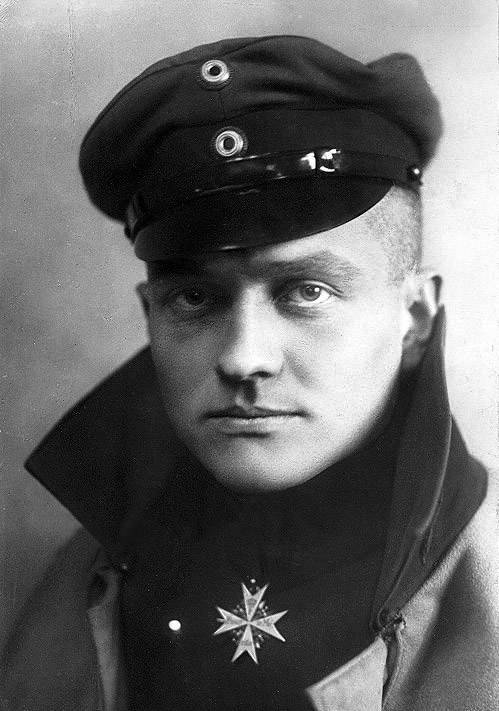
Portrait of First World War fighter ace Manfred von Richthofen.
C. J. von Dühren · Public domain · Wikimedia Commons
1903–1918

Inventors, showmen and the first war in the air

The Wrights kept their machine half-secret until Wilbur's 1908 demonstrations at Le Mans stunned European aviators, and the first flying jobs were exhibition work — spectacular and lethal, killing several of the Wrights' own touring team by 1910. The First World War then industrialized the trade: air forces trained tens of thousands of pilots, front-line life expectancy for new British airmen during 1917's "Bloody April" was measured in weeks, and aces like Manfred von Richthofen, credited with 80 victories, became the first mass-media pilot celebrities.

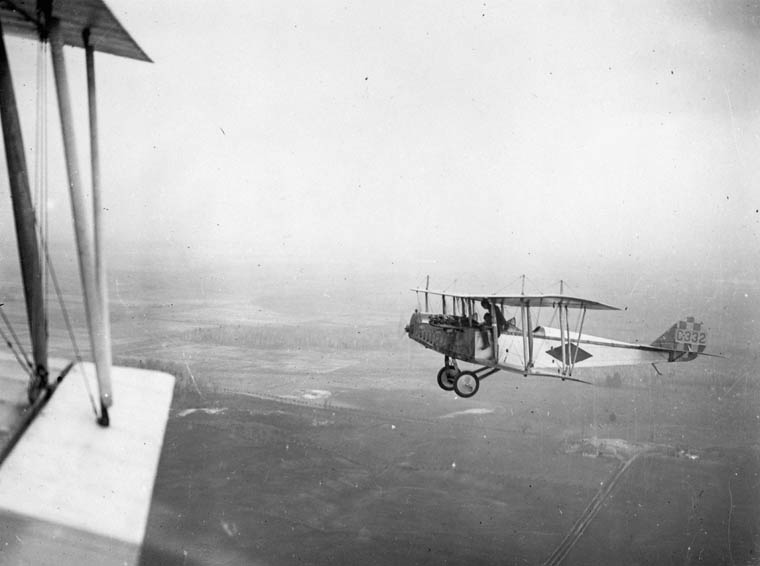
A barnstorming biplane performing at an air show in the 1920s.
Unknown author Unknown author · Public domain · Wikimedia Commons
1919–1939

Barnstormers, airmail and the first airlines

War-surplus Curtiss JN-4 "Jenny" biplanes sold for a few hundred dollars, and demobilized pilots barnstormed across North America selling rides at county fairs. The US Air Mail Service flew the continent in open cockpits by dead reckoning, following railway lines pilots called the iron compass; more than thirty of its pilots died between 1918 and 1927. Doolittle's 1929 blind flight brought instruments, KLM and Qantas built lasting airlines, and by the late 1930s the uniformed airline captain — dressed like a ship's officer — had replaced the daredevil as the trade's public face.

1939–1958

War training, pressurized cabins and the jet

The Second World War trained pilots on an industrial scale — the United States alone graduated hundreds of thousands — and women ferried warplanes in Britain's Air Transport Auxiliary and America's WASP program, though airlines refused to hire them afterward. Surplus crews and transport aircraft seeded the postwar airline boom, pressurized cabins lifted flights above much of the weather, and the de Havilland Comet opened the jet age in 1952. Its metal-fatigue crashes, and the Boeing 707's transatlantic debut in 1958, taught the industry that jets demanded new engineering and a more procedural kind of pilot.

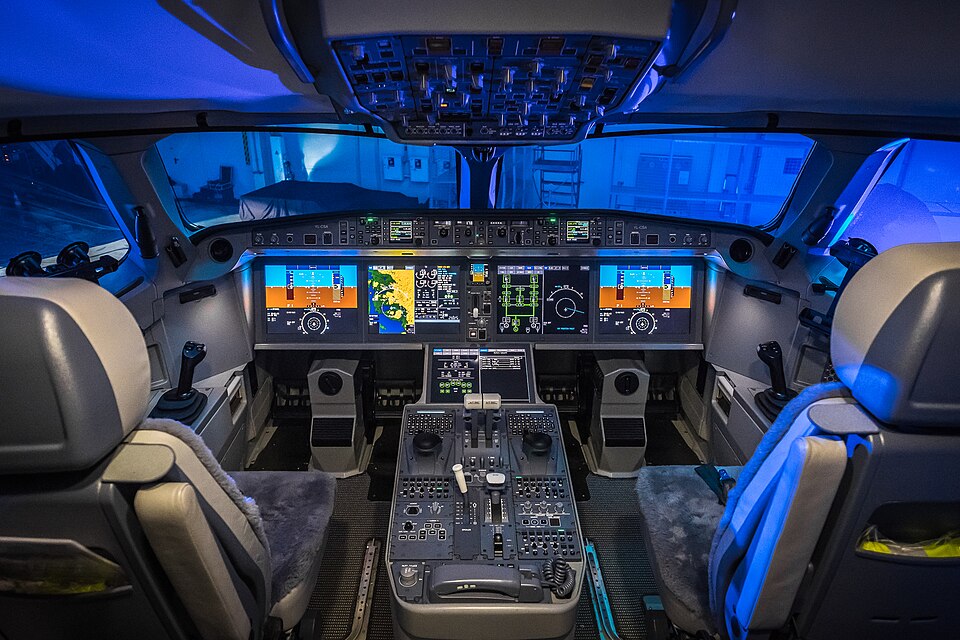
A modern glass cockpit with digital flight displays replacing analog instruments.
Kārlis Dambrāns from Latvia · CC BY 2.0 · Wikimedia Commons
1958–present

The shrinking, safening cockpit

The jet-age cockpit held five people; today's holds two. Inertial navigation eliminated the navigator by the late 1970s, electronic monitoring eliminated the flight engineer after two-crew jets like the Boeing 767 were certified in 1982, and the Airbus A320 of 1988 introduced fly-by-wire, with computers standing between the pilot's hand and the control surfaces. Crew resource management rebuilt cockpit culture after Tenerife. The result is the profession's quietest revolution: IATA counted roughly one accident per 1.26 million flights in 2023, making the airline cockpit arguably the most safety-engineered workplace on earth.

What this job replaced

Neighbouring trades that no longer exist — absorbed, automated or regulated away.

Flight navigator

c. 1935–1980s

On ocean crossings, a dedicated navigator shot the sun and stars with a sextant through a transparent astrodome in the cabin roof, fixing the aircraft's position the way ship's officers had for centuries — Pan American's flying boats could not have crossed the Pacific without one. Inertial navigation systems, carried on the Boeing 747 from 1970, computed position continuously with no windows needed, and airlines retired their last navigators around the early 1980s; GPS finished the argument.

Flight engineer

c. 1930s–2000s

Complex piston airliners and early jets carried a third crew member facing a side panel of fuel, hydraulic and electrical controls, managing the machinery while the two pilots flew. A 1981 US presidential task force concluded two-crew jets were safe, the Boeing 757 and 767 were certified without the seat in 1982, and electronic systems monitoring did the rest; the last flight-engineer aircraft left major passenger fleets in the early 2000s.

Barnstormer

1919–c. 1930

Demobilized First World War pilots bought surplus Curtiss Jenny biplanes for a few hundred dollars and toured rural America selling five-minute rides and wing-walking shows from farm fields — for millions, the first aircraft they ever touched. The US Air Commerce Act of 1926 brought pilot licensing, aircraft airworthiness rules and inspections; the free-for-all that made barnstorming possible was regulated out of existence within a few years.

Trades that vanished →

Every safety rule in the modern cockpit is a memorial: the checklist to a bomber crash in 1935, the sterile cockpit to a chatty crew in 1974, crew resource management to 583 people at Tenerife. The profession's culture — procedural, skeptical, allergic to improvisation except when nothing else is left — was assembled crash by crash.

What has not changed since 1903 is the shape of the bargain: one or two named people accept responsibility for everyone aboard, in a machine that cannot be pulled over to the side of the road. The tools have been renegotiated every generation; the bargain has not.

Keep exploring

More in Frontier & Field