📜The Greats

Historian · The trained interrogator of the past — from Herodotus and Sima Qian to the digital archive, turning fragile documents into checkable accounts of what happened.

Ranking historians is itself a historiographical act, and a biased one: the list below favors people whose work survived, was translated, and entered the canon that gets taught — which means it undercounts whole traditions, from West Africa's griots to the anonymous compilers of China's dynastic histories. The eight are chosen because each changed the method, not merely the record: after each of them, the job itself was done differently.

They span twenty-five centuries and seven countries. Two were mutilated or shot for the contents of their work; one declined her state's highest honors twice to keep her independence; one out-wrote the entire academy without a doctorate. Together they trace the craft's long argument with power about who controls the story.

The all-time podium

Sima Qian
Sima Qian
China
2
Herodotus
Herodotus
Greece (Halicarnassus)
1
Ibn Khaldun
Ibn Khaldun
Tunisia
3

The eight who reached the top

1
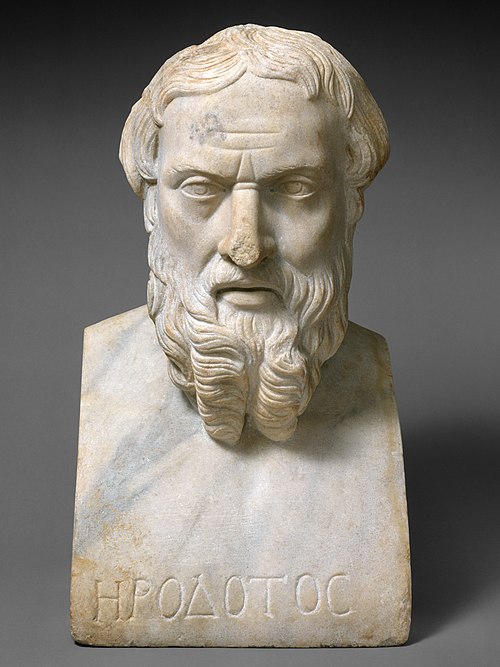
Marble bust of the Greek historian Herodotus. Unknown author · CC0

Herodotus

Greece (Halicarnassus) · c. 484 – c. 425 BCE

The man Cicero called the father of history invented the genre's method in one stroke: travel, interview, compare versions, and tell the reader which ones you doubt. His Histories of the Persian Wars embedded ethnography, geography and folklore into a single inquiry — historia — that has been read continuously for some 2,400 years.

The story

Reporting a Phoenician voyage around Africa commissioned by Pharaoh Necho II around 600 BCE, Herodotus added that the sailors claimed the midday sun stood on their right — to the north — as they sailed west around the continent's tip. He recorded the detail while flatly saying he did not believe it. That impossible-sounding observation is exactly what happens south of the equator, and it is now the strongest evidence the voyage really occurred: a fact too counterintuitive for a liar to invent.

“Record what you doubt as faithfully as what you believe; a later reader may know enough to verify it.”
Books of the Histories
9 books
Range of his travels
Egypt to Scythia
Continuously read for
~2,400 years
2
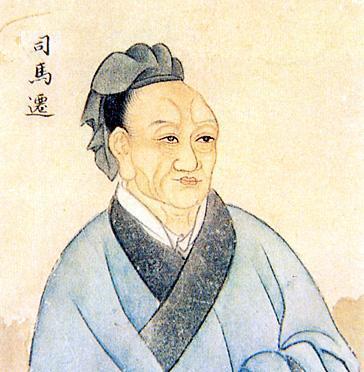
Traditional portrait of Sima Qian, Grand Historian of the Han dynasty. Unknown author · Public domain

Sima Qian

China · c. 145 – c. 86 BCE

Han China's Grand Historian completed the Shiji — 130 chapters covering roughly 2,500 years — whose architecture of annals, tables, treatises and biographies became the template for China's twenty-four official dynastic histories. No other historian's format governed a civilization's record-keeping for two thousand years.

The story

In 99 BCE, Sima Qian alone defended the general Li Ling, who had surrendered to the Xiongnu after his outnumbered force was destroyed. The furious Emperor Wu condemned him to death, commutable to castration — a penalty convention expected an honorable man to escape by suicide. In his letter to his friend Ren An, Sima Qian explained why he instead accepted the mutilation and the disgrace: the history his father had begun was unfinished, and he could not die before it was done.

“He judged the unfinished work worth more than honor, rank or the body — and finished it.”

Chapters in the Shiji
130 chapters
Span of history covered
~2,500 years
Dynastic histories on its model
24 official histories
3
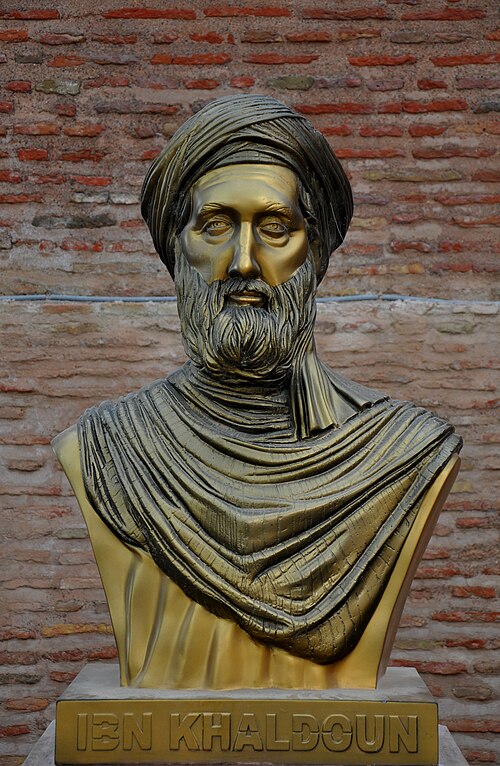
Statue of the historian Ibn Khaldun in Tunis. Reda Kerbush · CC BY-SA 4.0

Ibn Khaldun

Tunisia · 1332–1406

In the Muqaddimah of 1377, the Tunisian judge and scholar proposed that historical reports must be tested against laws of social organization — how dynasties rise on group cohesion, asabiyyah, and decay in luxury and taxation. He was doing sociology and economic history some five centuries before Europe named either discipline.

The story

In January 1401, with Timur's army besieging Damascus, the sixty-eight-year-old Ibn Khaldun had himself lowered from the city wall by rope to meet the conqueror in his camp. He spent roughly five weeks in Timur's company, interviewing him through interpreters and writing, at his request, a description of North Africa — while taking his own notes on the man destroying the world he knew. He then negotiated safe passage out. The episode, recorded in his autobiography, remains history's most audacious research interview.

“Test every report against how societies actually behave — and take the interview, even over the wall.”

Muqaddimah completed
1377
Weeks in Timur's camp
~5 weeks, 1401
Ahead of European social science
~5 centuries
4
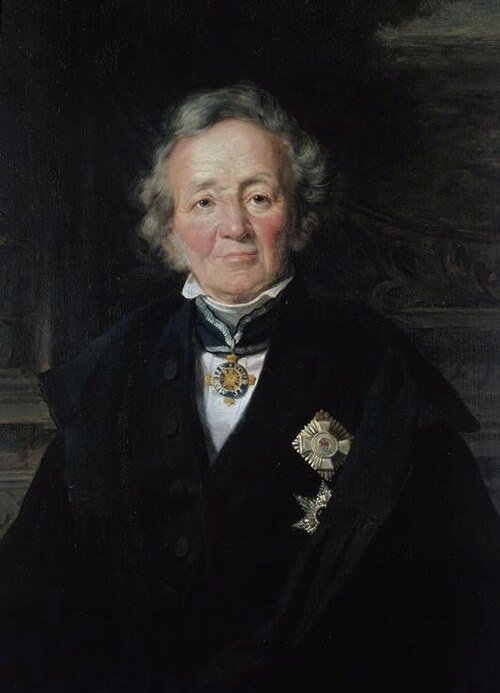
Portrait of Leopold von Ranke, founder of the archival seminar. After Julius Schrader / Adolf Jebens · Public domain

Leopold von Ranke

Germany · 1795–1886

Ranke turned history from a branch of literature into a certified profession: archive-based evidence, systematic source criticism, the footnote as checkable claim, and the doctoral seminar as the training vehicle. Appointed to Berlin in 1825, he taught the method to students who carried it to universities on every continent.

The story

Retirement did not end the project. Nearly blind and in his mid-eighties, Ranke began the work colleagues assumed was a joke: a history of the world. Dictating daily to relays of assistants from 1880, he drove the Weltgeschichte through volume after volume — antiquity, Rome, the early medieval West — reaching the twelfth century before he died in 1886 at ninety. The series was completed from his notes; the seminar students he had trained across six decades were already running the profession he had invented.

“Go to the archive; let the documents, not the tradition, set the story.”

Berlin professorship
1825–1871
World history begun at
Age 85
Seminar model's reach
Copied worldwide
5
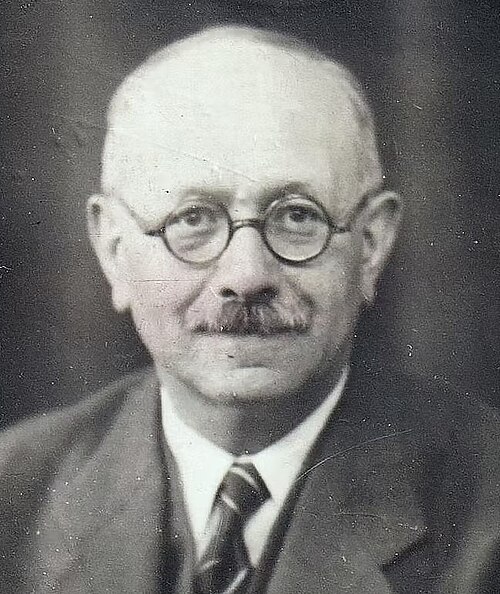
Photograph of the French historian and Resistance member Marc Bloch. Unknown author Unknown author · Public domain

Marc Bloch

France · 1886–1944

Medievalist, co-founder of the Annales school with Lucien Febvre in 1929, Bloch widened history's subject from rulers to rural life, belief and comparative structures — The Royal Touch traced centuries of faith in the healing hands of kings. His unfinished The Historian's Craft, written as a fugitive, remains the profession's most read meditation on itself.

The story

A Sorbonne professor, decorated veteran of both world wars and a Jew barred by Vichy's statutes, Bloch joined the Resistance in Lyon at fifty-seven under the code name Narbonne. Arrested by the Gestapo in March 1944, he was tortured for months without breaking, and on 16 June 1944 was executed by firing squad in a field at Saint-Didier-de-Formans with other prisoners. Survivors' accounts record him calming the frightened sixteen-year-old beside him — telling him the bullets would not hurt — and dying with the cry "Vive la France."

“The craft's honesty is worth practicing even when history turns on the historian himself.”

Annales founded
1929, Strasbourg
Joined the Resistance at
Age 57
The Historian's Craft
Unfinished, publ. 1949
6
Photograph of the American historian Barbara W. Tuchman. The U.S. National Archives · Public domain

Barbara Tuchman

United States · 1912–1989

A former journalist with no doctorate and no faculty post, Tuchman won two Pulitzer Prizes — for The Guns of August in 1963 and Stilwell and the American Experience in China in 1972 — and proved that rigorous, primary-source history could top bestseller lists. Her craft essays insist that holding the reader is part of the scholarship, not a betrayal of it.

The story

President Kennedy read The Guns of August, Tuchman's reconstruction of how Europe's leaders stumbled mechanically into war in 1914, shortly before the Cuban Missile Crisis of October 1962. During the crisis he invoked it directly, telling his brother Robert — who recorded the exchange in Thirteen Days — that he refused to follow a course that would let some future author write a comparable book called The Missiles of October. A work of narrative history, written by an outsider the academy did not quite count, had entered the decision loop of a nuclear standoff.

“Write so well that presidents read you under pressure; clarity is a form of rigor.”

Pulitzer Prizes
2 (1963, 1972)
Doctorate held
None
Books published
11 books
7

Romila Thapar

India · b. 1931

The preeminent historian of early India took her PhD at SOAS in London in 1958, built Jawaharlal Nehru University's Centre for Historical Studies from 1970, and re-founded ancient Indian history on critical readings of inscriptions and texts — dismantling both colonial and nationalist myths. She shared the US Library of Congress's Kluge Prize in 2008.

The story

The Indian state twice offered Thapar the Padma Bhushan, one of its highest civilian honors — in 1992 and again in 2005 — and she declined both times, stating she would accept awards only from academic institutions, not from any government. The independence was not theoretical: when her 2003 appointment to the Library of Congress's Kluge Chair drew an online petition with thousands of signatures denouncing her, the Library reviewed the campaign, dismissed it, and she held the chair. Her histories of ancient India remain the standard works her attackers could not replace.

“Keep the state at arm's length; a historian's authority survives only outside power's patronage.”

Padma Bhushan declined
Twice (1992, 2005)
Kluge Prize
2008 (shared)
PhD, SOAS London
1958
8

Natalie Zemon Davis

United States / Canada · 1928–2023

A pioneer of early modern social and cultural history, Davis recovered the lives of peasants, printers, women and border-crossers from judicial and notarial records. The Return of Martin Guerre (1983) became a model of microhistory; in 1987 she served as the American Historical Association's second woman president, and she received the Holberg Prize in 2010.

The story

Davis worked as historical consultant on the 1982 French film Le Retour de Martin Guerre, starring Gérard Depardieu as the impostor who took over another man's life in a sixteenth-century Pyrenean village. Watching the production smooth away the case's uncertainties, she went back to the sources — above all judge Jean de Coras's own account of the 1560 Toulouse trial — and wrote her own book to restore the ambiguities the camera had flattened. Film and monograph now circulate together, a standing lesson in what each medium does to evidence.

“When the film simplifies, write the book; honestly handled uncertainty is the historian's real product.”

AHA president
1987, 2nd woman
Holberg Prize
2010
Martin Guerre in print since
1983

Bars are scaled to the leader in this list.

Comparison Lab

Toggle names on and off — every bar rescales to the leader of your selection.

5 / 8

The argument

The founder's chair is contested. Plutarch wrote a whole treatise on the "malice" of Herodotus, and the old charge — father of history or father of lies — still frames the debate; partisans of Thucydides claim the true origin lies in his sterner method, while historians of China point out that Sima Qian built a more durable institutional tradition than either Greek. Even some of Herodotus's tallest tales, like the gold-digging "ants" of the Indian frontier, have found modern defenders offering naturalistic explanations.

The deeper bias is structural: a list built on surviving, translated texts erases traditions that carried history in other forms — West African griots reciting dynastic genealogies, Andean khipu keepers encoding records in knotted cords, Pacific navigator lineages chanting descent and voyage. Oral historians such as Jan Vansina spent careers proving these are evidence, not folklore, and any honest canon concedes that most of humanity's historical labor was done by people no written list can name.

And the profession still argues over its own gate: Tuchman's two Pulitzers against her lack of a doctorate poses the question directly. If the craft is defined by verifiable use of primary sources, the credential is convention; if by the seminar's training, the bestselling outsider is a different trade. The list above deliberately includes both answers.

Keep exploring

More in Education & Humanities