🍳The Greats

Chef · The professional who commands a kitchen brigade under nightly pressure, from Escoffier's Paris to Osaka's sushi counters and Lima's ceviche bars.

Picking eight names out of a trade practiced in every culture on earth for thousands of years is necessarily unfair to thousands of equally serious cooks who left no written record. The eight below are chosen because their influence is well documented and still visible in kitchens today, not because they were "the best" by any single measure.

They span six countries and four centuries, and they got there by very different routes: royal patronage, a hotel partnership, a sushi counter, a civil-rights-era dining room, a television studio, a grandmother's kitchen table, a Lima restaurant built from nothing. What they share is that each one changed what came after them.

The all-time podium

Auguste Escoffier
Auguste Escoffier
France
2
Marie-Antoine Carême
France
1
Jiro Ono
Jiro Ono
Japan
3

The eight who reached the top

1
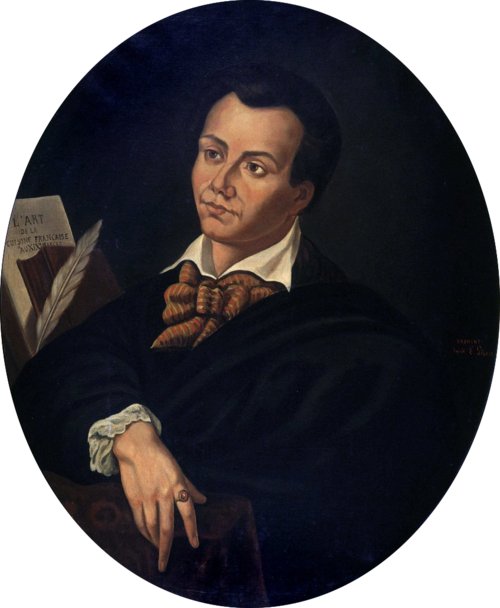
Engraved portrait of Marie-Antoine Carême. Carl von Steuben · Public domain

Marie-Antoine Carême

France · 1784–1833

Born into poverty and apprenticed to a Paris pâtissier as a child, Carême became the first celebrity chef, cooking for Talleyrand, Tsar Alexander I and the future King George IV. He turned sugar and pastry into architecture and began organizing French cooking into the system later chefs would call haute cuisine.

The story

By Carême's own later account, his father abandoned him at a Paris tavern around the age of ten, during the food shortages of the Revolution, reportedly telling him there were better trades than starving together as poor men. A cook-shop owner took him in as kitchen help; within a few years he had talked his way into an apprenticeship with one of Paris's leading pâtissiers, and started building the career that made him famous.

“A trade with a real apprenticeship route can turn total poverty into mastery — no capital required, only years.”
European courts served
5 named patrons
Technique codified
Grande cuisine
Sauce classification begun
Basis of the "mother sauces"
2
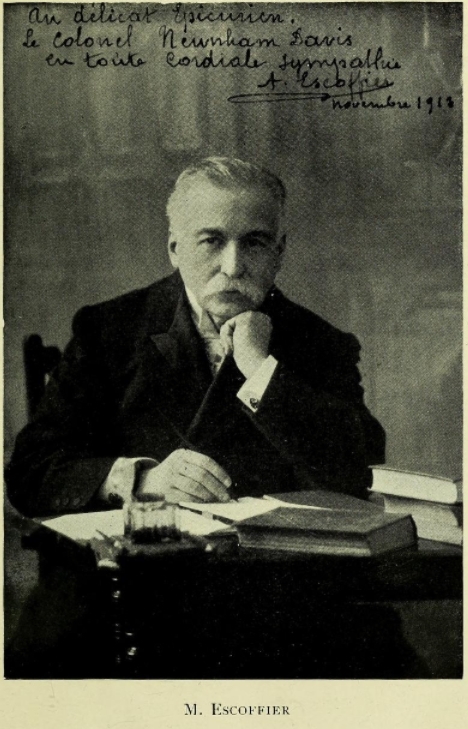
Photograph of chef Auguste Escoffier. Self, uncredited · Public domain

Auguste Escoffier

France · 1846–1935

Working alongside hotelier César Ritz at the Savoy, the Ritz Paris and the Carlton, Escoffier organized the professional kitchen into the brigade de cuisine — stations, ranks, a chain of command — and codified roughly 5,000 recipes in Le Guide Culinaire. In 1920 he became the first chef awarded France's Legion of Honour.

The story

In 1892 or 1893, opera singer Nellie Melba was staying at the Savoy after a triumphant performance in Wagner's Lohengrin, which features a swan. Escoffier served her poached peaches and vanilla ice cream in a silver dish set between the wings of an ice sculpture of a swan, naming it pêche au cygne. He later added a raspberry purée at the Carlton and renamed it Peach Melba, still on dessert menus today.

“A kitchen organized as a system outlives any single dish it produces, and scales further than any one cook's talent.”

Recipes codified
~5,000 (1903)
Brigade system adopted
Still industry standard
Hotel kitchens built
Savoy, Ritz, Carlton
3
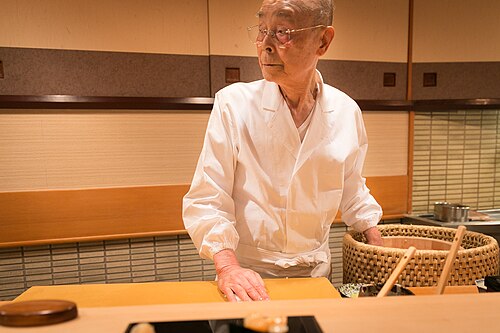
Sushi chef Jiro Ono at his counter. City Foodsters · CC BY 2.0

Jiro Ono

Japan · b. 1925

Owner-chef of the ten-seat Sukiyabashi Jiro in Tokyo, Ono held three Michelin stars for over a decade and became the public face of the shokunin ideal — a craftsperson devoted to one skill for a lifetime — after the 2011 documentary Jiro Dreams of Sushi made his apprenticeship system internationally famous.

The story

His former apprentice Daisuke Nakazawa, who went on to open the acclaimed Sushi Nakazawa in New York, has described making tamagoyaki — a sweet layered egg omelet — over and over for months, failing Ono's approval more than 200 times before finally getting a nod and being allowed near the fish. The documentary that captured the story turned a training exercise into a widely cited definition of culinary patience.

“Earning the right to touch the prestigious ingredient starts with mastering the humblest one first.”

Michelin stars held
3 stars, 2008–2019
Apprenticeship demanded
"3 yrs rice, 8 yrs sushi"
Seats in the restaurant
Just 10
4
Photograph of restaurateur Cecilia Chiang. Unknown author Unknown author · Public domain

Cecilia Chiang

China / United States · 1920–2020

Fleeing wartime China and later settling in San Francisco, Chiang opened The Mandarin in 1961 and introduced Americans to real Mandarin, Sichuan and Shanghainese cooking — tea-smoked duck, potstickers, moo shu pork — at a time when "Chinese food" in the US mostly meant chop suey.

The story

Chiang originally agreed to co-sign a $10,000 lease for two acquaintances who wanted to open a restaurant, only for them to abandon the plan and leave her responsible for the debt. Rather than walk away, she opened The Mandarin herself with almost no restaurant experience; it struggled at first, in an inconvenient location, before word of mouth among food writers like James Beard turned it into a landmark whose regulars ranged from Mae West to John Lennon.

“Authenticity sells once someone is willing to stop translating a cuisine down for an audience that hasn't tried it yet.”

Years running The Mandarin
~30 years
Regional cuisines introduced
Mandarin, Sichuan, Shanghai
Influence on US chefs
Cited by Alice Waters, James Beard
5
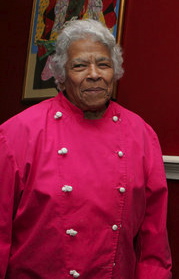
Photograph of chef Leah Chase. Joyce N. Boghosian · Public domain

Leah Chase

United States · 1923–2019

Known as the Queen of Creole Cuisine, Chase turned her in-laws' New Orleans sandwich shop, Dooky Chase's, into an elegant Creole dining room that — defying segregation laws — became a trusted meeting place for civil rights leaders including Martin Luther King Jr. through the 1960s.

The story

In 2008, presidential candidate Barack Obama visited Dooky Chase's and, before tasting it, put hot sauce into a bowl of Chase's gumbo. She scolded him for it right there, telling him a proper gumbo should be tasted before it's seasoned further, then sent him off with a hot-sauce-free portion in a to-go box — a story that became part of her legend, retold in nearly every profile of her for the rest of her life.

“Feeding people well, and feeding everyone the same way, can itself be an act of quiet political authority.”

Years at Dooky Chase's
70+ years
James Beard honor
Lifetime Achievement, 2016
Civil-rights meetings hosted
Upstairs dining room
6
Photograph of Julia Child. Lynn Gilbert · CC BY-SA 4.0

Julia Child

United States · 1912–2004

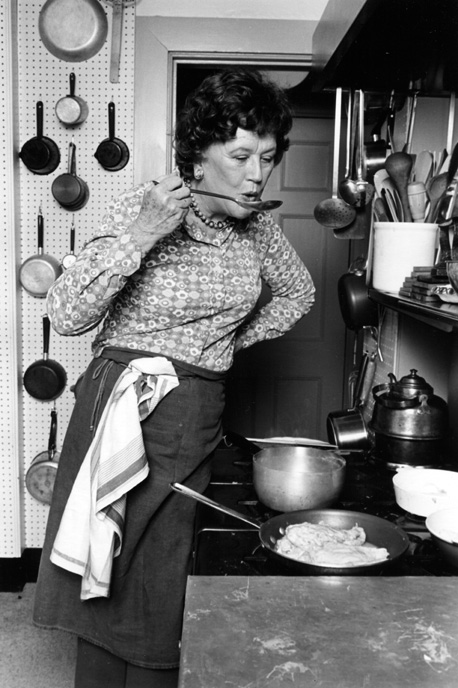
After training at Le Cordon Bleu in Paris, Child co-wrote Mastering the Art of French Cooking (1961) and hosted The French Chef (1963), the television series that made her America's first celebrity cooking teacher and proved French technique could be taught to ordinary home cooks, not just professionals.

The story

Filming The French Chef live-to-tape in 1963, Child attempted to flip a potato pancake in its pan and lost part of it onto the stovetop. Instead of stopping, she calmly scraped it back into the pan on camera, telling viewers that if you're alone in the kitchen, no one will ever know — a moment of unedited honesty that became one of the most replayed clips in American television history.

“Showing a mistake in the moment builds more trust with an audience than any flawless, edited take.”

Cookbook impact
Mastering the Art, 1961
TV honors
Peabody 1965, Emmy 1966
Career span on air
Decades on US television
7

Massimo Bottura

Italy · b. 1962

Chef-owner of Modena's Osteria Francescana, twice named the world's best restaurant, Bottura built his reputation on reimagining Emilia-Romagna's traditional dishes — the region his grandmother cooked in — with technique borrowed from modern art, while running Refettorio, a network of kitchens that turn surplus food into meals for people in need.

The story

Bottura's earliest food memories are of hiding under his grandmother's kitchen table in Modena to avoid his older brothers, watching her hands roll out tortellini and stealing pieces when she wasn't looking. Decades later, at Osteria Francescana, that memory became a signature dish, "Tortellini Walking on Broth," served with barely any broth at all so the pasta's own texture, not the liquid, is the point.

“The most original dish can come from taking an inherited, ordinary family recipe more seriously than anyone before you did.”

World's 50 Best, No. 1
2016 and 2018
Michelin stars
3 stars, since 2012
Meals served via Refettorio
Food-waste kitchens, since 2015
8

Gastón Acurio

Peru · b. 1967

After abandoning law school for Le Cordon Bleu in Paris, Acurio and his wife Astrid Gutsche opened Astrid y Gastón in Lima in 1994 and spent the next two decades building what became known as the Peruvian gastronomic boom, turning ceviche, native potatoes and street-food staples into serious cuisine.

The story

Acurio's father was a Peruvian senator who expected his son to become a lawyer; Acurio quietly dropped out of law school in Madrid in 1989 and enrolled at Le Cordon Bleu instead, where he met Gutsche. In 2008 he launched Mistura, a Lima food festival that grew into one of the world's largest, built to convince Peruvians themselves that their own market ingredients deserved fine-dining respect.

“A national cuisine's reputation can be deliberately rebuilt by taking local ingredients as seriously as imported ones.”

Restaurant concepts built
6+ brands, 10+ countries
Mistura festival
2008–2017
Underserved-youth culinary school
Pachacútec, founded 2007

Bars are scaled to the leader in this list.

Comparison Lab

Toggle names on and off — every bar rescales to the leader of your selection.

5 / 8

The argument

Much of what we know about Carême's rise from nothing comes from his own writing, and historians note he had every reason to dramatize it — a reminder that celebrity-chef memoirs, then as now, are not neutral sources.

Rankings like this one inevitably favor cooks who left a paper trail: cookbooks, patents, TV deals, obituaries. Countless equally skilled cooks — generations of nameless Ottoman palace kitchen staff, home cooks whose techniques became a restaurant's signature dish, nonnas whose recipes chefs still credit by name in interviews but not in print — simply left less evidence behind, a bias of the historical record rather than of their skill.

A list like this is a snapshot, not a verdict: reputations move and new information comes to light, and a name that looks unimpeachable one year can look very different the next — a reason to judge the technique and the history on its merits, not on any one person's current fame.

Keep exploring