🏗️The Greats

Architect · Designs buildings that must stand, meet code, please a client and cost the right amount — then carries legal responsibility if they don't.

Architecture is unusual in how far back its roll of honour reaches and how widely it is now spread: this list runs from a deified Egyptian official who designed the world's first monumental stone building to a woman who spent a decade as a 'paper architect' before construction technology could build what she had already designed.

Each entry is chosen for a specific, checkable achievement rather than general fame, and the list deliberately crosses continents, centuries and the divide between celebrated men and the women who were, for most of this history, shut out of the credit and the commissions altogether.

The all-time podium

Mimar Sinan
Mimar Sinan
Ottoman Empire (Turkey)
2
Imhotep
Imhotep
Egypt (Old Kingdom)
1
Filippo Brunelleschi
Republic of Florence (Italy)
3

The eight who reached the top

1
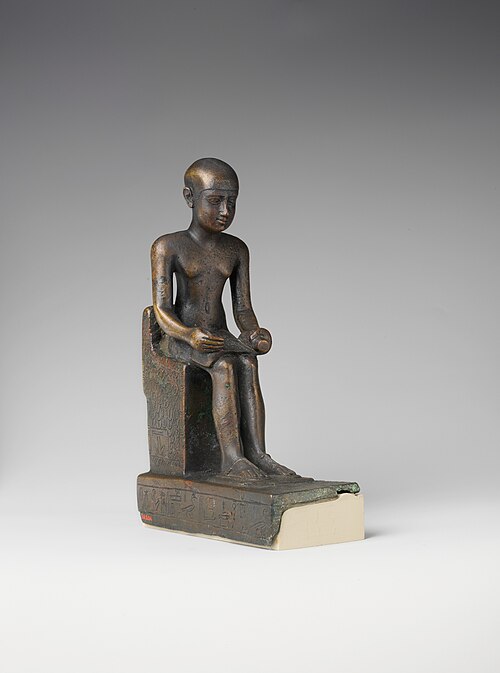
Ancient bronze statuette inscribed with Imhotep's name Unknown author · CC0

Imhotep

Egypt (Old Kingdom) · c. 2670 – c. 2600 BCE

Chancellor to the pharaoh Djoser and the first architect in history known by name, Imhotep designed the Step Pyramid at Saqqara around 2650 BCE, Egypt's first monumental cut-stone building, and was worshipped as a god for two thousand years after his death.

The story

Imhotep's Step Pyramid began as a conventional flat-roofed mastaba tomb, the standard royal burial of the era. Across several building phases he enlarged it and stacked five more mastabas of decreasing size on top, arriving — apparently through revision rather than a single original plan — at a 62-metre stepped pyramid unlike anything built before. Djoser was reportedly so pleased that he broke royal convention and had Imhotep's name and titles carved beside his own on the pyramid's boundary wall, an honour normally reserved for the king alone.

“The boldest design can emerge from revising a conventional one stage by stage, not from a single flash of originality.”
Historical priority
1st named architect
Structure height
62m, tallest of its age
Cult longevity
Worshipped 2,000+ yrs
2
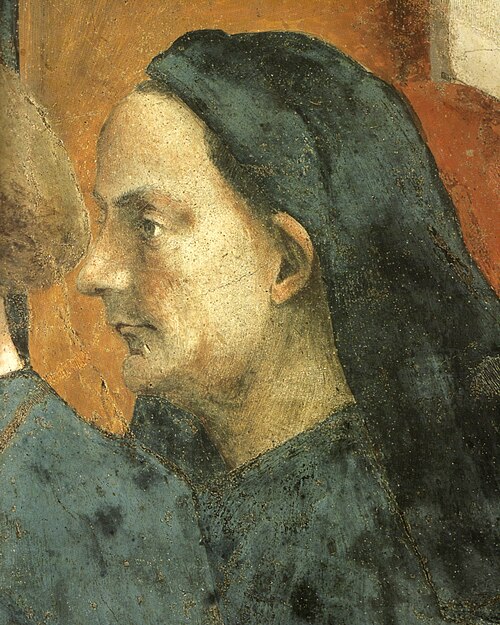
Historic portrait miniature believed to depict Mimar Sinan Mimar Sinan · Public domain

Mimar Sinan

Ottoman Empire (Turkey) · c. 1489–1588

Chief architect to three Ottoman sultans across a fifty-year tenure, Sinan is credited with over 300 structures, from the Süleymaniye Mosque to his self-declared masterpiece, the Selimiye Mosque in Edirne, whose dome he built specifically to surpass Hagia Sophia's.

The story

Sinan began as a stonemason and army carpenter, was conscripted into the Janissary corps as a young man, and rose through military engineering before Suleiman the Magnificent appointed him chief architect in 1539. He later ranked his own three greatest mosques like stages of an apprenticeship: Şehzade (1548) he called his apprentice work, the Süleymaniye (1557) his journeyman work, and the Selimiye in Edirne (1575), completed in his late eighties, his masterpiece — finally building a dome that beat the Hagia Sophia's after decades of trying.

“Rank your own body of work honestly, and treat your masterpiece as something to keep earning, not a title to claim early.”

Career span
~50 years
Structures credited
300+
Sultans served
3
3
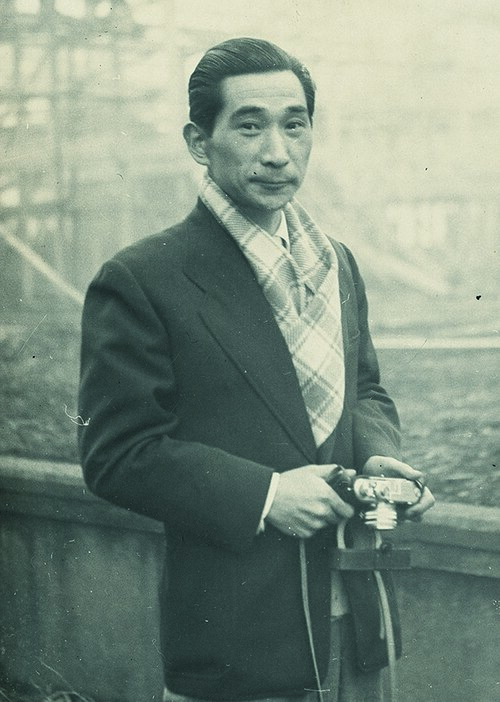
Portrait bust of Filippo Brunelleschi scan uploaded by Sailko , cropped by MenkinAlRire · Public domain

Filippo Brunelleschi

Republic of Florence (Italy) · 1377–1446

A goldsmith who lost the competition to design Florence's baptistery doors, Brunelleschi turned to architecture and engineering and, between 1420 and 1436, raised the largest masonry dome in the world over Florence Cathedral without any wooden supporting frame.

The story

When Brunelleschi won the 1418 competition to complete Florence Cathedral's dome, he proposed building it without centering — the wooden scaffold every other mason considered essential for a span that size — and refused to explain how. Vasari records that when rivals doubted him, Brunelleschi challenged them to stand an egg upright on marble; when they failed, he cracked its base flat and stood it up himself, saying that anyone who had seen his dome model would know how to build the dome too.

“Sometimes you have to prove you've already solved the hard problem before anyone will trust your solution to the easy one.”

Dome interior span
45.5m, still a record
Construction time
16 years
Wooden centering used
None
4
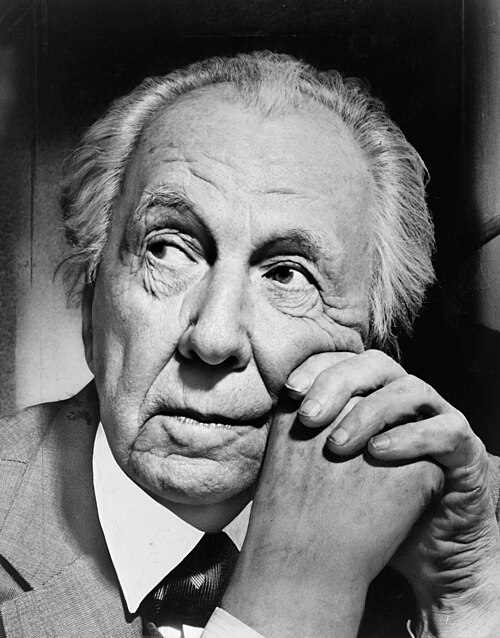
Portrait photograph of Frank Lloyd Wright New York World-Telegram and the Sun staff photographer: Al Ravenna · Public domain

Frank Lloyd Wright

United States · 1867–1959

America's most prolific major architect, Wright designed roughly 500 completed buildings across seven decades, from the Prairie houses of the 1900s to Fallingwater (1935–39) and the spiralling Solomon R. Guggenheim Museum, finished the year after his death.

The story

In 1934, client Edgar Kaufmann owned a favourite waterfall on his Pennsylvania property and expected a house designed with a view of it. According to the often-told studio account, Wright had done no drawings when Kaufmann called to say he was arriving to see them; over the roughly two hours it took Kaufmann to drive from Milwaukee, Wright sketched the design for Fallingwater — built directly over the waterfall rather than facing it — essentially complete, and it was this version that was then built.

“The boldest answer to a brief sometimes ignores the client's literal request and answers what they actually love instead.”

Buildings completed
~500
Active career
~70 years
Posthumous works
Guggenheim NYC, 1959
5
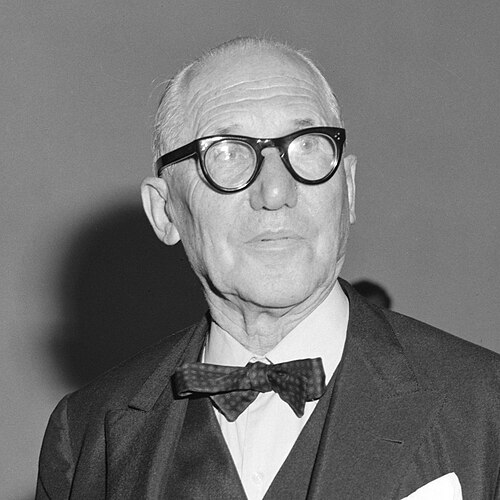
Photograph of Le Corbusier in his later years Joop van Bilsen for Anefo · CC0

Le Corbusier

Switzerland / France · 1887–1965

Born Charles-Édouard Jeanneret in Switzerland, Le Corbusier became modernism's most influential and most contested figure, codifying the movement in Villa Savoye (1931) and his own Five Points of Architecture, and later shaping postwar urban planning worldwide.

The story

Villa Savoye, Le Corbusier's showcase of pilotis, ribbon windows and a flat roof garden, leaked from the day the Savoye family moved in; Madame Savoye wrote letter after letter about rain through the roof terrace and her son's recurring bronchitis from the damp, and it took years of disputes to get proper repairs made. The family was later forced out during the Second World War, and the house nearly faced demolition before France's Ministry of Culture saved it as a listed monument in 1965, the year Le Corbusier died.

“A design can be theoretically correct and still fail the people living in it — livability is not automatic.”

Influence on modernism
Core of the movement
UNESCO listing (2016)
17 sites, 7 countries
Contested legacy
Widely debated
6
Photograph of Kenzo Tange Unknown photographer · Public domain

Kenzo Tange

Japan · 1913–2005

Tange rebuilt a symbol of Japan out of its greatest catastrophe with the Hiroshima Peace Memorial Park (1955), led the Metabolist generation of Japanese architects, and became the first non-Western architect to win the Pritzker Prize, in 1987.

The story

Tange was a young architecture professor, not yet forty, when he won the international competition to design the Hiroshima Peace Memorial Park in 1949, four years after the atomic bombing and with much of his own prior work destroyed in the firebombing of Tokyo. He aligned the cenotaph, the eternal flame and the ruined Atomic Bomb Dome on a single sightline through the park, turning an act of mourning into the axis the entire design was built around.

“A memorial's power can come from its geometry alone — align the plan with what people most need to see.”

Pritzker Prize
1987, 1st non-Western
Career span
~55 years
Olympic legacy
Tokyo 1964 venues
7

Zaha Hadid

Iraq / United Kingdom · 1950–2016

The first woman to win the Pritzker Prize (2004), Hadid spent roughly a decade as a celebrated 'paper architect' whose fluid, computationally derived designs were considered unbuildable before construction technology caught up with her drawings in the 1990s.

The story

Hadid's international breakthrough was winning the 1983 competition for The Peak, a leisure club on a Hong Kong hillside, with a shattered, dynamic painting-like design unlike anything else submitted — but the project was never built, and for years critics treated her as more painter than practical architect. Her first major building, the Vitra Fire Station in Weil am Rhein, only opened in 1993, a full decade after The Peak, once new modelling software and construction methods could finally realize the geometry she had been drawing by hand all along.

“Being unbuildable with today's tools is not the same as being wrong — sometimes the technology has to catch up.”

Pritzker Prize
2004, 1st woman
Years before first building
10 yrs (1983–93)
RIBA Royal Gold Medal
2016, 1st woman solo
8

Lina Bo Bardi

Italy / Brazil · 1914–1992

Trained in Rome, Bo Bardi emigrated to Brazil in 1946 and spent the rest of her career there, championing an 'architecture of poverty' that reused existing structures and put ordinary public life, not monuments, at the centre of her design.

The story

For the São Paulo Museum of Art (MASP, opened 1968), Bo Bardi suspended the entire museum volume between two giant red concrete beams spanning 74 metres, lifting it clear off the ground and leaving the site beneath it as open civic space. She insisted the empty plaza she created underneath stay open and unprogrammed, and it has hosted markets, protests and gatherings for decades since — a piece of urban generosity built directly into the structure, not added around it.

“The most valuable thing a building gives a city can be the space it deliberately leaves empty underneath.”

MASP clear span
74m
Built works
~20 realized projects
Years based in Brazil
46 years (1946–92)

Bars are scaled to the leader in this list.

Comparison Lab

Toggle names on and off — every bar rescales to the leader of your selection.

5 / 8

The argument

Le Corbusier remains architecture's most contested major figure: hugely influential on modernist form and planning, he is also documented to have had fascist sympathies in the 1930s and 40s, and his high-rise urban renewal ideas — never built at full scale in Europe but echoed worldwide — are blamed for some of the twentieth century's most dehumanizing public housing.

Denise Scott Brown is architecture's most cited case of erased credit: she was an equal partner and co-author with Robert Venturi on Learning from Las Vegas (1972) and their built work, but was excluded when Venturi alone received the 1991 Pritzker Prize, and a 2013 petition to retroactively add her name gathered thousands of signatures but was never acted on.

Keep exploring