🏺The Greats

Archaeologist · The scientist who reads human history out of the ground, one unrepeatable layer at a time — from Nabonidus's temple trenches to LiDAR and ancient DNA.

Choosing eight archaeologists means choosing among the people who dug, and that already biases the list toward the century and a half in which digging was documented, published and mostly run from a handful of countries. The names below are here because their methods, discoveries or arguments still shape how excavation is done — not because they were the only ones digging.

They span from a Victorian surveyor who counted potsherds to a diver who took the discipline underwater, and include three women who ran some of the twentieth century's most consequential excavations. Behind each stands a rarely named local workforce — Egypt's Qufti foremen above all — whose skill made the famous careers possible.

The all-time podium

Howard Carter
Howard Carter
United Kingdom
2
Flinders Petrie
Flinders Petrie
United Kingdom
1
Kathleen Kenyon
Kathleen Kenyon
United Kingdom
3

The eight who reached the top

1
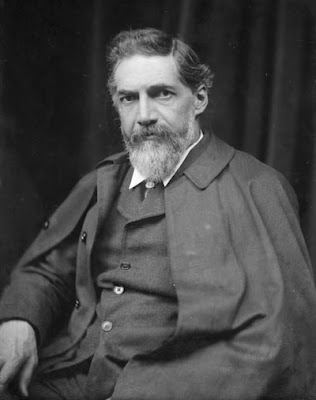
Portrait of the Egyptologist Flinders Petrie. Unknown author Unknown author · Public domain

Flinders Petrie

United Kingdom · 1853–1942

Petrie made Egyptology a science of small things: he weighed, counted and published everything, invented sequence dating from pottery styles, and trained a generation — including Howard Carter — in his frugal, systematic camps. He also trained and relied on Egyptian excavators from the village of Quft whose descendants still staff digs today.

The story

At Thebes in 1896, Petrie's team found a black granite stela of pharaoh Merneptah bearing, in its second-to-last line, the only known mention of "Israel" in Egyptian writing. When the visiting philologist Wilhelm Spiegelberg puzzled over the name and Petrie grasped what it was, he remarked, "Won't the reverends be pleased?" — and predicted at dinner that night that this stela would be better known than anything else he had ever found. It is.

“Record everything, keep everything, publish everything: the unglamorous fragment may be the find that matters.”
Seasons in Egypt & Palestine
50+ years
Graves seriated at Diospolis Parva
~900 graves
Excavation memoirs published
Nearly one a year
2
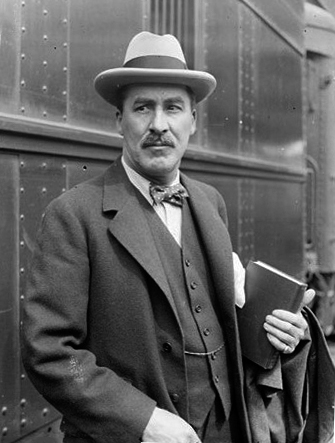
Photograph of Howard Carter, discoverer of Tutankhamun's tomb. Chicago Daily News, Inc., photographer · Public domain

Howard Carter

United Kingdom · 1874–1939

A draftsman with no university education who trained under Petrie, Carter spent five barren seasons searching the Valley of the Kings before finding the only substantially intact royal tomb ever excavated there. The ten-year clearance that followed set standards of recording and conservation that still impress specialists examining his notes.

The story

By 1922 Lord Carnarvon had decided to stop funding the search; Carter persuaded him to pay for one final season. Three days after work resumed that November, a step cut into the bedrock appeared beneath the remains of ancient workmen's huts. On 26 November, Carter opened a small hole into the antechamber, held up a candle, and — asked by Carnarvon whether he could see anything — gave the discipline its most famous reply: "Yes, wonderful things."

“Persistence is a method: the last season you can afford may be the one that pays for all the others.”

Empty seasons before the find
5 (1917–22)
Objects catalogued from the tomb
~5,400
Years to clear the tomb
10 (1922–32)
3
Photograph of the excavator of Jericho, Kathleen Kenyon. UCL Institute of Archaeology · CC BY 4.0

Kathleen Kenyon

United Kingdom · 1906–1978

The most influential field excavator of the twentieth century, Kenyon refined Wheeler's grid into the Wheeler–Kenyon method of deep trenches and standing sections, and applied it at Jericho and Jerusalem. Her textbook Beginning in Archaeology trained decades of students, and she ran the British School of Archaeology in Jerusalem.

The story

At Jericho between 1952 and 1958, Kenyon's trenches cut to bedrock and found a massive stone tower and town wall dating to around 8000 BCE — monumental architecture millennia before pottery, let alone the Bronze Age. The same stratigraphy showed almost nothing standing in the era of Joshua's supposed conquest, a result that dismayed some of the excavation's biblically motivated sponsors. She published the evidence anyway, in exhaustive detail, and the tower remains among the oldest monuments known.

“Dig so carefully that your evidence can disappoint your own funders and still stand.”

Age of the Jericho tower
~10,000 years
Seasons at Jericho
7 (1952–58)
Method's reach
Global standard
4
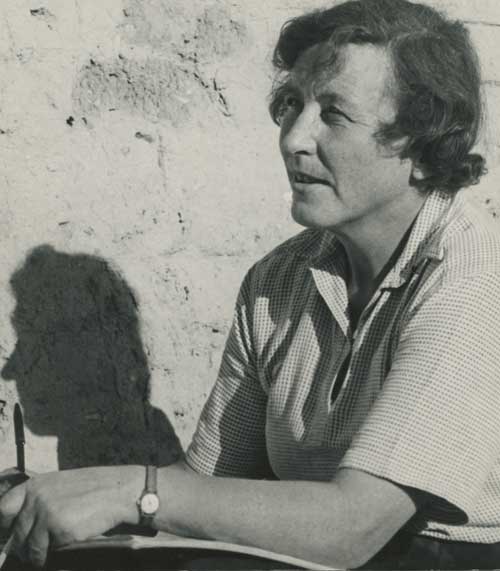
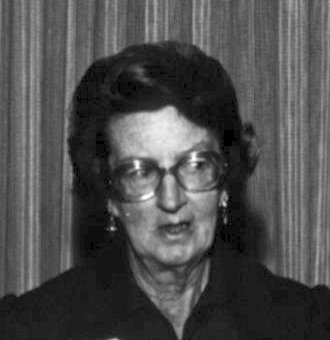
Photograph of paleoanthropologist and archaeologist Mary Leakey. National Institutes of Health · Public domain

Mary Leakey

United Kingdom / Tanzania · 1913–1996

Working for decades at Olduvai Gorge in Tanzania, Mary Leakey found the 1.75-million-year-old Zinjanthropus skull in 1959 — while her more famous husband Louis lay ill in camp — and directed the meticulous excavations that defined early stone-tool archaeology. She had left school with no degree; she ended with the discipline's deepest site.

The story

In 1976 at Laetoli, visiting researchers larking about — throwing dried elephant dung at each other — tumbled into a gully and noticed ancient animal prints preserved in volcanic ash. Two years of careful work later, Paul Abell of Mary Leakey's team spotted a heel print that proved human-like: the Laetoli trackway, roughly 27 meters of footprints left by upright-walking hominins about 3.66 million years ago. Bipedalism, the prints showed, is a million years older than stone tools.

“Notice what the accident uncovers; the site does not care how the evidence gets found.”

Age of the Laetoli footprints
~3.66M years
Zinjanthropus skull found
1959, Olduvai
Years working East Africa
~50 years
5
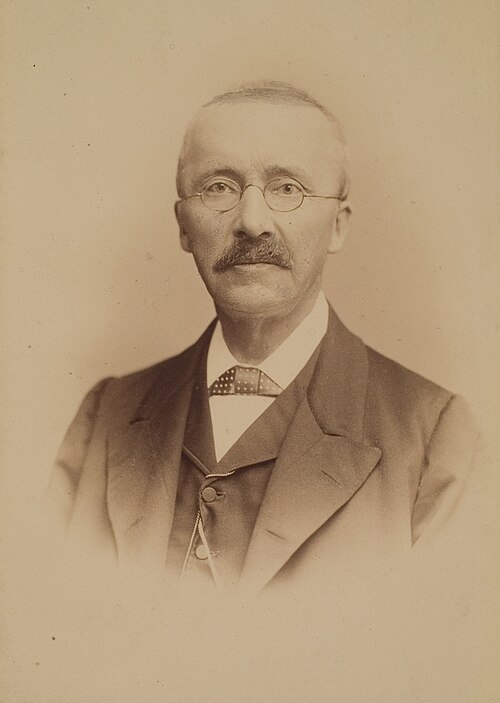
Portrait of Heinrich Schliemann, excavator of Troy. Ed. Schultze Hofphotograph Heidelberg Plöckstrasse 79 · CC BY-SA 4.0

Heinrich Schliemann

Germany · 1822–1890

A merchant who made a fortune in indigo, gold-rush banking and war profiteering, Schliemann retired to prove Homer true and trenched the mound of Hisarlik in Ottoman Turkey from 1871. He found a real Bronze Age city — and destroyed much of the layer he was looking for. Modern archaeology defines itself against his methods while owing him its most famous site.

The story

On 31 May 1873, Schliemann claimed he glimpsed gold in a trench wall, dismissed the workmen for an unscheduled rest, and cut the hoard free with his own knife while his wife Sophia carried it away in her shawl. He later admitted Sophia was in Athens that day — one of many embellishments — and he smuggled "Priam's Treasure" out of the Ottoman Empire. Lost from Berlin in 1945, the gold resurfaced in 1993 in Moscow's Pushkin Museum, where it remains, still disputed.

“A great discovery cannot excuse a destroyed context; the field remembers both, permanently.”

Superimposed cities at Troy
9 major layers
His great north–south trench
~17 m deep
Treasure's forced travels
Istanbul→Berlin→Moscow
6
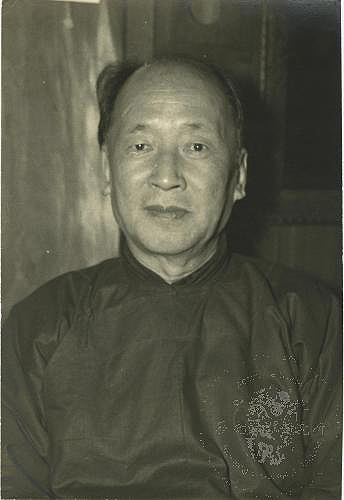
Photograph of Li Ji, the father of modern Chinese archaeology. Unknown author Unknown author · Public domain

Li Ji

China · 1896–1979

Harvard-trained Li Ji led the Academia Sinica excavations at Anyang from 1928, uncovering the late Shang dynasty capital — royal tombs, palace foundations and inscribed oracle bones — and proving that China's earliest recorded dynasty was history, not legend. He is called the father of modern Chinese archaeology, and trained its founding generation.

The story

In June 1936, near the end of the fourteenth Anyang season, his team hit pit YH127: a single buried archive of more than 17,000 inscribed oracle-bone fragments, the records of Shang royal divination. Rather than dig it apart in place, they cut the entire pit out as a three-ton block and shipped it to the laboratory in Nanjing for micro-excavation. A year later Japan's invasion halted the dig; Li Ji spent the war moving the collections across China, and finished his career with them in Taiwan.

“When the find is too important to dig fast, take the whole problem to the laboratory.”

Anyang seasons led
15 (1928–37)
Oracle-bone pit YH127
17,000+ fragments
Discipline he founded
Chinese archaeology
7

Tatiana Proskouriakoff

Russia / United States · 1909–1985

Born in Tomsk and trained as an architect during the Depression, Proskouriakoff joined a Maya expedition as a drafter and became the person who proved the inscriptions record real history. Her reconstruction drawings of Maya cities remain standards, and her 1960 decipherment paper redirected an entire field she never took a degree in.

The story

Studying the dated stelae of Piedras Negras, Guatemala, Proskouriakoff noticed that monuments clustered before each temple spanned roughly a human lifetime, opening with one distinctive date-glyph and adding another a couple of decades later. Her 1960 paper argued these were birth and accession records of successive rulers — overturning the reigning view, defended by Eric Thompson, that the texts were pure calendar-priest astronomy. She was right; the glyphs were history, and decipherment followed. Her ashes were buried at Piedras Negras in 1998.

“Pattern seen honestly beats prestige: the outsider's chart can overturn the orthodoxy of a whole field.”

The paper that broke the code
1960, Piedras Negras
Ruler reigns identified
7 successive rulers
Guatemala's Order of the Quetzal
Awarded 1984
8

George Bass

United States · 1932–2021

Bass founded underwater archaeology as a discipline: rather than let salvage divers hand finds up to scholars on deck, he insisted archaeologists learn to dive and excavate shipwrecks on the seabed to land-dig standards. He founded the Institute of Nautical Archaeology in 1972 and led the field's defining projects off Turkey.

The story

In 1960, as a 27-year-old graduate student who learned to dive in a swimming pool weeks earlier, Bass directed the excavation of a Bronze Age shipwreck at Cape Gelidonya, Turkey — the first ancient wreck excavated in its entirety on the seabed by archaeologists. Mapping, grids and recording all happened at 27 meters' depth. His later Uluburun project (1984–94) logged over 22,000 dives and raised a 3,300-year-old royal cargo — Canaanite copper, Egyptian gold, Baltic amber — rewriting Bronze Age trade.

“If the evidence lies somewhere archaeologists cannot work, change the archaeologists, not the standards.”

First full seabed excavation
1960, 27 m down
Dives logged at Uluburun
22,000+ (team)
Institute founded
INA, 1972

Bars are scaled to the leader in this list.

Comparison Lab

Toggle names on and off — every bar rescales to the leader of your selection.

5 / 8

The argument

Schliemann is the permanent argument: the man who put Troy on the map also dynamited and trenched straight through the Homeric-era layers he sought, embellished his own diaries, and smuggled the finds. Whether he belongs on any list of great archaeologists — or only on lists of great destroyers who happened to dig — divides the field to this day.

The list's colonial frame is itself contested. Petrie's excavations rested on Egyptian labor and his finds left Egypt under the partage system; he also held eugenicist views his biographers no longer excuse. Source countries from Egypt to Greece to Nigeria now demand returns of material excavated or looted in this era, and museum shelves have become the discipline's most public battleground.

And the greatest systematic omission is the workforce: Egypt's Qufti foremen, trained by Petrie from the 1890s and indispensable to every major excavation since; the local crews at Anyang, Jericho and Olduvai — including Kamoya Kimeu, the Kenyan fossil hunter who found more hominid fossils than most professors. Naming eight excavators inevitably means not naming the hundreds whose hands did the finding.

Keep exploring

More in Frontier & Field