1511Nuremberg's portable watches
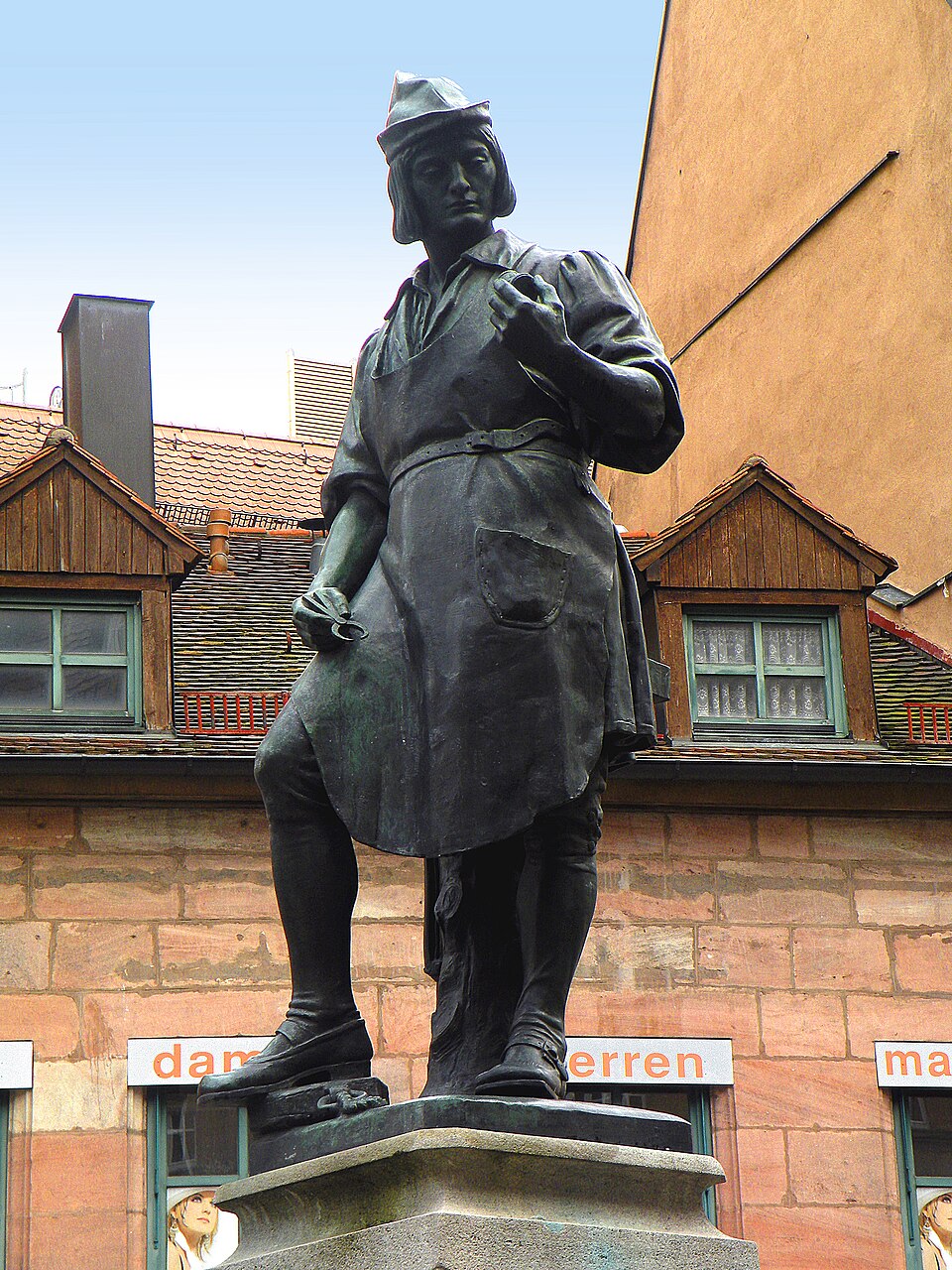
The humanist Johann Cochläus records that locksmith Peter Henlein of Nuremberg makes small iron timepieces that run forty hours and can be carried in a purse — the earliest clear written evidence of watchmaking as a distinct craft. Early watches had only an hour hand and could drift by an hour or more a day; they were jewelry that happened to tell time.
1601Geneva founds the first watchmakers' guild
Jean Calvin's sumptuary laws had banned the wearing of jewelry in Geneva from the 1540s, pushing the city's goldsmiths and jewelers into the one luxury object still permitted: the useful watch. In 1601 Geneva's watchmakers organized what is generally counted as the world's first guild devoted purely to watchmaking, and the city became the trade's enduring capital.
1675Huygens adds the balance spring
Dutch scientist Christiaan Huygens fits a spiral spring to the balance wheel, giving it a natural oscillation period for the first time. Accuracy improves from a fraction of an hour to a few minutes per day at a stroke, watches gain minute hands, and a bitter priority dispute with England's Robert Hooke — who had shown a spring-regulated balance years earlier — begins immediately.
1761Harrison's H4 solves longitude at sea
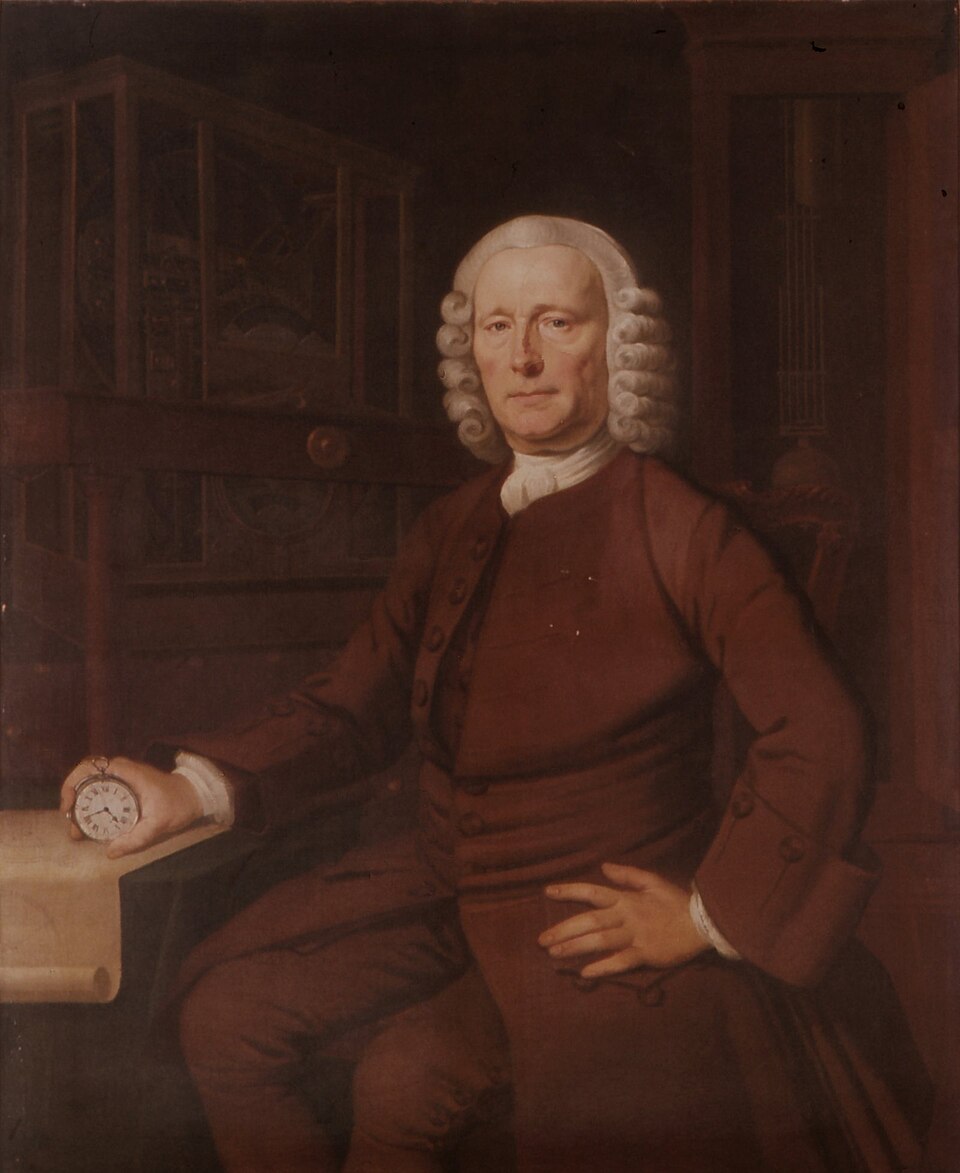
John Harrison's 1.4-kilogram watch H4 sails from Portsmouth to Jamaica aboard HMS Deptford and loses about five seconds in 81 days — accuracy that finally lets navigators compute longitude, the problem Britain's 1714 Longitude Act had priced at £20,000. The Board of Longitude resisted paying for years; Harrison received his final award in 1773, aged 80, after King George III took up his case.
1801Breguet patents the tourbillon
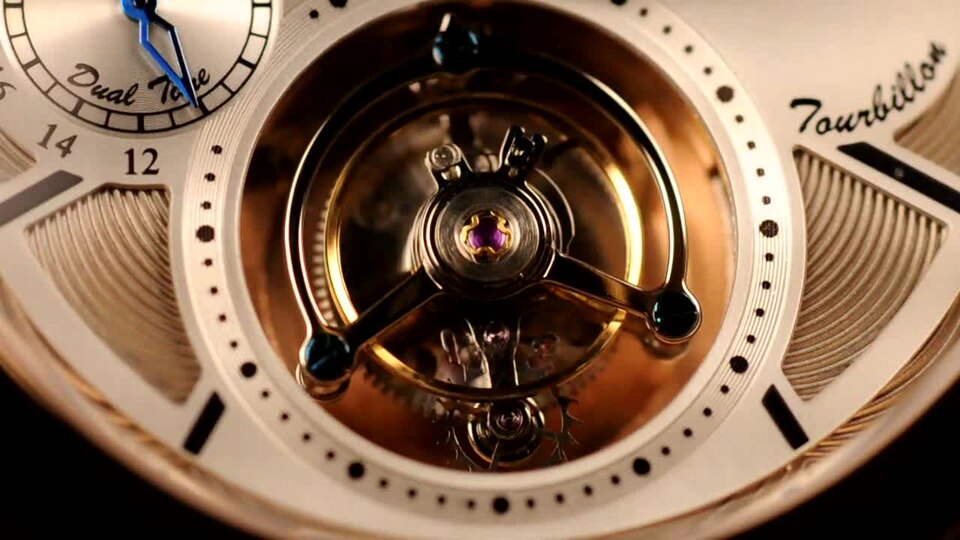
In Paris, Abraham-Louis Breguet patents the tourbillon, a rotating cage that carries the balance and escapement through all vertical positions to average out the errors gravity causes in a pocket watch. Commercially marginal for two centuries, it became the signature complication of the modern luxury revival — and a standard test piece for elite watchmakers ever since.
1854The American system reaches watchmaking
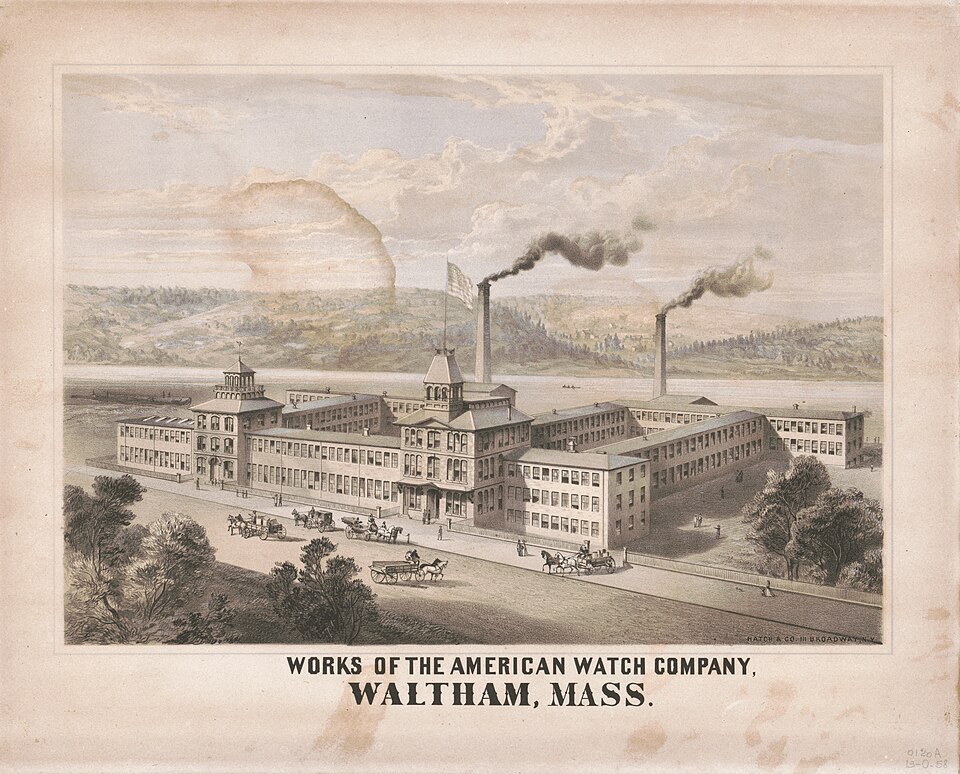
Aaron Lufkin Dennison and Edward Howard's factory — from 1854 established at Waltham, Massachusetts — applies the interchangeable-parts methods Dennison had admired at the Springfield Armory to watches. Machine-made Walthams undercut hand-fitted European work so badly that Swiss observers sent to the 1876 Philadelphia exhibition went home warning their industry to mechanize or die.
1926Rolex makes the wristwatch waterproof
Rolex founder Hans Wilsdorf patents the screw-down Oyster case, and in October 1927 puts one on swimmer Mercedes Gleitze during a highly publicized English Channel swim attempt; the watch emerges running after more than ten hours in the water, and Wilsdorf buys the Daily Mail's front page to say so. The wristwatch — a soldiers' convenience of the First World War — becomes a serious instrument.
1969Seiko's Astron starts the quartz era
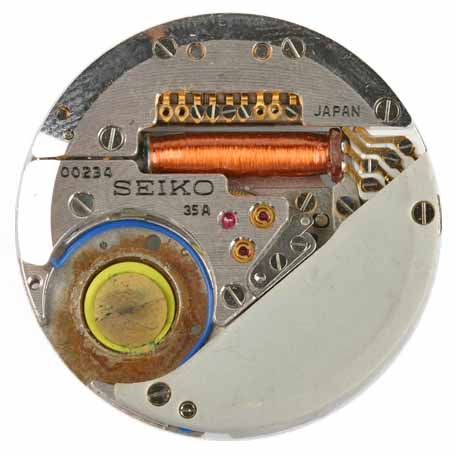
On 25 December 1969 in Tokyo, Seiko releases the Astron, the world's first quartz wristwatch — accurate to about five seconds a month and priced at 450,000 yen, roughly the cost of a small car. Within a decade, mass-produced quartz movements are more accurate than the finest mechanical chronometers and cost almost nothing to make.
1970–1983The quartz crisis guts the Swiss industry
Swiss watch-industry employment collapses from roughly 90,000 in 1970 to under 35,000 by the mid-1980s, and well over half its firms disappear. The banks force the industry's two giant groups to merge under Nicolas Hayek, and in March 1983 the plastic, machine-assembled Swatch launches — profitable at a low price, and the cash engine that funds mechanical watchmaking's survival.
2019A wristwatch sells for CHF 31 million
At the Only Watch charity auction in Geneva on 9 November 2019, a unique steel Patek Philippe Grandmaster Chime sells for CHF 31 million, the highest price ever paid for a wristwatch at auction. The result marks how completely the mechanical watch has been reinvented: technically obsolete for fifty years, and more valuable than at any time in its history.