✍️Origins & Evolution

Novelist · The maker of book-length fiction, from Murasaki Shikibu's Heian court to the Kindle's self-publishing flood — a trade with no license, no ladder and no retirement age.

The novel is younger than poetry and drama but the impulse behind it — long prose stories about invented people — is ancient, and it kept being reinvented independently: in Greek romances, in Heian Japan, in Ming China's vernacular epics, in Golden Age Spain. What we call "the novelist" is really the survivor of all those separate inventions, fused together by print.

The profession's turning points are less about style than about distribution. Each new delivery mechanism — the printing press, the circulating library, the monthly serial, the sixpenny paperback, the ebook — changed who could afford to read fiction, and therefore who could afford to write it for a living.

Where it began

1st–2nd century CEGreek & Roman Mediterranean

The oldest surviving long prose fictions come from the Greco-Roman world: Chariton's Callirhoe, often called the earliest fully surviving Greek novel, Petronius's fragmentary Satyricon from Nero's Rome, and Apuleius's The Golden Ass, the only Latin novel to survive complete. These were popular entertainments, not prestige literature — which is precisely the point. From its beginning, long fiction was a commercial form written for readers' pleasure, and its makers ranked well below poets. The novelist's long climb from disreputable entertainer to cultural authority starts here.

Timeline

1st–2nd c. CEGreek and Roman prose fiction

Chariton's Callirhoe, Petronius's Satyricon and Apuleius's The Golden Ass establish long prose fiction as a popular commercial form in the ancient Mediterranean — read for pleasure, ranked far beneath epic poetry, and preserved only patchily because so few took it seriously enough to copy.

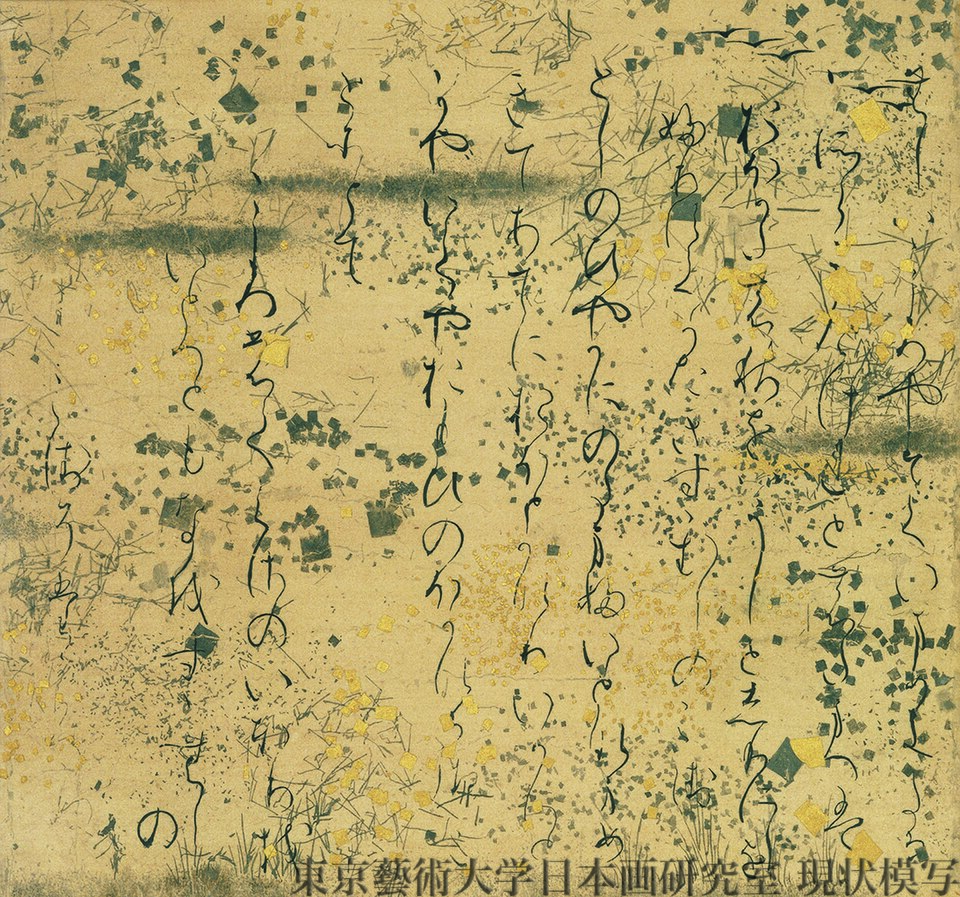
c. 1010Murasaki Shikibu completes The Tale of Genji

A lady-in-waiting to Empress Shōshi at Japan's Heian court finishes a fifty-four-chapter prose narrative following the courtier Genji and some four hundred characters across three generations. Its interior psychology and structural ambition lead many scholars to call it the world's first novel — written by a woman whose real name is unknown.

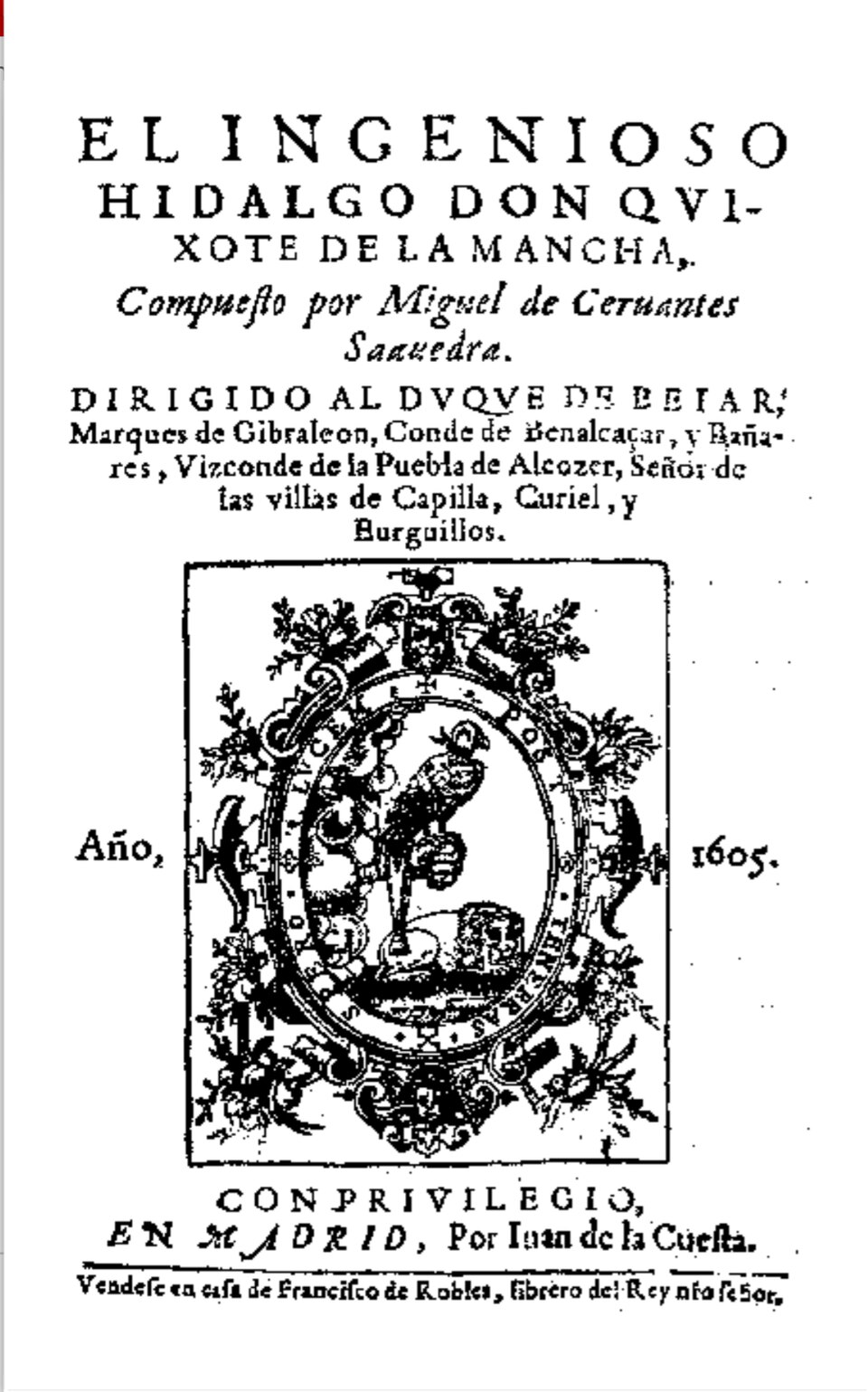
1605Don Quixote, Part I

Miguel de Cervantes, a 57-year-old veteran and former captive, publishes El ingenioso hidalgo don Quijote de la Mancha in Madrid. A parody of chivalric romances that turns into something far stranger — fiction aware of itself as fiction — it becomes the standard candidate for the first modern novel and an immediate bestseller with pirate editions within the year.

1740Pamela and the novel-reading craze

Samuel Richardson's epistolary Pamela; or, Virtue Rewarded becomes England's first fiction sensation, spawning sequels, stage versions, merchandise and Henry Fielding's parody Shamela within months. Moralists denounce novel-reading as addictive and corrupting — the first of many panics about the form — while circulating libraries begin renting fiction to readers who cannot afford to buy it.

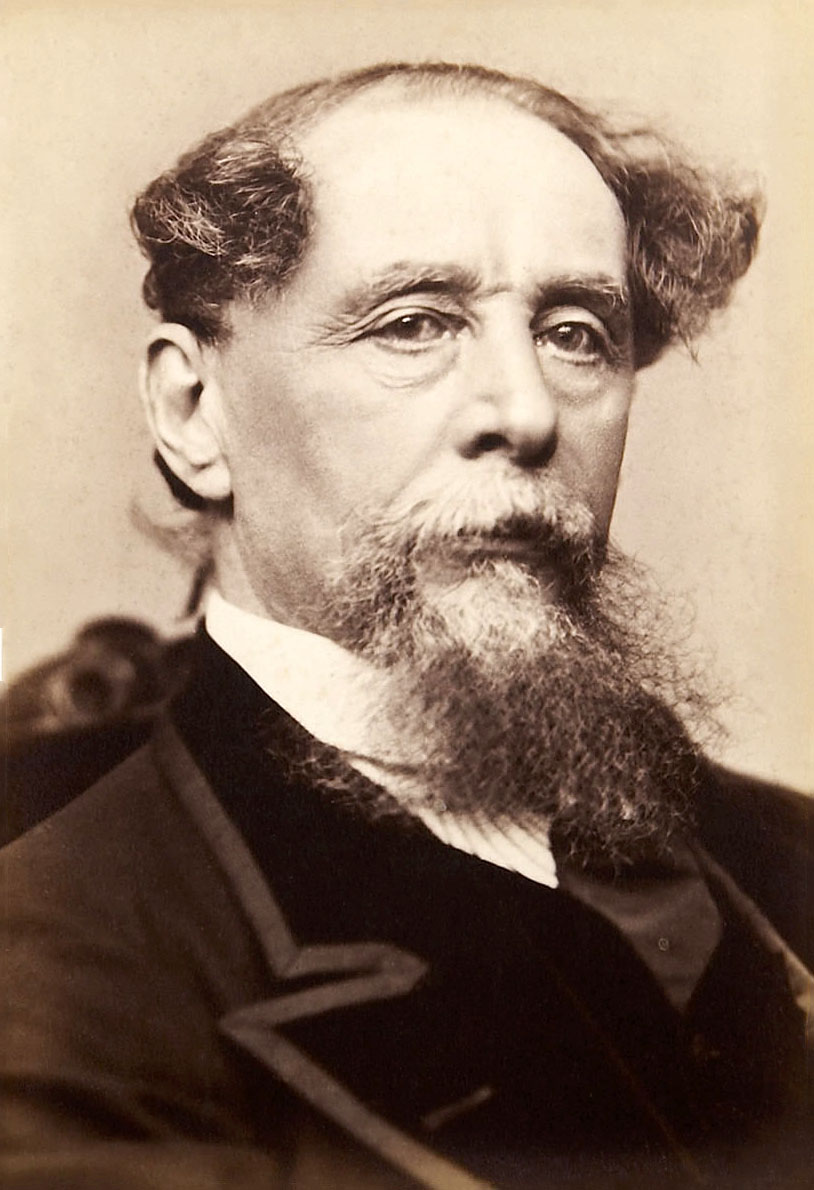
1836Dickens invents the mass serial

The Pickwick Papers, issued in shilling monthly numbers, grows from sales of under a thousand copies to some forty thousand per installment once Sam Weller appears. The 24-year-old Charles Dickens demonstrates that fiction sold in cheap parts can reach an industrial-scale public, and serialization becomes the dominant business model of the Victorian novel.

1857Madame Bovary on trial

France prosecutes Gustave Flaubert for offending public morals after the Revue de Paris serializes Madame Bovary. His acquittal in February 1857 — the same year Baudelaire is convicted for Les Fleurs du mal — makes the novel's right to depict adultery and provincial despair a matter of settled law, and the scandal makes the book famous.

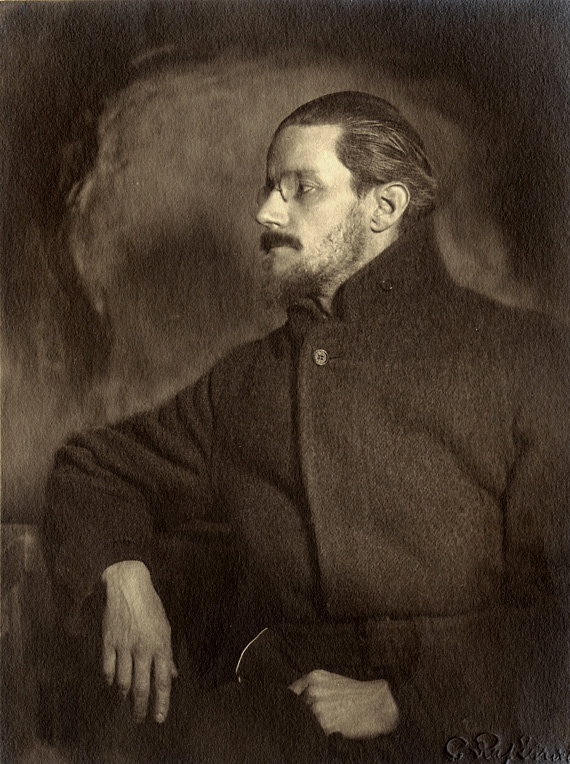
1922Ulysses published in Paris

Sylvia Beach's bookshop Shakespeare and Company publishes James Joyce's Ulysses on 2 February 1922, his fortieth birthday, after serial excerpts were prosecuted for obscenity in the United States. The ban stands until Judge John Woolsey's 1933 decision. Modernism makes the novelist an avant-garde figure — and makes difficulty itself a form of prestige.

1935Penguin's sixpenny paperback

Allen Lane launches Penguin Books in London with ten titles at sixpence each — the price of a packet of cigarettes — after failing to find a decent cheap book at Exeter station. Quality fiction in paperback reaches railway kiosks and tobacconists, multiplying the reading public and, with it, the royalties a successful novelist could earn.

1967One Hundred Years of Solitude

Editorial Sudamericana in Buenos Aires prints 8,000 copies of Gabriel García Márquez's Cien años de soledad; they sell out in weeks. The Latin American Boom — García Márquez, Vargas Llosa, Cortázar, Fuentes — proves that the novel's center of gravity no longer sits in Europe or the United States, and magical realism becomes a global export.

2007The Kindle and the self-publishing era

Amazon's first Kindle sells out in five and a half hours on 19 November 2007, and Kindle Direct Publishing lets any writer publish worldwide without a publisher. Within fifteen years, millions of self-published titles appear annually, genre authors build careers outside the established houses, and the novelist's oldest gatekeepers lose their monopoly.
The eras

A scene from an illustrated handscroll of The Tale of Genji, the eleventh-century Japanese narrative.
Imperial Palace Kyoto · Public domain · Wikimedia Commons
Antiquity – 1400s

Long fiction before "the novel"

Prose fiction was invented repeatedly and independently: Greek romances and Latin comic narratives in the ancient Mediterranean, The Tale of Genji at Japan's Heian court around 1010, and the great Chinese vernacular narratives — Romance of the Three Kingdoms, Water Margin — taking shape by the fourteenth century. Almost everywhere the form ranked below poetry, and much of it was written by court women, entertainers or anonymous compilers rather than anyone called an author.

An illustration of Don Quixote and Sancho Panza, from Cervantes's 1605 novel.
Juan de la Cuesta · Public domain · Wikimedia Commons
1500s – 1740s

Print, the picaresque and Don Quixote

Movable type made long fiction reproducible and sellable. Spain led: the anonymous Lazarillo de Tormes (1554) founded the picaresque, and Cervantes's Don Quixote (1605, 1615) gave Europe a novel about the difference between books and life. In England, Defoe's Robinson Crusoe (1719) and Richardson's Pamela (1740) established fiction posing as true testimony — and the first mass panics about what novel-reading did to the young.

Portrait of Charles Dickens, the most famous novelist of the Victorian era.
Jeremiah Gurney · Public domain · Wikimedia Commons
1740s – 1900

Serialization and the novelist as public figure

Circulating libraries, monthly numbers and newspaper feuilletons turned fiction into a mass industry and its best practitioners into celebrities. Dickens toured two continents reading his own work; two million people lined the streets of Paris for Victor Hugo's funeral in 1885; Tolstoy's estate at Yasnaya Polyana became a pilgrimage site. For the first time, a substantial number of people earned a full living writing novels.

Portrait of James Joyce, whose Ulysses redefined the modern novel in 1922.
Unknown author · Public domain · Wikimedia Commons
1900 – 1970s

Modernism, the paperback and the global novel

Joyce, Proust, Woolf and Faulkner remade the novel's form and made experiment prestigious, while Allen Lane's Penguin (1935) and the American paperback houses remade its economics. The Nobel Prize turned novelists into international public intellectuals, and after 1945 the form's energy dispersed worldwide — Japan's Tanizaki and Kawabata, the Latin American Boom, Achebe's Things Fall Apart (1958) answering colonial literature from within Nigeria.

An Amazon Kindle e-reader, the device that opened the self-publishing era in 2007.
Amazon.com, Inc. · Public domain · Wikimedia Commons
1980s – present

Conglomerates, MFAs and the self-publishing flood

Trade publishing consolidated into a handful of global houses — Penguin and Random House themselves merged in 2013 — while universities industrialized the apprenticeship through creative-writing degrees. Amazon, founded as an online bookstore in 1995, then dismantled the gatekeeping entirely: since Kindle Direct Publishing opened in 2007, millions of self-published titles have appeared each year, and web-serial platforms in China and Korea built parallel fiction industries employing more writers than print ever did.

What this job replaced

Neighbouring trades that no longer exist — absorbed, automated or regulated away.

Feuilletonist (newspaper serial novelist)

1836–1930s

From 1836, Paris dailies fought circulation wars with the roman-feuilleton — a novel installment across the bottom of the front page. Eugène Sue's The Mysteries of Paris (1842–43) gripped France chapter by chapter, and Dumas kept teams of collaborators supplying copy by the column. Radio drama, cinema and the cheap paperback killed the trade between the wars; its cliffhanger craft survives in television writers' rooms.

Triple-decker novelist

1821–1894

For most of the Victorian era, British novels appeared in three volumes at the artificial price of 31 shillings and sixpence — roughly a week's wages — a format sustained by Mudie's Select Library, which bought thousands of copies and rented them out volume by volume. Novelists padded plots to fill the third volume. In 1894 Mudie's and W. H. Smith refused the price, and within three years the format was effectively extinct.

Pulp fictioneer

1896–1950s

After Frank Munsey converted The Argosy to all-fiction pulpwood paper in 1896, hundreds of American magazines paid around a cent a word for westerns, detective stories and space opera, and a fast typist could earn a middle-class living on volume alone. Raymond Chandler and Isaac Asimov apprenticed there. Paperback originals and television destroyed the pulps in the early 1950s; the surviving titles converted to digest size or died.

Trades that vanished →

Every distribution shift in this history looked like the death of the novelist and turned out to be a reorganization instead. The serial, the paperback and the ebook each destroyed one business model, created another, and left more people reading long fiction than before.

What has never changed is the unit of production: one person, alone, holding a few hundred thousand words in their head for years until the shape comes right. The tools around that act keep churning; the act itself has outlasted every one of them.

Keep exploring

More in Arts & Creation