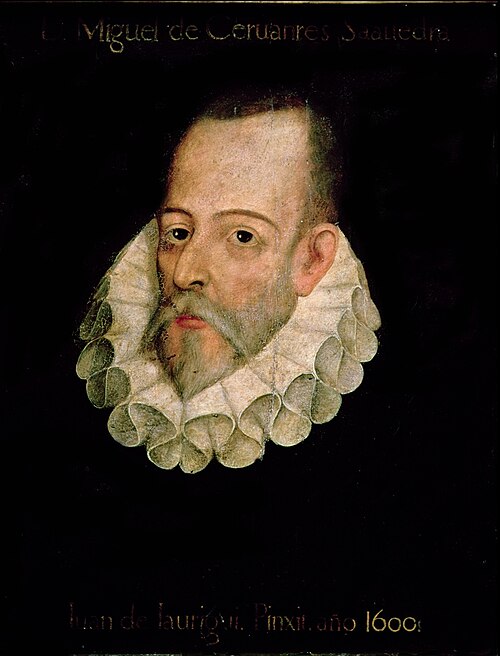
 Attributed to Juan de Jáuregui · Public domain
Miguel de Cervantes
Don Quixote (1605, 1615) is the standard candidate for the first modern novel: fiction about the gap between books and life, self-aware enough to discuss its own pirated sequel inside Part II. Cervantes wrote it in his late fifties, after a life of war, captivity and failed applications.
At the Battle of Lepanto in 1571, Cervantes took two gunshot wounds to the chest and one that permanently maimed his left hand — he was proudly called "el manco de Lepanto." Sailing home in 1575, he was captured by Barbary corsairs and spent five years enslaved in Algiers, attempting escape four times before being ransomed. In Don Quixote's prologue he says the book was "engendered in a prison," and tradition places its conception during a later jailing in Seville over tax-collection debts.
“Material outlasts misfortune: the masterpiece can come at the end, made of everything that went wrong first.”