🎻The Greats

Musician · Spends years mastering an instrument or voice, then earns a living from performances, recordings and teaching in a market streaming has broadened but paid less for.

Music's roll of honor stretches from a medieval abbess who is the earliest composer whose life we actually know, to a Senegalese singer born into a hereditary tradition of oral historians. Between them the list crosses court patronage, Cairo radio, Hindustani apprenticeship, jazz reinvention and Afrobeat protest.

Each entry is chosen for a specific, checkable achievement rather than general fame, and the list deliberately spans continents, centuries and the divide between celebrated men and the women who, for much of this history, had far narrower paths to the same recognition.

The all-time podium

Wolfgang Amadeus Mozart
Archbishopric of Salzburg / Austria
2
Hildegard von Bingen
Holy Roman Empire (Germany)
1
Ludwig van Beethoven
Holy Roman Empire (Germany) / Austria
3

The eight who reached the top

1
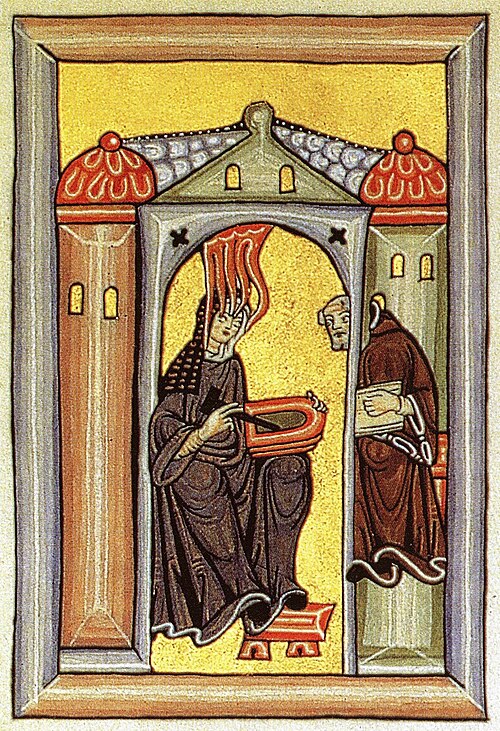
Medieval illuminated manuscript portrait of Hildegard von Bingen Unknown author Unknown author · Public domain

Hildegard von Bingen

Holy Roman Empire (Germany) · 1098-1179

Abbess of Rupertsberg and composer of an unusually large surviving body of monophonic chant, plus what may be the earliest morality play set to music, Hildegard is the earliest composer in Western history whose life and personality are documented in real detail.

The story

In 1178, in her early eighties, Hildegard refused church officials' demand to exhume a man buried in her convent's cemetery whom they considered excommunicated, insisting he had been reconciled before death. Mainz's clergy responded by placing her convent under interdict, banning music and sacraments there; Hildegard wrote a furious formal protest defending sung praise as essential worship, and the ban was lifted only months before she died.

“Defending your art on principle can matter as much as making it.”

Surviving chant compositions
~70 works
Earliest composer with documented biography
1st known
Years leading Rupertsberg
29 yrs (1150-79)
2
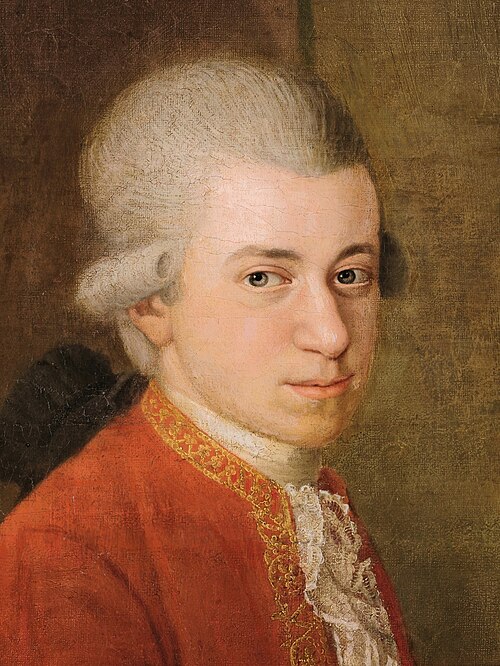
18th-century oil portrait of Wolfgang Amadeus Mozart Johann Nepomuk della Croce · Public domain

Wolfgang Amadeus Mozart

Archbishopric of Salzburg / Austria · 1756-1791

A child prodigy who toured Europe's courts from age six, Mozart composed over 600 catalogued works across opera, symphony, concerto and chamber music before dying at 35, and his 1781 break from servitude under the Archbishop of Salzburg foreshadowed the freelance career Beethoven would complete.

The story

In 1781, fed up with being treated as a servant, Mozart sought permission to resign from Archbishop Colloredo's household; the archbishop's chief steward, Count Arco, physically threw him out of the room — 'with a kick on my arse,' Mozart wrote to his father — the humiliating act that ended his court employment for good and pushed him into freelance life in Vienna.

“Sometimes the humiliating exit is the one that frees you to work on your own terms.”

Complete works catalogued
~600 (Köchel)
Age at first concert tour
6 years old
Age at death
35 years
3
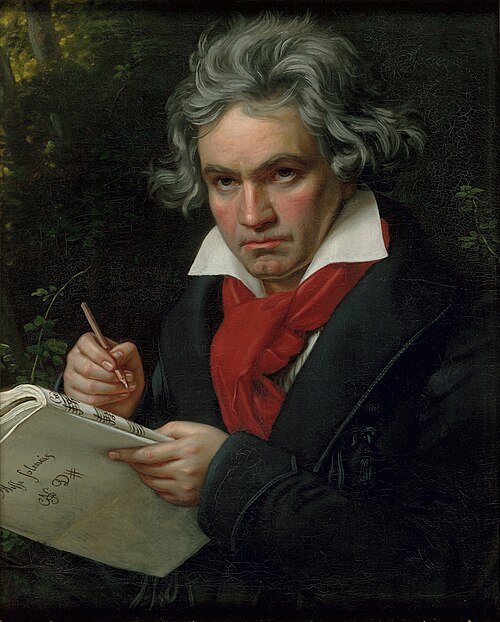
Portrait of Ludwig van Beethoven, c. 1820 Joseph Karl Stieler · Public domain

Ludwig van Beethoven

Holy Roman Empire (Germany) / Austria · 1770-1827

The composer most credited with inventing the independent, freelance-artist model, Beethoven refused a steady court post and instead lived on commissions, publishing income and a noble-funded annuity, composing nine symphonies and redefining what a composer could demand of an audience even after losing his hearing.

The story

In 1808 Beethoven was offered a salaried position as Kapellmeister in Kassel; to keep him in Vienna, three aristocrats — Archduke Rudolph, Prince Kinsky and Prince Lobkowitz — signed a contract in 1809 guaranteeing him an annuity of roughly 4,000 florins a year for life, on the sole condition that he stay in Austria and compose, making him arguably the first major composer paid simply to be himself rather than to serve a court.

“Patrons can fund independence instead of buying obedience, if the artist is valuable enough to negotiate.”

Symphonies completed
9
Annuity secured, 1809
~4,000 florins/yr
Years composing after total deafness
~12 years
4
Photograph of Egyptian singer Umm Kulthum performing Production company · Public domain

Umm Kulthum

Egypt · c. 1898-1975

Egypt's most celebrated singer, Umm Kulthum built a fifty-year career on monthly live radio concerts that could stretch a single song past an hour through audience-driven improvised repetition, becoming a unifying cultural and nationalist symbol across the Arab world.

The story

From the 1930s, Umm Kulthum's first-Thursday-of-the-month concerts, broadcast live on Cairo Radio, drew such devotion that streets emptied and cafés gathered crowds around radios to listen; she would repeat a single emotionally charged line dozens of times at the crowd's shouted urging, a call-and-response tradition known as tarab, stretching songs composed to run twenty minutes into performances lasting well over an hour.

“Let the audience's response reshape the performance in real time — the version they demand is the real version.”

Career length
~50 years
Funeral crowd, 1975
Millions in Cairo
Longest known concert songs
60+ minutes
5
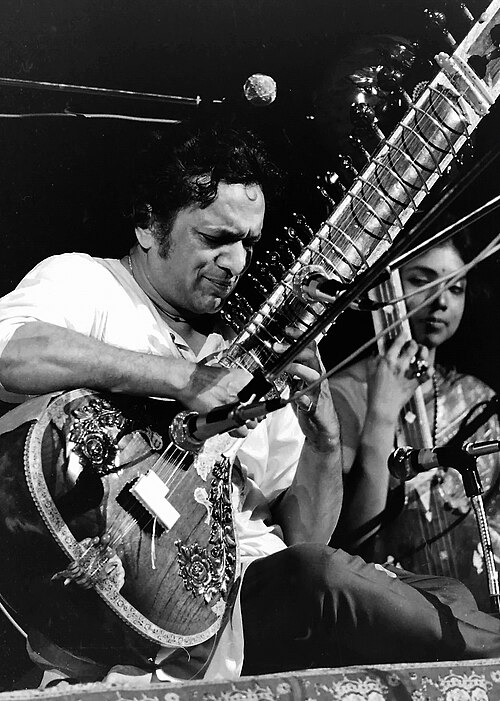
Photograph of Ravi Shankar playing the sitar Markgoff2972 · CC BY-SA 4.0

Ravi Shankar

India · 1920-2012

A sitar virtuoso trained for years under Ustad Allauddin Khan of the Maihar gharana, Shankar brought Hindustani classical music to Western concert halls and rock audiences alike, mentoring George Harrison and performing at Monterey, Woodstock and the Concert for Bangladesh.

The story

Shankar moved into guru Allauddin Khan's household in Maihar in 1938 and lived there for roughly seven years under strict gharana discipline, practicing for hours daily; he later said this immersive guru-shishya apprenticeship, not any conservatory, made him a musician. At the 1967 Monterey Pop Festival, part of the crowd applauded loudly after his opening tuning, mistaking it for the performance itself.

“A teacher's total, years-long discipline can matter more than any single school's curriculum.”

Years training under Allauddin Khan
~7 years
Grammy Awards
3 + posthumous lifetime
Career span
~75 years
6
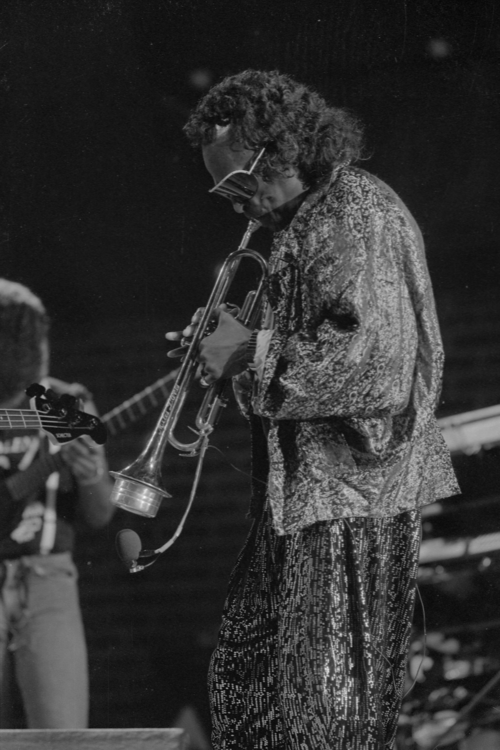
Photograph of Miles Davis playing trumpet on stage Firma Hagblom-Foto · Public domain

Miles Davis

United States · 1926-1991

A trumpeter who reinvented jazz roughly once a decade — bebop, cool jazz, modal jazz on Kind of Blue (1959), and jazz fusion on Bitches Brew (1970) — Davis built a career on restlessly discarding his own successful sound rather than repeating it.

The story

For the 1959 album Kind of Blue, Davis gave his band only sketched scales and modes rather than fully written chord changes, and the musicians largely improvised their solos on first or near-first takes with almost no rehearsal. Pianist Bill Evans's own liner notes compared the sessions to a tradition of spontaneous ink painting that allows no correction, and the record went on to become the best-selling jazz album of all time.

“Sometimes less preparation forces more honest playing than exhaustive rehearsal ever could.”

Kind of Blue certification (US)
Multi-Platinum (RIAA)
Major style reinventions
~5 across career
Grammy Awards
~8 (incl. lifetime)
7

Fela Kuti

Nigeria · 1938-1997

The creator of Afrobeat, fusing Yoruba rhythms, jazz and funk into extended political anthems, Fela Kuti used his Lagos compound the Kalakuta Republic as a self-declared independent state and turned his concerts into direct confrontations with Nigeria's military government.

The story

After Fela's 1977 album Zombie mocked Nigerian soldiers as mindless zombies obeying orders, roughly a thousand soldiers stormed his Kalakuta Republic compound, beat residents, and threw his elderly mother, activist Funmilayo Ransome-Kuti, from a second-floor window — injuries from which she died the following year. Fela responded by delivering her coffin to the doorstep of the military headquarters in Lagos and writing 'Coffin for Head of State' about the raid.

“Music that names its target directly can provoke real consequences, and become more powerful because of them.”

Studio albums released
~50
Soldiers in the 1977 Kalakuta raid
~1,000
Years performing at the Shrine
~20 years
8

Youssou N'Dour

Senegal · b. 1959

Born into a griot family in Dakar, N'Dour fused the West African griot's inherited role as praise-singer and oral historian with mbalax dance rhythms, becoming Senegal's best-known musician worldwide and later serving as the country's Minister of Tourism and Culture.

The story

N'Dour's mother was a griotte who sang praise songs at ceremonies, and he began performing in her circle as a child even though his father's side of the family was not griot by caste, a mixed lineage he has said complicated his early claim to the tradition. His 1994 duet with Neneh Cherry, '7 Seconds,' sung partly in Wolof, English and French, topped the French singles chart and introduced mbalax's polyrhythms to a global pop audience.

“An inherited tradition can still be renegotiated and carried into entirely new audiences.”

"7 Seconds" chart peak (France)
No. 1, 1994
UNICEF goodwill ambassador
Since 2003
Senegal cabinet post
Minister, 2012-13

Bars are scaled to the leader in this list.

Comparison Lab

Toggle names on and off — every bar rescales to the leader of your selection.

5 / 8

The argument

Even Umm Kulthum's exact birth year is debated among biographers, since Egyptian civil registration was inconsistent at the time and she is widely reported to have shaved years off her own age throughout her career.

Fela Kuti's legacy is contested for reasons beyond music: he faced credible domestic abuse allegations and held controversial views on HIV/AIDS treatment late in life, complicating a purely celebratory reading of him as a political hero.

Keep exploring

More in Arts & Creation